
At Charlotte’s Bark and Heal, dogs and kids heal together
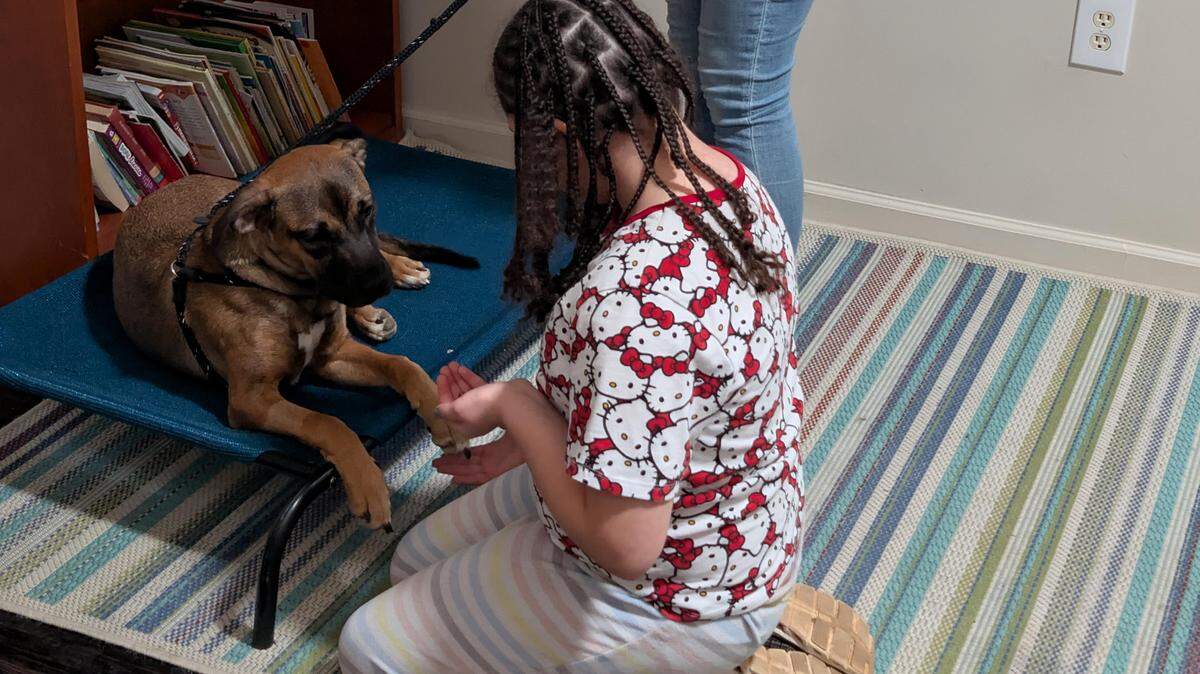
The scene is unbearably sweet: A little girl, about eight, is training a puppy. Like a pro, she lifts her voice into a confident “Sit” while raising her palm upward, just as she learned. No luck. The girl tries again: “Sit.” This time, success! She does a little celebratory jump, and the dog leaps up to kiss her, licking her hair bow off her head. No adult in the room minds when the training session momentarily derails into giggles and wags.
Here, at Bark and Heal, dog training isn’t the ultimate goal. Therapy is.
Bark and Heal unites kids and dogs who face challenges disproportionate to their small sizes. The kids are residents at Alexander Youth Network’s Transition House. They’ve recently completed treatment at the organization’s residential psychiatric center; here, they reinforce positive behaviors and gain new life skills before they return to their families or foster homes. The pup, Sunny, is an eight-month-old rescue dog with Billies’ Buddies Animal Rescue who’s awaiting adoption. Each Wednesday evening, the kids and dog gather to bond, to play, and to help each other home.
“It’s a beautiful thing,” says Stacia Jackson, Alexander Youth Network’s chief marketing officer. “You’re watching a child and a dog healing at the same time.”
Therapy for kids might not look like you’d expect. Alexander Youth Network’s treatment incorporates NMT — the Neurosequential Model of Therapy — that uses personalized approaches to help each child heal from trauma. Sometimes, this therapy looks like play. Sometimes, it looks like pottery or drumming. For the four kids in Bark and Heal, it looks like dog training.
Bark and Heal is a beautiful example of local nonprofits building mutual support. Alexander Youth Network and Billie’s Buddies face daunting times. Kids’ mental health has become a crisis, as has foster care. In North Carolina, there are half as many licensed foster care homes as there are children who need them. Dogs also face a critical shortage of homes, with our municipal shelter and many rescue organizations at full capacity. With pet therapy being a proven tool to improve kids’ mental health, these groups discovered a natural fit.
At Bark and Heal, each child gets about ten minutes with the dog to practice skills. Sit. Stay. Fetch. Paw. Place. Kristin Zalaquett, Sunny’s foster, trains the trainers. She shows the kids how to use hand signals, how to offer a treat, when to praise. When Sunny follows the children’s commands —and she almost always does — it brings smiles all around: the kids, Zalaquett, social workers. This is more than tricks; it’s connection. It’s confidence. Zalaquett reserves a couple minutes for each child to bond with Sunny however they choose, whether with a cuddle or game of fetch.
“For kids who’ve had past traumas and who are dealing with many things, it’s a big deal to have a dog come in who’s just like, ‘I’m here for you, and I love you,’” Zalaquett says. “These dogs have such a calming effect.”
Several times, after children have returned home from Transition House, their family has gotten a dog due to the impact that Bark and Heal had.
Zalaquett calls Sunny a “unicorn puppy.” She’s quick to learn, eager to please, and tender with the kids. The rescue finds especially calm and focused dogs for the program, and Sunny’s the first puppy to make the cut. This shelter mutt seems born to be a therapy dog.
“The dogs in shelters are amazing,” Zalaquett says. “There are so many gems out there.”
Sunny will be the Bark and Heal dog until she finds her forever home. When each Bark and Heal dog gets adopted, Zalaquett hosts a graduation ceremony, led by the kids and attended by the dog’s new family. When it’s Sunny’s turn, the kids will demonstrate the dog’s skills, and they’ll give the family notes and drawings of their new dog. Then, there’s the ceremonial passing of the leash.
Until then, Sunny’s here to learn tricks to help her attract adopters. On this evening, after each child finishes their training, Sunny’s exhausted. Zalaquett invites the kids to gather with a blanket to read Sunny a bedtime story. They stroke her fur as they take turns reading “Could I Be Your Dog?” about a homeless dog named Arfy who finds his new home. The book ends with suggestions for people to help rescue dogs.
“That’s what you all are doing!” Zalaquett tells the kids as they beam. “You’re volunteers who are helping Sunny find her new home!”
It’s time for Bark and Heal to end. The kids leave the training room to get ready for bed. Zalaquett gathers her belongings, says her goodbyes to the staff and begins to leave. But then comes a tug at Zalaquett’s shirt. One child has returned with a request. “Can I please give Sunny one more hug?”
When the child and Sunny hug — just as when they train — it’s impossible to tell which end of the leash is happier.
Jen McGivney is a contributing columnist for the Charlotte Observer and a former columnist for Charlotte Magazine.