
Let’s undo instead of adding to the damage of I-77 in Charlotte | Opinion
There is a reliable way to kill a city: cut it apart with highways, widen them when they fail, and call the destruction progress.
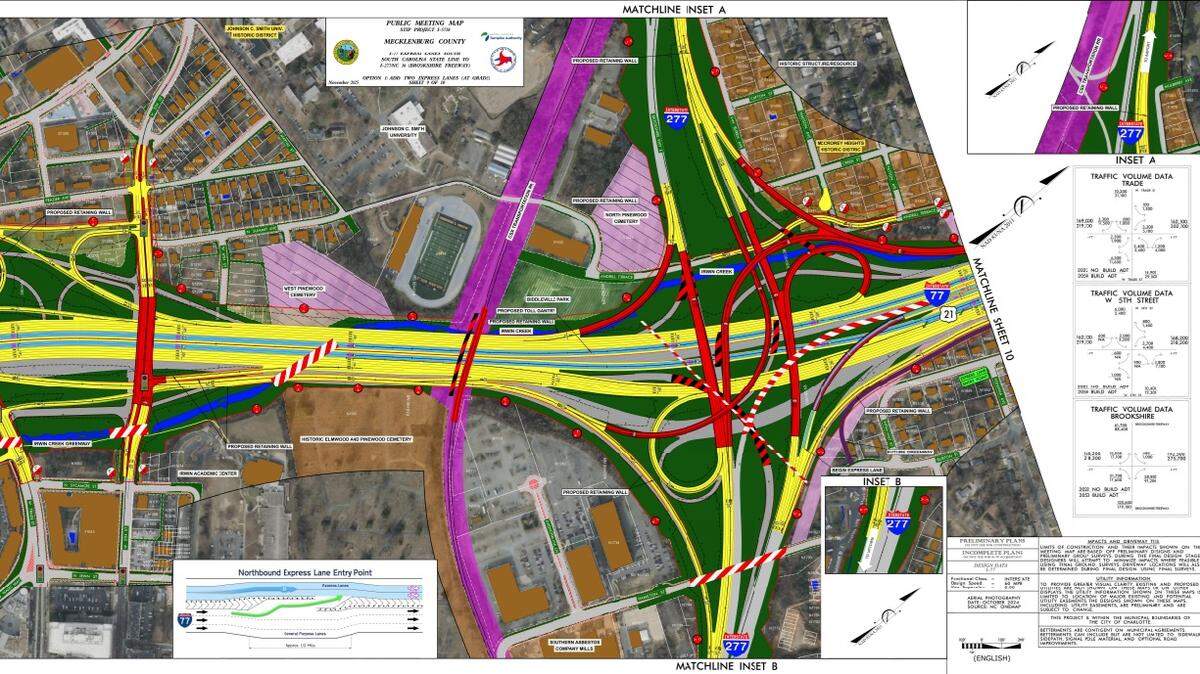
Charlotte now faces that choice with the proposed expansion of Interstate 77 from Uptown to the South Carolina line. The plan would add toll lanes while demolishing homes, erasing parkland, and deepening the physical barrier that has long divided neighborhoods from the city’s core. Supporters frame the project as necessary infrastructure. In truth, it risks repeating one of the most damaging urban planning mistakes of the last century.
Across the country, cities are doing the opposite of what Charlotte is now considering. They are undoing highways.
In Rochester, New York, the city is removing sections of its sunken Inner Loop highway and replacing them with an at-grade boulevard that reconnects downtown with surrounding neighborhoods. What was once a trench of speeding traffic is being transformed into walkable streets, housing, and public life. The project has opened land for development, restored street connectivity, and revived parts of the city that had long been isolated by highway infrastructure.
Atlanta is pursuing a similarly imaginative approach. The proposed “Stitch” project would cap a stretch of the I-75/85 Downtown Connector with a 17-acre park, creating a three-quarter-mile ribbon of green space that reconnects neighborhoods divided by the highway decades ago. The vision includes urban parks, trails, and transit-oriented development linking Midtown and Downtown. It is not merely a beautification project. It is an economic strategy grounded in the recognition that cities thrive when their neighborhoods are connected rather than fragmented.
Dallas offers perhaps the clearest demonstration of what this approach can achieve. Klyde Warren Park, built on a deck over a sunken eight-lane highway, transformed what was once a divisive stretch of asphalt into one of the city’s most beloved public spaces. Today the park includes a children’s playground, water play areas, food trucks, reading rooms, a performance pavilion, and yoga areas. Families gather there. Workers eat lunch there. Cultural events animate the space throughout the year. More importantly, the park reconnects neighborhoods that the highway once separated, creating new economic energy around it.
These projects share a common insight: the urban highway model that dominated the 20th century often damaged the very cities it was meant to serve. By carving through neighborhoods and prioritizing vehicle throughput over human connection, highways frequently hollowed out civic life around them. Cities today are learning from that history and experimenting with ways to repair the damage.
Charlotte should be studying these examples carefully. Instead, we appear poised to double down on the very model other cities are trying to escape.
Expanding I-77 will not simply add lanes. It will widen the scars of past planning decisions that cut through communities — often Black and working-class neighborhoods — with little regard for the people who lived there. Wilmore, McCrorey Heights and surrounding areas already bear the legacy of earlier highway decisions. To repeat that pattern today would be both historically tone-deaf and economically shortsighted.
Supporters of the expansion argue that Charlotte must add lanes to move more cars and relieve congestion. Yet decades of transportation research suggest the opposite often occurs. Expanding highways tends to invite more driving, a phenomenon known as induced demand, which quickly fills the new capacity and leaves cities with the same congestion and more pavement.
Charlotte already has alternatives that could address congestion using the infrastructure we have. Dedicated rapid bus lanes, improved transit frequency, and better connections between neighborhoods and employment centers can move far more people through the same corridors without widening the highway footprint. Cities across the country are investing in these strategies because they reduce congestion while strengthening the urban environment rather than eroding it.
More importantly, the premise behind endless highway expansion misunderstands what makes cities grow. People do not move to thriving regions because they can drive faster on wider highways. They come because the city offers opportunity, livability, and a sense of place.
We can widen highways and deepen divisions. Or we can imagine a Charlotte that heals its urban fabric rather than tearing it further apart.
The future of the city depends on which vision we choose.
Mark Peres leads The Charlotte Center for the Humanities & Civic Imagination and teaches ethics at Johnson & Wales University.