
What I’m hearing about Phil Berger’s goodbye and the NC budget stalemate | Opinion
Our state government can survive for a pretty long time without a new budget, but that doesn’t mean it is a good way to run things.
For months now, North Carolina has continued largely on a 2023 budget after the General Assembly failed to reach an agreement in last year’s long session. It’s not the sort of crisis some Democrats would like to make it out to be, but it is still a problem.
Costs have risen considerably since then, and teachers, law enforcement and other state workers could really use a pay raise.
As lawmakers return to Raleigh this month for the short session, there are finally signs of a way through. I am hearing hopeful things from people in and around the General Assembly. They tell me there appears to be real willingness to get a deal done and more optimism than before about reaching an agreement.
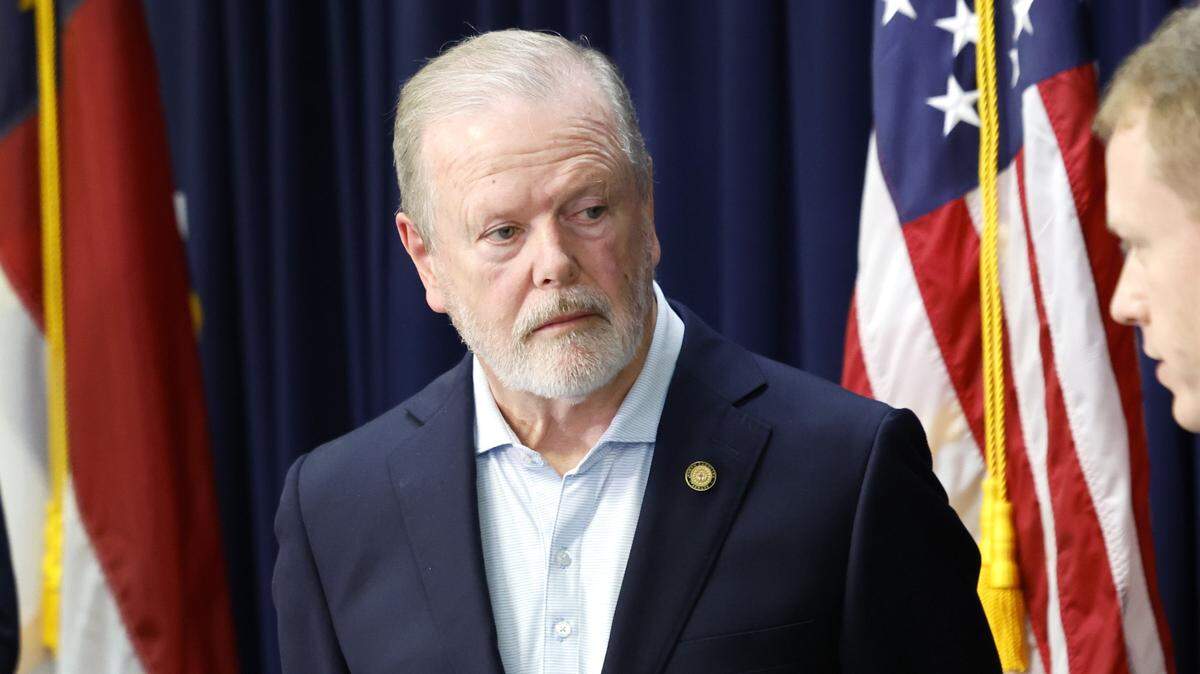
Sen. Phil Berger’s primary loss helps explain why. He will still lead the Senate through the end of the year, but the short session now arrives as a long goodbye. That tends to focus the mind.
It is hard to distill the differences in a $66 billion budget into a few short sentences, but the core dispute here is not that complicated. The grand achievement of North Carolina Republicans over the last decade has been keeping the state fiscally sound while steadily lowering taxes. One way the General Assembly has kept the momentum going is building in “triggers” to the budget. Once the state reaches a certain amount of tax revenue, the income tax rate inches down a bit more.
Berger and the Senate want to preserve those triggers and keep driving the tax rate down. This is an admirable goal, but we’re in a much different economy than we were when the plan was devised. The House is arguing that the trigger formula that once helped manage North Carolina’s finances prudently may no longer fit a fast-growing state facing inflation and new spending pressures.
Speaker Destin Hall gave the clearest public explanation of his chamber’s position in a recent sit-down with WRAL. “Right now North Carolina is a destination state,” he said. “We’ve got a great tax policy, we’ve got a great business environment. People are moving here in droves. We don’t see that we should risk that.”
House leadership sharpened that case this week by circulating an analysis from the Carolina Leadership Coalition, a pro-business conservative group, arguing that the current triggers are poorly calibrated. The idea is not that taxes should never go lower. It is that North Carolina’s current benchmarks are static. They do not adjust for inflation or population growth, which means another tax cut could be triggered even if the state’s real buying power is weaker than the topline numbers suggest.
The outlines of a deal are not hard to see. The Senate should accept the House’s more cautious approach to the tax triggers, and the House should give Berger something real to show for his final year in power by fully backing the N.C. children’s hospital he has championed.
It is a sensible trade. Reset the triggers, hold off on the next round of tax cuts and use the room to make a few lasting investments, including the House plan to raise starting teacher pay to $50,000.
The hospital is the clearest place to start. It has become one of the main symbols of the broader budget fight, but it is more than a bargaining chip. It is one of the few big-ticket items in this whole debate that carries obvious public value and obvious political logic.
Initially, I was skeptical of the need for the hospital, but I’ve started to come around. Right now, North Carolina is sadly a magnet for killing children, as people come from surrounding states for abortions. A new children’s hospital could now make our state a magnet for saving young lives.
Berger does not need one last ideological victory to validate his career. He has already had plenty of those. What would better suit this moment is a budget agreement that protects the state’s fiscal footing while locking in a few lasting priorities.
The politics point the same way. Republican senators certainly do not want to head into campaign season without a budget, especially now that Senate caucus coffers are thinner after the effort to save Berger’s career. Members need something tangible to run on. A governing agreement is more helpful than another season of trench warfare with the House.
This deal would let the House say it acted prudently. It would let the Senate say it preserved the larger arc of its tax legacy while still delivering something concrete for North Carolina. And it would give Berger a chance to leave not just as the architect of an era, but as a leader who knew how to close one.
For a legislature that has spent months staring at the same impasse, that would be a pretty good use of Berger’s long goodbye.
Contributing columnist Andrew Dunn is the publisher of the Longleaf Politics newsletter, which offers thoughtful analysis of North Carolina politics and policy from a conservative perspective. He can be reached at andrew@longleafpol.com.