Q&A: How one group wants to help North Carolina disagree healthier
There’s a lot that divides us these days, but one thing North Carolinians do seem to agree on is just how divided we are in the first place.
A poll conducted by Healthier United, a health care advocacy group, found that 86% of North Carolinians believe the current tone and tenor of political debate is dividing the country and making things worse. Healthier United has recently launched an initiative in North Carolina called Disagree Healthier, which aims to improve public discourse, especially around health care issues.
I sat down with Healthier United CEO Jake Williams to discuss the initiative and its goal to help North Carolinians disagree healthier. This conversation has been edited for length and clarity.
Tell me a little bit about Healthier United and what you do.
Our day job, so to speak, is to improve public health through improving public policy. We began doing this in Colorado about 12 years ago, and now we’ve recently expanded to other states, and North Carolina is at the top of our list. The initiative is called Disagree Healthier, and the reason why we’re doing it is we think that it’s the healthiest thing to do for our democracy, and that it supports the mental health and well-being of us as people within this democracy.
We have a motto in the course of campaigning for the policies that we seek to achieve, which is “no permanent friends, no permanent enemies, only permanent interests.” What that means is that we are willing to partner with Democrats or Republicans or anybody in between, as long as they’re willing to partner with us on our agenda. But the only way you can operate that way is by adhering to a code of conduct that allows for you to partner with somebody in the future, even if you’ve disagreed with them in the past. I’m not trying to say that we have it all figured out, but we’ve learned from mistakes and successes in terms of how we can facilitate disagreements in a way that’s healthier for ourselves and our future prospects to make progress within public policy and even the future of our democracy. So that’s why we’re doing Disagree Healthier in the first place.
What are the moving parts of the initiative? What kind of things are you doing in North Carolina?
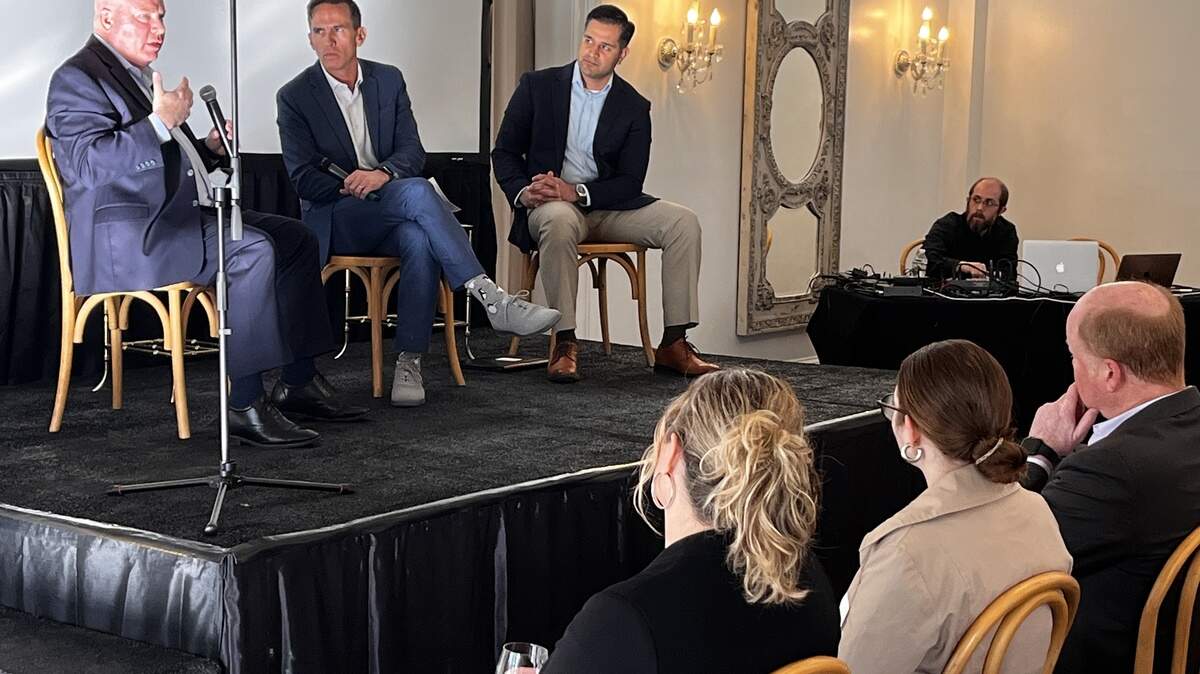
First, we’ve been doing polling to find out what folks think about the status of the political dialogue in the country. Second, while polling can tell us a lot at a population level, we think that speaking to people face-to-face gives you so much more depth and texture. So we traveled across North Carolina, all the way from Asheville to Wilmington, and then back some, speaking to regular, everyday North Carolinians about this same topic. We’re also sharing tips on how you can disagree healthier in your own personal life, on our website. And then finally, we’ve been producing events around the country where we bring together leaders who are willing to disagree in this sort of way. The objective of the events is not to is not to hope to find some sort of consensus on the topic that we happen to be debating, but rather to model what’s possible, to model the behavior that we think we need more of in our democracy, which is to be able to disagree in a way that’s respectful, that maintains our curiosity about other person’s perspective and leaves us in a place at the end where we preserve the possibility of dialoguing again in the future.
You mentioned you have been traveling across the state and talking to people. What have you learned?
Every conversation that we’ve had, literally every single one, I would say that people have expressed concern about the nature of the political debate in our country nowadays. One, for example, was with a young lady, she’s 22 years old, and, frankly, what made me sad about the conversation was that she was skeptical that things would ever get any better. And I’m much older than 22 now, and I recall thinking when I was that age that times may be tough, but I did believe that things would get better. I’ve seen that same sentiment reflected in other young folks that I’ve spoken with. It’s a real cause for concern, and it’s lent weight to our decision to do this in the first place, because I do think that there’s something very fundamental about what we’re doing here.
This isn’t a theoretic issue. I think that each of us, whether we realize it or not, actually plays an important role in our democracy in the course of our daily lives. How we speak to each other, even how we speak to family members, does have a small effect on the way that our democracy operates. It’s been so gratifying doing this work because everybody can relate to this. Everybody’s got a story about a disagreement they’ve had in their personal life, within their friend circle, or in their family life. And I think that most people are interested in how to make it better for their own well-being and for all of our well-being. I’ve heard concern, and I’ve heard an interest in getting better, and I hold that in balance with the reality that a lot of folks, not everybody, but a lot of folks, are skeptical that we can get better, so we just need to work harder.
Many of us want to have healthier disagreements and we want to get along better. But many of us are also guilty of making our discourse unhealthy. How do you reconcile that or see it as a challenge — that a lot of us want a solution, but we’re also part of the problem?
Well, first, I think that we all recognize that it’s easier to yell than it is to truly listen. And I think that when we think about the dialogue online, that reality comes into even starker focus when you consider that yelling, so to speak, gets a lot more traction than listening or thoughtful dialogue. So in some ways, we should all give ourselves a little bit of a break, because the environment in which we’re operating now is more difficult than it was, say, 10 or 20 years ago, to have the sort of debate that would be healthier for our democracy. Disagreeing is a lot like working out. You gotta practice. You gotta flex that muscle in order to get stronger at the gym in the same way that you need to practice disagreeing in a better way to disagree healthier. So one, let’s cut ourselves a little bit of slack here. And two, just recognize that it takes practice to get better.
What is the number one piece of advice that you would give to people about how they can disagree healthier and engage in better political discourse in their own lives?
The number one piece of advice that I would give to folks is to practice. It can be scary. It can be strenuous. But the more I hear heartbreaking stories of how sons don’t talk to mothers anymore, or you lost a best friend over politics, I think the more urgent it becomes for our social fabric, and so if we can all just practice, I think that we can get better.
Is there anything else you want people to know about you and your initiative?
Perhaps the best news out of the initiative is that people all agree that this needs to get better. If you look at the polling that we’ve done, you’ll see that, for example, whether you’re a Democrat or Republican or unaffiliated, the vast majority of people recognize that the current tone and tenor of our political debate is dividing the country, and they want something better. So on the one hand, it’s depressing and concerning that everybody believes that’s where we’re at, but it’s also heartening, and this is backed up by conversations that I’ve had with regular folks, that people are willing to do something to make it better.
You can learn more about the initiative and get tips on how to disagree healthier at healthierunited.org/disagree-healthier.
This story was originally published April 2, 2026 at 10:29 AM.