Drug companies profited from the Big Beautiful Bill. So did Michael Whatley | Opinion
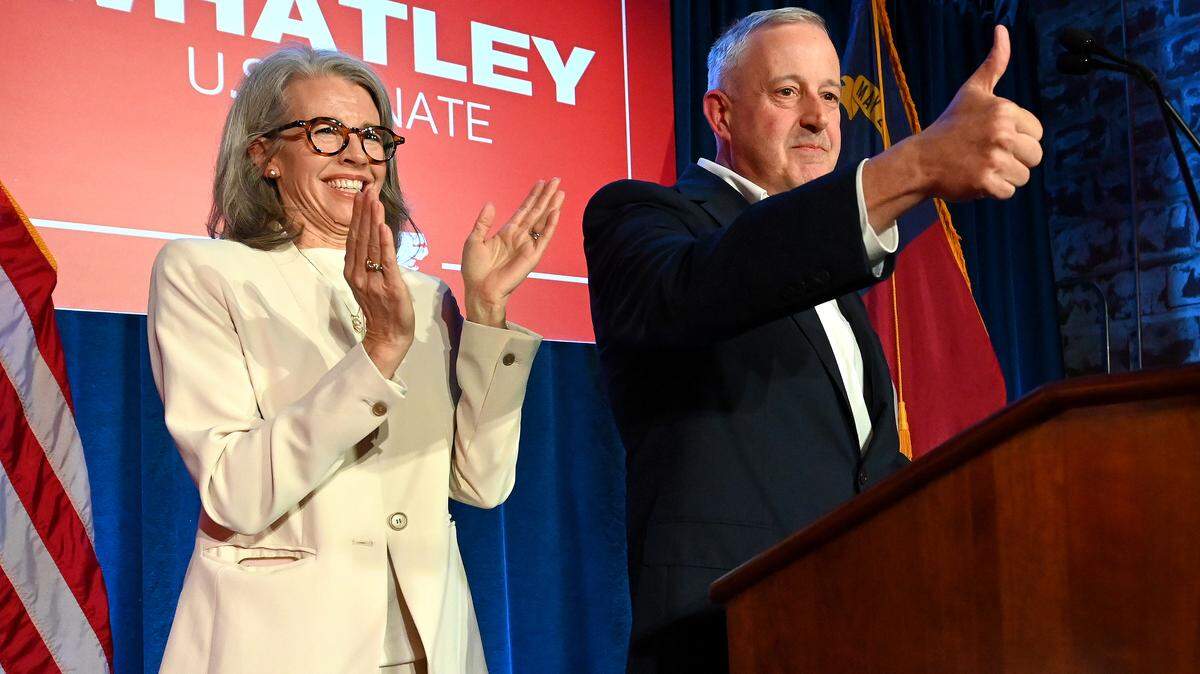
Michael Whatley’s investment portfolio has become a hot topic in North Carolina’s U.S. Senate race as federal lawmakers debate a congressional stock trading ban. For voters, it should be troubling when anyone with power and influence, regardless of position or party, financially benefits from policies they support.
Such is the case with Whatley and President Donald Trump’s signature One Big Beautiful Bill Act. As co-chairman of the Republican National Committee, Whatley helped get the bill across the finish line, and he encouraged North Carolina leaders to support it. But he also may have financially benefitted from its passage.
One provision of the bill weakens Medicare’s drug price negotiation program, which allows the government to negotiate prices directly with pharmaceutical companies for high-cost drugs that don’t have generic alternatives. The One Big Beautiful Bill Act undermines those price negotiations by delaying or exempting more “orphan drugs,” or medications that treat rare diseases, from negotiation. Ultimately, it costs the government billions of dollars in savings and increases out-of-pocket costs for patients while giving a windfall to pharmaceutical companies, as orphan drugs are tremendously profitable.
According to publicly available financial disclosures, which are required of all Senate candidates, Whatley and his family hold investments valued up to $265,000 in pharmaceutical companies that manufacture drugs that are delayed or exempted from Medicare price negotiation. This includes cancer drugs that were once used to treat rare cancers but have since become some of the top-selling cancer drugs in the world.
For example: Whatley and his family have investments valued up to $95,000 into Merck, the manufacturer of Keytruda, one of the most widely used cancer drugs on the market. Keytruda was initially an orphan drug for specific rare cancers, but its use has since been expanded to include more common cancers as well. Under the Big Beautiful Bill, Medicare price negotiation for Keytruda will be delayed at least one year. A single infusion of Keytruda could have an out-of-pocket cost of up to $2,000 for Medicare patients, depending on their coverage plan. Supplemental insurance can reduce those costs, but for millions of Medicare enrollees, their supplemental insurance is Medicaid, and the One Big Beautiful Bill Act’s Medicaid cuts could threaten that coverage.
Financial disclosures also show that Whatley himself has investments valued up to $45,000 in Bristol Myers Squibb, whose cancer drugs Opdivo and Yervoy will also be delayed from Medicare price negotiations. Opdivo is a widely used drug approved for many different cancers. Whatley’s spouse and children have investments valued up to $65,000 in Johnson & Johnson, the manufacturer of Darzalex, a multiple myeloma drug that is now ineligible for price negotiation entirely.
Of course, this isn’t to say that Whatley’s support of the bill was motivated by his or his family’s financial holdings. As co-chairman of the RNC and a major driver of the party’s agenda, his embrace of the legislation and role in its passage was to be expected. But it does illustrate something about politics that many voters loathe: those closest to the political process are rarely harmed by the dangerous and costly policies they support. And oftentimes, they benefit from those policies, while the average Joe is left out to dry. In this case, cancer patients on Medicare could struggle to afford the treatment they need to survive, while Big Pharma and its shareholders profit.
“Like millions of Americans, Michael Whatley is planning responsibly for his family’s future with a diverse investment portfolio —that’s not unusual, controversial, or newsworthy,” Whatley campaign spokesperson DJ Griffin said in a statement. “He supports commonsense reforms requiring members of Congress and their families to divest individual stocks or place assets in qualified blind trusts, because public service should never be about personal profit.”
Former Gov. Roy Cooper, Whatley’s Democratic opponent, has emphasized the fact that much of Whatley’s wealth is tied up in stocks of individual companies. Whatley, to his credit, has voiced support for a congressional stock trading ban, and his campaign has said he would sell his stocks if elected. Much of Cooper’s wealth is also tied up in investments, though it is in mutual funds and brokerage accounts, not stocks of individual companies. Questions have also been raised about Whatley’s investments in oil and gas stocks following military action in Venezuela and Iran.
Whatley may not have been a lawmaker, or even a candidate, when the Big Beautiful Bill was passed last year. But he was a leader with significant sway over the party’s message, image and agenda. The president handpicked him for that role, just as he handpicked him to run for a Senate race that was open only because its current occupant refused to support this very bill. Is Whatley’s investment portfolio a real conflict of interest? Maybe not. But perception matters, especially when it comes to policies that come at a real cost to voters. Many voters already feel like politics is a game that benefits the rich and powerful at the expense of everyone else. If Whatley wants to be North Carolina’s next senator, he should convince them otherwise.
Deputy Opinion Editor Paige Masten is covering politics and the 2026 elections for The Charlotte Observer and The News & Observer.