
Phil Berger’s response to his primary defeat underscores why he lost | Opinion
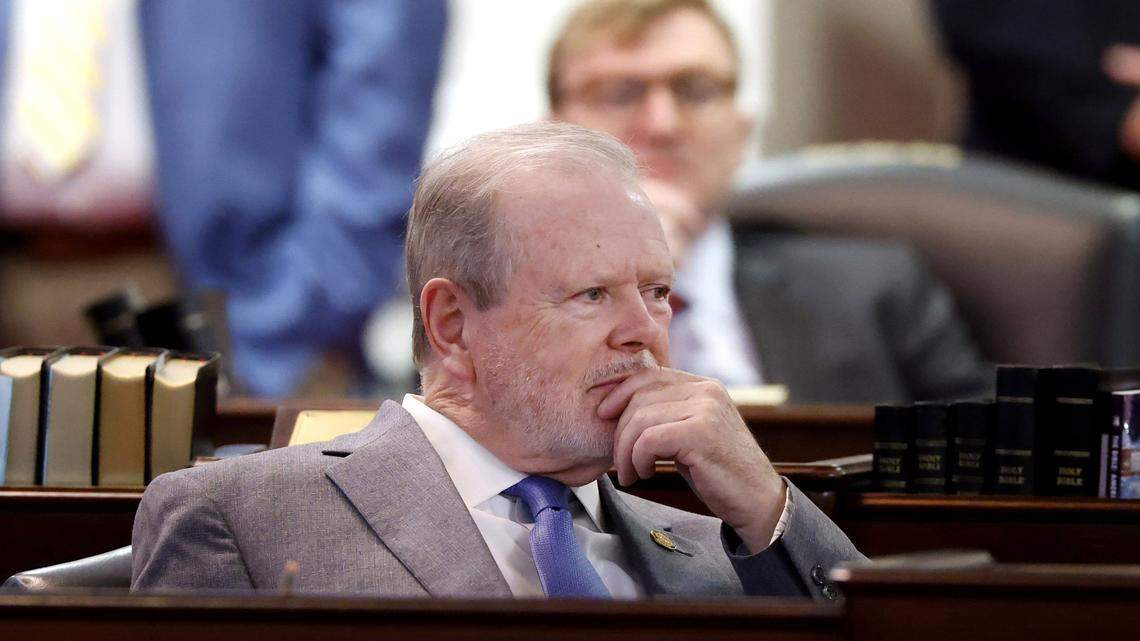
Senate leader Phil Berger doesn’t seem to have learned much from the stunning primary loss that ended his political career.
Instead of acknowledging his own shortcomings, Berger is choosing to pin the blame for his loss on Democrats. When asked what message voters sent him in the primary, Berger responded: “Democrats like to vote in some Republican primaries. That’s the message.”
But Berger’s primary wasn’t a referendum on his ideology. It was a referendum on his leadership, and that kind of flippant attitude toward voters is exactly what cost him the election in the first place. Berger lost because voters in his home county — including many Republicans! — felt neglected and dismissed. He lost because he tried to open a casino that his constituents didn’t want and because voters are growing increasingly frustrated with politicians in both Washington and Raleigh. In the end, his constituents probably realized that having the most powerful politician in North Carolina as their state senator had yielded very little for their district. And as much as Berger may want to attribute that to Democrats, the math says otherwise. Donald Trump won ruby red Rockingham County by 35 points in 2024. Berger lost it by nearly as wide a margin. His dismissiveness now only vindicates voters’ belief that Berger doesn’t take them seriously.
But there’s also a larger problem at play here, which is that Berger seems to fundamentally misunderstand who his constituents are. Even if he did lose because Democrats and unaffiliated voters helped rally against him, so what? They are as much his constituents as anyone else, and their concerns shouldn’t carry less weight simply because they don’t agree with him. In the end, the policies that Berger supports affect everyone in his district, including those who didn’t vote for him, which makes their opinion of him equally valid.
Berger seems to think that spite is the only reason a liberal constituent would vote against him, which is as ridiculous as it is reductive. If you live in Berger’s district and aren’t a Republican, voting in the Republican primary is the only way to have a real say in who represents you in Raleigh. The district is gerrymandered so heavily that the general election doesn’t matter — it’s the Republican primary that really determines the winner. It’s also perfectly legal: North Carolina has a semi-closed primary system, which means that voters registered with a political party must vote in that party’s primary, while unaffiliated voters are free to vote in any primary they choose. If Berger doesn’t want voters to cross party lines in a primary, perhaps he should consider drawing the maps more fairly.
Somewhere along the way, too many politicians embraced the belief that they only represent the people in their own political party. They forget that their district includes the people who don’t vote for them, even if their voices have been drowned out by gerrymandering. It may be a product of polarization, but it’s also a driver of it. Without competitive general elections, lawmakers compete only for the trust and approval of their party’s base. In a state like North Carolina, where unaffiliated voters outnumber everyone else, that’s particularly harmful because it leaves the millions of voters who fall somewhere in the middle feeling like no one represents them at all.
Ultimately, Berger has no one but himself to blame for his loss. Maybe if he spent more time doing things for his district, fewer voters would’ve made a point to vote against him, Republican or not. That, at least, is a lesson that every lawmaker can learn from.
Deputy Opinion Editor Paige Masten is covering politics and the 2026 elections for The Charlotte Observer and The News & Observer.
