
Does cost of living change NC’s dismal ranking on teacher pay? | Opinion
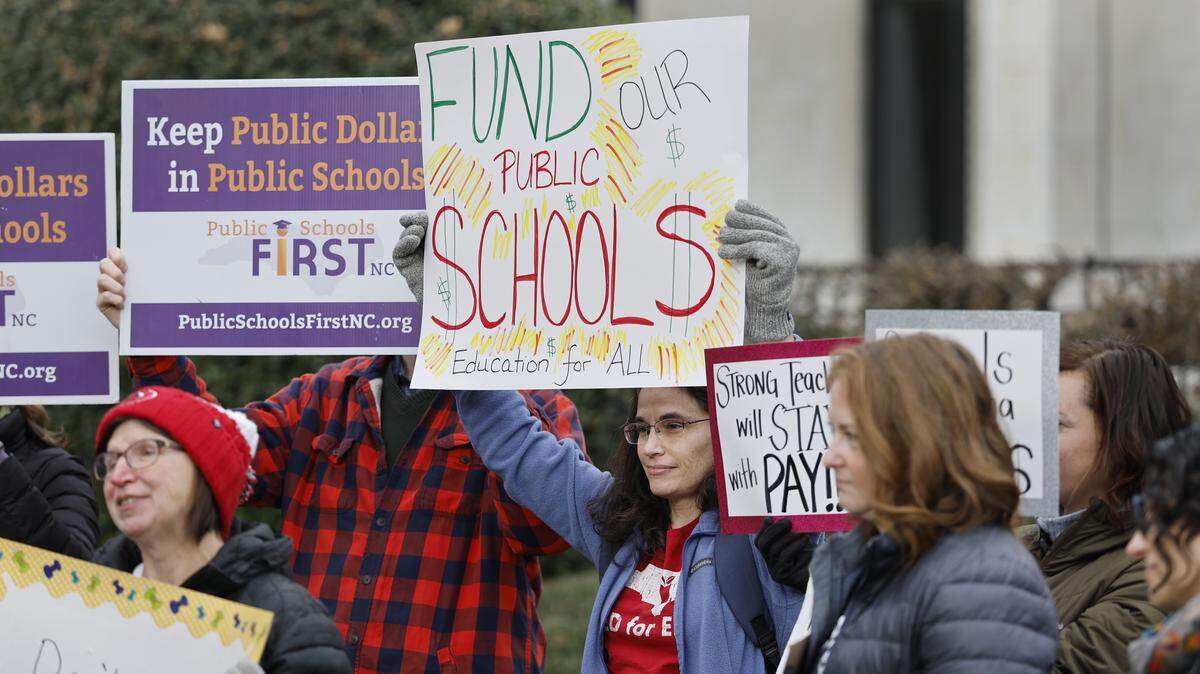
As public-school teachers rally in Raleigh for higher salaries, a different way of evaluating their pay shows just how lousy it is.
By traditional measures, North Carolina’s teacher pay is exceptionally low:
North Carolina ranks 46th among the states and D.C. in average teacher pay, down three notches from 43rd last year.
We pay teachers an average of more than $16,000 a year below the national figure of $76,552.
We rank 50th in school funding per student, $5,630 below the national average. Only Oklahoma spends (slightly) less per student.
We also rank 50th in the percentage of our state’s overall economy that we invest in public schools, an indictment of our priorities.
Our teachers earn over $4,000 less a year than the typical North Carolina worker despite their higher education levels.
·All four of our neighboring states pay teachers more. Georgia’s average teacher pay ranks 22nd nationally, Virginia is 23rd, South Carolina is 31st, and Tennessee is 39th.
Comparatively worse
When it comes to public education, North Carolina is the stingiest state in the neighborhood, and one of the cheapest in America. That’s a long-term threat to our prosperity.
The absolute spending measures are alarming enough. But any particular salary counts more in some states than in others, because the cost of living varies from place to place. So maybe teacher pay in North Carolina isn’t terrible after all?
No, it’s equally terrible (if not worse) in real economic terms. Dividing each state’s average teacher pay by its cost of living – a metric that reflects the buying power of their teachers’ incomes – North Carolina ranks a lowly 47th among the 50 states and D.C. Only Hawaii, Florida, Arizona and Maine pay teachers relatively worse by this real-world measure. All four have higher costs of living than we do.
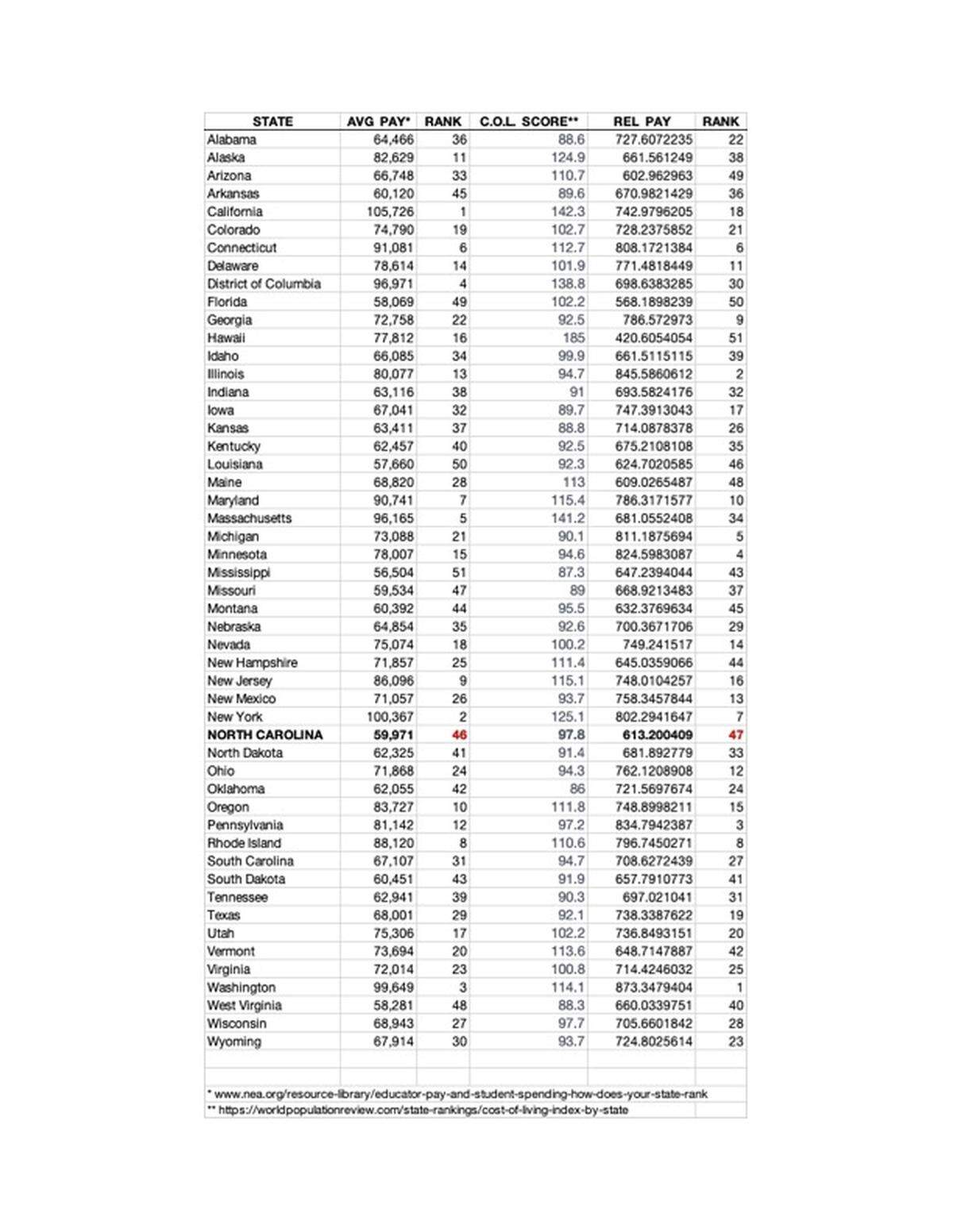
The politically conservative states of Alabama, Arkansas, Indiana, Iowa, Kansas, Kentucky, Montana, Nebraska, North Dakota, Ohio, Oklahoma, South Dakota, Texas, and Wyoming pay teachers more than North Carolina does – and all of them have lower costs of living. That means they do more with less, while we do less with more.
Market forces matter
Partly as a result of our state’s stinginess, we have a 7.4% teacher vacancy rate across North Carolina, and one in 10 teachers quits each year. Teacher turnover is bad for students.
Consider: Public school teachers typically must have at least a four-year degree, demonstrate expertise in their subjects, and be licensed by the state. By contrast, only 36% of North Carolina adults ages 25-64 have a four-year college degree. And yet, on average, less-educated workers out-earn the teachers in charge of instructing our children – the citizens, leaders, and employees of tomorrow.
Conservatives typically embrace free-market philosophies and policies. Teaching might be the only economic sector in which some of them seem irrationally to believe (or to hope) that market incentives don’t apply.
A state that was first in freedom and later first in flight is now nearly last in our investment in public education. Does that reflect North Carolina’s values? Does it reflect yours?
Investing in our future
As lawmakers craft a state budget for taxing and spending over the next year, stabilizing public school funding should be a top priority.
North Carolina’s already-low individual income tax rate of 3.99% is scheduled to drop further next year, to 3.49%, with our corporate income tax rate falling from 2% this year to zero by 2030.
But lower rates would produce less revenue, and public pre-K-12 schools receive 39% of the state’s roughly $32 billion annual funding. So further revenue reductions would hit public schools especially hard when they already lag dramatically.
North Carolina has America’s 13th-leanest overall tax system, according to the conservative Tax Foundation. Partly as a consequence of North Carolina’s budgetary austerity, its spending on preK-12 public education has sunk to harmful levels.
Disproportionately high education spending would come at the expense of other public and private needs. But very low education spending constrains our people and our economy.
Educated citizens are better, more fulfilled contributors. Employers depend on a well-educated, well-trained workforce to thrive. A robust economy, in turn, generates more revenue for education and other essential services.
North Carolina battles daily to attract new businesses, grow existing enterprises, and add 21st-century jobs. High taxes would impede that. So does inadequate public education.
Our state isn’t wealthy, but it’s not poor, either. We can do better – and we should. Leaving our low tax rates where they are would be a good start.
Eisley is a Statesville communication consultant. Reach him at mattheweisley@gmail.com.
This story was originally published May 1, 2026 at 8:57 AM.