
The governor is “hopeful” NC can start reopening this week. His plans may need to change.
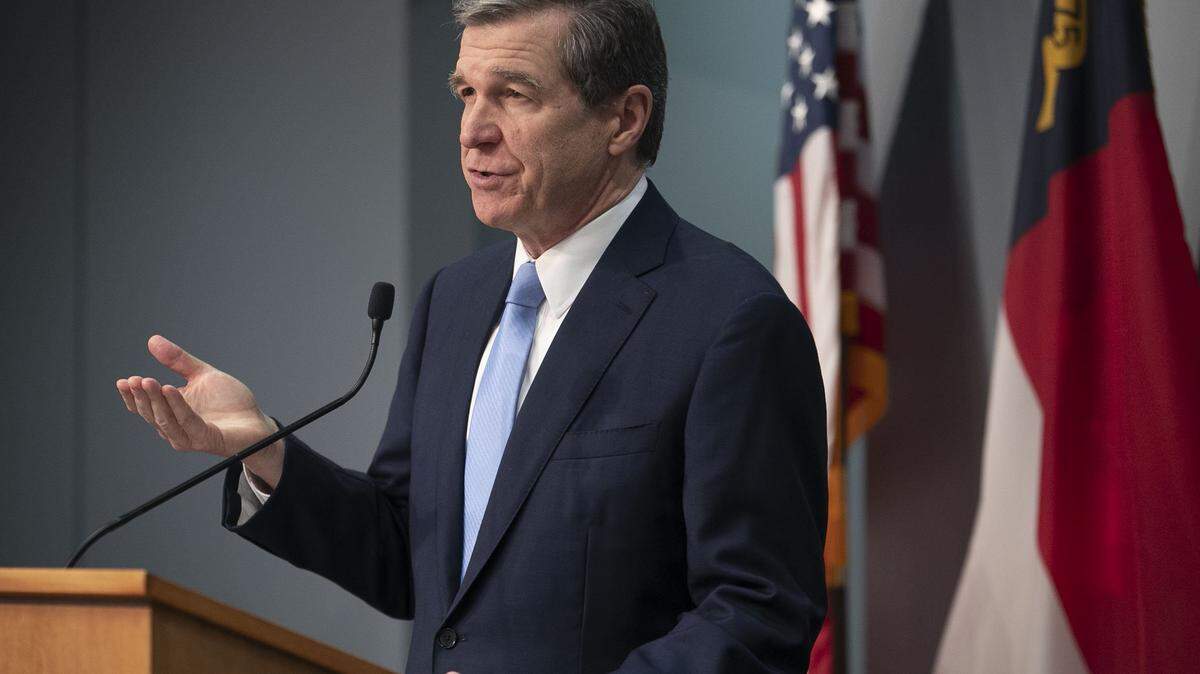
N.C. Gov. Roy Cooper remained hopeful Monday that more businesses will begin to reopen when the state’s stay-at-home order expires May 8. But North Carolina’s current COVID-19 numbers are lagging behind what federal and state guidelines recommend for reopening. The governor might need to adjust his approach to restrictions.
Cooper, in a news conference Monday morning, said he was “still hoping we can get to Phase 1” and that an announcement on specifics could come as early as Tuesday. White House guidelines, however, recommend a downward trajectory over a 14-day period of reported influenza like illnesses and COVID-19 symptoms before states start reopening. Cooper’s own reopening checklist calls for a downward trajectory in new cases, a “continued” downward trajectory in COVID-like illnesses and a 14-day downward trajectory in the number of people currently hospitalized. As of Monday, North Carolina hasn’t appeared to achieve any of those benchmarks.
The numbers aren’t all bad: North Carolina is meeting the metric of a decline in percentages of positive tests, although that might be a factor of people with less-severe symptoms now having more access to tests. But add it all up and the reality is this: Things are not yet getting better in North Carolina. They’re merely beginning not to get worse.
That still may be enough for Cooper to push ahead with reopening. The governor, like others across the country, is facing growing pressure to loosen stay-at-home restrictions and bring relief to workers and business owners. Some of that pressure is coming from a loud but small group that’s miscasting legitimate public health measures as government tyranny, but as the coronavirus continues to devastate local economies, the governor might begin to see cracks in the overwhelming support his measures have received thus far.
Those economic consequences are real, not just political, and the governor is smart to weigh them against the risks of a gradual reopening. How much risk would that bring? There’s no certain answer at this point, as there’s little to no meaningful data or trends from states that already have begun loosening restrictions. It’s notable, however, that despite the president regularly encouraging reopening, the White House’s own public health experts have warned that loosening stay at home restrictions could bring a new rise in coronavirus infections. That includes more people who have preexisting conditions, including younger people.
How can NC protect those people and the population at large while moving forward? Department of Health and Human Services Secretary Mandy Cohen offered a possible preview Monday when she noted that health officials want people to avoid activities that involve contact with others for more than 10 minutes at a time. She also noted that indoor activity carries a higher risk than outdoors, as do public activities that involve sitting for more than 10 minutes.
That seems to fit with Cooper’s Phase 1 plans to reopen all parks and retail stores such as clothing stores, sporting goods stores, book shops, and houseware stores. Church services, hair salons and other activities that involve sitting for more than 10 minutes — even at a social distance — will likely have to wait for phase 2.
Those measures make sense, if they’re supported by COVID-19 benchmarks the governor says North Carolina needs to meet. If N.C. falls short this week, we urge Cooper to continue to use caution in loosening restrictions, perhaps by allowing more outdoor activities or requiring face coverings for customers and/or employees in some businesses.
North Carolina has avoided the worst of COVID-19 thus far, but that’s because its governor has been both aggressive and thoughtful in slowing the spread of the virus. This next phase calls for even more of the latter.
This story was originally published May 4, 2020 at 2:02 PM.