
Did Charlotte police ‘kettle’ protesters? There’s a more important question to ask
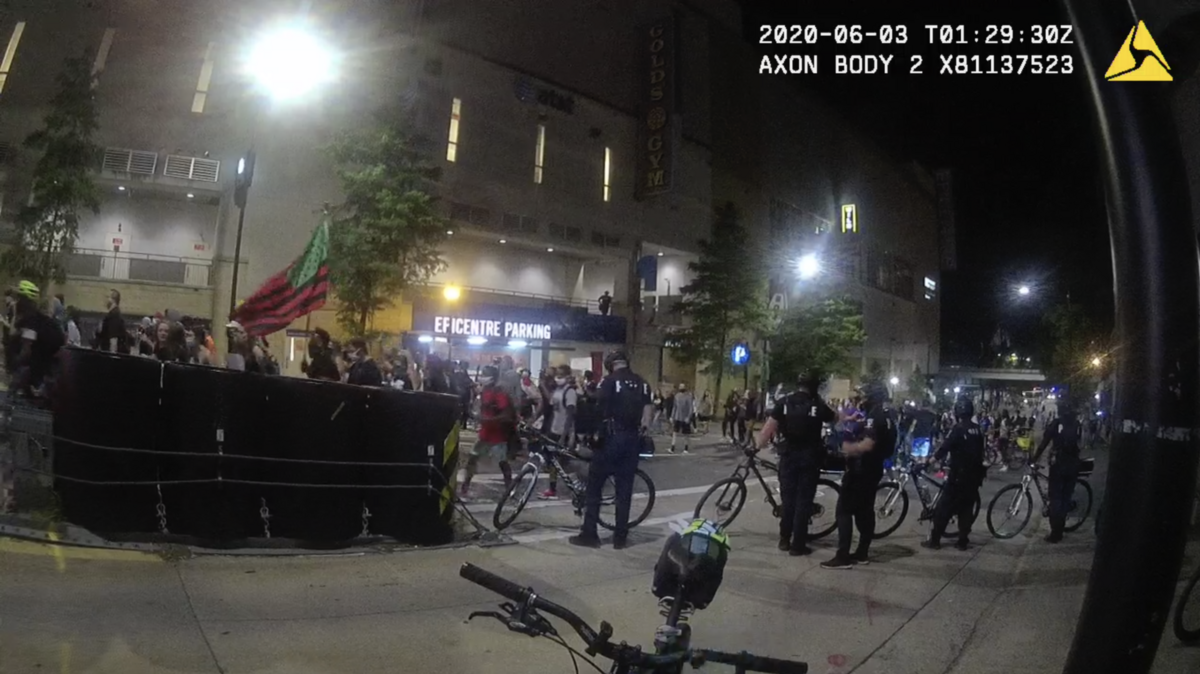
Did Charlotte-Mecklenburg police offers “kettle” a large group of George Floyd demonstrators in uptown on June 2 before tear gassing them? It’s a question that might never be fully answered. It’s also not the most important question to ask.
Video of the protest released by CMPD on Wednesday shows that police did steer protesters into a bottleneck on Fourth Street on the fifth night of Floyd demonstrations. CMPD officers on the video appeared to believe they left an escape route - something the State Bureau of Investigation affirms - but smoke from the chemical agent blocked that path, effectively and cruelly cornering protesters.
A more critical question remains from that night: Why did police have and execute a plan to tear gas protesters who, at that moment, were no danger to themselves or officers? The answer to that question, and the response from Charlotte City Council and Mayor Vi Lyles, will be crucial to addressing higher-level issues with CMPD and paving a path for new chief Johnny Jennings to restore faith in the department.
Jennings and CMPD already have taken early steps in that direction. The department disciplined an officer who on video expressed satisfaction at the tear-gassing that was about to happen to protesters. Additionally, all officers, including those in riot gear, are now required to wear body-cameras.
Importantly, CMPD also changed a policy that allowed officers to declare the peaceful group it tear-gassed as unlawful because earlier in the evening, members who may have been in that group threw objects at police. Now, according to a city official who spoke to the Editorial Board, a previously unlawful group can “reset” to lawful if it continues to march on and becomes peaceful again.
That’s a promising change, but it also is attaching code to what common sense already should have told police - that there was no immediate reason to tear gas the demonstrators moving up Fourth Street. The fact that chemical agents were used anyway - and that at least one officer was gleeful about it - speaks to a larger issue of police not distinguishing between adversaries and members of the public they are supposed to serve. It’s a complaint CMPD has long received from members of minority communities.
The policy change also raises a larger problem with CMPD and demonstrations - people too often don’t know what the department’s policies are. CMPD has declined to offer specifics when questioned by Charlotte Observer reporters, leaving people at least somewhat in the dark about how they or police are required to behave. It’s also hard to improve policies if police are reluctant to reveal them.
That’s where the mayor and city council come in. Charlotte leaders have long allowed CMPD to operate in isolation instead of demanding the transparency and accountability necessary to improve the force. Lyles, who was critical of police after the June 2 protests, was inexplicably quiet when video was released Wednesday.
That needs to change. For starters, the mayor, City Council and police should address whether tear gas is an appropriate method of crowd control, and if not, what alternatives are safe and effective. Some U.S. cities, including Seattle and Denver, have restricted the use of chemical agents for crowd management, allowing it only for situations in which lives are an imminent danger.
The mayor and council members also need to pursue a fuller, transparent exploration of CMPD policies regarding officers and use of force. For too long, CMPD has been allowed to fence itself off from the public. That diminishes the very good work officers do, and it gets in the way of the relationships CMPD needs to cultivate with minority communities. Until Charlotte’s leaders ask the right questions, little will truly change.
This story was originally published August 30, 2020 at 12:00 AM.