
Is a powerful Democrat wavering on NC redistricting reform? We asked him.
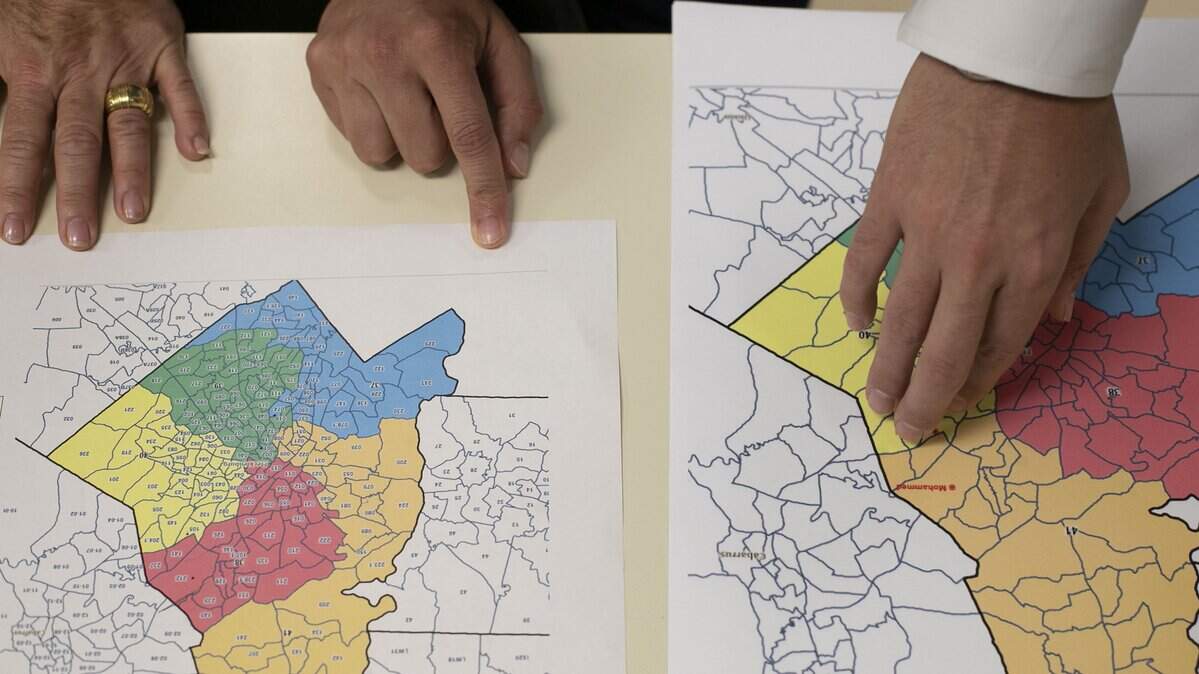
A political truth that transcends party: The fastest way for Democrats or Republicans to lose their appetite for independently drawn legislative districts is to win an election and gain the power to draw maps themselves.
It was true in North Carolina a decade ago when Republicans lost interest in independent redistricting — and Democrats suddenly became big fans — following the GOP takeover of the General Assembly. Will Democrats become less enthusiastic about reform if they regain a majority in the NC House and Senate next week?
More than a dozen Democratic lawmakers and candidates told the Editorial Board no during interviews this election season, and not one spoke out against independent redistricting. That’s good. But a quote from the office of a powerful Democratic state senator last week surely raised the eyebrows of fair map proponents across North Carolina.
In a WRAL report on redistricting, a spokesperson for Democratic Sen. Dan Blue was disturbingly imprecise on what kind of reforms he wanted. “At this juncture, we can’t say for sure how redistricting would proceed in the next legislative session if one or both chambers flip,” Blue spokesperson Leslie Rudd said in an email. “We need to cross that bridge when we get to it. Short of a constitutional amendment, we are committed to a more transparent legislative process with actual public input that puts these guidelines into practice.”
Legislative process? That’s not what Democrats have demanded or what this Editorial Board has long advocated for with regards to fair maps. We believe that an independent commission — with no lawmakers — offers the best chance to wean politics out of district drawing. That’s also a position that Blue has taken. “The only way that you’re going to eventually get a system that does not [employ] political gerrymandering or racial gerrymandering … the only way you’re going to move away from that, is by an independent redistricting commission,” Blue said in 2016.
Has he changed his mind? No, he told the Editorial Board this week. “I’m supporting an independent commission for redistricting,” he said. “But the devil is in the details.”
Among the details to be sorted out, he said, is to get an amendment on the ballot that would change the North Carolina Constitution, which currently requires that the General Assembly revise new legislative districts after each census. Blue agreed, however, that the constitution doesn’t require lawmakers to craft the maps themselves; that task could be appointed to others before being approved by legislators. Would Blue support an independent commission to draw the next set of districts once North Carolina receives the results of the 2020 census? He said yes.
Other details to be sorted out include how the commission is appointed, what criteria lawmakers could dictate of new maps (such as no splitting small towns into different districts) and whether lawmakers can address concerns with the finished maps a commission provides.
The first issue — makeup of commissions — is indeed tricky. There should be an equal number of Democrats and Republicans, for starters. Lawmakers, of course, shouldn’t be on any redistricting commission. Neither should political insiders. Does that mean the commission will be truly independent? Probably not. But the goal is sift out as much politics as possible.
As for legislators having influence over the maps? Lawmakers should resist the temptation to set guidelines on geography or other criteria, which could bring political benefit. They also should not tinker with maps once an independent commission hands them over. The overriding principle should be this: legislators shouldn’t be involved in how their maps are drawn, other than the thumbs up or down vote that the Constitution currently requires. Otherwise, it wouldn’t be an independent process.
We believe most Democrats are behind that notion. We’re glad Sen. Blue appears to still support it.
BEHIND THE STORY
MOREWhat is the Editorial Board?
The Charlotte Observer and Raleigh News & Observer editorial boards combined in 2019 to provide fuller and more diverse North Carolina opinion content to our readers. The editorial board operates independently from the newsrooms in Charlotte and Raleigh and does not influence the work of the reporting and editing staffs. The combined board is led by N.C. Opinion Editor Peter St. Onge, who is joined in Raleigh by deputy Opinion editor Ned Barnett and in Charlotte by deputy Opinion editor Paige Masten. Board members also include Observer editor Rana Cash and News & Observer editor Nicole Stockdale. For questions about the board or our editorials, email pstonge@charlotteobserver.com.