
North Carolina’s quiet, consequential LGBTQ victory
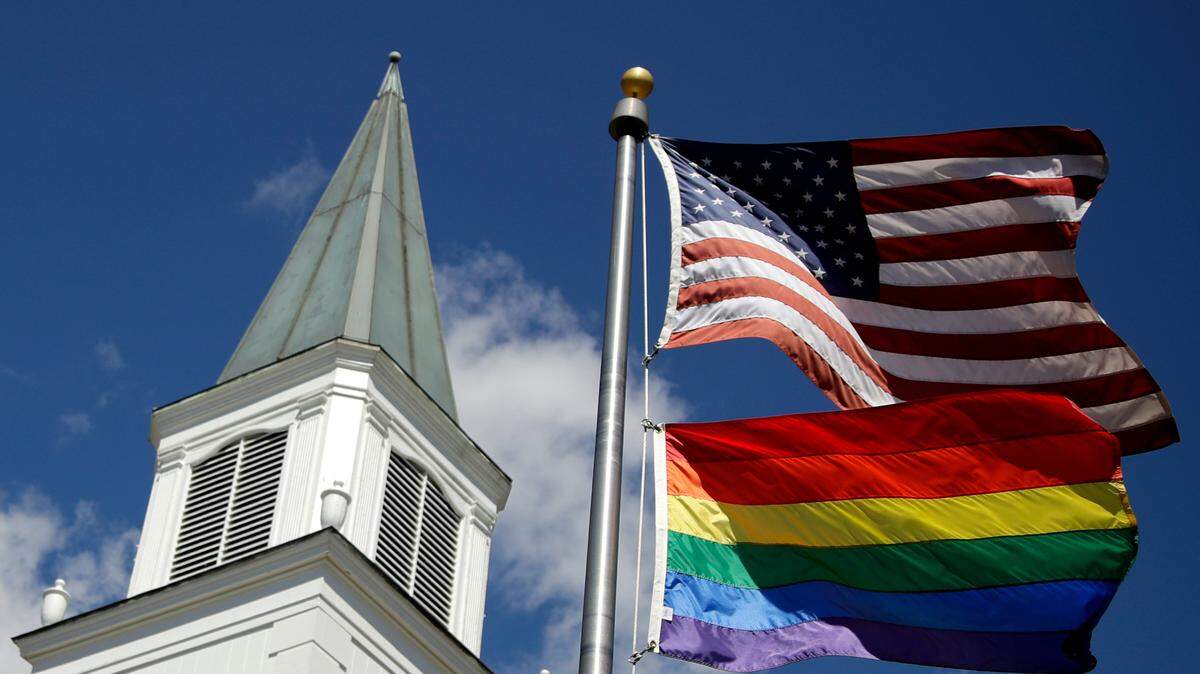
This week, three North Carolina municipalities — Hillsborough, Carrboro and Chapel Hill — passed ordinances protecting members of their LGBTQ communities from discrimination. They were the first non-discrimination ordinances in North Carolina since a provision in a state law barring such measures expired in December. That law had replaced HB2, the discriminatory and destructive measure Republicans passed in 2016.
Four years later, Republicans don’t want another fight. A spokesperson for Senate leader Phil Berger told the Editorial Board Wednesday that Berger and Republicans have more important items on their mind. No Republican lawmakers said otherwise. A chapter in North Carolina history has ended.
This is what progress looks like sometimes — not a splashy legislative vote or a landmark court decision, but a quiet acknowledgment that things are at least a little different now. That’s what happened this week in North Carolina, and next week, the Durham City Council and Orange County Board of County Commissioners will likely pass similar non-discrimination ordinances. “The tides are changing,” Equality North Carolina Executive Director Kendra R. Johnson said in a statement Wednesday, adding: “We hope other cities and towns across our state will be encouraged by these victories and do the right thing for their own citizens in the weeks ahead.”
In Charlotte — where the HB2 fight began four years ago — a new ordinance might be slower to arrive. Some City Council members have been reluctant to jar the city’s fragile relationship with the legislature, especially as they prepare to ask for taxing authority for a multi-billion dollar transit plan.
GOP lawmakers also aren’t spoiling for a confrontation. That’s a pragmatic choice, certainly — with a Democratic governor and override-proof Democratic numbers in the legislature. Republicans weren’t going to succeed with another HB2 or anything close to it. Still, Republicans could have fought the non-discrimination fight just to tell their constituents they did. A sure loss is sometimes besides the point politically.
But despite the expected call for a fight from the North Carolina Values Coalition, neither Berger nor N.C. House Speaker Tim Moore signaled an impending fight this week with their remarks to open the legislative session. Moore may have signaled the opposite, saying: “Above all, we are committed to a system of government that represents justice for all North Carolinians. Every person who calls our state home is represented here. They are each created equal with the same rights.”
Is that a new direction for N.C. Republicans? In the years since HB2, at least some GOP lawmakers have indicated regret for the legislation that tarnished North Carolina and cost it significant revenue. It’s possible Republican leaders have realized that our state’s discriminatory posture was bad for the bottom line. It’s also possible that they, like so many others, have simply realized such policies are wrong.
Our country has made remarkable progress in an extraordinarily short time on LGBTQ rights. Just 20 years ago, not one state, conservative or liberal, allowed LGBTQ people to marry. Just 10 years ago, there was not one gay or lesbian member of the U.S. Senate. Now such milestones are hardly noteworthy. Gays and lesbians marry in all states, thanks to the U.S. Supreme Court. They hold public office, including in North Carolina’s General Assembly. If not for the HB2 fight that preceded it, this week’s non-discrimination ordinances would likely have generated little public stir.
Certainly, there are real battles ahead for LGBTQ advocates, including issues involving religious freedom and the rights of transgender people. Federal courts and the U.S. Supreme Court are starkly more conservative after Trump administration appointments. The journey toward equality will probably be filled with more dips and disappointments.
But in North Carolina this week, local governments moved forward and Republicans moved on. It was the right decision. It was another quiet step. It was progress.
BEHIND THE STORY
MOREWhat is the Editorial Board?
The Charlotte Observer and Raleigh News & Observer editorial boards combined in 2019 to provide fuller and more diverse North Carolina opinion content to our readers. The editorial board operates independently from the newsrooms in Charlotte and Raleigh and does not influence the work of the reporting and editing staffs. The combined board is led by N.C. Opinion Editor Peter St. Onge, who is joined in Raleigh by deputy Opinion editor Ned Barnett and in Charlotte by deputy Opinion editor Paige Masten. Board members also include Observer editor Rana Cash and News & Observer editor Nicole Stockdale. For questions about the board or our editorials, email pstonge@charlotteobserver.com.
This story was originally published January 15, 2021 at 7:29 AM.