
To raise money for roads and bridges, NC should try this novel approach
Paying for roads
Regarding “NC Republicans question how governor plans to pay for road repairs as state goes green,” (Jan. 25)
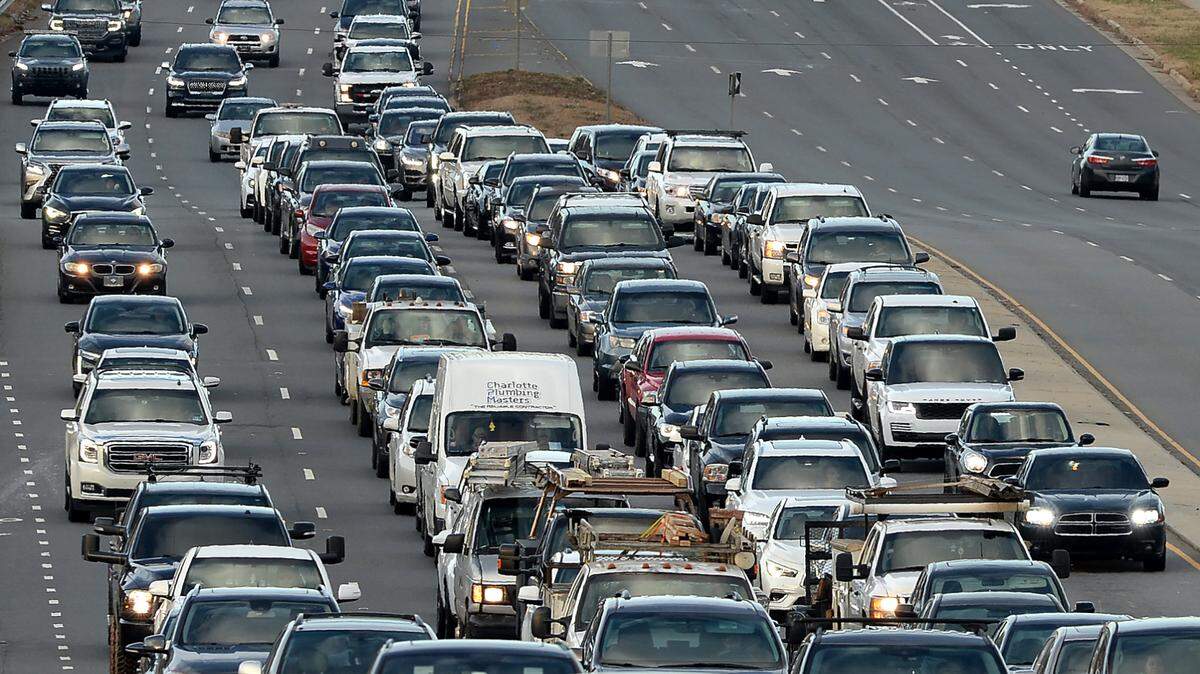
Clean energy director Dionne Delli-Gatti seemed to welcome public input to the dilemma of how the state can pay for much-needed bridge and road repairs. One suggestion is to have a sliding scale by vehicle weight.
Heavier vehicles put more stress on bridges and roads, causing more wear and tear on them than lighter ones. Instead of raising vehicle registration fees by energy type (e. g., electric vehicles vs. gas vehicles) it may be more fair to raise registration fees by the weight of vehicles.
The “gas tax” may no longer be appropriate. If the goal is to raise funds for bridge and road repair, then the strategy to accomplish this should look to causes of the most damage. Call it a damage/maintenance tax.
Jo Ann Lee, Charlotte
Charlotte trees
Regarding “The reason Charlotte’s grand tree canopy goal didn’t stand a chance,” (Jan.25):
Trees clean the atmosphere and control flooding, erosion and water pollution, calamities usually restored with taxes. Could we persuade landowners to plant trees by offering inspections by arborists assuring safety during high winds? Trees also provide habitat. Why choose to live in a sterile landscape? E.O. Wilson, a passionate advocate for biodiversity left us with his opinion — allowing the world to descend into emptiness would be evil. It is not that way now. We can combine growth and a nurturing environment. Start by reclaiming the city parks department and expand park land before we speed recklessly into the future.
Christie Benoit, Charlotte
Trees vs. growth
North Carolina does not seem to prioritize stricter rules to protect its beautiful trees — and developers think it is too costly to save them. But a “fledgling aviation startup” (Boom Supersonic ) with plans to build a faster jet by 2032 received an incentive package worth $121.5 million from the state and Guilford County. The article said “House Bill 334 set aside almost $107 million to prepare up to 1,000 acres for a manufacturing plant.”
So how many trees might be destroyed on 1,000 acres for a company that hasn’t even produced a prototype? It’s not that I’m against growth, but at what price and for whose benefit? And whose loss?
Judy Hartley, Charlotte
Juli Ghazi
The views expressed by Juli Ghazi in the interview in the Jan. 24 Observer raise several additional questions. Is it OK for someone to spread the COVID virus to others because of the personal decision not to get vaccinated and take other precautions? In the same vein, is it OK to overburden the health care system because of the same personal decisions? Ultimately, is total freedom of personal choice compatible with a harmonious, civilized society?
Henry Anderson, Cornelius
Helping refugees
The task presented to Catholic Charities in settling refugees is immense. While providing temporary housing to a young Afghan couple I witnessed the staff’s dedication to tackle problems brought on by extreme difficulty finding housing and by a population that is severely handicapped by language. Few have English skills. The problem is exacerbated by the difficulty finding interpreters.
Even knowing English, the frustrations are many. HIPPA laws and implications of COVID restrictions are only a few of the topics that require advanced understanding.
My first thought when I saw the article criticizing the efforts was what a shame if this inhibits peoples’ financial support of this tremendous institution and mammoth effort.
Joni Groomes, Charlotte
Book bans
Regarding “Holocaust novel ‘Maus’ banned in Tennessee school district,” (Jan. 28) and related articles:
A number of folks are so busy trying to protect our youth from “inappropriate language” and an illustration showing nudity that they are trying to burn bestseller books describing tragedies that actually took place.
Are they unaware of the graphic violence, sexual situations and vulgar language seen and heard on our television screens and at the movie theaters?
Perhaps they should get their priorities straight and let high school upper class students learn history from factual information, rather than a false, glossed over version. A competent history teacher would be a great aid to these students learning history as it actually happened rather than from some media producer’s imagination.
Noel A. Triplett, Charlotte
Voter subversion
A greater threat to democracy than voter suppression is voter subversion, which consists of actions to interfere, tamper or destroy votes that don’t reflect a desired outcome. Fortunately, after the 2020 presidential election state officials held the line against efforts to overturn results. An extreme example of voter subversion was attempted Jan. 6, 2021. Now GOP legislators in a number of states are advancing bills to appoint and authorize partisan election officials to overturn election results in defiance of popular will. Only the federal government can uniformly safeguard the elective franchise from efforts to subvert our most sacred right as citizens. All voting should be safe, free, transparent and secure from subversion.
Joseph Salerno, Charlotte
BEHIND THE STORY
MOREHow do I get a letter published?
The Charlotte Observer publishes letters to the editor on Sunday most weeks. Letters must be 150 words or less, and they will be edited for brevity, clarity, civility, grammar and accuracy. To submit a letter, write to opinion@charlotteobserver.com or visit our letters submission page.
What are you seeking when you choose letters?
We’re seeking a variety of viewpoints from a diverse group of writers.
What must I include?
You must include your first and last name, city or town where you live, email and phone number. We never print anonymous letters. If you’d like for us to consider publishing your photo, please include one.
How often can I have a letter published?
Every 30 days. But you can write as often as you’d like.