
For Black History Month, reverence at the National Civil Rights Museum
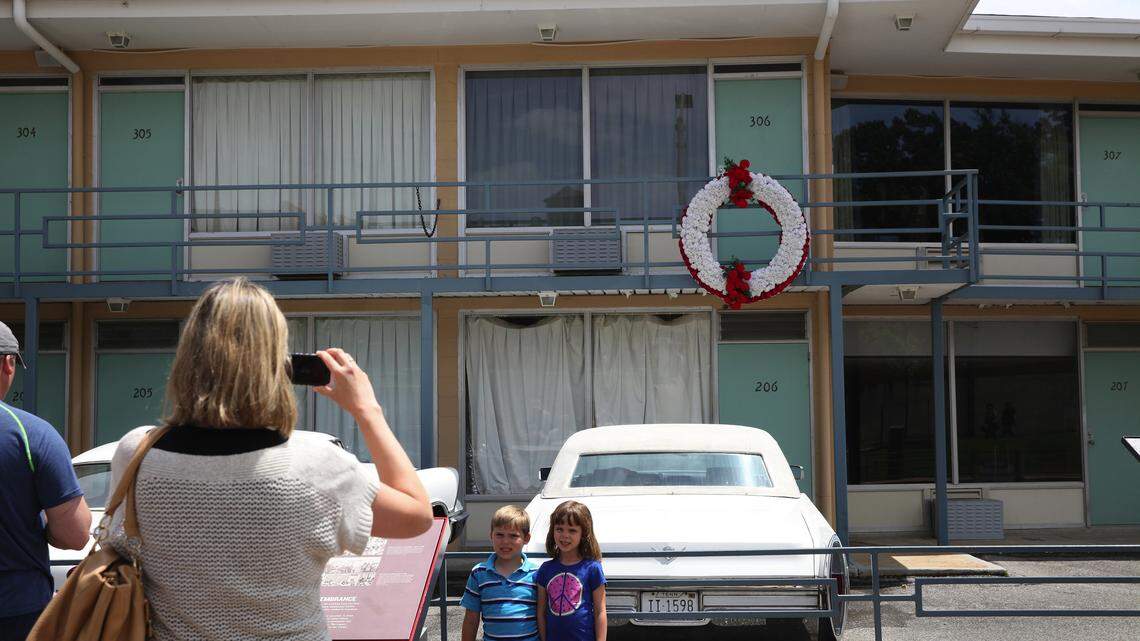
Courage, determination, faith and hope. These were clearly visible to me in the exhibits and photographs of black Americans during my recent visit to the National Civil Rights Museum in Memphis. I was so moved standing in front of the Lorraine Motel where Rev. Martin Luther King Jr. was shot and killed by a despicable man. Walking through the museum, I felt such reverence; I wanted to kneel and weep. I, like so many others, had nothing to do with the atrocities of that time. But those who suffered are our American brothers and sisters, all created by God.
King said, “The good neighbor looks beyond the external accidents and discerns those inner qualities that make all men human and, therefore, brothers. ... We must live together as brothers or perish together as fools.”
How many of us think of what Black History Month, observed throughout February, means and why we celebrate? I asked a few friends what it means to them.
“As a black woman, I often wonder if white folk have a clue of what it truly means to be black in America,” Betty Gregory told me. “Black History Month offers non-blacks the opportunity to spend real time with black Americans and see what it’s like. Some of my best friends are white, and we have spent quality time together in each other’s homes. I’ve broken bread, shared tears and laughter with them. They get me and I them, there is no topic we can’t talk about and still love each other. I know it can be done, but there must be a willingness to get honest and do it.”
“The significance and purpose of Black History Month is to educate and inform all ethnic cultures of the African diaspora’s struggles from the transatlantic slave trade to freedom,” said Derek L. Partee, the Republican vice chair in North Carolina’s 12th Congressional District. “I am four generations removed from slavery. My maternal ancestors were owned by E.P Simons of Bertie County, N.C., and my paternal ancestors were owned by Squire Boone Partee, of Panola County, Miss. Knowing my family history of servitude to freedom gives me a strong sense of self-pride that reflects in my successful accomplishments as an American.
Brandon Pierce, a Republican who plans to run for Charlotte City Council this year, said: “Black History Month is so much more than a reflection of history. It’s a testament to the future. It’s a time where we can use the lessons of the past to give inspiration to the present day. It’s a time where we remember that our nation is always at its best when we put our hope in the unique value of all individuals.”
It’s important we fully understand our history, the good and the bad. We must become knowledgeable of what black Americans went through during the Jim Crow period. We must show empathy and build relationships if we are to experience healing in America. Although I am encouraged by America’s progress in some areas, such as the lowest-ever unemployment rate among black Americans, hurt, anger and resentment remain.
Our country needs healing. I’ll defer to what Almighty God says about it in 2 Chronicles 7:14:
“If my people, which are called by my name, shall humble themselves, and pray, and seek my face, and turn from their wicked ways; then will I hear from heaven, and will forgive their sin, and will heal their land.”
This story was originally published February 20, 2019 at 5:09 PM.