Why Roy Williams’ UNC retirement still echoes amid Tar Heels’ coaching search
AI-generated summary reviewed by our newsroom.
- Roy Williams retired in 2021, saying he no longer felt he was the right coach.
- UNC is preparing to look outside the 'Carolina family' for coaching hires.
- Transfer portal and NIL reshaped recruiting, prompting new leadership needs.
READ MORE
UNC basketball coach search
UNC basketball coach Hubert Davis coached the Tar Heels for five seasons but was let go after they were defeated in the first round of the 2026 NCAA Tournament. On April 7, the university hired former NBA coach Michael Malone. Here’s ongoing coverage of North Carolina’s coaching transition.
Expand All
The question caught Steve Kirschner off guard both times Roy Williams asked it.
The first time came March 30, 2021, when Williams called Kirschner to inform him he was retiring. The second time came the following night, just a day before the April 1 news conference in which Williams would announce he was stepping down. Kirschner, UNC basketball’s longtime communications director, sat in the living room at Williams’ Chapel Hill home. The two of them reviewed his retirement statement, anticipated questions he may receive from the media at the impending press conference and rehearsed answers.
At some point during that review session, Williams looked over and asked: “Aren’t you gonna try and talk me out of it again?”
He wouldn’t. Not this time. As Williams had already decided, it was time.
The Hall of Fame coach — both in private and public — didn’t blame the sport, or the players, or the changing landscape. He turned inward, the way he always had.
Williams didn’t think he was getting through to his players the same way. He didn’t think he was pushing the right buttons. He didn’t think he was the best man for the job anymore.
“Coach,” Kirschner recalls telling Williams in his living room that night, “you’re just being way too hard on yourself.”
Maybe he was. Or maybe he had a sense of what was coming next.
.JPG "RAL__88I7338 (3).JPG")
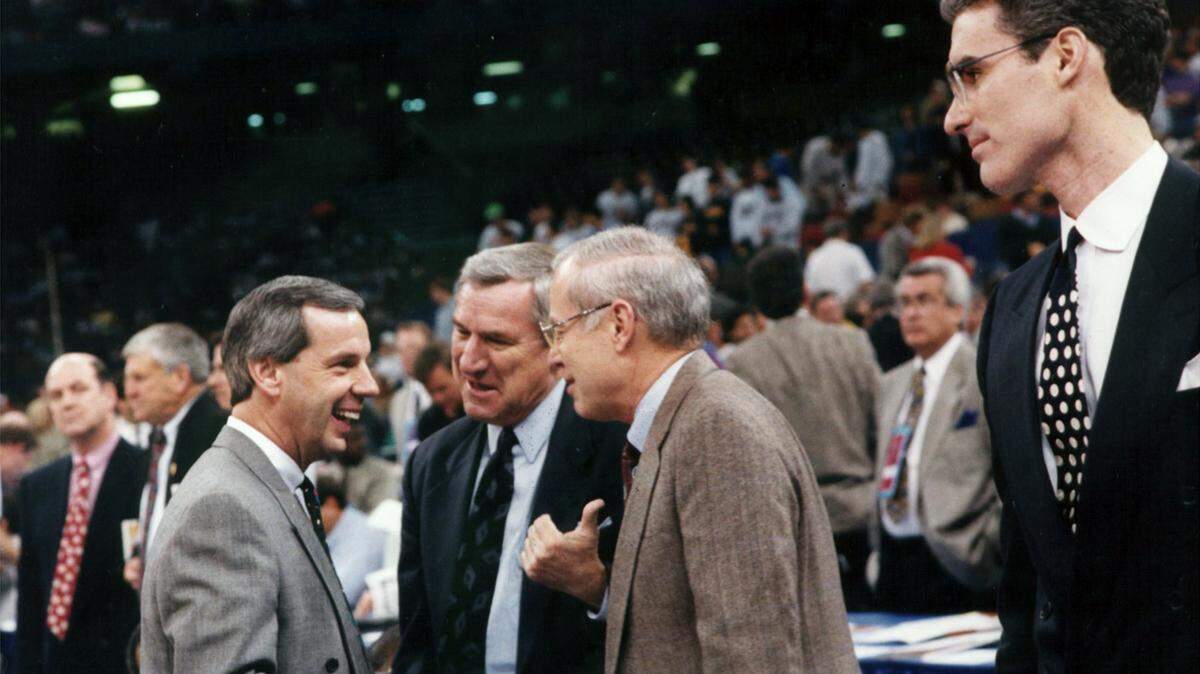
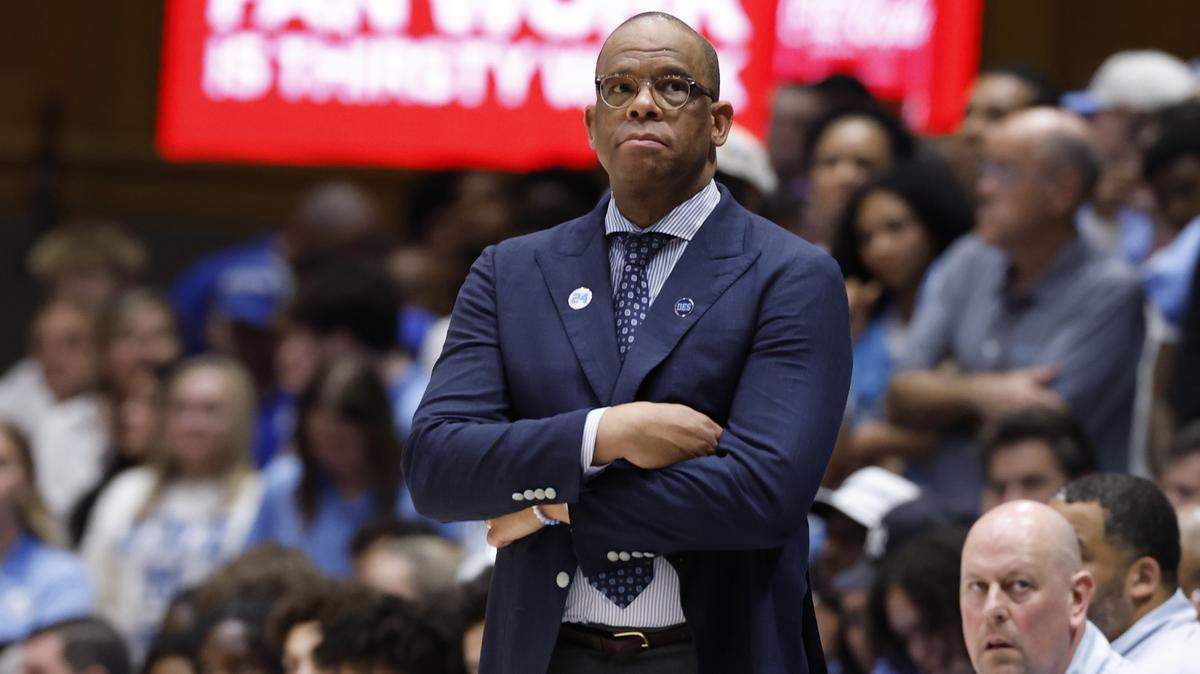
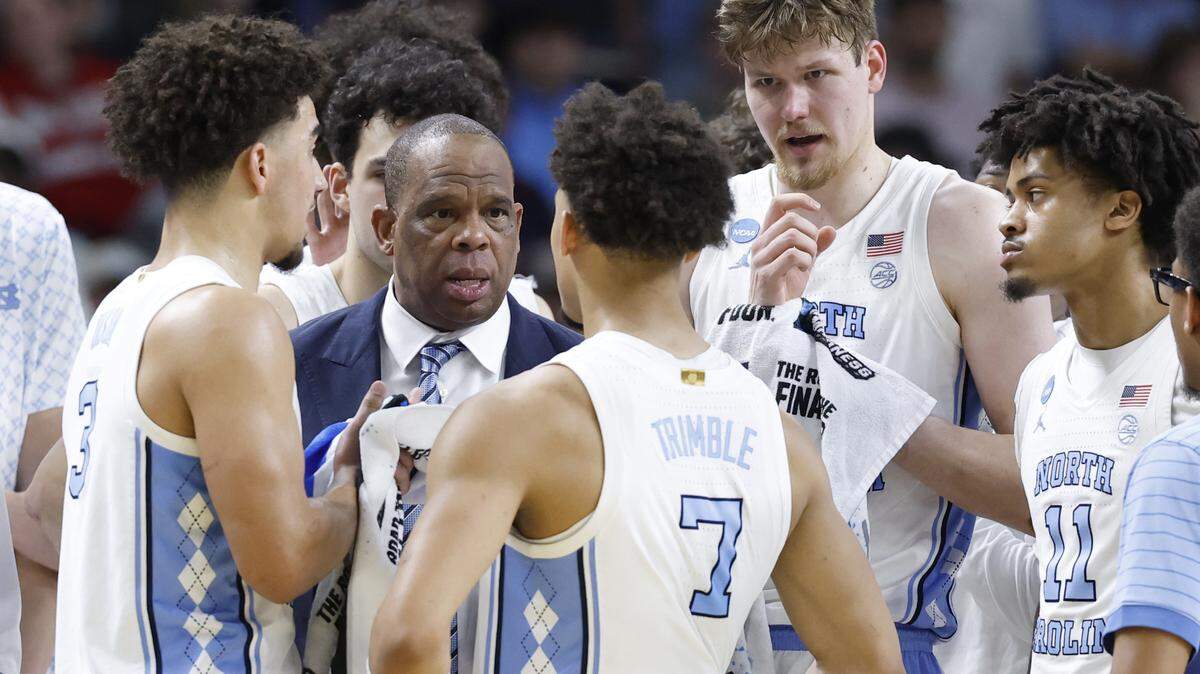
Five years later, a similar tension sits at the center of North Carolina’s current coaching search. UNC men’s basketball built its identity on continuity — from Dean Smith to Bill Guthridge to Williams and others — but for the first time in generations, it is preparing to look outside the “Carolina family” following Hubert Davis’ firing.
In a sport reshaped by the transfer portal and NIL, the question is no longer simply who best understands the past, but who can best navigate the future.
That much was true five years ago, and continues to ring true now.
“Heck, I’d like to coach for 30 more years,” Williams said on April 1, 2021. “But I just don’t think I’m the right guy.”
‘I didn’t get it done’
The decision that became public on April 1, 2021 — a date many fans initially hoped was a simple April Fool’s prank — had been building for months, maybe years.
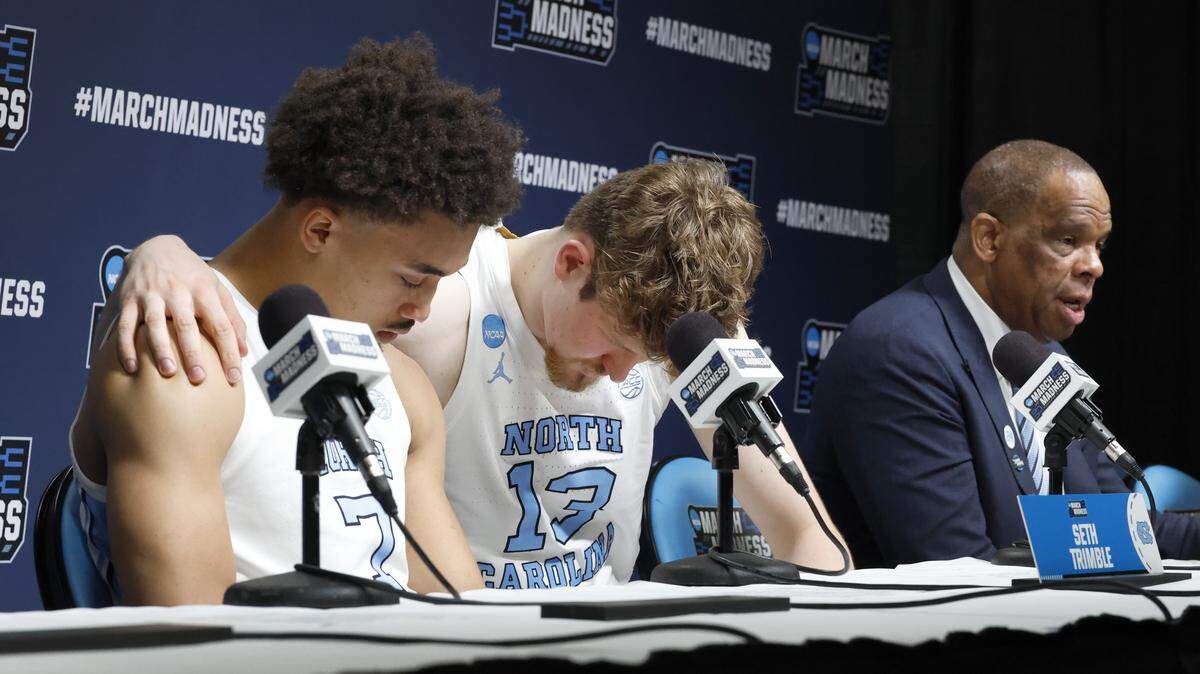
North Carolina lost, 85-62, to Wisconsin in the first round of the NCAA tournament on March 19. It marked Williams’ first opening-round exit in 30 tries. The Tar Heels had clawed their way into the field after a pandemic-disrupted season, but never resembled the teams that had defined Williams’ tenure.
“I just never got the team, this year, where I wanted them to go,” Williams said then. “I just didn’t get it done. I didn’t get them to buy in and focus on the things that I think are really big in the game of basketball. We got better, but not to the level some of our teams have been. I didn’t push the right buttons.”
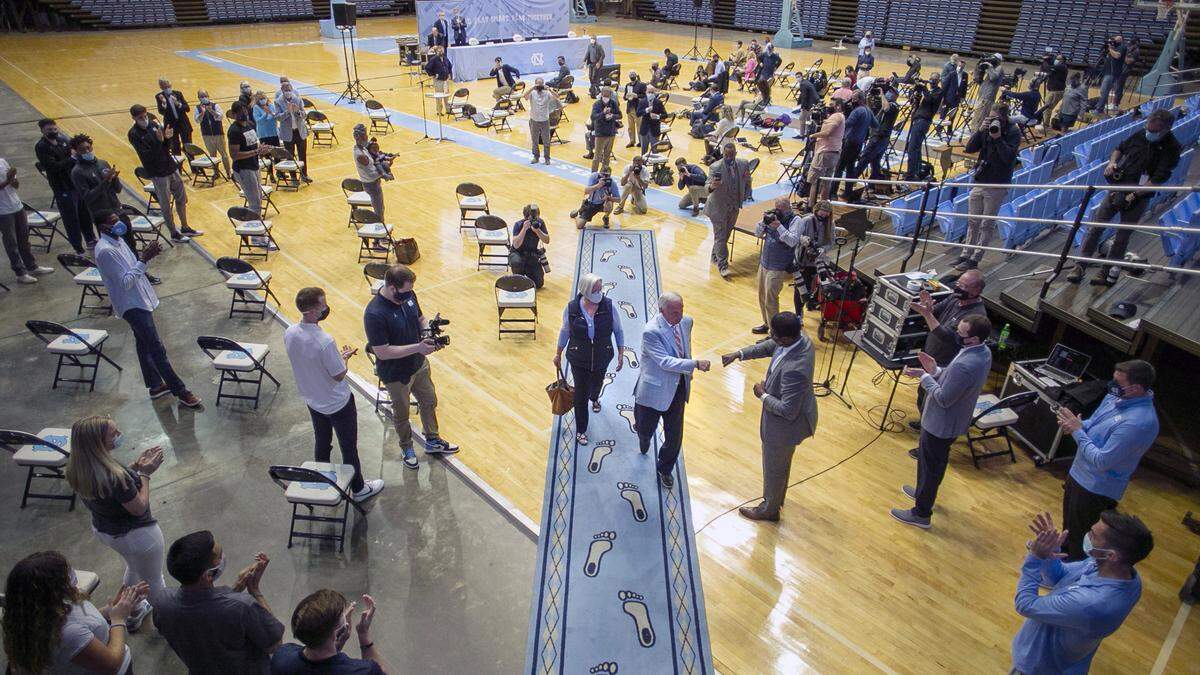
The silence inside the Smith Center — a place that had so often roared during Williams’ years coaching in Chapel Hill — only amplified the rawness. His voice cracked and his sniffles echoed as, above him, video boards showed images of a younger Williams. The contrast was impossible to ignore.
At 70 years old, he admitted something few coaches — or more generally, men — of his stature ever do publicly: He was scared of what came next.
“I don’t know what’s in the future,” he said. “I know I won’t coach again.”
In the years since, it’s become easy to contextualize that decision within the broader transformation of college athletics.
The transfer portal was about to boom. Name, image and likeness opportunities would fundamentally reshape recruiting and roster management — even for blue blood programs like UNC. The sport was shifting under everyone’s feet at breakneck speed.
‘We did OK’
He could have stayed. Williams had earned the right to coach as long as he wanted. He wasn’t just another UNC coach. He was the program’s prodigal son, the one who returned in 2003 to restore order after the turbulent Matt Doherty years and ended up building a legacy that could stand alongside — if not equal to — Smith.
That was never supposed to be easy. The final years certainly weren’t.
North Carolina’s 2019-20 season was one of the worst in program history, marking the only losing season in Williams’ Hall of Fame career. The following year required a grind just to reach The Big Dance. Those struggles came after a decade that included not only championship highs but also the strain of the academic scandal Williams often referred to simply as “the junk,” along with personal health scares and the loss of close friends like Smith.
So, even before the pandemic, the toll was visible.
Williams had always said he would coach as long as his health allowed. But coaching, for him, was never just physical. It was emotional. Relational. All-consuming.
When he began to feel that slipping — when he questioned whether he could still reach his players the way he once had — he chose to leave before “strike three.”
After his April 1 news conference ended, Williams stepped off the stage at the Smith Center and turned toward the modest, socially distanced crowd.
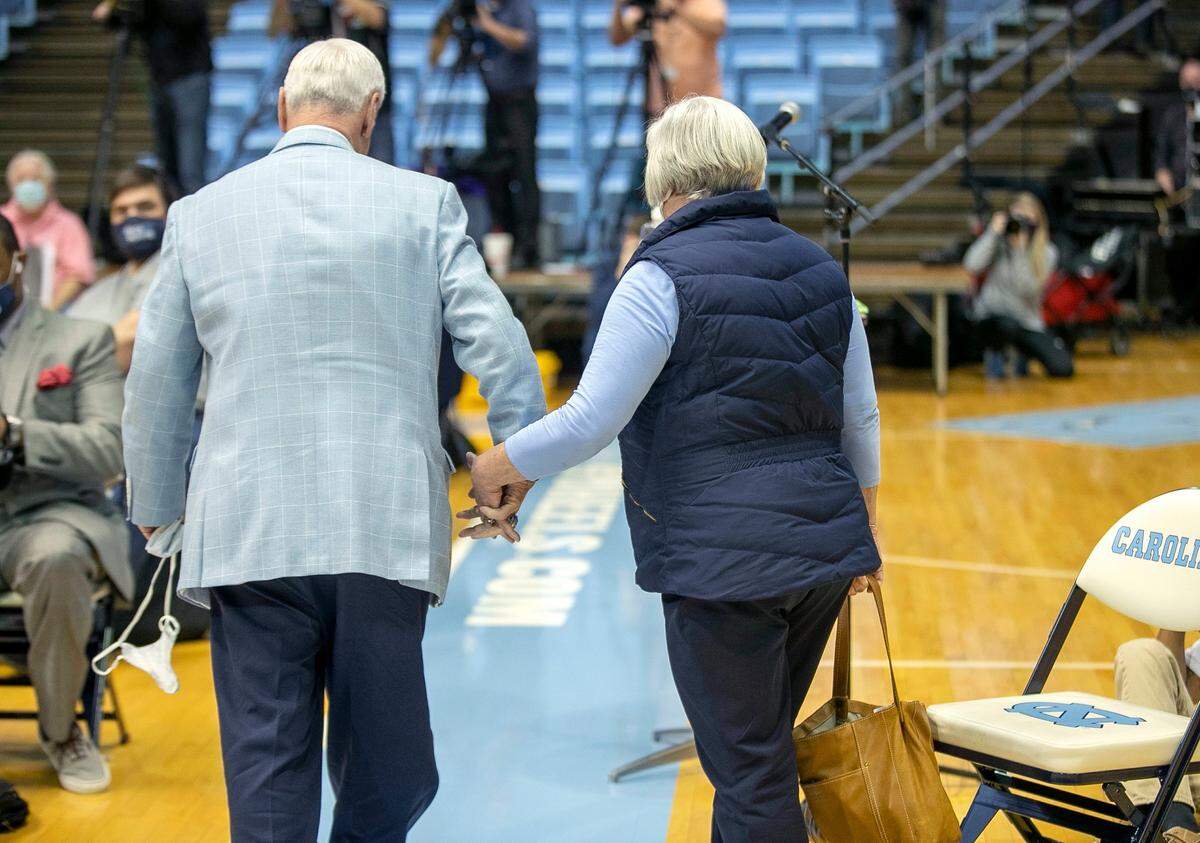
Waiting for him was his wife, Wanda, who had encouraged him to retire before — after the 2009 championship, again after 2017.
He was ready this time.
Roy took her hand, and together they walked slowly across the Carolina blue carpet toward the tunnel. Former players and friends applauded as he disappeared behind the black curtains — for the last time as a head coach, and for the first time stepping into whatever came next.
Earlier that morning, he had shared a quieter exchange with longtime assistant Steve Robinson in which he allowed himself some grace.
“We did OK,” Williams told Robinson.
“We did a lot better than OK,” came the reply.
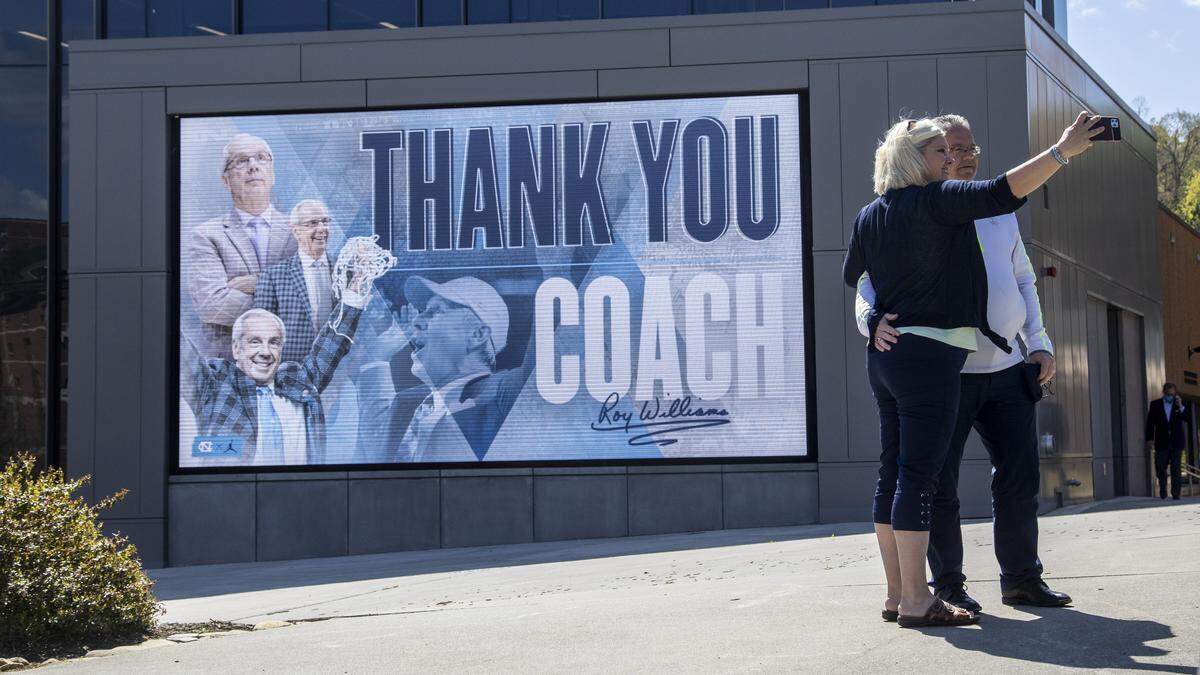
The Roy Williams shadow
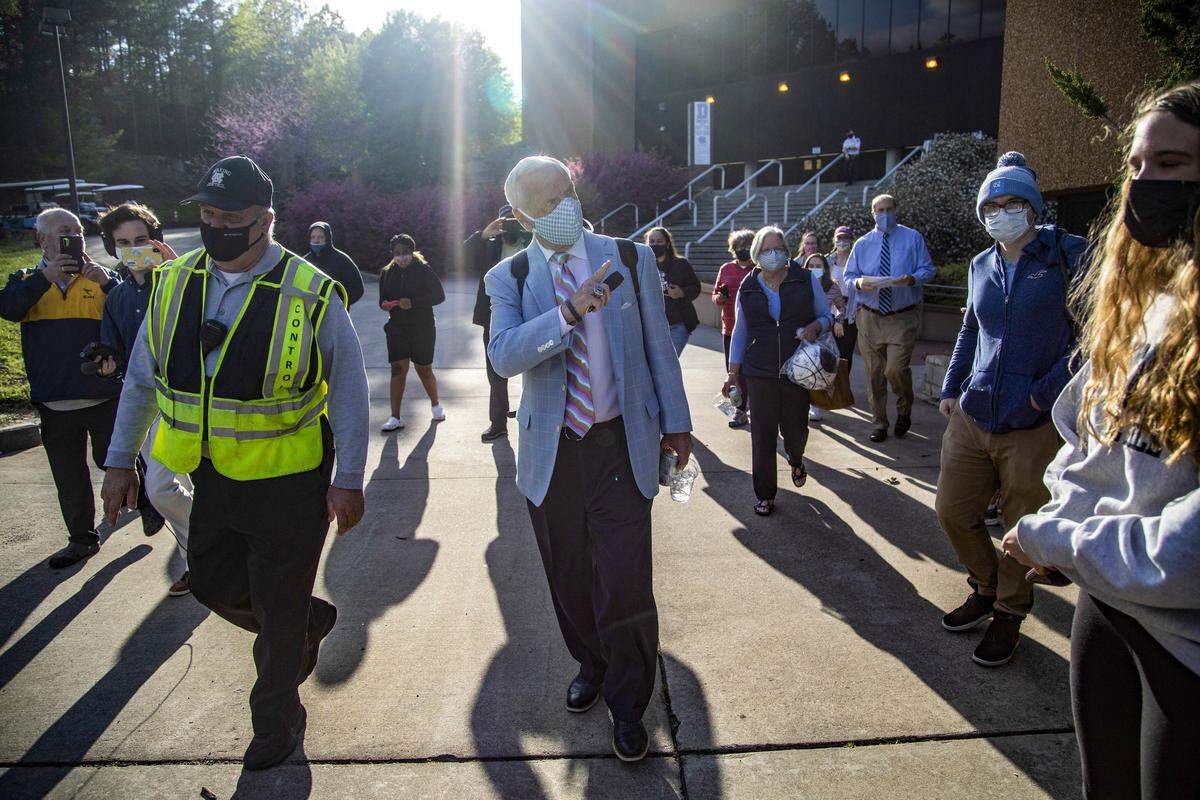
The news that Thursday landed like a thunderclap.
ESPN analyst Jay Bilas called it “stunning.” Mike Krzyzewski, Williams’ longtime rival and friend, said he was surprised, too.
“Roy is a great friend, and our sport was very fortunate to have him as long as it did,” Krzyzewski said. “We have all benefited from his longevity in and commitment to coaching. His legacy is secure.”
Across North Carolina, the response carried a similar tone as coaches, players and fans all tried to capture and express what was gone, even if they hadn’t been ready for it.
“Now there’s a new legacy hanging over whoever occupies that office next,” former N&O columnist Luke DeCock wrote. “Williams did as well as anyone could in Smith’s shadow, and he leaves a shadow of his own, different but in some ways just as large, over his successor.”
Behind the scenes, the succession was already taking shape. That much was obvious to some before Williams’ final season ended.
After UNC’s first-round exit in the 2021 NCAA tournament, Kirschner recalls a very unusual postgame dynamic in the locker room.
“(Hubert) Davis talked a lot, and he usually didn’t,” Kirschner said. “And I remember thinking, I wonder if I just heard the first speech to the team by Head Coach Davis.”
Five days after Williams announced his retirement, UNC introduced Davis as its next head coach.
Once again, the Tar Heels had their handpicked choice — the next link in a line that stretched back to the 1950s. The transition felt like a continuation, not a departure.
Five years later, after five uneven seasons, it reads differently.
Davis’ tenure was defined as much by a run to the 2022 national title game as by inconsistency and a changing sport that demanded faster adaptation. And now, the shadow still looms — only the stakes have shifted. For the first time in generations, UNC will likely depart from the very lineage Williams once carried forward.
And yet, Williams’ presence hasn’t fully receded.
You can still picture him on the sideline: plaid sport coat, right arm waving furiously, urging his players to push the ball up the court faster than seems possible. You can still hear the cadence of his voice, equal parts demanding and self-deprecating, always circling back to accountability with a sprinkling of “dadgum,” “doggone” and “frickin.”
That — and, of course, the wins — is the through line.
Five years later, the wins and banners remain, but the reason Williams walked away endures, too. He left because he believed North Carolina deserved better than what he could give.
And in the end, that was perhaps the most Roy Williams decision of all.
This story was originally published April 1, 2026 at 5:30 AM with the headline "Why Roy Williams’ UNC retirement still echoes amid Tar Heels’ coaching search."
.JPG)