Charlotte native to run Boston as a pro. Then he’ll train to serve on a Navy sub
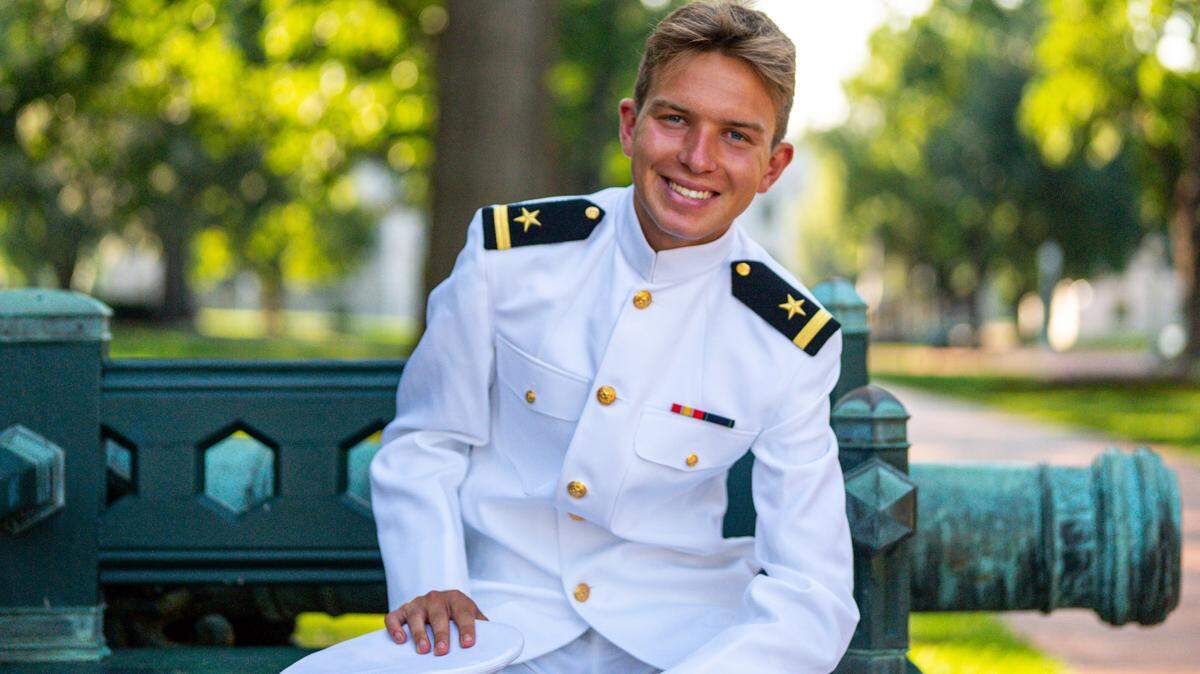
Murphy Smith lives in Boston now.
But when he ran his first marathon in December, the 23-year-old Charlotte native listed his hometown as he has since he started racing: Charlotte.
And his debut performance put him on the map more broadly — as a new force to be reckoned with in U.S. distance running. On Monday, when Smith tackles his second marathon, it will be as one of just 34 American men in the professional field at the Boston Marathon, staged on a storied course that extends 26.2 miles from Hopkinton to the city and passes within a quarter-mile of his apartment.
His run there will cap a cycle that had him logging as many as 130 miles a week, a level of training that will soon get increasingly difficult to maintain.
In August, he’s set to complete his master’s program at Boston College. Then in October, the 2025 U.S. Naval Academy graduate will begin training to serve on a submarine at the Naval Nuclear Power School in South Carolina. Likely sometime in 2028, he’ll start a stint at sea that could last more than three years.
That’s why “running is something that I put a ton of time into now,” he says, “while I still can.”
A somewhat unusual chapter of his life
His commitment to training has paid impressive dividends.
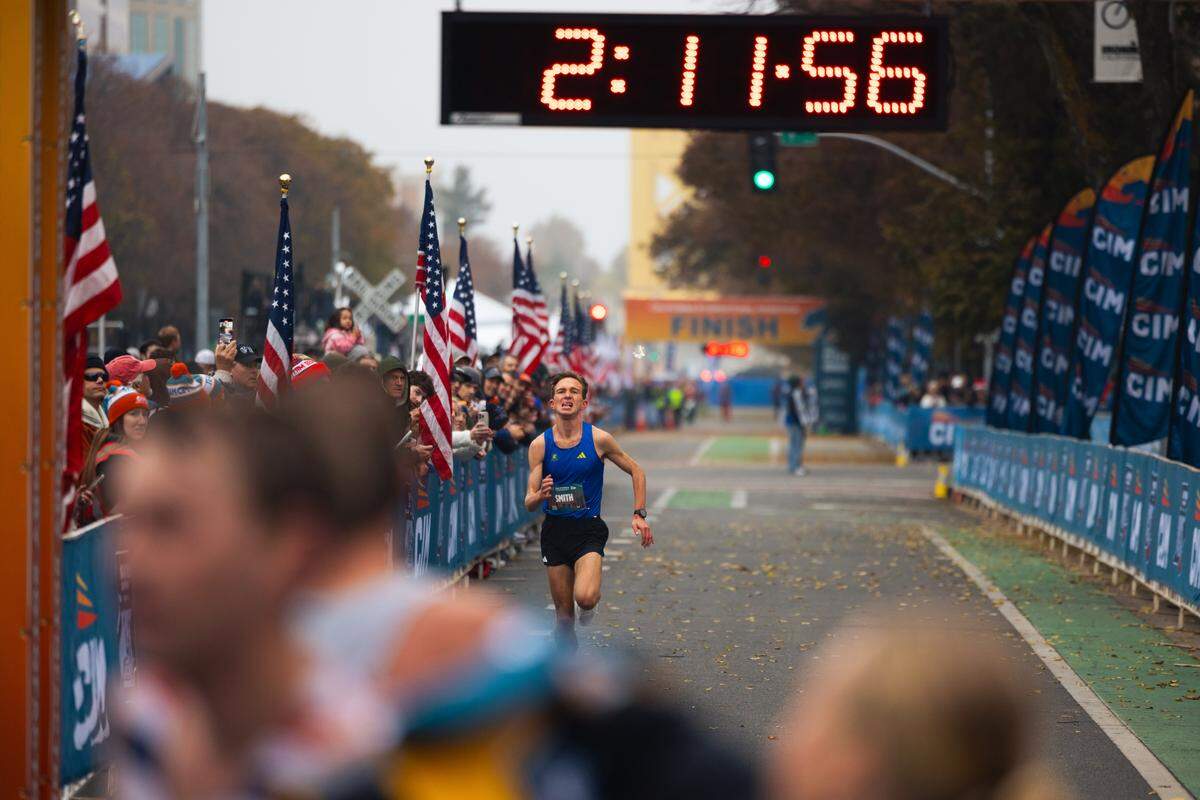
The Ardrey Kell High School graduate and former decorated Navy distance runner completed his marathon debut four months ago — at the California International Marathon (CIM), which also served as the U.S. Marathon Championships — in 2 hours, 11 minutes, 59 seconds, good for 10th overall. Smith was the youngest runner in the top 10.
It was a best-case scenario, especially given the challenges.
About six weeks before CIM, Smith twisted his ankle badly enough that he couldn’t run the next day. Soon after, his calf began to flare up, forcing him to take roughly 10 days off at a point in training when most marathoners are building toward their peak.
Before that, Smith figured he might be in shape to run somewhere in the low 2:12s. Because he’d had to take time off to deal with the ankle issue, he adjusted his expectations to something more conservative: just try to break 2:16, which would get him safely under the U.S. Olympic Trials Marathon qualifying mark by two minutes.
So the 2:11 was an overwhelmingly pleasant surprise.
Since then, in preparation for Boston, he has logged a staggering amount of miles, the kind of volume he still shakes his head at sometimes.
“If you told me a year ago I’d be running 130 miles, I would have said, ‘You’re crazy,’” Smith says. “If you would have told me that even six months ago — in September, before I really got in the thick of my first build — I would have thought you were crazy.
“But then it’s like, day by day, just keep stacking, stacking, stacking. Get a little bit higher. Push the body. See what you can do.”
That approach has followed him from his south Charlotte high school (where he was 4A state cross-country individual champion as a senior in 2021) through the Naval Academy (where he was Patriot League Runner of the Year in 2023 and 2024), and now into a somewhat unusual chapter of his life.
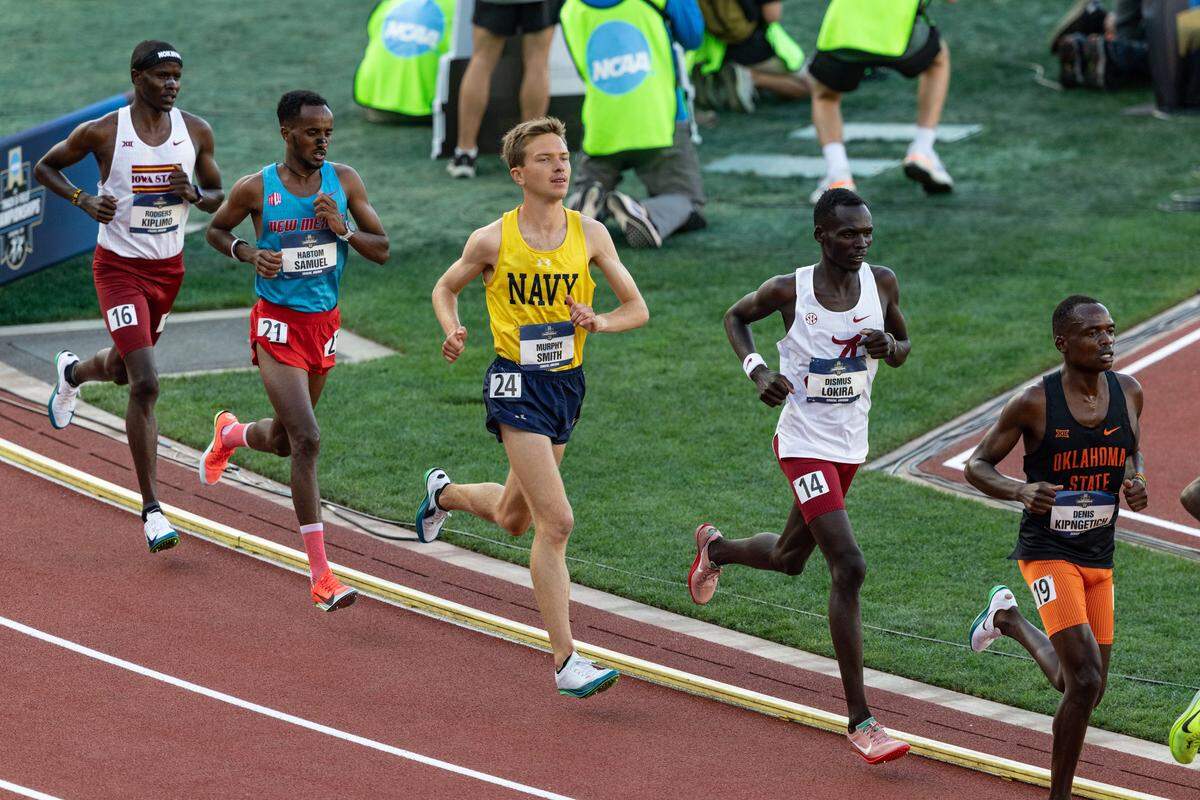
Smith is currently an active-duty Navy officer, but his primary responsibility at the moment is graduate school. He’s studying finance at Boston College, in a program that allows him more flexibility to train — which he’s doing with the Boston Athletic Association’s high-performance group, a setup that has helped accelerate his transition to the marathon.
“I’ve got a pretty good gig right now,” he admits. “I get to go to school for free; I get paid by the Navy; and I get to run a lot more seriously, too.”
Then, next year, that changes.
‘It will definitely take some adapting’
Nuclear Power School is part of the pipeline for Naval submarine officers. The schedule will be demanding. The margin for 120-mile weeks will shrink.
He understands that.
“I don’t think I’ll be running 130-mile weeks,” he says, “but I think I can realistically get up to 70 to 90 — maybe a little bit more, here and there — and just try to consistently optimize my day. Because I do like it (running) a lot. It’s not something I want to walk away from. But it will definitely take some adapting from my current sleeping till 8:30 or 9 sometimes, and then getting out of bed and running at 10.
“I will not have that much time on my hands.”
He plans to make marathon training work, though, somehow. After all, Smith did qualify for the Olympic Trials at CIM, and he does hope to run them when they take place in March 2028, which should roughly coincide with the conclusion of his submarine training — meaning he’ll likely still be on shore and able, with approval — to compete.
What comes after that is less certain (although it’s highly unlikely he’ll have to worry about the actual Olympics, since only the top three finishers out of a field that could include more than 200 men earns U.S. spots).
But he’s clear on his priorities.
“National defense and making sure that we can set the future generations up for success and secure freedom on the American homeland,” Smith says, “is an invaluable thing. And it will be the primary thing.”
As a result, Monday’s Boston Marathon may represent Smith’s biggest and best opportunity to maximize his potential as an elite runner for the foreseeable future.
Oh, and by the way: If you try to track him in the results, you might notice that he’s listed as hailing from Boston. But he’d like you to know that’s necessary per his affiliation with the BAA’s high-performance group, not because anything has changed about where his heart still lives right now.
If it were up to him, “my hometown would be listed as Charlotte — for sure.”
This story was originally published April 17, 2026 at 5:39 AM.