
There were scary, memorable times. Hornets' Steve Martin reflects on 30 years in NBA
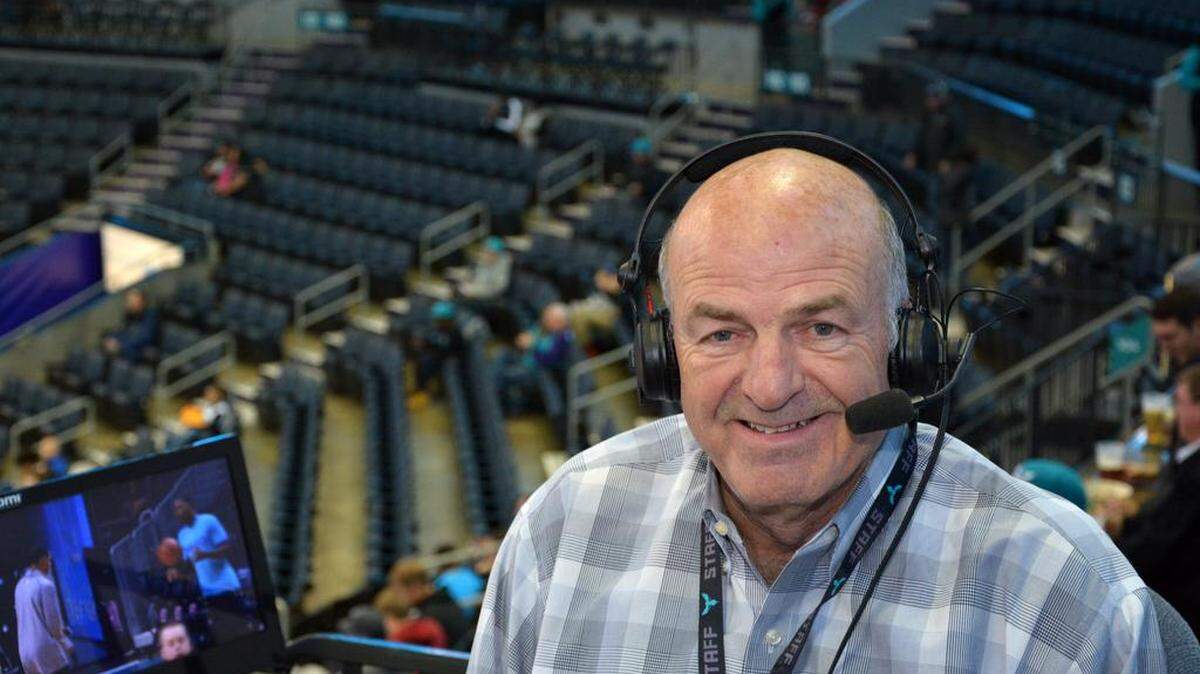
The soundtrack of the NBA in Charlotte is signing off for the last time Tuesday.
Steve Martin, who has called play-by-play on radio or television since the NBA first arrived in 1988, is retiring after the Charlotte Hornets’ final game this season, in Indianapolis Tuesday. Martin’s last home game is Sunday afternoon, against the Indiana Pacers.
Martin shared some parting memories Friday before a road game against the Orlando Magic.
Q. Funniest memory from 30 years on the road in the NBA?
A. Dick Harter (the original Hornets’ first coach) had a habit of leaving an arena as soon as he was ready. He didn’t really care whether the players were ready, and certainly not the broadcasters.
Gil (McGregor, Martin’s first broadcast partner) and I were doing postgame shows in Boston, which mostly was paying off gifts for Dick, like a lawn tractor. After we get done, we get down to the locker room and it’s empty. We ask a ball kid how long it’s been like that, and he says 10 to 15 minutes. I knew the Boston subway system well, so we got on the Blue Line. We had to switch trains and then get on a bus to get to the airport.
We get to the gate (teams still flew commercial then, before charters) and the team isn’t there. That would have been even worse; miss the bus and the flight! But we were told we were on time. Then, the team shows up; they got caught in a traffic jam. We’d beaten them there by the subway.
Q. The most spectacular play you ever called?
A. Actually, it was two plays in the same game (the victory over the Boston Celtics in 1993 that clinched the first-round playoff series). It was Alonzo (Mourning)’s shot to put us ahead, and then Kendall (Gill)’s block on Dee Brown.
Kevin McHale was dead in front of me (for the inbounds pass). His pass hit Dee Brown perfectly solid (on the rise for a score at the rim). But Kendall’s arm was right there.
Q. All-time favorite interview with a player?
A.Magic Johnson in the first season. Now we don’t interview players from the opposing team, but in that first season we did if we took a loss. We brought him out in a Hornets T-shirt; he was very gracious. He seemed genuinely excited that we had a team in Charlotte.
Q. Were you ever too sick to call a game?
A. Larry Brown’s (second-to-last game) in Washington against the Wizards. I’m glad I was sick. I wouldn’t have wanted to do that one (a 108-75 blowout loss)
We flew to Washington and the next day I just woke up with no voice, but I had no cold. But God said, ‘You want no part of this one!’” Tom Werme flew up to replace me and did a great job.
Q. Hardest coach to work with?
A. I mean this in a nice way, but it was Larry because you never knew what agenda he’d have in a pregame interview. I would ask him a pregame question, and he would look at me like I was stupid or something. There were nights when you didn’t know what issue he wanted to talk about. If there was something he wanted to talk about, it was right then, right there.
Q. And the easiest coach to work with?
A. Steve Clifford. And everybody (with an opposing team) who visits us says the same thing. In the pregame, even if you don’t ask a good question, he’ll have a good answer. And even off-topic, he’ll seize on opportunities to talk about things that should be talked about.
Q. Your scariest travel story is…
A. Flying into Boston one time right at the makings of a nor’easter. On the approach, we knew it would be really rough. And it definitely was. Even the players were rolling all over the place (on their seats). It was just wild for everyone the way we were bouncing around. It was unsettling.
Q. Your favorite color-analyst combination…
A. When I got into this, we had tested different people (to be color analyst). I did a college game with Gil – a Wake Forest game – and I said afterward I could have done two with him (back-to-back). His timing and my timing were just perfect. We never stepped on each other (in who spoke when).
Q. What was it like to get through a 7-59 season in 2011-12?
A. We were always looking for little (positive) things to spur us on. If someone just threw a skip pass, it would justify a replay. We’d be out (of games) in the second period.
Q. The biggest change in the NBA in your span was…
A. Getting out of commercial flights and into charter travel.
(Before charters) you would go into a city to play a game and then you’ve got to stay in that city (before playing elsewhere the next night). The league rule was first flight out, so if that was 5:30 (the next morning), you’re on it.
(Charter flights) revolutionized everything. Instead of players going back to the hotel (after a road game) and then going out to blow off steam, they were on a flight to the next town, you’d get in at 1:30 maybe, but they were in bed (in the next city).
I think in the entire league, that put a premium on taking better care of yourself.
Q. The thing you’ll miss most…
A. Getting to know the player and the continuing relationships with the coaches. I was treated awfully well by all the coaches.
This story was originally published April 6, 2018 at 2:57 PM with the headline "There were scary, memorable times. Hornets' Steve Martin reflects on 30 years in NBA."