Why ’21st-century power forward’ PJ Washington can be the maybe who hits for Hornets
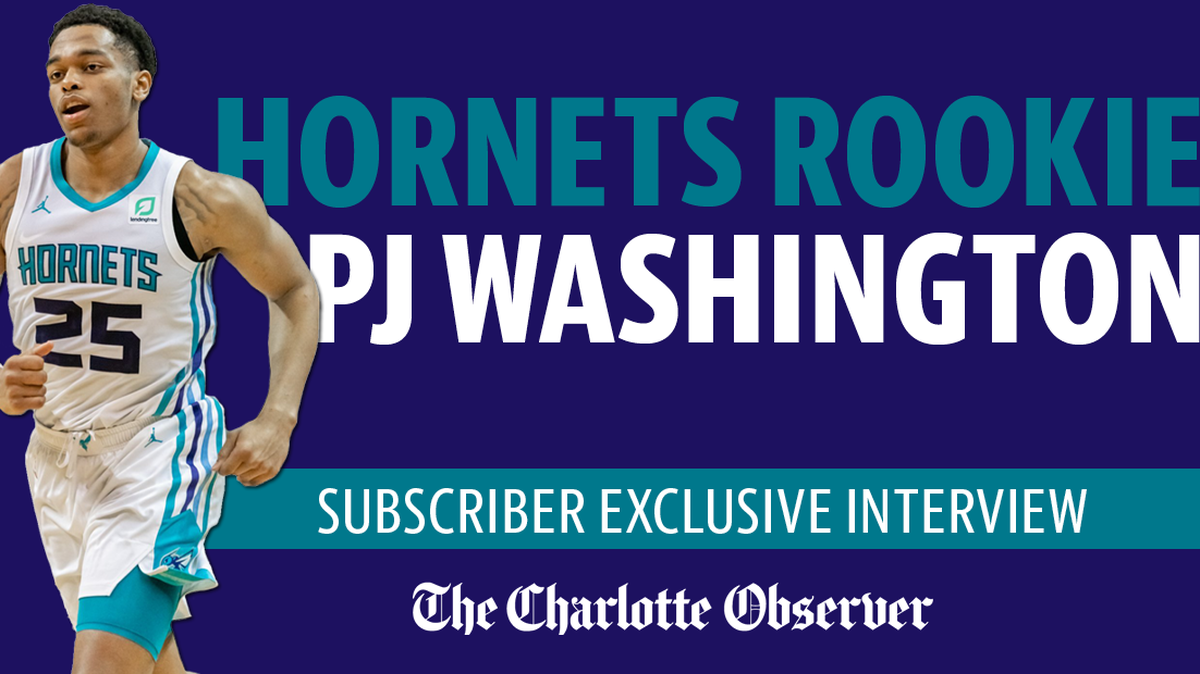
Rookie PJ Washington is still a maybe, but he looks like the best maybe the Charlotte Hornets drafted in a long time.
Each game of the preseason, Washington did something encouraging: Guard multiple positions, score in the post, make corner 3-pointers. General manager Mitch Kupchak was struck by his shooting range. Coach James Borrego saw a skill level he didn’t anticipate. Veteran forward Marvin Williams described Washington as basketball-savvy and studious.
But the most interesting compliment came from guard-forward Nic Batum: How Washington epitomizes the way the NBA is evolving.
“He’s modern. The 21st-century power forward,” Batum said of the 6-foot-7 Washington. “He can shoot 3s and he can post up. He can switch on defense. He can play (center) and he can guard (small forwards) sometimes. This is a new position — the new power forward in the NBA.
“That guy can do a lot of things on the court.”
As of Tuesday, Borrego hadn’t revealed a starting five for Wednesday’s season-opener against the Chicago Bulls. Washington started the last three preseason games while Batum was out with an Achilles injury. It’s up in the air whether Washington will start, but Batum is sufficiently impressed enough that the 11-season veteran volunteered to come of the bench to make room for the rookie.
The preseason numbers are eye-catching: Washington averaged 12.2 points and shot 63 percent from the field and 50 percent from 3-point range. But the impression he has left is about more than statistics. Williams, probably the Hornets’ most cerebral player, was immediately impressed with how quickly Washington grasped and incorporated techniques. Williams marveled when Washington, who missed summer league with an injury, told him during the first preseason game against the Boston Celtics that the NBA didn’t seem all that fast.
The Hornets have churned through a slew of lottery picks, and only the departed Kemba Walker became a star. They’ve ended up with role players (Cody Zeller and Michael Kidd-Gilchrist), wash-outs (Frank Kaminsky, now in Phoenix) and some still works-in-progress (Miles Bridges and Malik Monk).
Is Washington different?
No shortcuts
During a one-on-one conversation recently with the Observer, Washington described an upbringing where you didn’t take shortcuts. Both of his parents played basketball at Middle Tennessee State, and his mom and dad each coached him at various times when he was growing up.
If basketball was just for fun, that was cool. But when he told them he aspired for this to be his craft, the approach changed. They didn’t hold back analyzing and critiquing. Not mean, but honest and blunt. He learned that realizing potential required extra time and extra attention and particularly thick skin.
“This was a basketball family. They always pushed me, always to get better. The car rides home wasn’t just, ‘You played well.’ We’d talk about the things I didn’t do good.”
Washington sought knowledge and correction, not just support
“They didn’t have any excuses for me. My dad used to work at the middle school (which Washington attended). He would grade papers, and then once he got done, we’d be in the gym and I’d have a weighted vest on, trying to dunk.
“We’ve always been trying to get to this level.”
There’s a cliche about coaches’ kids always being the studious ones, but in this case it applied. Before this preseason, Borrego said he wished more of his players spent evenings during the season watching other NBA teams’ games. Washington is that guy, constantly watching League Pass to see what he can learn about some veteran’s game.
“When I’m guarding somebody, I like to know their best move, but also all their weaknesses, so I can force them into that,” said Washington, who calls himself a problem-solver. “I’ve always watched film — in college and even in high school. Just trying to get an advantage in any way I can.
“... I got that from my parents at a very early age. They would always hype the other team’s talent up to get me going.”
That combination of talent, studiousness and thick skin earned him a scholarship offer from Kentucky. That he accepted it over other options speaks to how Washington doesn’t choose the easy out.
Washington said the distinctive thing about Kentucky coach John Calipari’s recruiting sales pitch is there was no sales pitch. While other coaches promised immediate playing time and starting spots, Calipari told Washington he’d have to earn any minutes in Lexington, competing with a loaded roster.
That transparency is what sold Washington on Kentucky, and he stuck around a second season to maximize the experience.
Fixing flaws
That first college season, Washington was good enough that he could have left his name in the 2018 draft and been a first-round pick. Averaging 10.8 points and 5.7 rebounds for Kentucky is doing something, but his 24 percent shooting from the college 3-point line was a clear flaw.
He went back and attacked the gap in his game, shooting 42 percent as a sophomore, and his scoring and rebounding averages jumped to 15.2 and 7.5. That got him drafted 12th overall by the Hornets in June.
The Hornets fan base was underwhelmed. Washington presented a “safe” pick at a time when the Hornets needed to take more of a gamble. His size suggested he might be redundant to Bridges, another forward the Hornets got in the 2018 draft. It didn’t help public perception that Washington had to sit out Las Vegas Summer League with a foot injury originally suffered at Kentucky.
So the fans didn’t get to see him until that first preseason game in Boston, and — wow. Sixteen points in 20 minutes on 6-of-7 shooting. He validated that debut by scoring in double figures in each of the five preseason games. Kupchak said Monday he never anticipated Washington improving so rapidly from a passable mid-range shooter at Kentucky to making half of his attempts from NBA 3-point range now.
The Hornets’ excitement is apparent, yet guarded. Washington had no problems in the preseason, but Borrego knows what comes next could trip him.
Still, this is the maybe showing signs of being a lot more.
“Until you step into a real NBA regular-season game, you don’t really know,” Borrego said. “But I think he brings us physicality, he understands the game, he’s going to make the right play more times than not.
“He’s a poised young man, not afraid of the moment.”
That, alone, makes him distinct among the maybes.