How NBA Finals’ conclusion bears significance in Hornets’ pursuit of Coby White
Coby White hits the unrestricted free agent market with no qualifying offer hanging over him, no offer sheet to match, nothing to constrain his movement for the first time in his NBA career.
Typically, this would be a cause for concern.
It’s not for the Charlotte Hornets, though.
Instead, for those fans of the purple and teal who’ve suffered through a decade of the NBA’s longest current postseason drought, here’s the part that should lead to a bit of an exhale: the Hornets are operating with a structural head start that’s about as favorable as the league’s collective bargaining agreement allows to re-sign the seventh-year pro.
The calendar is the Hornets’ friend
Teams can begin negotiating with their own pending free agents one day after the NBA Finals wraps. That’s it. And with the New York Knicks holding a 3-1 edge over the San Antonio Spurs following the largest comeback win in Finals history on Wednesday night — and with Game 5 set for San Antonio on Saturday night — the two sides could begin their formal discussions as soon as Sunday.
Every other team in the league — the ones with cap space, the contenders looking for a microwave scorer off the bench, the front offices that watched White torch their team in February and March — has to wait until 6 p.m. on June 30 to even pick up the phone and dial White’s representatives. Players can’t put pen to paper until the moratorium lifts just after noon on July 6.
That’s a window the Hornets can drive a truck through.
Jeff Peterson, the Hornets’ president of basketball operations, can have a number in front of White’s representation before any rival GM is legally allowed to make a pitch. Combine that with White having just spent two months inside the building, and any advantage that other suitors normally lean on basically disappears.
“If I would have never came here, I wouldn’t know how great the people were here,” White told The Charlotte Observer during an interview after the season ended. “I never would have knew how the organization is ran. I never would have knew how the players are prioritized.”
Bird rights, fully loaded
Here’s the cap mechanics piece that matters. By trading for White before the deadline rather than chasing him in July, Charlotte inherited his full Bird rights from Chicago.
In practical terms, the Hornets can exceed the salary cap to re-sign him, they can offer him a fifth year that no other team can match, and they can build in 8% annual raises versus the 5% any rival is capped at.
So, even if some team clears max room, the Hornets can outbid them in total dollars, length and yearly bumps without sweating the cap sheet. That’s the entire point of paying the trade tax.
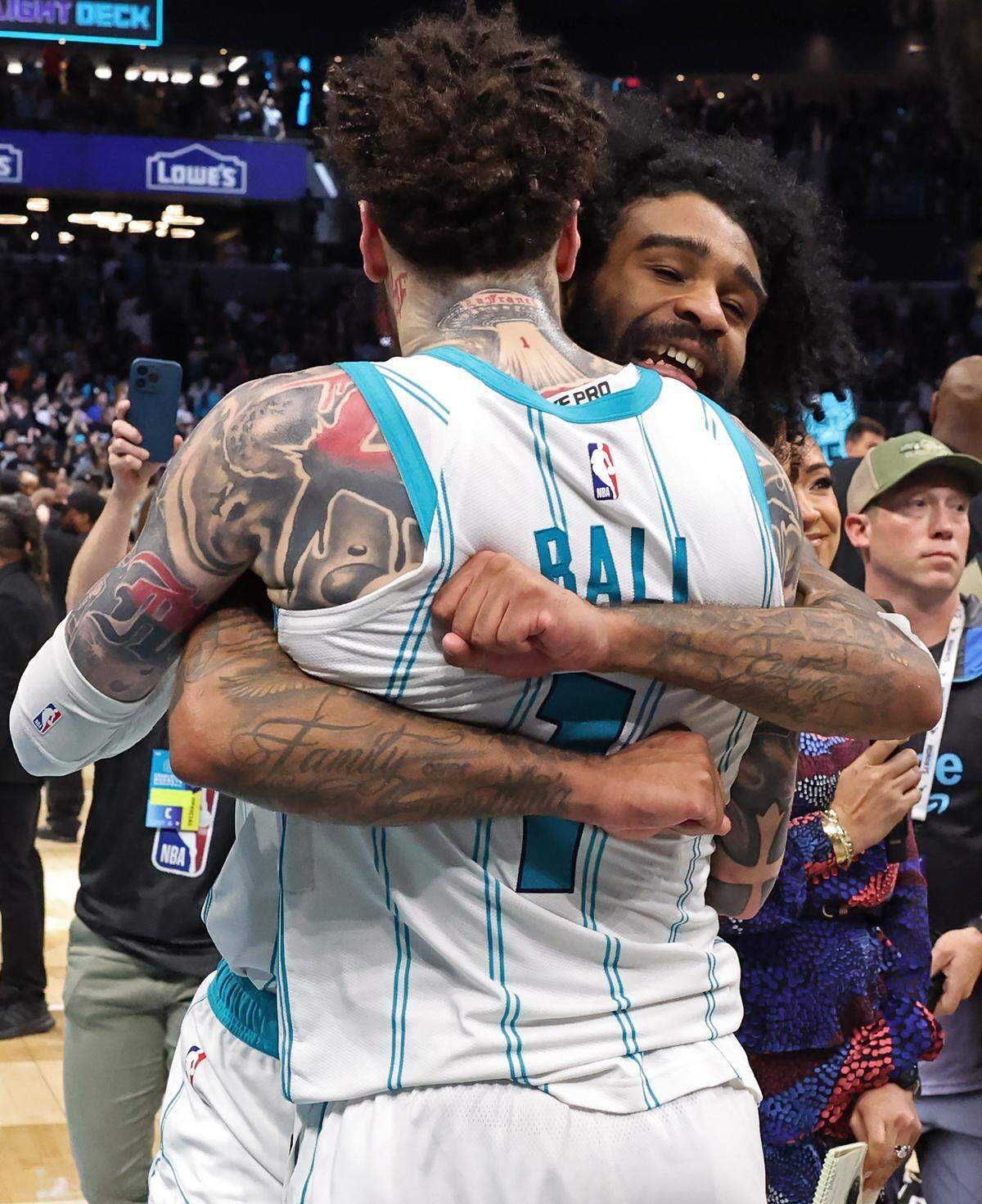
Getting White at the deadline didn’t just rent him for a postseason push. It also locked in the financial mechanism to keep him, along with providing him with a huge sneak peek.
“The people, getting to know the staff and the support staff and training staff, weight room staff, just getting to know all these people, they’re just fun to be around,” White said. “I think that’s the most important part is, can I enjoy every day to the fullest? And I think I could do that here with the people that I’m surrounded with.”
The on-court case
In 23 games after the trade, White averaged 15.6 points, three rebounds and three assists while logging nearly 10 fewer minutes per night than he had in Chicago. He shot 52.5% from the floor, 39.1% from three, and posted a 55.5 effective field goal percentage. Those are numbers that suggest the fit isn’t just functional. Additionally, it elevated his efficiency.
Remember what coach Charles Lee saw it the same way?
“He’s going to bring an extra layer of offense to our group,” Lee said immediately after the trade. “He’s so dynamic in a lot of different ways and has the ability for himself to score, to also be fouled, but also to pass and get other guys open looks.”
Lee’s philosophical tendencies are different from what White ran under Billy Donovan for six years. But assistant Josh Longstaff, who knew White from Chicago, was the bridge.
“He’s been great for me in terms of learning the system,” White said, “but also just giving me the confidence to go out there and play and not think.”
Perhaps most importantly, White wasn’t just a super sub for star guard LaMelo Ball. In the roughly 309 minutes the duo logged together on the court, the Hornets outscored opponents by 94 points.
During those minutes, White shot 46.1% overall while making 39.1% from 3-point range and 83.9% of his free throws. Ball drained 40.7% from the floor, connecting on 36.8% beyond the arc and 89.9% at the free throw line.
The shot you’ll be telling your kids about
Then there’s the game against Miami in the play-in tournament.
Tied late in regulation, Sion James was inbounding. LaMelo Ball is option one, Brandon Miller option two. With both covered, James finds option three: White, curling off a Grant Williams flare screen with his momentum running parallel to the baseline.
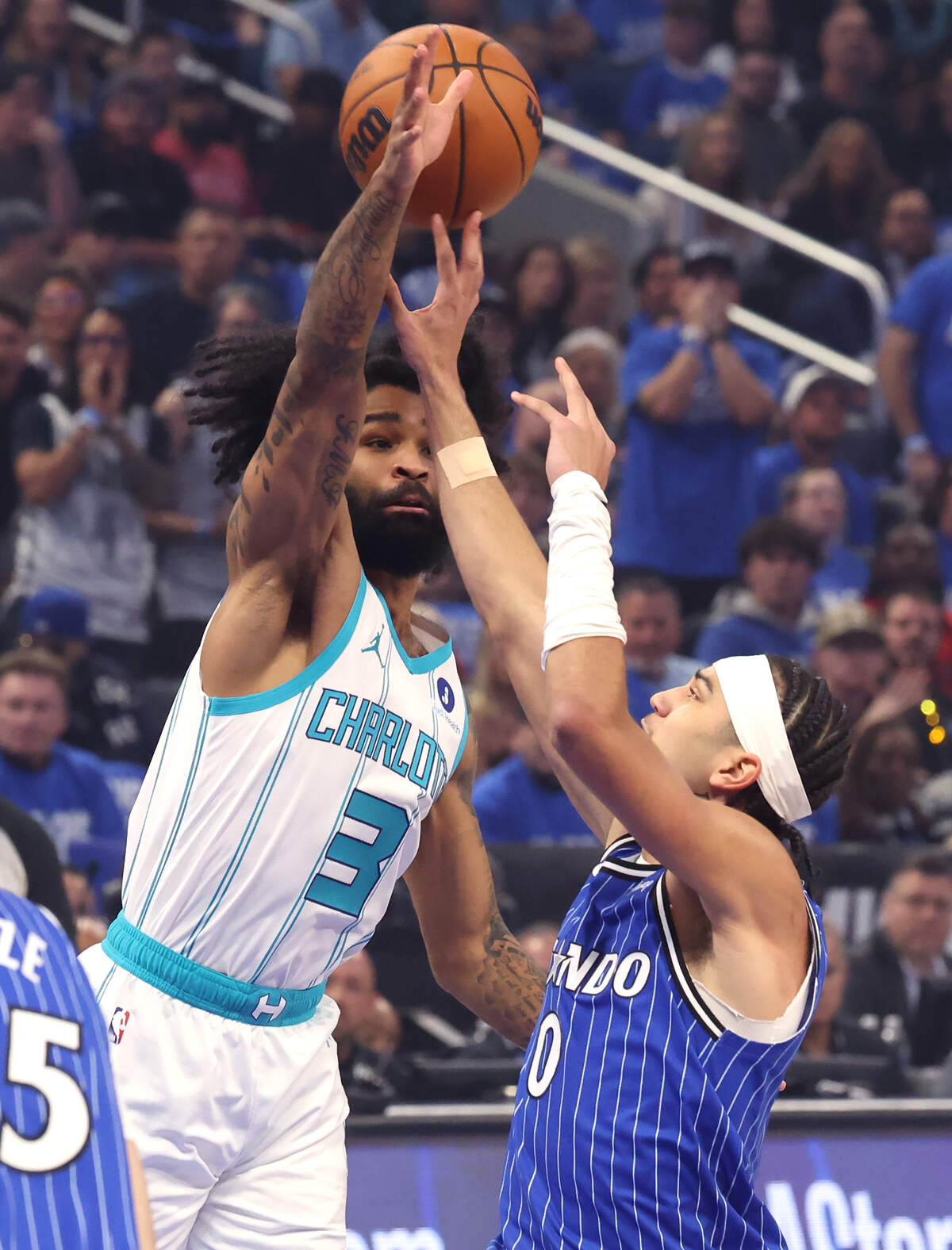
He squares up midair. Lets it go.
“(Expletive),” White remembers thinking, “it got a chance!“
It had more than a chance. It tied the game, sent Spectrum Center into hysterics, and set up Ball’s overtime game-winner in a 127-126 play-in survival over the Heat. White finished with 19 points, five rebounds, three assists, a team-high plus-minus of plus-21. And 14 of those points came in a third quarter that included a buzzer-beating 3-pointer from the wing that nearly took the roof off the building.
“It was out of body after that,” White said that night. “All my teammates were like, ‘Yo, I ain’t never seen you act like that!’”
The Hornets fell to Orlando in the next round, extending the playoff drought to a decade. But that shot is the kind of franchise moment you build around — and the player who hit it is telling everyone within earshot that he wants to stay.
What you’re really watching for
Peterson didn’t leave much room for interpretation three days after the season ended. “Like I said when we traded for Coby, we envisioned him as somebody who’s going to be with the Hornets for a long time,” he said. “He embodies what we’re about.”
White agrees with all of that.
“They obviously play a style that kind of benefits me,” he said in his interview with The Observer. “People could tell that by the end of the season, how I was playing. It was probably one of my most efficient stretches I had in terms of minutes and what I was doing in those minutes.”
White added plenty to a team that started 4-14 and finished above .500 at 44-38. Things are on the rise in Charlotte, and the 26-year-old guard mentioned the Hornets’ soon-to-be completed practice facility and shift in front-office culture like a guy who’s already decided.
That means the mechanics are in place. The number just has to land.
If so, it will be another signal the Hornets’ ownership and front office are truly changing the narrative and how things are done within the playoff-starved franchise.