How former South Carolina star Ieasia Walker went from making plays to calling fouls
When Ieasia Walker played for the South Carolina women’s basketball team from 2008 to 2013, the Gamecocks weren’t yet the national powerhouse they are today.
Even then, her ability to swipe the ball away from opponents was well known among players and coaches. A tough point guard from Amityville, New York, she finished her career fifth on the program’s career steals list and seemed to have a preternatural knack for sensing when and how to poke the ball free.
“I think sometimes she steals it even before the official is in the position to make a call,” Dawn Staley said.
Seven years later, Walker isn’t stealing the ball any more. She’s the official, already in position to make the call.
‘Did I make the right choice?’
A three-time All-SEC selection and SEC Defensive Player of the Year honoree, Walker played for the Gamecocks at a time when the program was still scrapping its way to national prominence. She was the second player under Staley to score 1,000 career points. And when her collegiate career ended, she did what so many women’s college players do — she went to play abroad.
“I played in Spain, with Ashley Bruner. We graduated the same year. So we played in Spain together and I came back, I played in Puerto Rico first and I played in Sweden,” Walker told The State.
Back home between seasons in early 2016 and officiating high school basketball games in New York, Walker was preparing to head back, this time to Iceland, before she visited South Carolina to watch the Gamecocks play UConn.
While she was there, she told director of player development Freddy Ready about something she was thinking about applying for — the NBA’s Referee Development Program.
“He whispered to (assistant coach Lisa) Boyer, and coach Boyer told coach Staley, and so I ended up sitting down with them, and they pretty much nudged me in the direction, saying officiating is another way to give back to the sport, and it’s another way to be around basketball and just a way of life, to take care of yourself financially,” Walker said.
“The coordinators want former players. But again, you have to put much into that as you do playing the game,” Staley said. “I’m happy she’s sticking with it. She’s always been a fitness guru, so running up and down the floor, sprinting five miles a game is right up her alley.”
Returning from that trip to Columbia, Walker decided to cancel her plans for Iceland and instead stay and interview for the program, designed to help former athletes with no officiating experience. There were eight open spots and, she later found out, roughly 1,000 applicants.
Phone interviews led to Skype interviews, which led to a panel interview. The process lasted months. In the meantime, the team Walker almost joined in Iceland signed a point guard she knew from high school who went to Seton Hall, Didi Simmons.
“I was thinking like, ‘Did I make the right choice?’” Walker said. “And I’m like, if it doesn’t work out, I was still playing basketball and training, so I knew I’d be ready and would try to find another job abroad if getting into the program didn’t work out.”
After six months, Walker got the call — she had made it in.
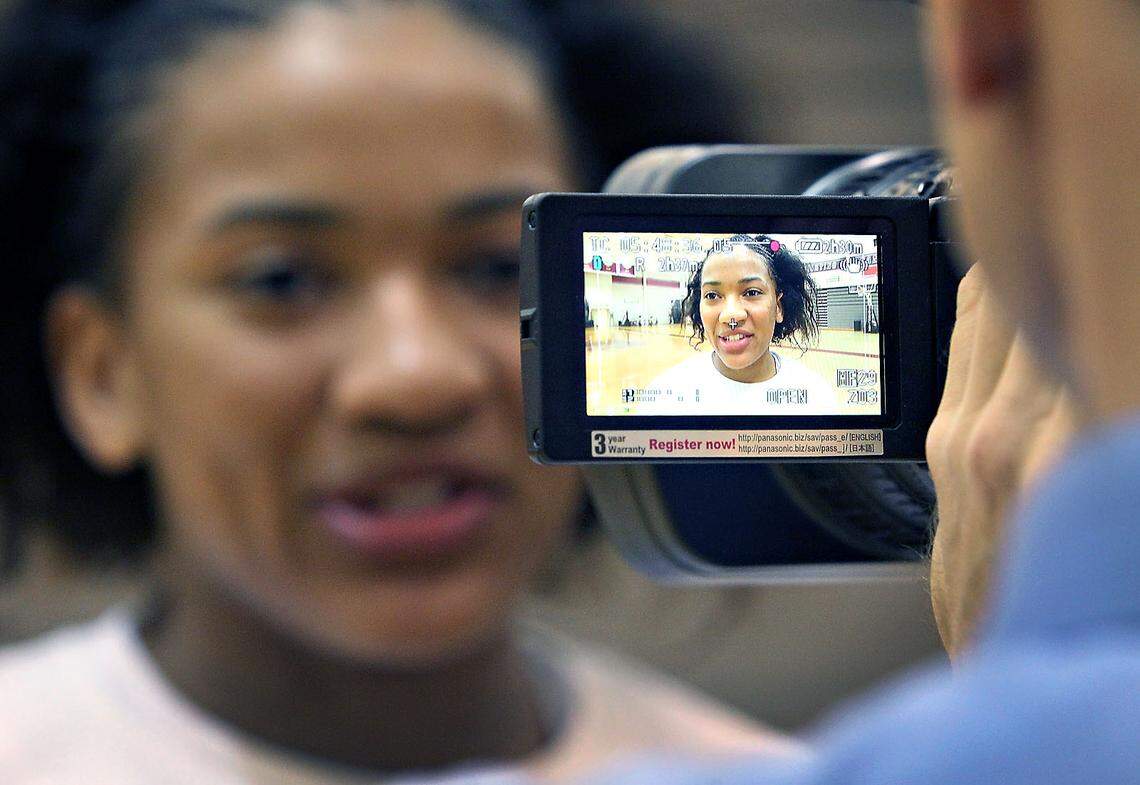
‘A whole different outlook on basketball’
Learning to officiate basketball, much like learning to play it, is a complicated process — there are coaches, camps, circuits, film work, practice, scouting. There’s an entire subculture related to — but definitely not the same as — the one involving players and coaches.
“I went through the (refereeing) circuit, my first year went through the circuit, and I made it to mid-level. There’s three camps: They have a grassroots camp, a mid-level camp, and then at that time in 2017 they had two separate elite camps,” Walker said of the development program. “So my first year, I made it to mid-level. The following year, I started back at mid-level and I made it to elite.
“This past year, I went back, I made it to elite. I didn’t get hired. I got put on a monitor list, where they will receive my officiating schedule and find either tournaments or camps or games I’m refereeing in, they’ll watch and pretty much scout, and see if, ‘OK hey, let’s give her another shot, bring her back,’ and then I would again go back to elite or start from grassroots and work my way up again and then they will decide that way.”
With former NBA officials as mentors from the program, Walker learned early on that playing and refereeing were different beasts.
“I think the challenge of it was one of the things that lured me, because I love learning new things, and this gave me a whole different outlook on basketball, because I only looked at it from a player lens,” Walker said.
“And much of it did translate, having to see the floor and always thinking what could this team be running or having an idea of what they’re already running. … But there were still a lot of things I had to learn. And that was the cool part of starting out in officiating. It’s the same sport, but it was so different, just with how you had to look at it from an officiating perspective.”
Specifically, Walker said she struggled at first to draw a distinction between fouls and poor play.
“When you’re officiating, it’s like you’re kind of calling the game like a player, so maybe a player would drive to the basket, and I’m like, ‘Oh, you should have finished.’ Yet, it was illegal contract, and a foul should have been called,” Walker said. “So that was a hard part of my play calling to grow out of, because I’m like, ‘Aw, you should have finished or you should have gone left.’”
Understanding the playing side, however, has also helped. When she can pick up on the tendencies of teams or players, she can position herself accordingly to have the best view of the play.
“It’s not just, okay everybody sees it, oh, that’s a foul. It’s all about angles and where you are at the time a play happens, and having that playing experience helped me get the right angle to have an open look on a play,” Walker said.
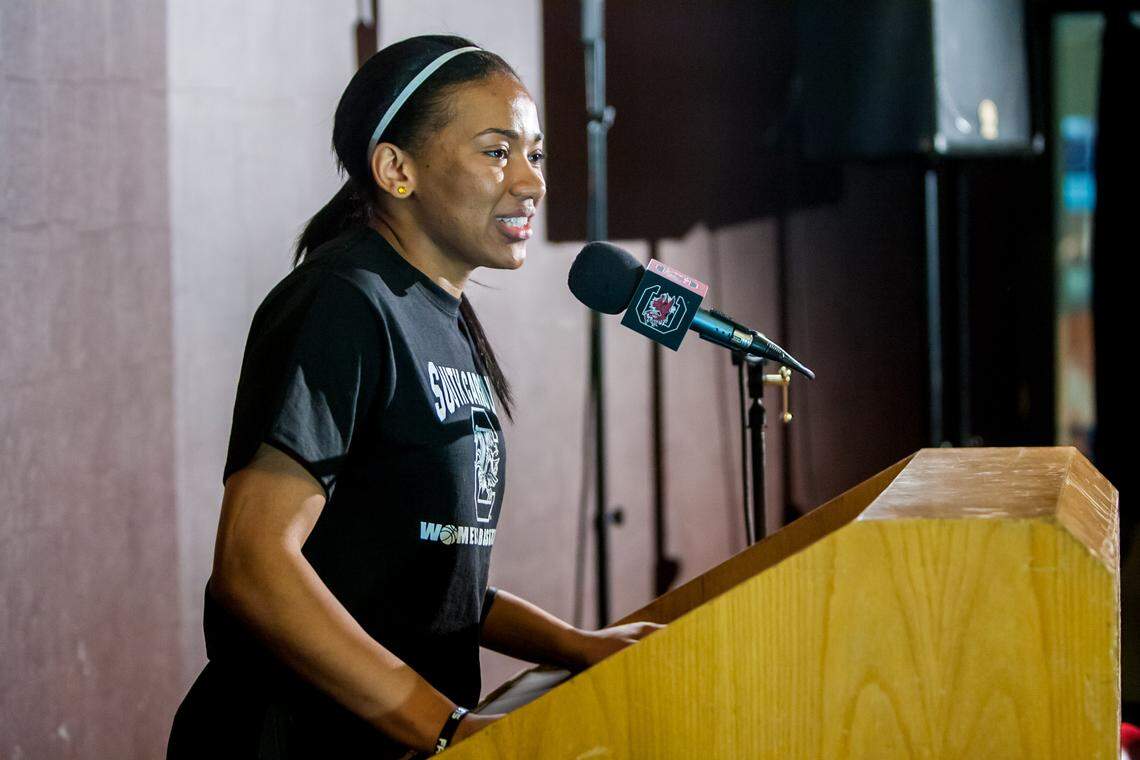
Challenges and downsides
Starting with no experience in officiating, Walker said the main way she got better was calling more games, and not just on one level. She refs everything from youth parochial leagues to college games to adult rec leagues. It’s a grind her former coach understands.
“What they have to go through, as officials, to break into it, it’s a lot. You have to be committed to it,” Staley said.
There is a downside, however.
“Unfortunately, the practice that you get is during kids’ games, which is what they work so hard to play in. You’re learning, making mistakes,” Walker said. “Unfortunately, these mistakes are going to come at their expense, because these are their games that they’re trying to win. But there’s not much you can do about that.”
Looking for another way to stay involved with the game and help out young players, Walker has also taken up coaching at a charter school in New York with 13-and-under and 11-and-under teams, both boys and girls.
“I feel like I have more of a direct impact on the development of basketball, and especially in girls’ basketball, because in New York, it has pretty much plateaued over the last few years and the talent isn’t really being developed,” Walker said. “There’s more trainers out here, but for some reason the basketball skill level is still going down, at least in New York. And I feel like I have a lot of knowledge from where I played in college, abroad, and even officiating that I can give that to the youth.”
‘OK cool, we’re gonna turn it around.’
Now seven years removed from her last time on the floor with the Gamecocks, Walker still visits and keeps up with Staley and the rest of the coaching staff. She’s seen them sometimes out on the road recruiting at tournaments where she’s reffing games.
Walker has known Staley for more than a decade now — as a young player in the Northeast, she met Staley when she was still the coach at Temple, recruiting an older girl in her AAU program. They developed a close relationship, but Walker wanted to play on a bigger stage than Temple could provide.
Then Staley took the job at South Carolina.
“I don’t think I even knew South Carolina Gamecocks, nothing, like I didn’t even know the school existed. I was just asking, what conference is that? (My coach) said SEC,” Walker said.
“And I’m just like, I’m in. I just knew from there and in my head it just clicked … There’s no reason not to go there. Like they know everything that I need to know to be the best player I can be. I didn’t know how the team did, I didn’t know they were last, anything, and then I found out, and I’m like, ‘OK cool, we’re gonna turn it around.’”
Those early days at South Carolina were often tough — Staley was trying to build the program in her image, and that meant work, discipline and plenty of intensity. And without the benefit of top-level talent like the Gamecocks now routinely recruit, the coaches were doing even more.
“I remember lots and lots of running in the preseason. Coach Staley was very big on discipline,” Walker said. “And so it seemed that a lot of things that we had to do were strictly enforced, where it was only one way that she wanted things to be done, and we knew there were multiple ways to get the same goal. But because she was building a program and we were the starting foundation, she had to make sure everybody was on the same page, so we had to pretty much be uniform with anything that we did.”
The results started to come though — a Sweet 16 berth in 2012, the program’s first in a decade, and consecutive 25-win seasons. And those results formed the foundation for even better seasons. There’s one memory Walker has in particular illustrating that growth.
“I remember being there and I saw A’ja (Wilson) on campus, maybe my sophomore year, and I’m like who is this girl?” Walker said. “So by changing the culture there, we were able to get someone like her to stay home, and other the kids that came, like Tiffany Mitchell, now they’re considering going to a school like that because we were able, under the direction of coach Staley, to turn it around and bring them in.”
And when the Gamecocks took home the national title in 2017, Walker felt pride in what she helped build. It was a feeling Staley acknowledged with all her former players, gifting them replica national championship trophies in recognition of their contributions.
“I was actually at the game when they won the championship that year, and coach Staley was saying everyone from the past, including her Temple players, they all helped with that, they all have a part of that win, and that’s so good to hear from the person that has been there through it all,” Walker said.
But just because they have that bond doesn’t mean Walker would ever want to officiate a game with Staley coaching, she joked.
“I think she would be a pester, because I know how she is and how she harps on the refs. So I would have to tell her, ‘Coach, take a beat, take a second, breathe,’” Walker laughed.
This story was originally published January 23, 2020 at 5:00 AM with the headline "How former South Carolina star Ieasia Walker went from making plays to calling fouls."