Inside the slow death of Wake Forest basketball: A motorcycle, silence and stubborn hope
The motorcycle can be heard before it can be seen, the sharp roar of a revving engine. The sound is far away at first, then closer. Indoors, it sounds louder than it might outside. A faint smell of gasoline fills the air and that, too, becomes stronger.
Years ago, the sound became part of a pregame spectacle at Wake Forest basketball games. Those days aren’t that far in the past: college kids on their feet in their gold and black tie-dye shirts; the Demon Deacon mascot emerging on the bike, the engine screaming.
After all this time, it never fails to be an odd sight: a mascot with an unusually large head, bushy white sideburns and a thick yellow bow tie, in a tuxedo jacket and top hat, straddling a vintage motorcycle and walking it around a basketball court.
Wake Forest started doing this in 2003, in Skip Prosser’s second season as coach. He wanted to create an energetic atmosphere. Later that year, he told The Washington Post: “People stop me at restaurants and in the neighborhood and say they haven’t had this much fun at a Wake game in a long time, maybe ever.”
Spectators, at one point, might have appreciated the Deacon on the bike. They might have fed off the noise. In better times, it was perhaps an effective way to energize a crowd. Now it was a Sunday in late January, about a week and a half ago, and the better times felt far away.
Wake Forest, 10 years removed from its last winning record in the ACC, was hosting Virginia, the reigning national champion. Outside of Lawrence Joel Coliseum, there wasn’t a scalper in sight. Cars arrived without the hassle of traffic.
People trickled inside, unhurried. Ten minutes before tipoff, entire sections sat empty in the upper deck. Even in the lower bowl, lonely rows waited for company. Game time approached and soon came that familiar sound, a motorcycle humming in the distance.
The lights went dark. The Demon Deacon appeared on the bike, rolling the throttle. The public address announcer introduced the Wake Forest starting lineup. With each name, a flame rose from torches bearing the logo of Texas Pete hot sauce — a production without much of an audience.
The Deacon circled the court. The revving continued, until he disappeared into the tunnel behind one of the baskets. The lights came back on, revealing an arena that was maybe one-third full. Soon it was quiet enough to hear the cheerleaders from the other end of the court.
The place smelled like gasoline and the environment felt sad. It was all enough to make anyone wonder:
Whatever happened to Wake Forest basketball?
WAKE FOREST SEARCHING FOR STABILITY
The simplest answer is that Prosser died, and that his death from a heart attack in July 2007, after his sixth season as Wake Forest’s coach, set everything that followed into motion. Almost 13 years later, Wake is still searching for the kind of stability and consistency — the good kind — Prosser provided.
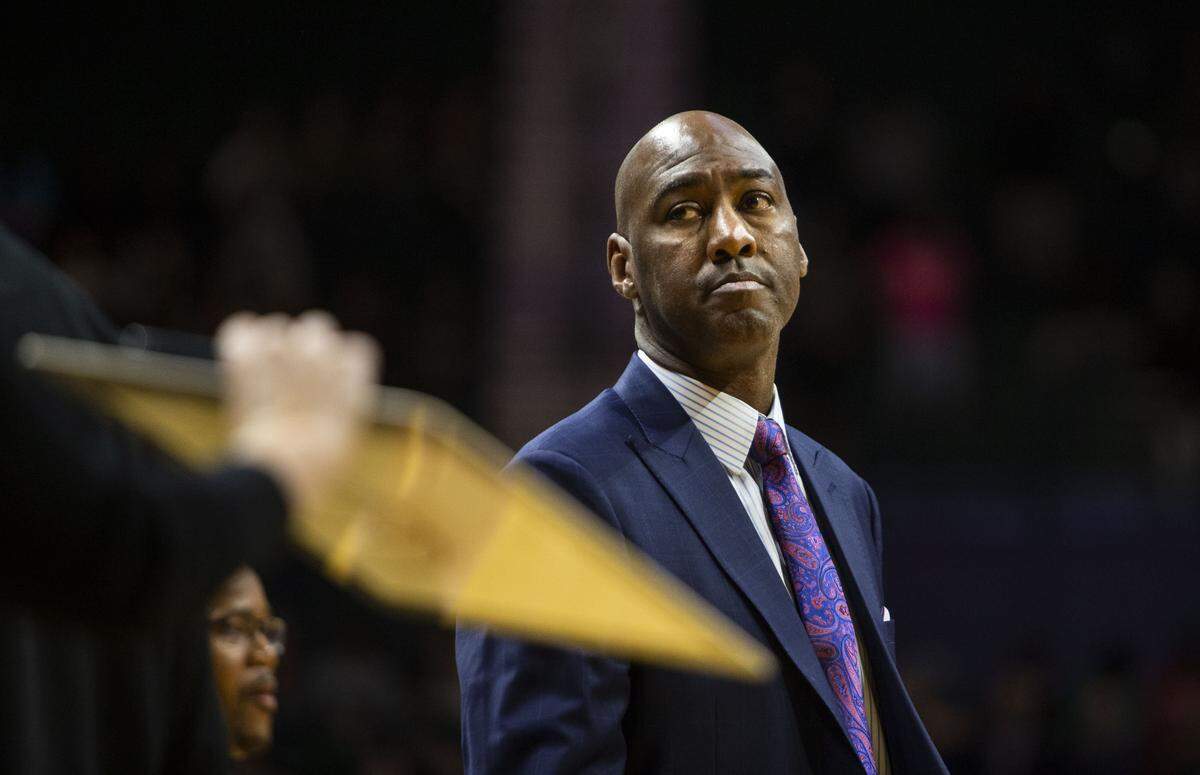
Danny Manning is the Demon Deacons’ third coach since. Throughout most of his tenure, now in its sixth season, he has been left to answer the same sort of questions that followed his predecessors. Most often, those questions have been about what has gone wrong.
“Hell, have we won as many games as we’d like?” Manning asked the day after his team’s overtime defeat against Virginia. “No. But we also understand that in the big picture of life, everything’s not going to go your way every day.”
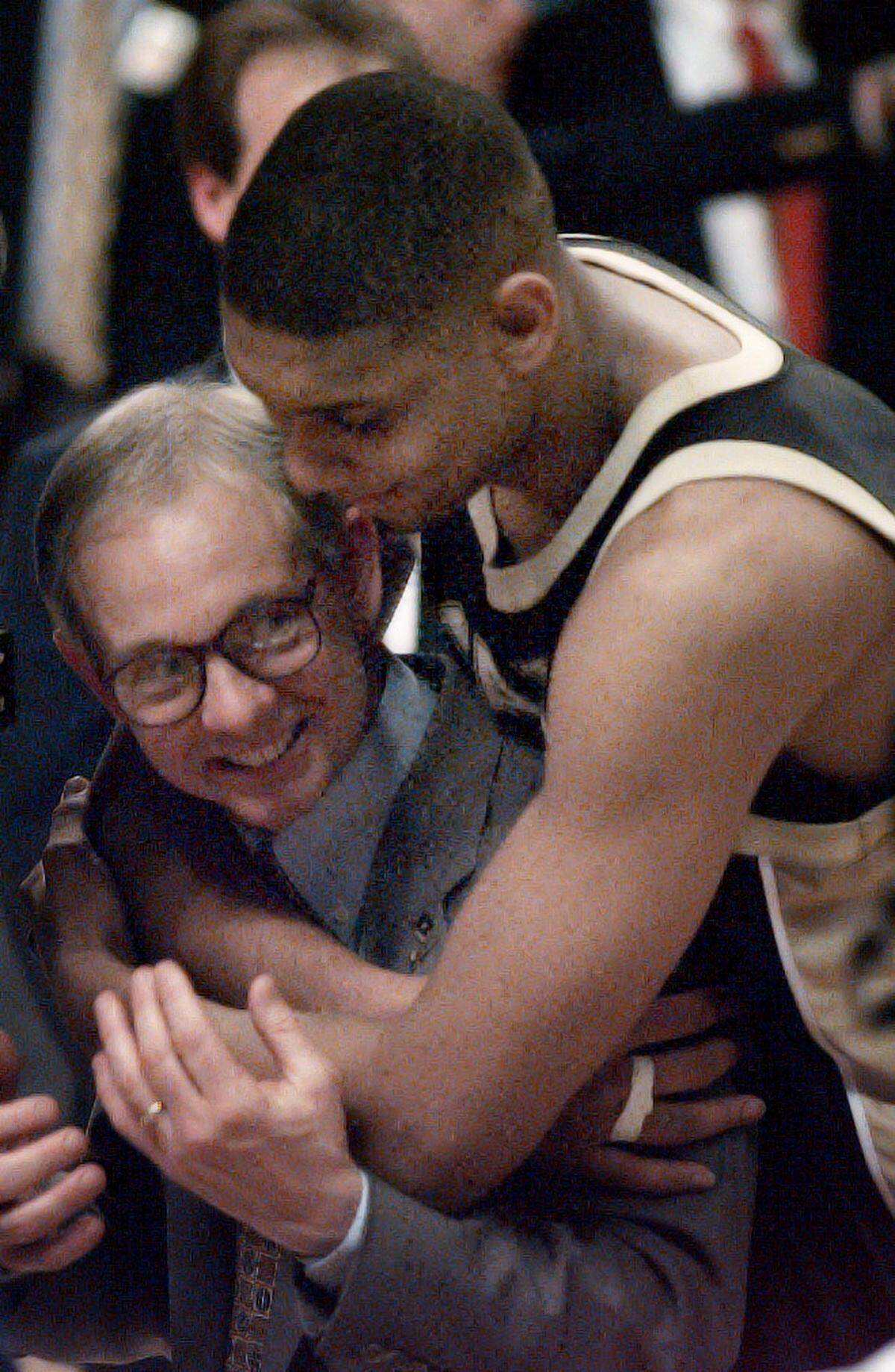
Between 1991 and 2010, only Duke, North Carolina and Maryland won more ACC games than the Demon Deacons. In the mid-1990s, they won back-to-back conference championships. Twenty-five years later, people still talk about Randolph Childress’ 1995 ACC tournament. Tim Duncan became Tim Duncan in Winston-Salem, before he became an all-time NBA great. Chris Paul played at Wake. Josh Howard was a unanimous ACC Player of the Year in 2003.
Now, amid a decade in the basketball wilderness, Wake Forest has become a metaphor for encountering adversity and attempting to overcome it. More often than not, those attempts have ended in failure. In three of Manning’s five full seasons, the Demon Deacons have finished 11-20, including the past two seasons.
Those seasons followed a 19-14 finish in 2017, when Manning led the team to its only NCAA tournament appearance since 2010. After, Ron Wellman, then Wake’s athletic director, extended Manning’s contract. The deal reportedly runs through the 2024-25 season, and came with a guaranteed $18 million buyout should Manning be fired.
And so perhaps it was not surprising, then, that last March, after the second of consecutive 11-win seasons, Wake announced Manning’s return. The announcement came a little more than a month before Wellman retired, and before John Currie, his successor, began. (Through a school spokesperson, Currie declined to be interviewed for this story.) When the school announced Manning’s return, on Twitter, the reaction was littered with mean tweets and humorous GIFs.
Fans have responded this season by not showing up at Joel Coliseum. Go to a game there and it’s impossible to feel as though Wake Forest supporters have not checked out. During the Virginia game, fans mustered audible groans when Wake scored four points in the first 10 minutes. Even less than half full, though, the arena grew loud when the Demon Deacons rallied, and louder in overtime, until Wake lost, failing to attempt a shot in the final possession before time expired.
“This game kind of shows where we’re at,” Isaiah Mucius, a sophomore forward, said afterward. Wake persevered without two of its best players, both injured. “I think we’re getting better as the season goes on, and we’re taking those steps that people outside really don’t really see.
“Practices have been a lot different than last year. Dudes are really competing.”
Manning has said he likes that about his team, at least — the effort.
“We’ve just got to continue to fight,” he said a day later.
REMINDERS OF A SUCCESSFUL PAST
All around Joel Coliseum are reminders of Wake Forest’s past. ACC championship banners hang in the rafters. More banners, recognizing the school’s best players, hang throughout the concourse. In the bowels of the arena, near the locker rooms, the walls are lined with photos of Wake players who’ve gone on to the NBA. It’s a long list.
All around Manning’s office, meanwhile, are reminders of his own basketball past. There’s a case for his championship rings, a commemorative basketball honoring him as one of the best McDonald’s All-Americans. As a teenager in Greensboro, he was a prodigy. His freshman year at Kansas, he was the subject of profiles in The Washington Post and The New York Times. His senior year, he carried the Jayhawks to the 1988 national championship. Danny and the Miracles.
It is easy to remember both Manning and Wake Forest for what they were. Once, Manning was an undeniable basketball talent who went on to become one of college basketball’s greatest players, and the No. 1 pick in the 1988 NBA Draft. Once, Wake Forest was just a level below UNC and Duke in the ACC. Both Manning and Wake Forest have been trying to recapture something, together.
Now, after five-and-a-half seasons, it feels like time is running out on their relationship. Before a victory on Saturday against Clemson, the Demon Deacons had lost six of their past seven games. They’re 3-8 in the ACC, and another losing conference record would be their ninth in the past 10 years. Between 2011 and 2019, no ACC team had a worse conference winning percentage than Wake Forest. Manning’s ACC record is 27-74.
Prosser’s death feels like a turning point but, more than 12 years later, there have been many moments, large and small, that have led Wake Forest into the abyss. Few of them seem as significant as Wellman’s decision to fire Dino Gaudio, who’d been one of Prosser’s assistants, and replace him with Jeff Bzdelik, who became a punchline, known for his quirky way of explaining defeat, by the end of his four-year tenure.
Gaudio lost his job after three seasons, two of which ended with NCAA tournament appearances. Behind the scenes, though, all was not well. After Wake’s 2009 tournament appearance, a woman accused a Wake Forest player of sexual assault. She went public with her story in 2011, more than a year after Gaudio was fired.
After his departure, two other players he either coached or recruited, or both, found trouble. In the fall of 2010, Tony Woods, a forward, was charged with assault on a female. He later transferred to Oregon. In 2011, J.T. Terrell was charged with DWI after he was found passed out in a running car. He transferred to Southern California.
In some ways, Bzdelik’s tenure appeared doomed before it began. Still, his teams progressed, incrementally and slowly, going from eight victories to 13 to 13 to 17, before his firing in 2014. During a phone interview last week, Gaudio, now an assistant coach at Louisville, implied that Bzdelik left Manning in a particularly unenviable position when Manning accepted the job.
“When Danny got the job, it definitely was a five- or six-year rebuild after what Danny inherited,” Gaudio said. “... What he inherited, he just had a tremendous disadvantage where he had a lot of work to do.”
The New Orleans Pelicans, for whom Bzdelik is now an assistant coach, did not respond to a request to speak with Bzdelik. Gaudio, meanwhile, returned to Joel Coliseum last year, when Louisville played at Wake Forest. He’d not been back since his firing.
The scene affected him, he said. The empty seats. The lack of energy.
“Going in there, I remember what it was like,” he said. “I mean, we had it rolling in there. The Joel was an unbelievable atmosphere to play in, with what they did in pregame, with the motorcycle coming out, and the fans. Honest to goodness, when I went in there last year, and we played them — it was gut-wrenching to see what the place had become.”
DECADE IN THE DARK
For a long time, in his younger years, basketball came easily to Manning. Now he’s 53 with a pair of surgically repaired knees, and at times when he’s on the sideline, working, it looks like the game that has given him so much is also taking its toll. On a couch near the Wake Forest basketball offices, he bristled at the thought that his path has been easy.
“I’ve gone through my challenges,” he said. “You know, I’m the only player in the history of the NBA to play on three ACLs. I’ve gone through my challenges. I understand what a challenge is. And that’s what every job is — you have your challenges. And you have to find a way to fight the good fight, to bring the energy to uplift people day in and day out.”
As a young player, there was a time when everyone wanted him, or at least wanted to watch him. Now he’s on the other side, a coach laboring to win in front of a half-filled home arena. College coaches used to make pilgrimages to Greensboro in effort to woo Manning, when he was in high school. Now, a different generation of coaches tries to offer him their support.
Joe Dooley, the East Carolina coach, is especially close with Manning. They shared an office when they worked together at Kansas, before Manning became the head coach at Tulsa in 2012. To some, Manning might seem aloof. Dooley thinks he knows better, though.
“I think the word, probably because he’s been in the public eye since high school, is he’s very guarded,” said Dooley, who more often makes a point to be there for his friends in the profession “when something’s not going right.”
Like Wake Forest’s greater odyssey during the past 13 years, Manning’s tenure has been filled with its own what-ifs — especially those surrounding the departures of John Collins and Dinos Mitoglou in 2017. Manning and his staff had not planned on replacing either before they left and, had they returned, Wake’s frontcourt would’ve been among the ACC’s best. That attrition is representative of college basketball these days, too.
Later this month, on Feb. 19, Wake Forest will honor Dave Odom, the Demon Deacons head coach from 1989 through 2001. The school will raise a banner with Odom’s name and undoubtedly it will create a juxtaposition between the past and the present. Yet it’s difficult to imagine any coach nowadays winning the way Odom won, with four-year stars.
Meanwhile, only three of Manning’s players were on the team two years ago. With transfers and other departures, the roster continues to churn in a way that has become common throughout the sport. Against Virginia, Wake was without Brandon Childress, Randolph’s son, and Chaundee Brown, both of whom were injured. The Demon Deacons lost by two.
“There’s a lot of games left,” Manning said the next day, before a practice.
He sat outside Wake Forest’s new basketball offices on the third floor of the university’s new sports performance center and basketball complex. It opened in September and, inside, the smell of fresh paint was still strong.
The Shah Basketball Complex is named after Wake alum Mit Shah, an Atlanta businessman who donated $5 million toward the project. The facility includes offices for the men’s and women’s basketball teams and an expansive weight room designed only for basketball players.
“This is a beautiful building,” Manning said. “And it is. We’re really fortunate to have it. Excited to have it. But in some ways, it’s just getting us ... in the facilities game. … We’d have been very happy to have it a while back, too.”
The facility includes two new practice courts replete with the newest technology, including sensors that relay to players the angle of their jump shots, so that they can adjust their arc accordingly. The building offers four floors of proof of Wake Forest’s commitment to compete.
And yet who knows how long it might take to recover from this decade in the dark, in which the Demon Deacons have lost in conference more often than any other ACC team. Manning speaks like he understands his reality. Indeed, things have not been easy, especially during the past six years, but “that’s life,” he said.
“You don’t get up feeling 100 percent every day,” he said. “But you go to work every day.”
Now Manning was on his way to practice. He spoke about his affinity for “the grind,” especially when things aren’t going well. He said he prioritized preparing his players for the lives beyond the game. He said “I have blinders on,” in response to a question about how he handles the inevitable speculation surrounding his own future.
“The outside noise doesn’t bother me,” Manning said, though nowadays at Joel Coliseum it’s sometimes the absence of noise that’s most noticeable.
This story was originally published February 5, 2020 at 5:40 AM with the headline "Inside the slow death of Wake Forest basketball: A motorcycle, silence and stubborn hope."