
How Davidson athletes plan to make a difference for social justice
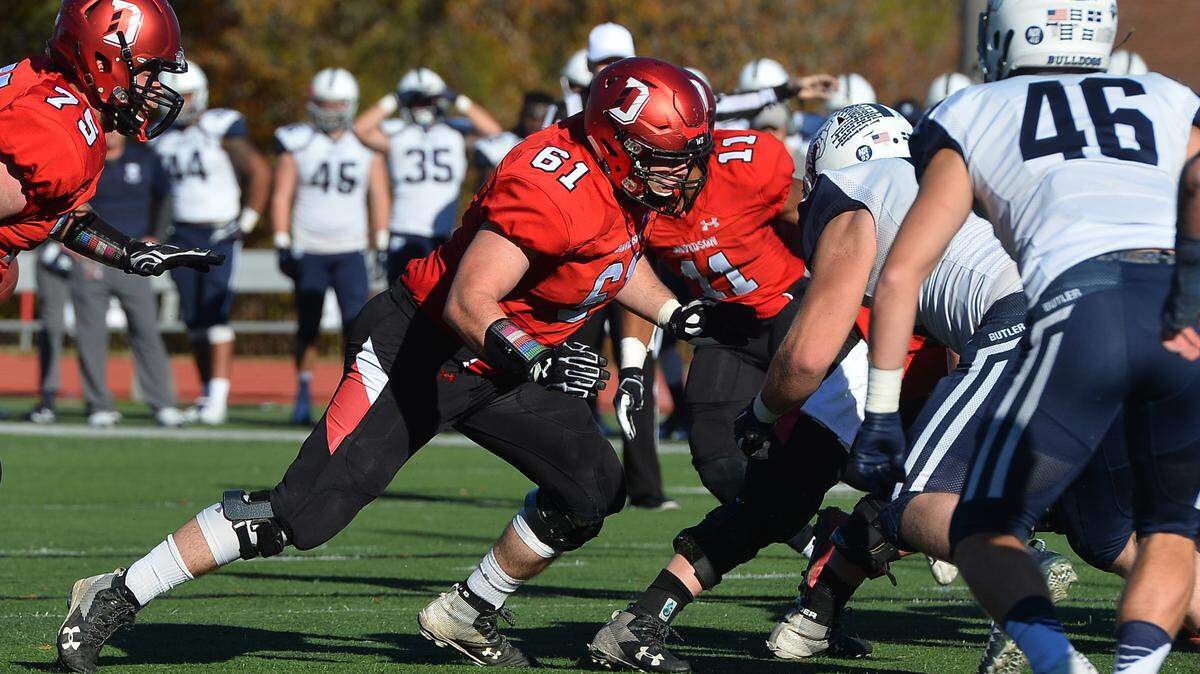
As outrage has grown in recent weeks toward racial injustice and police brutality against African-Americans, Davidson football player ChiChi Odo also felt the need to act.
Odo’s plan: From his home in Texas, he hoped to pull together other Wildcats athletes on a video call to talk about what they could do — and how they could act and help — to make a difference.
“I saw how big a social issue this had become and the climate within the country,” said Odo, a junior defensive end. “I wanted the end goal of the discussion to be about a positive step for change and how we could play a part in that.”
Working with Davidson athletics director Chris Clunie, head football coach Scott Abell and assistant coach Steven Jackson, Odo organized the call. On June 4, about 200 people watched — Davidson students, faculty, staff members and administration. Twenty-two athletes spoke, as did Clunie and Jackson.
Mostly, the athletes talked about being accountable to each other and making a difference locally and on campus, about working with the under-priviledged in the town of Davidson, involving professors in the conversation and talking with campus and local police.
“We took a real sense of immediacy from it, that we could discuss these issues as student-athletes,” said Natalie Junior, a senior on the Wildcats women’s lacrosse team. “It’s going to help us better understand these issues, help educate each other and allow us to share resources.”
Odo came up with three questions for the athletes to consider and discuss during the video:
▪ What are the ways we can serve our community?
▪ How can we educate ourselves and others on campus?
▪ What are ways that we better serve our teammates and classmates?
“It’s a lot about community outreach,” said Odo, who is majoring in psychology and wants to work in the medical field. “Expanding into different parts of our community. The real cool thing about athletics is it brings people from different ages and backgrounds. We can engage the community in a lot of creative ways.”
The voices of Davidson’s athletes have the potential to have a larger impact on the predominately white campus than at most colleges and universities. One in four Davidson students (462 of 1,843) is a varsity athlete, among the highest percentages in NCAA Division I.
“That’s why we’re different,” Clunie said. “We have all these scholar-athletes who are doing incredible things in the classroom, then they’re also competing at the highest level in sports. So they’re helping us have these conversations. They’re uncomfortable, but athletes are used to being uncomfortable, in practice and in games.
“As athletes, you know sports have the ability to transcend race. But we’ve got to go to work. You can’t just say, ‘Hey, I’m on the football team that’s 40 percent African-American, so I’m doing my part.’ The work has to be done.”
Said Jackson: “Here at Davidson, we have some of the best and brightest young people in the world, from all different backgrounds. Let’s lead the charge here. Let’s show people what it looks like. We’re encouraging them to show what they can achieve and continue to achieve.”
Davidson has had its own challenges, dealing with racial incidents involving its baseball and women’s lacrosse teams during the past school year. According to a statement released by the baseball program this week, a friend of a player was allowed access to a Davidson class held remotely on Zoom and made a “racially motivated comment.” Also, according to the statement, “(s)everal team members have apologized to a fellow student who was the subject of a racial insult in December.”
In the statement, the baseball team said it “sincerely apologizes to members of our community for the recent actions of team members that failed to live up to our community’s commitment of support for each other and to Davidson’s values of honoring the dignity and worth of every human being.”
The lacrosse incident took place last Halloween.
“It was absolutely a terrible, egregious act of micro-aggression,” said Junior. “It insulted and hurt black people and we apologized for it. We don’t stand with those actions and have taken and continue to take seriously our own rehabilitation and our own mindsets. We want to be allies, but we want to be proactive allies. We’re taking a lot of steps toward that.”
Clunie, who played basketball at Davidson from 2002-06, said he and the college have no choice but to continue these conversations and, as importantly, to act on what’s said.
“It’s hard for me as an AD, as a black AD and an alum,” Clunie said. “Finding that balance in pushing people. They want to go there, but they want to have a better understanding. You can’t just not be a racist; you have to be an anti-racist. So we all have to live that for ourselves and also advocate for each other. We have to swing back and forth. It’s not one or the other.
“We tout all these values about Davidson and Davidson athletics. But we don’t often live up to them. We’re human. It’s a blessing and a curse. But this is forcing people to challenge a harsh reality. We are going to do the hard work at Davidson. There might be gaps. But we know we all need to be better.”
This story was originally published June 11, 2020 at 2:04 PM.