
What do the NCAA’s name, images and likeness rules mean for NC State, UNC and Duke?
With the NCAA fast-tracking the ability of college athletes to be compensated for their name, image and likeness, schools also are having to fast-track their plans to comply.
The NCAA Division I Council on Monday recommended an interim NIL policy. The Division I Board of Directors is expected to approve it Wednesday. As of Thursday, July 1, it will be a new -- and financially better -- day for athletes.
That’s moving fast.
N.C. State quarterback Devin Leary, for example, could choose to begin being paid for making TV spots for, say, Amedeo’s Italian Restaurant near campus. North Carolina guard Caleb Love might look into social media avenues for potential income or monetize himself through YouTube or Instagram, where he has more than 150,000 followers.
None of that has been allowed. It will be as of July 1.
“It’s something where we’re going to be very positive about and provide the opportunity to be able to capitalize on their own personal brands,” NCSU athletic director Boo Corrigan said Tuesday in an interview with The News & Observer. “We’re going to be there to support them.
“Part of the issue, and part of the concern everyone has, there’s not a lot of left and right limits right now on where everything is. What it does mean is if an athlete is provided that opportunity, we’re going to be there to best we can to help them out and be a part of everything.”
The NCAA action was taken quickly as eight states were on the verge of enacting their own NIL laws and policies -- Alabama, Florida, Georgia, Kentucky, Mississippi, Ohio, Texas and New Mexico.
Arizona’s NIL law will be effective July 23. Twelve other states have passed laws that will go into effect between 2022 and 2025. North Carolina has not passed an NIL law.
“Being in a state that hasn’t passed anything yet, we didn’t know if we’d be allowed to do anything,” Corrigan said. “Everything has been sped up.”
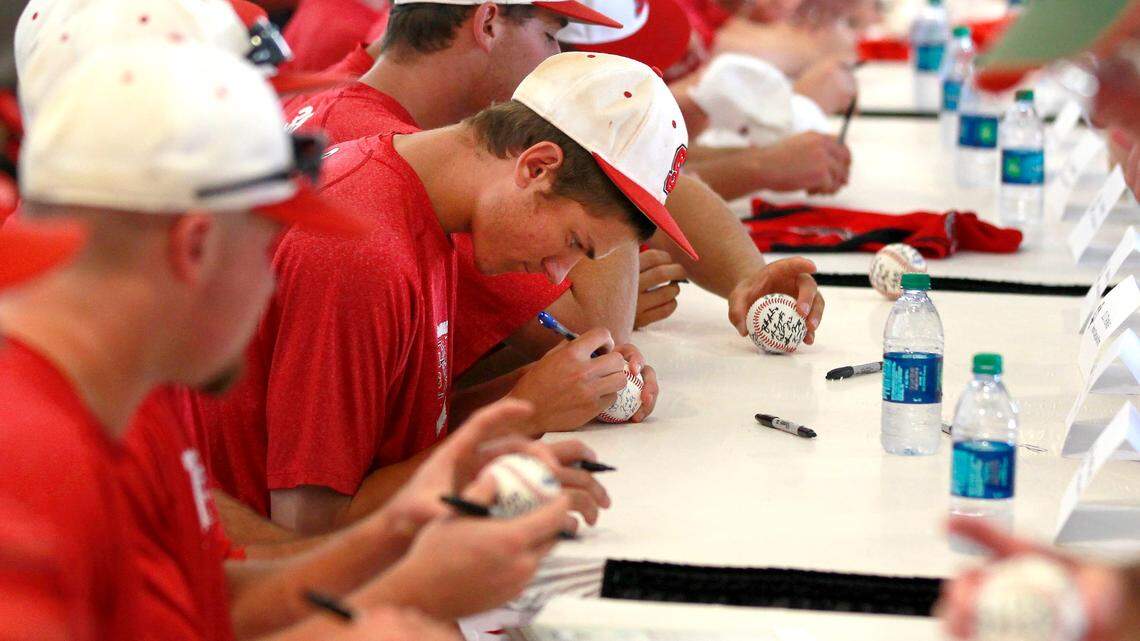
An important note is that the NIL situation is different than the Supreme Court’s ruling regarding college athletes receiving education-related benefits. NIL involves athletes entering into endorsement deals with corporations, monetizing their social media accounts or selling their autographed photos, for example.
In regards to education-related benefits, NCAA rules had capped scholarships as covering room, board, books and tuition. In recent years, schools were able to provide athletes what’s called “full cost of attendance” allowances, which include stipends to cover some expenses beyond room, board, books and tuition.
On June 21, the Supreme Court ruled even those increased limits violated federal antitrust laws because they limited athletes’ earning power.
“Nowhere else in America can businesses get away with agreeing not to pay their workers a fair market rate on the theory that their product is defined by not paying their workers a fair market rate. ... The NCAA is not above the law,” Justice Brett Kavanaugh wrote in his opinion on the NCAA v. Alston case.
That ruling means athletes can now receive equipment, like laptops, used for classwork and can accept paid summer internships just as other students have always been allowed to do.
Estimates on how much money star college athletes can make from NIL options run the gamut. What would a player such as former Duke star Zion Williamson had been worth had he enjoyed NIL opportunities? His ripped sneaker alone would have fetched a high price for him.
“No one knows that those numbers are going to be,” Corrigan said. “I still think being on a college campus, and the value of an education is enormous. Being around people on a campus who aren’t your teammates but people you’re in school with and all that is still at the core of what we do. This obviously changes that and we’re going to change to go along with that.”
Here’s how UNC and NC State have planned for the NIL changes:
UNC
UNC has tried to prepare for NIL by educating its athletes while it bolstered resources from an administration standpoint through several partnerships. The school announced its LAUNCH program just two weeks ago that is aimed at teaching its athletes how to build their personal brand.
Carolina hired Altius Sports Partners to help with “strategic guidance” from an administrative perspective.
“Tar Heel student-athletes are in a unique position to maximize on their NIL,” Altius CEO Casey Schwab said in a release. “We are proud to partner with UNC to equip the department as they prepare and empower all stakeholders in the NIL era.”
UNC will use COMPASS to help with the compliance management for its athletes and staff to monitor and track NIL deals.
UNC first began using INFLCR in 2017 and has expanded its services with NIL on the horizon. INFLCR provides software that helps athletes cull their own content for social media channels. It also provides the administration with the ability to track progress and develop a NIL strategy tailored toward recruiting.
According to INFLCR, 448 of the Tar Heels athletes used its app In 2019-20. Men’s basketball players in particular, downloaded/shared more than 4,500 photos and videos in their collective 1,178 app sessions. That was geared toward building a personal brand, now with NIL becoming official, those same social media posts could be monetized.
“The addition of INFLCR Plus will not only help coaches recruit compliantly, showcasing the brand impact that North Carolina athletics has on student-athlete brands,” INFLCR CEO Jim Cavale said in a statement. “But it will also give student-athletes additional education around their brand value and strategies they can use to improve that value and really win in the NIL era.”
NC State
N.C. State on Thursday announced the creation of the ALPHA NIL program to help the athletes maximize their brands, providing resources and support.
NCSU, in making the announcement, said it would continue to to leverage campus expertise and resources as partners in a collaborative effort to serve the athletes’ needs.
NCSU began planning early, associate athletic director Jenna McLaughlin said in an interview Tuesday with the N&O. A committee, she said, was formed in the fall of 2020 to start analyzing NIL ramifications.
“This happened fast,” she said. “On June 28 we get a release that ‘This is the interim NIL policy’ to follow. Our NIL committee got back together last night and this morning. We had the infrastructure to support NIL and it’s just making sure that our institutional expectations of our student-athletes and our coaches are clear.”
McLaughlin said a meeting was held Tuesday with all the Wolfpack coaches and that another would be held Wednesday with the Pack athletes.
“Yes, it happened fast but I think as we’re prepared as we possibly could be for it,” McLaughlin said.
McLaughlin said NCSU signed with INFLCR, a major marketing and branding company, to track financial disclosures of the athletes. She said the NCAA in its interim NIL policy did not mandate that athletes disclose.
“Do we want to monitor that? Absolutely, and we will have a platform for them to disclose,” McLaughlin said.
N.C. State announced in December 2020 that it had signed a five-year, department-wide agreement with INFLCR to help Wolfpack athletes build personal brands on social media.
INFLCR, which has more than 700 NCAA teams as clients, will provide NCSU athletes, coaches and staff access to thousands of photos, videos and graphics produced by N.C. State Athletics and delivered through the INFLCR software and mobile app. They then will be able to share that content on their personal social-media channels and apps.
“I think that may be one of the larger avenues they have, through social media, rather than running camps or something like that,” Corrigan said.
College recruiting? The new NIL policy will change it, although that’s another gray, wait-and-see area for administrators, coaches and the potential recruits.
“I think what we owe to everyone who comes in is to know exactly what your platform is, know exactly what you can do, know exactly what you can’t do,” Corrigan said. “Letting them know that it is important to us that they be able to capitalize on this.”
Corrigan noted that athletes also could receive the support of NCSU’s Entrepreneurship Program to enhance their personal brands.
NCSU said that program would help form a multi-tiered educational program for its athletes, beginning with the ALPHA Summer Series.
“The aim of all educational programming will be providing exposure to foundational knowledge in all areas of entrepreneurship, including financial literacy, brand management and decision-making while continuously meeting the advanced needs of student-athletes,” NCSU said in Thursday’s release.
Duke
On Thursday morning, Duke issued its NIL policy for students, allowing them to begin receiving financial compensation.
“Continuing to enhance the student-athlete experience is paramount, and this is a significant step in the right direction,” said Nina King, who is taking over for the retiring Kevin White as Duke’s athletics director this summer. “With the initial parameters in place, we’ll now turn our focus to education and support while remaining flexible and adaptive. I’m absolutely thrilled for our student-athletes and the exciting new opportunities that lie ahead.”
Duke athletes are allowed to use professional representation for NIL activities but must disclose this and any activities to the athletic department. The agents must be registered with Duke and, where applicable, with the state of North Carolina under terms of the state’s Uniform Athlete-Agent Act.
The policy specifically bans athletes from receiving payment for work not performed or for their initial or continued enrollment at Duke. Players are also not allowed to receive compensation tied to specific athletic achievements, like, for example, scoring 30 points in a basketball game or three touchdowns in a football game.
It also says any use of the school’s name, logos, symbols, facilities or images are not allowed for use in NIL unless they comply with Duke’s trademark licensing policy.
Any benefits, like use of Duke facilities or departmental resources, provided to athletes must also be available to the general student body.
Athletes are prohibited from any NIL activity tied to gambling or performance-enhancing products that are on the NCAA’s banned substance list..
NIL activities are not allowed during team activities, such as practices, competitions or team meals.
This story was originally published June 29, 2021 at 5:18 PM with the headline "What do the NCAA’s name, images and likeness rules mean for NC State, UNC and Duke?."
