As NIL debate continues, ACC looks to navigate ‘turbulent’ future for college sports
While there is no way to predict exactly where the biggest of big-money college athletics is headed, most inside the business insist they saw almost a year ago what it would become when college athletes at last received the right, without much limitation or oversight, to monetize their name, image and likeness (NIL).
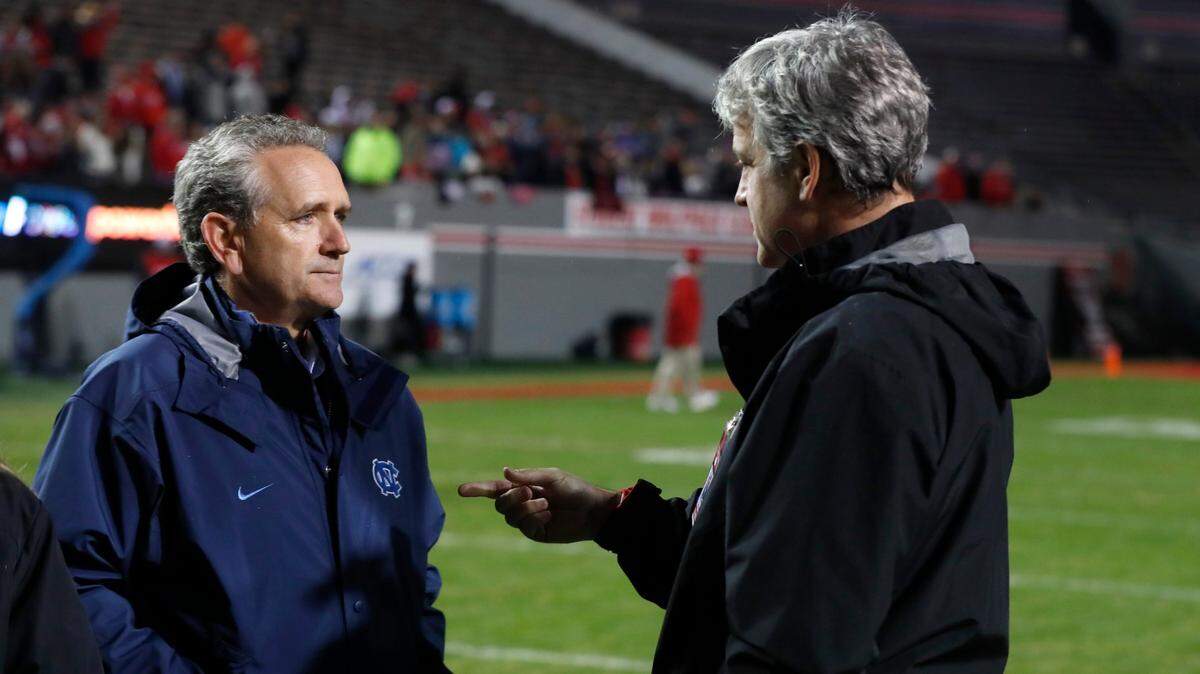
“Everyone right now in the industry, if you talk to your compliance person and you talk to your coaches, predicted what would happen,” Bubba Cunningham, the athletic director at North Carolina, said in a lamentable tone last week at the end of the ACC’s annual spring meetings.
At times those meetings took on the feeling of a group therapy session. Behind closed doors at the Ritz-Carlton on Amelia Island, outside of Jacksonville, Florida, administrators and coaches bemoaned the free-for-all of this still-new NIL era; its devolution into pay-for-play by another name. For so long, those administrators and coaches had held all the power in college sports. Now that dynamic is changing, thanks in no small part to NIL, and there’s frustration if not panic.
The complaints surrounding NIL last week among ACC coaches and officials were, and are, many: The lack of oversight or enforcement; the confusion over rules that appear to exist in name only; the additional confusion over NIL-related laws that vary from state to state; the lack of a standard for what any athlete’s NIL market value should be. And that’s just the start, not to mention tampering — “one of the major issues in college football,” Wake Forest coach Dave Clawson said — or NIL’s unintended effect on recruiting.
‘Looking for clarity’
The answers, meanwhile, are much fewer. Welcome to the world of college athletics in 2022, where the endless uncertainty and constant hubbub around all things NIL represent but a microcosm of the state of the overall enterprise: No one knows how to address the myriad challenges surrounding college sports, or even how the challenges of today will morph into those of tomorrow.
In the meantime, let there be grumbling. There was no shortage of that at the ACC’s meetings, much of it devoted to how NIL deals have changed the game, both literally and figuratively.
“My take is, we went too fast, whoever ‘we’ is,” said Mack Brown, the North Carolina head football coach. “And we didn’t understand the consequences before we made the initiative. And now we’re figuring out all the things that we should have thought about before it started, and we’ve got to figure out how to fix them.
“Because it’s harder to put the toothpaste back in the tube after it’s already out.”
The day that ACC athletic directors and coaches first convened at the Ritz was the same day, May 9, the NCAA announced a belated effort to rein in pay-for-play inducements disguised as NIL deals. Such transactions have always been against the rules, those both at the NCAA level and throughout states that have tried to outlaw pay-for-play under the guise of NIL. But enforcement has been missing from the start.
There wasn’t optimism among ACC coaches and athletic directors that anything would change. Nor was there a consensus, even, on what the NCAA’s guidelines actually mean. They’re meant to curb booster involvement in NIL deals, yes, but days after the NCAA released those guidelines coaches were still attempting to grasp what, exactly, the rules are. And this was more than 10 months after a defeated NCAA reluctantly allowed athletes NIL rights last July 1.
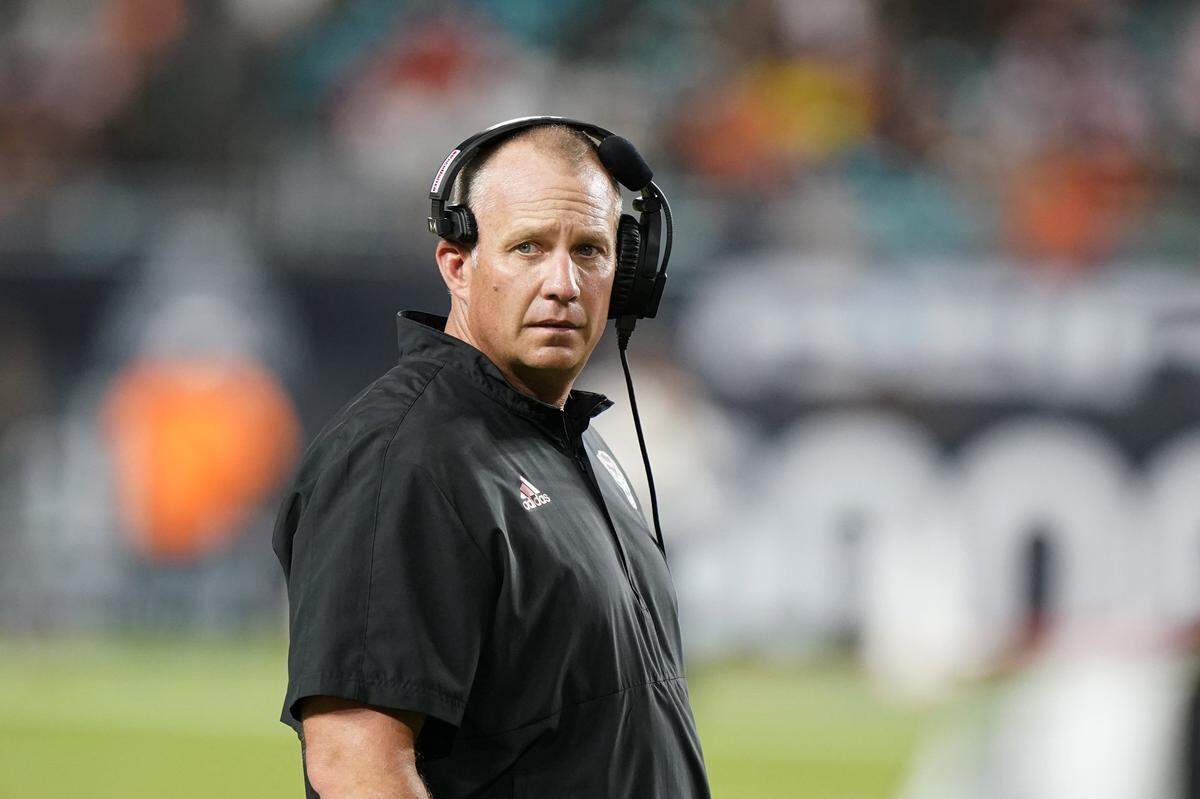
“The problem you have is the one-time transfer rule has created opportunities for players to go somewhere immediately,” Dave Doeren, the N.C. State football coach, said. “And because that came into play at the same time as these NIL deals, you now have incentives for players to go into the portal and leave. And that was not the intention of NIL.
“It was not the intention of the one-time transfer rule. So they need to enforce whatever these guardrails are and I think we’re all looking for clarity right now. Looking for leadership like to see, all right, are these the rules? If they are, explain them to everybody — educate us, educate the players. And then enforce them. And let’s just have a level playing field that we all abide by, and that would be great. But right now there’s zero enforcement on it.”
Nor is there any indication that additional clarity, or education, will arrive any time soon. Jim Phillips, now about a year and a half into his tenure as ACC commissioner, tried to calm league coaches last week, and emphasized that “we’re not unwinding NIL ... and going to go back to yesteryear.”
“We are in a different place in college athletics,” Phillips said, repeating for reporters what he’d shared with the conference’s football and basketball coaches, “and we have to embrace it and move forward with these new rules of engagement. The (Supreme) Court has told us how they feel.”
‘Permissive language’
Like NCAA President Mark Emmert, who recently announced that he will relinquish his position by June 2023, Phillips argued that the questions facing college athletics, particularly those related to NIL and broader athlete compensation, are too big for those within the industry to solve. For years, the NCAA and its member schools fought any kind of model that would allow athletes to receive compensation beyond their scholarships.
Change came slowly, first in the form of full cost of attendance payments, and then through the Supreme Court’s ruling in the Alston case, in 2021, that the NCAA could not limit academic-based payments to athletes. That ruling, narrow in scope, came with the broader implication that the foundation upon which college athletics had been built was on shaky legal ground; that, indeed, the premise behind the entire enterprise no longer held up, at least not in a court of law.
In his concurring opinion in that case, Justice Brett Kavanaugh’s final three sentences struck an ominous tone, and took aim at the heart of the NCAA’s traditional business model: “Nowhere else in America can businesses get away with agreeing not to pay their workers a fair market rate on the theory that their product is defined by not paying their workers a fair market rate,” Kavanaugh wrote. “And under ordinary principles of antitrust law, it is not evident why college sports should be any different. The NCAA is not above the law.”
Now, though, Emmert and Phillips and others within the college athletics machine expect the law to save the NCAA. Or, at the least, provide the sort of guidance surrounding NIL that the NCAA has not provided.
“We need federal legislation,” Phillips said, though moments later he conceded that “it really doesn’t feel like” a Congress-backed national NIL standard is “a priority in Washington, D.C. right now.”
“So let’s not say, ‘Hey, maybe tomorrow’s going to be better or next week’s going to be better,’” Phillips said. “We deal with what we have right now. We deal with the permissive language right now that we have. And we try to make sure that we hold each other accountable for what we’re seeing out of the industry.”
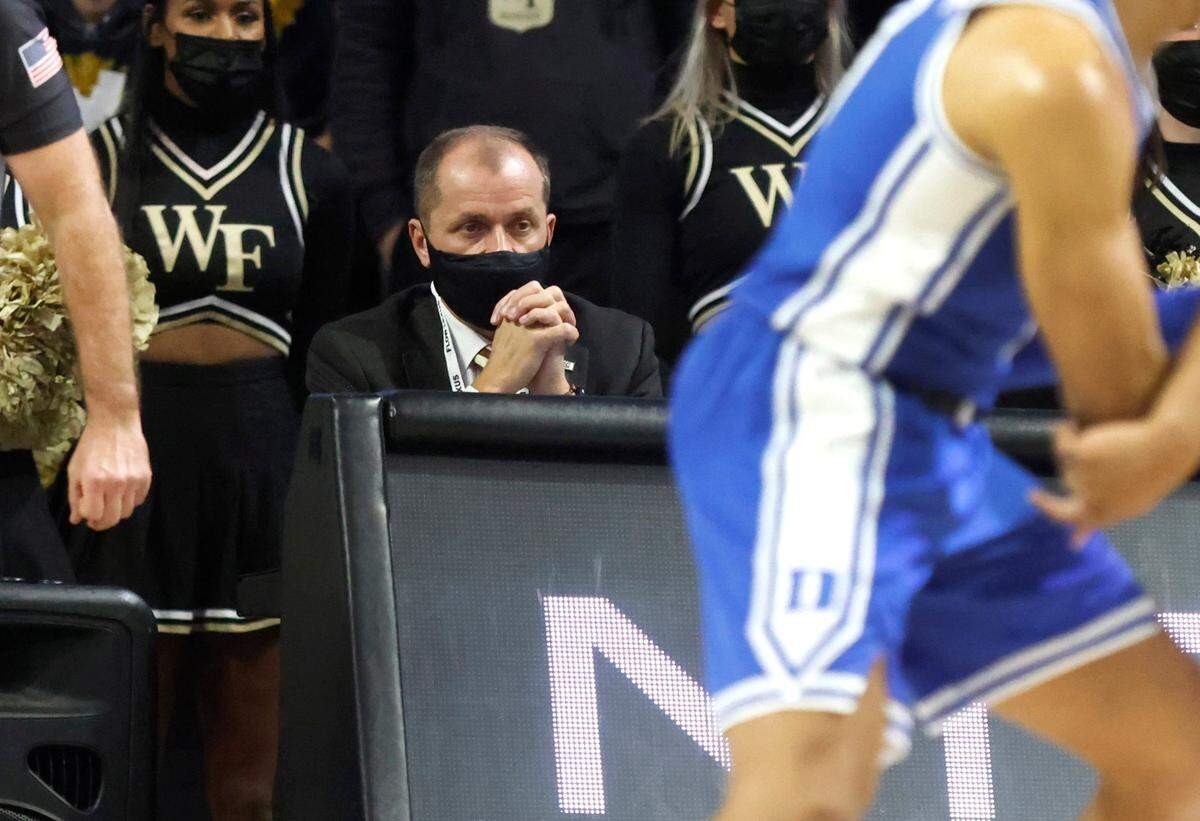
The problem, several coaches said last week, is there’s no mechanism in place to hold anyone or any school accountable for potential misdeeds. Nor is there a consensus on what a misdeed is.
Take tampering, for instance. It is generally accepted that it is against the rules for one school to contact an athlete at another school and tempt that athlete to transfer with the promise of money related to a potential NIL deal. Yet, as Brown, the UNC coach, said, “We don’t know for sure what tampering means,” or how it is defined.
Is it tampering when an athlete’s former high school teammate or coach makes first contact? Is it tampering if another school’s booster expresses interest in arranging a deal with an athlete? Is it tampering only when an official coaching staff member from another school is involved?
“One of the worst things is that with the combination of the NIL and the transfer portal, we’re having people steal people off teams,” Brown said. “And that’s not what this was meant to be. And that can’t continue to happen.
“It just — it’s not fair to FCS teams. Their best players are gone. It’s not fair to any of the teams that lose players. And I’ve got friends in this business that have just absolutely had players bought off their campus. And that’s not the purpose, and that’s not the way it should be.”
Doeren, the N.C. State coach, could name examples: “Georgia Tech lost their running back,” he said. “OK, Louisville lost their receiver. A few years ago, Wake Forest lost a quarterback, you know, as a two-year starter to an SEC team.
“This isn’t a new thing. It’s just now a public thing. And you know, it’s not good for the game.”
‘Treading water’
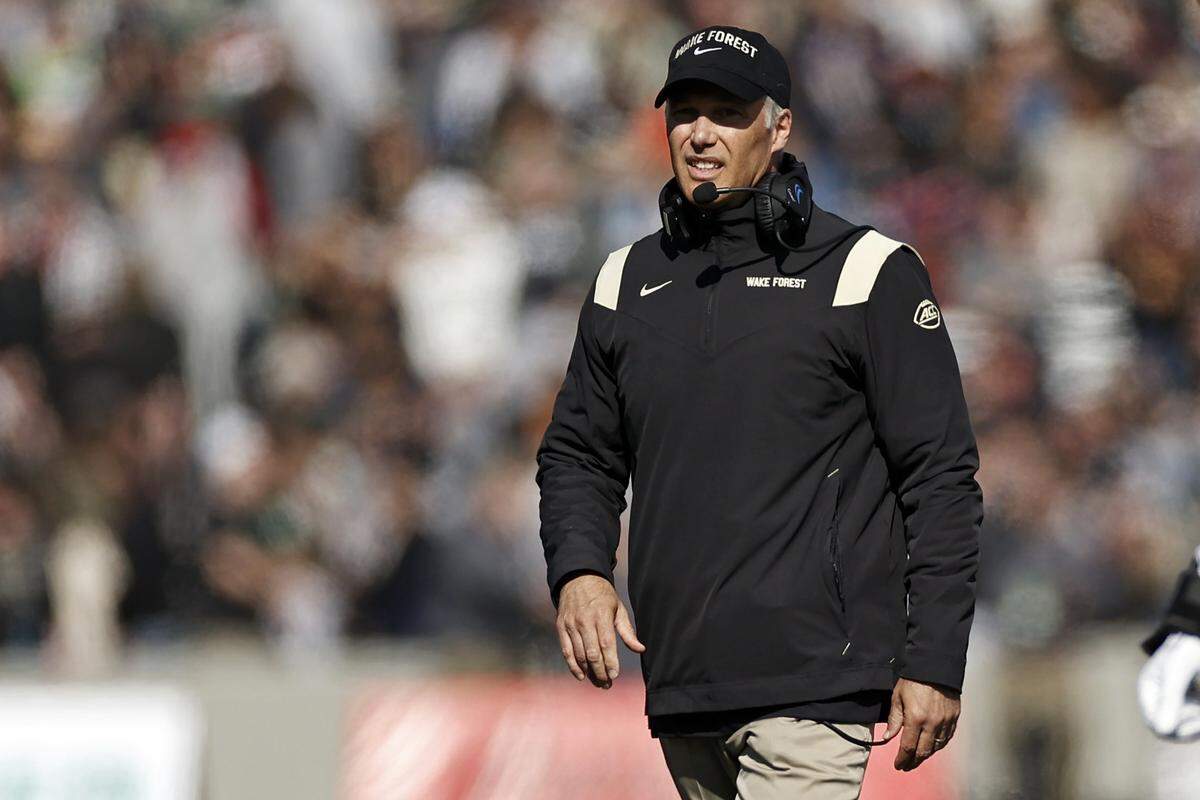
At Wake Forest, Clawson and his staff have had to fight to keep players they’ve developed from being swayed to leave. In the football coaches’ meeting last week, Clawson said, it became something of a running joke: It’s almost better these days, he said, for a good player not to make an all-conference team. That way, there’s more of a chance he can stay under the radar, and doesn’t become a target of a higher-profile program.
“There doesn’t appear to be any enforcement,” Clawson said of tampering. “And so nobody’s quite sure what the rules are and it’s like a road without a speed limit, right? If the speed limit’s never enforced, people are going to drive fast. And so right now, we don’t know what the rules are and if there are rules and they’re broken, there doesn’t appear to be any consequences for breaking them.”
Nor is there an understanding, or standard, that provides clarity of what’s a legitimate NIL deal and what’s pay-for-play. Some coaches and athletic directors last week advocated for what Cunningham, the UNC athletic director, described as a “third-party administrator” as a kind of overseer of NIL deals. The lack of such a thing, Cunningham said, had proven to be “the biggest miss” in the NCAA’s forced, begrudged rush into the NIL era.
“If you had a third-party administrator, it’s not about restricting anybody’s ability to be compensated,” Cunningham said. “It’s simply about disclosure of the information of the compensation. You could then determine a market value.
“Then you could apply some standards to it and say, this is beyond the pale, therefore it’s a potential violation. Right now there’s no way to know what’s fact and what’s fiction based on what you’re reading and seeing. And that is problematic.”
The conversations pertaining to NIL come at a particularly perilous time for college athletics. With Emmert’s impending departure, the NCAA will be restructuring its leadership. There’s more momentum than ever behind the idea of football breaking away from the NCAA, and the formation of a new governance structure.
A proposed piece of legislation in California, which was the first state to allow college athletes the ability to profit off of their name, image and likeness, would further upend college sports and force schools to share revenue with athletes — though it’s a long way from becoming law. And then there are all the conversations of the day about how to rein in pay-for-play through NIL deals.
“I haven’t had any conversations with anybody on the NIL committee or at the NCAA level about what are you going to try to do to fix this,” said Cunningham, who added that “I have no confidence that they’re going to be able to do anything.
“And they’re transitioning leadership at the NCAA level — I think we’re going to be treading water for another 24 months. It’s going to take nine to 12 months to get a new CEO; nine to 12 months for the CEO to get his or her organization in place and convince people this is the right direction to go. It’s going to be turbulent for at least two years.”
This story was originally published May 18, 2022 at 6:15 AM with the headline "As NIL debate continues, ACC looks to navigate ‘turbulent’ future for college sports."