With offense up and complaints few, the new NCAA charge rule is no flop
There’s a famous old story about the late Jim Valvano speaking to summer basketball campers as he worked his way up the college basketball ladder. He’d work the kids into a frenzy, and they’d spend the rest of the week darting out from behind pillars and around corners and inside lockers because he’d convinced them to take a charge any time a counselor walked by.
This anecdote was, of course, designed to capture Valvano’s ability, even as a younger man, to captivate an audience, to motivate and instruct, to push the boundaries of the possible. He could talk anyone into anything, that was the point, even jumping in front of otherwise unsuspecting people to show just how badly they wanted to help their team win.
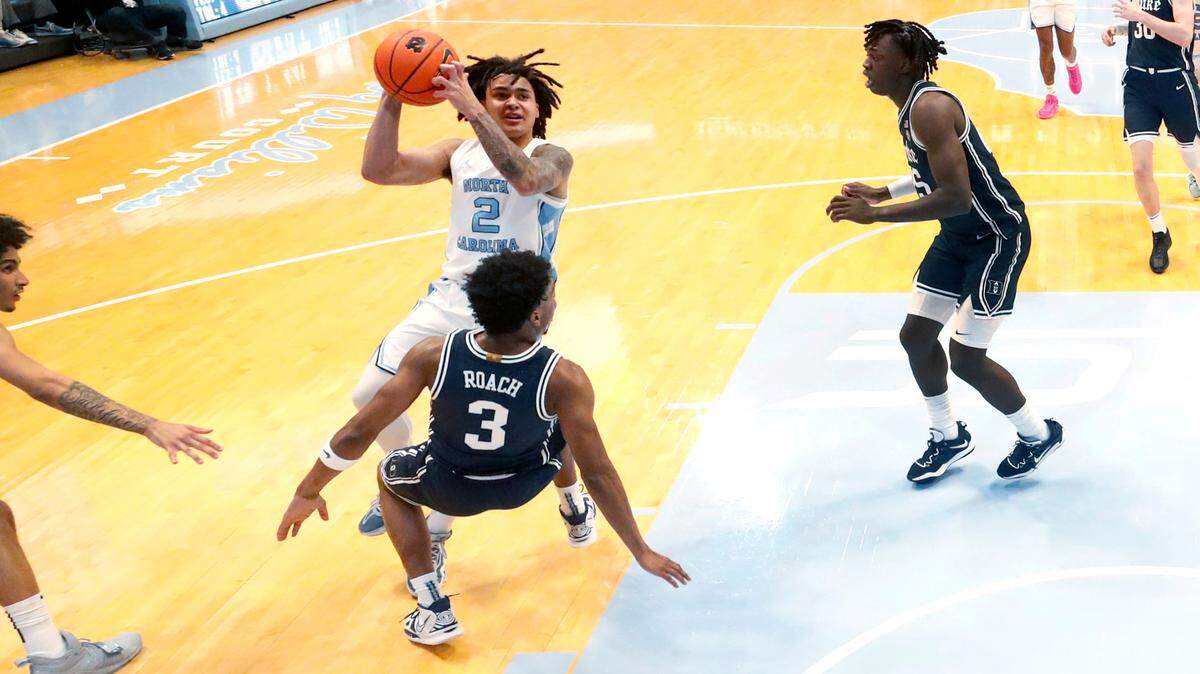
For most of the past 50 years of college basketball, that’s been the way taking a charge has been viewed. A hustle play. Taking one for the team. Go get ‘em. It was something anyone could do, if they wanted it badly enough, regardless of skill or talent. The charge-taking help defender sliding in front of a driving attacker became a signature feature of some programs, like Duke in its pomp under Mike Krzyzewski, or anywhere Buzz Williams has gone.
Finally, someone realized, in a game elevated and distinguished by sublime skill and talent, maybe that wasn’t such a good thing. So much so that the charge as we knew it was quietly and almost entirely removed from college basketball by a rule change this season, and few have complained.
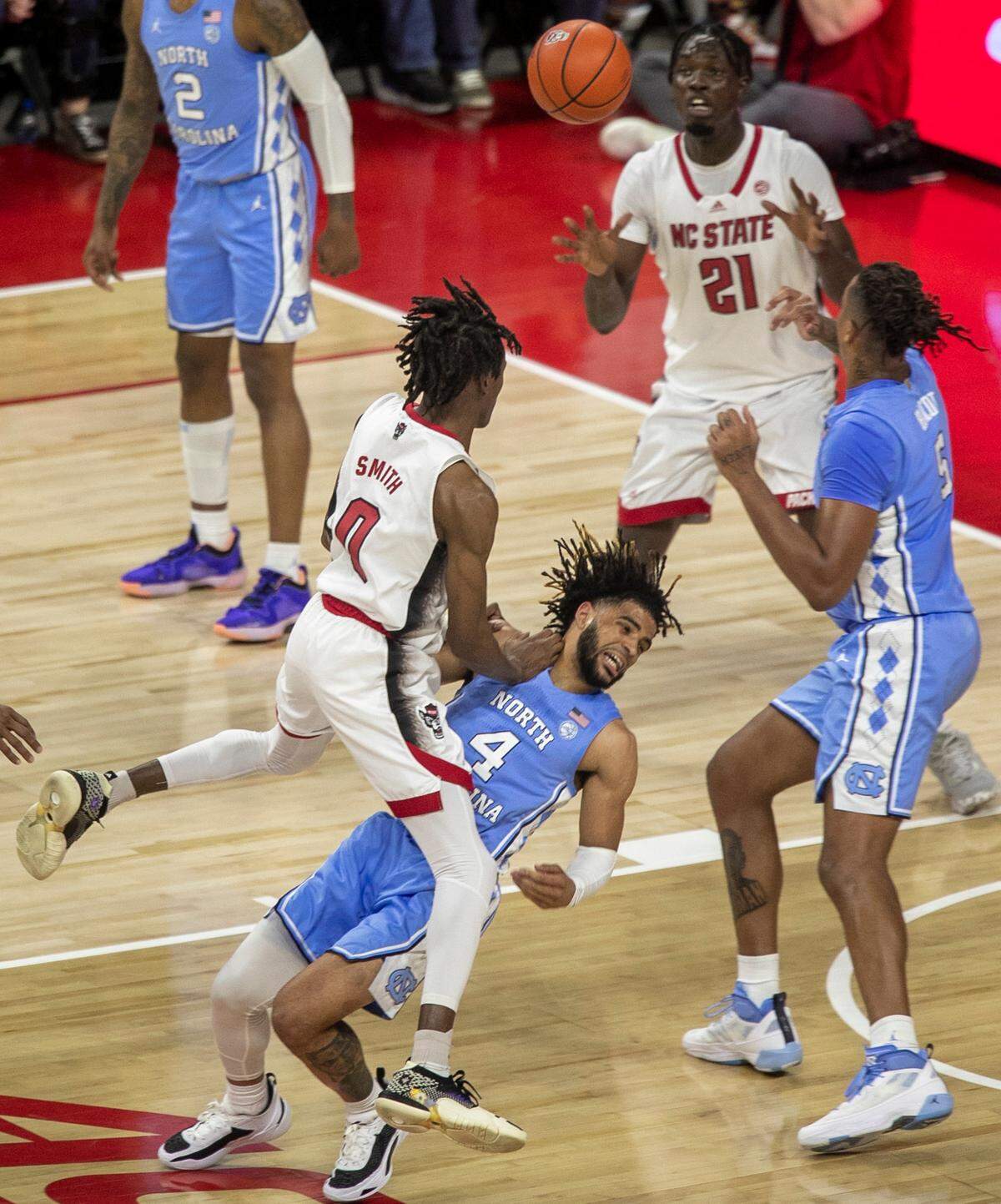
Most NCAA rule changes usually provoke some level of lament from coaches forced to change their usual ways. Not this one. A simple offseason change in the definition of a charge, essentially placing the burden of proof on the defensive player instead of the offensive player, has essentially de-chargified college basketball.
Under the old rule, a defender had to be in position before the offensive player left the floor. Now, it’s when the offensive player plants his foot to leave the floor. That small difference has had a massive impact.
It’s hard to argue with the results: Offense is up. One of the hardest 50-50 calls in the game has become easier to officiate thanks to the new standard. There are still offensive fouls called when out-of-control players barge into an unsuspecting opponent, as there should be. But the days of simply being rewarded for getting in the way are over.
“We don’t teach charges anymore,” Duke coach Jon Scheyer said. “It’s going to be a low-percentage play. There’s a difference if you’re on the ball and a guy’s going through your chest and you can make that play then. But as a secondary defender coming over, you better be really early to take the charge.”
The charge, as we knew it, has become obsolete.
“I’m not sure it could have worked out any better than it has,” said Chris Rastatter, the NCAA’s supervisor of officiating.
A dramatic decrease in offensive fouls
While the NCAA’s reasons for wanting to reduce the number of charges vary — from increasing offense to reducing contact — there’s no question it has tried in the past. Before the 2011-12 season, the NCAA added the restricted arc under the basket, making any attempt by a secondary defender to draw a charge in that area an automatic blocking foul.
Even that was a difficult play to officiate, forcing an official to watch not only the offensive player’s movements and when the defensive player got into legal guarding position, but where his feet were relative to the circle. That’s a lot to watch at full speed.
In some ways, the restricted arc had the same flaws as the NCAA’s attempt to change the definition of a charge during the 2014-15 season. That season, the rule was altered so that a defensive player had to be in position before the offensive player started his “upward motion to the basket.” It turned out to be an extremely difficult determination for an official, and the NCAA went back to the old standard after the season.
“Guys were out at the foul line taking three steps and we were giving them and-ones,” said Rastatter, who was still working Pac-12 games then. “We were all over the board.”
The goal of this summer’s change was twofold: To reduce the kind of hard contact that drawing a charge often generated under the previous rule, and to do it in a way that officials would be able to internalize without changing the workflow of what they’re watching. The standard — the planting of the launch foot — is supposed to be something that officials can more easily perceive in their normal patterns of observation.
“Stick to the fundamentals, which is find the secondary defender,’ Rastatter said. “Don’t try to outsmart the system. I’m just telling you, over 90 percent of the time, that secondary defender is going to be late.”
In practice, it’s still been a difficult play to officiate. Initially, officials were calling almost everything a block, because they had a hard time noticing when the defensive player was actually in position. For longtime basketball officials, old habits died hard. But Rastatter has continued to pound the message, and it seems to be getting through.
“I totally think it works,” veteran official Roger Ayers said. “It does what they wanted to accomplish. We weren’t very good on block/charge plays. Anytime there was contact in the chest, regardless of their feet, that was probably going to be an offensive foul. Now, this puts the onus on us to look more closely at the defender.”
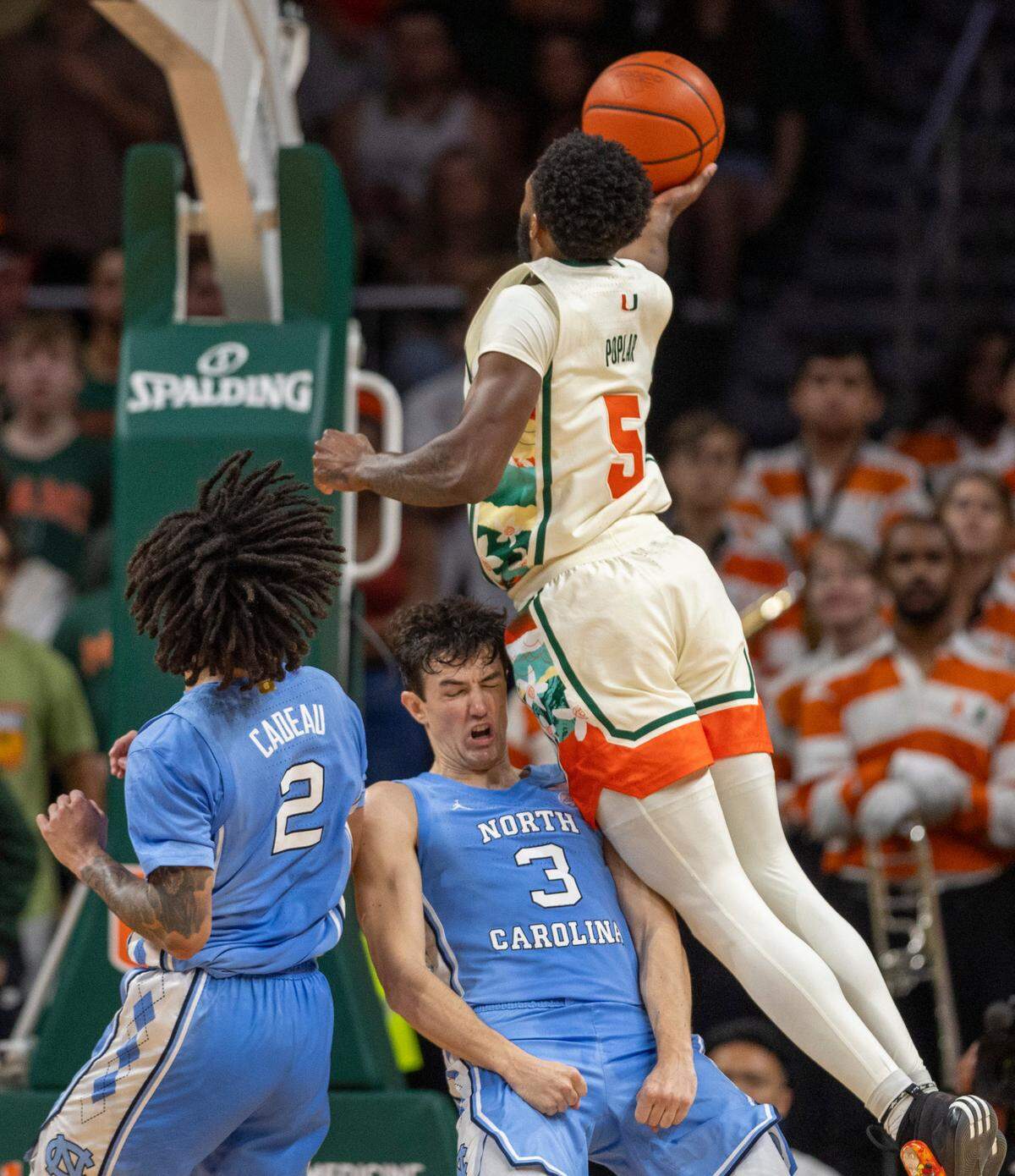
The difference has been dramatic. According to play-by-play analysis by Ken Pomeroy, offensive fouls declined slightly last season, thanks presumably to the institution of a sporadically called technical foul for flopping, but have declined drastically this season, from 3.72 per game two years ago to 3.47 last season to 2.23 per game as of Feb. 4, a figure that has remained constant throughout the year.
Since that figure also includes illegal screens and offensive-rebounding violations, which have presumably remained constant, the drop-off in charges is even more dramatic by comparison. Meanwhile, officials have been more accurate and consistent with those difficult plays, Rastatter said.
Offensive efficiency at record levels
Within the ACC, conference supervisor Bryan Kersey said his figures indicate that not only are block/charge plays being called correctly more often in ACC games than a year ago, there are fewer of those plays to officiate under the basket, an indication that coaches, players and officials alike have all adjusted.
“Absolutely,” Kersey said. “We’re getting it right a lot more than we’re getting it wrong, especially this time of year.”
The net result? Across college basketball, non-steal turnovers are dramatically down and offensive efficiency across college basketball is the highest it has been in the 28 seasons Pomeroy has been tracking it. The impact has been stunning.
There may be other factors involved in the scoring surge, like the proliferation of older players thanks to the extra Covid year, but all signs point to the block/charge balance being tilted back toward the offense. Which was precisely the goal, over the summer, when the rule change was proposed.
“More rhythm, more flow, scoring is up,” Rastatter said. “I like where we are.”
The NBA figured this out a long time ago: People buy tickets to see great plays, not other players get in the way of those plays. But resistance was strong at the college level, because the dirty secret about the charge is that coaches, collectively if not unanimously, love them.
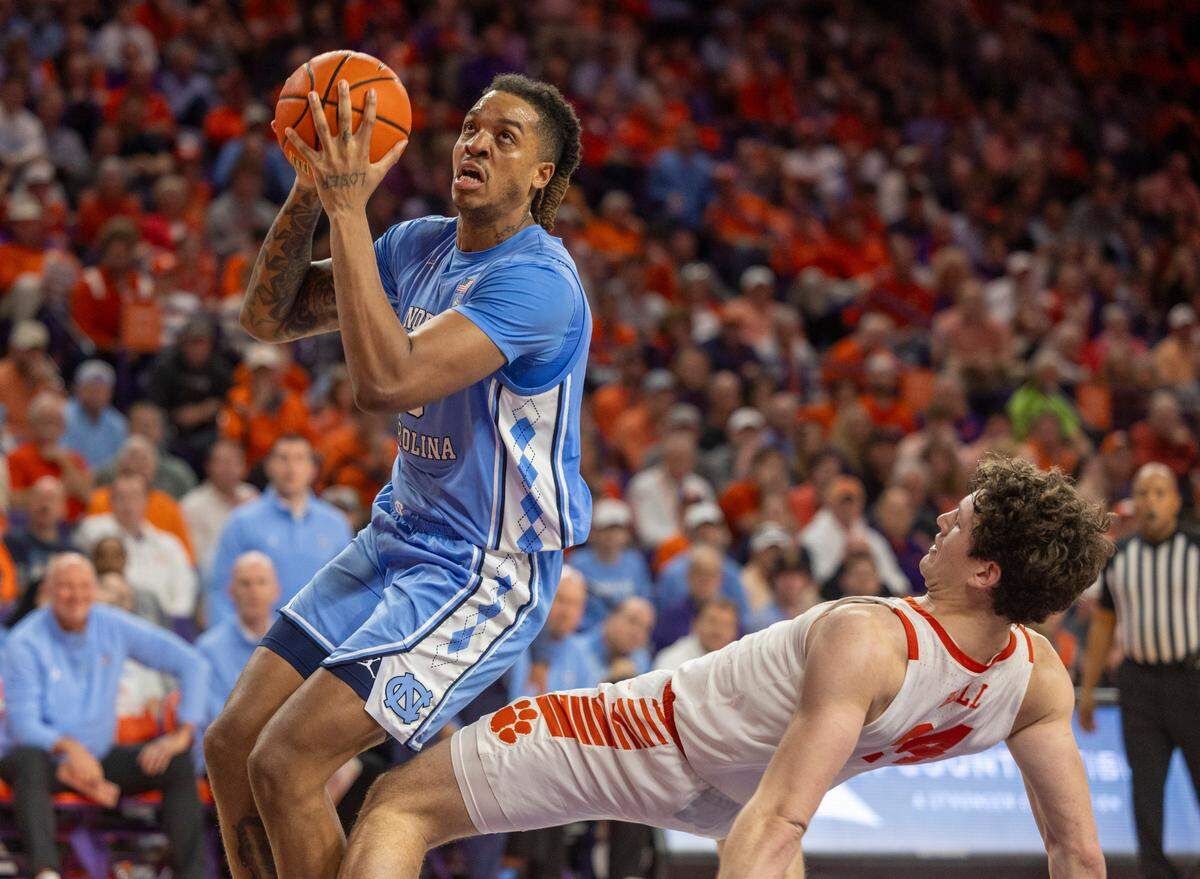
It’s very difficult to teach a player how to take off from just inside the 3-point line and throw down a tomahawk dunk. But it’s very easy to teach someone how to slide under that player and try to take a charge. For teams that were less skilled, less athletic and less talented, taking a charge was a great equalizer. And for lesser coaches, it became a crutch.
“Recruit better,” said Wake Forest coach Steve Forbes. “I always thought it rewarded the nonathletic versus the athletic. This was a major issue for me in the (Southern Conference). I had a real problem with it in the SoCon. It was all a bunch of flopping, because we were more athletic than almost every other team we played. I did not like it.”
Now the pendulum is swinging back the other way, and the game is better off for it. Charges are down. Offense is up. The game has changed, hopefully for good. The days when merely getting in the way was rewarded are over.
There’s no going back. For anyone.
“I’ve called blocks and been running down the court, and coaches have asked me, ‘Roger, would that have been a charge last year?’” Ayers said. “My answer is usually, ‘Absolutely.’”
Never miss a Luke DeCock column. Sign up at tinyurl.com/lukeslatest to have them delivered directly to your email inbox as soon as they post.
Luke DeCock’s Latest: Never miss a column on the Canes, ACC or other Triangle sports
This story was originally published February 17, 2024 at 8:00 AM with the headline "With offense up and complaints few, the new NCAA charge rule is no flop."