In Charlotte, there’s an HBCU conference head whose pioneering legacy is hard to overstate
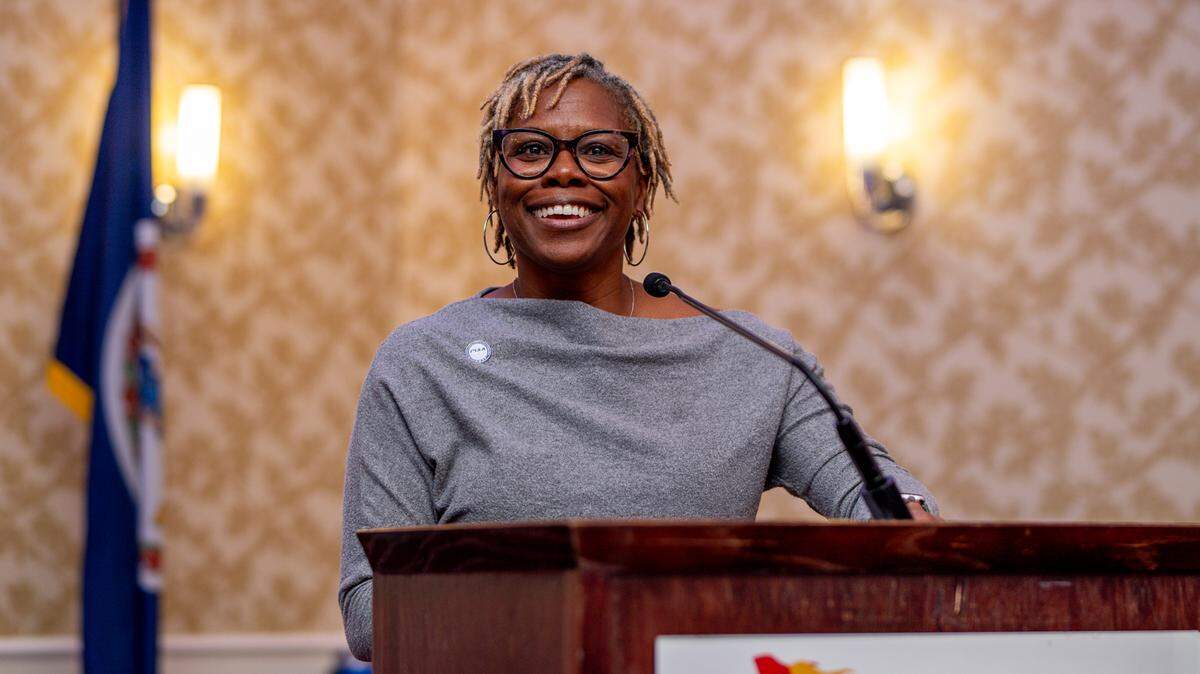
Last week, one of the city of Charlotte’s highest-ranking officials in college athletics said something out loud that most people would agree with:
She said the Central Intercollegiate Athletic Association has been “really good for me” and that “it has opened up doors” that were previously closed to her.
That, of course, is only half the story.
The other half?
Jacqie McWilliams-Parker has served the CIAA quite well — and really, for most of her career, it appears she’s been the one opening doors for others.
McWilliams-Parker, the commissioner of the CIAA, is a pioneer in college athletics. In fact, it’s a bit of an understatement to say such a thing. The Colorado Springs, Colorado, native and Hampton alumna became the first Black woman appointed as the commissioner of any conference in all of the NCAA — Division I, II or III — when she was appointed to her post in 2012.
What she’s done for the DII conference for historically Black colleges and universities — one she has represented as a player, as a coach, as an administrator and now as commissioner — is well-documented. That includes her role in balancing budgets as well as brokering broadcast deals with ESPN.
But the biggest role she’s proud of fulfilling, by virtue of her position, is that of a mentor. When she became the first Black woman college conference commissioner, there was a pressure, she said, to not be the last: There are now seven Black women commissioners — including Sherika Montgomery of the Big South, which is also based in Charlotte — and that is undoubtedly entangled in her legacy.
Whenever someone asks if she’s living a dream, she tells a story from decades ago, when one of her colleagues at the NCAA asked her a prescient question:
“Pie in the sky,” her colleague began, “When you get big, where do you want to go?”
McWilliams-Parker responded: “I want to be a commissioner, and I want to be the commissioner of the CIAA.”
“I spoke it again a couple years later,” she said, “and here I am.”
In celebration of National Girls and Women in Sports Day, The Observer sat down with McWilliams-Parker to discuss her life as an athlete, her career path in college athletics, the possibility of the CIAA’s end-of-season conference basketball tournament returning to Charlotte and more. The interview below has been edited for clarity and brevity.
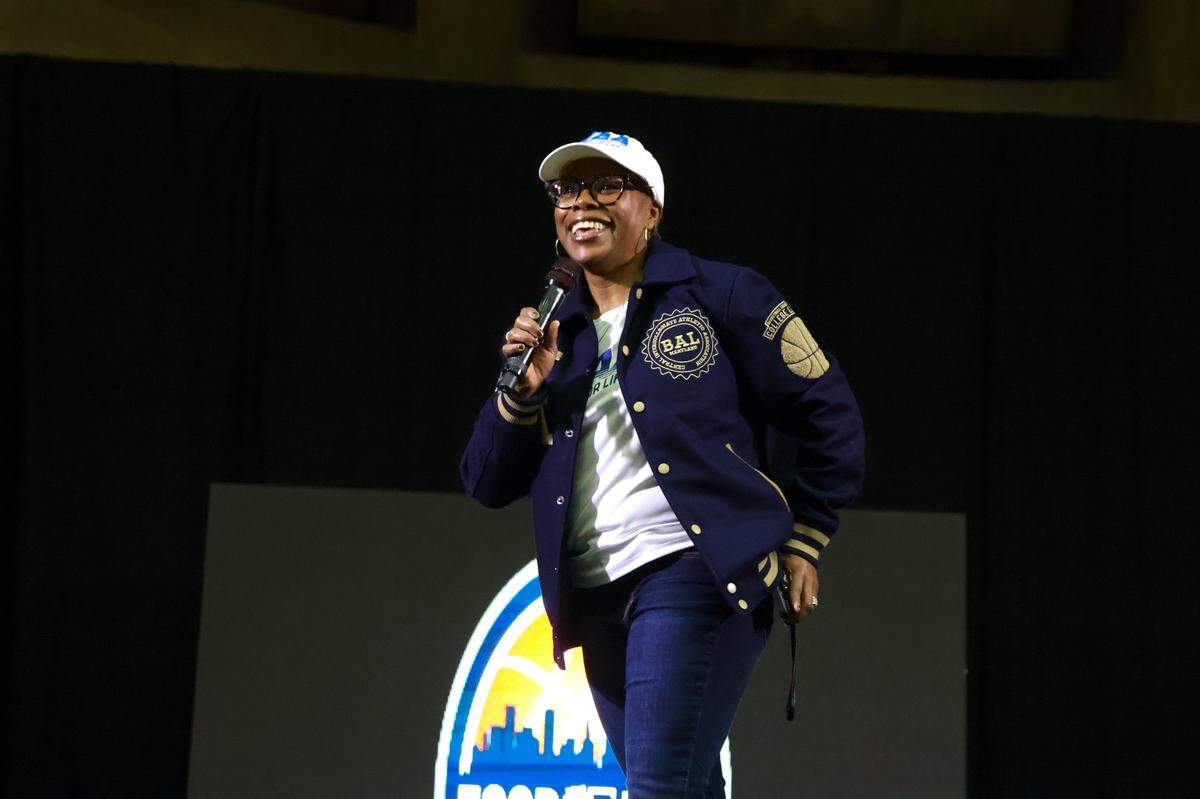
A military child with ambitious athletic dreams
Alex Zietlow: So you were born in Colorado Springs but were the child of a military family, so you moved around a lot. Where all did you grow up?
McWilliams-Parker: Germany. California. And Colorado. We lived in Germany twice. Lived in California. And in-between, we moved back to California and then to Colorado again. And that’s where I did seventh grade through high school.
Z: Was it an athletic military family? (Her father, Lawrence, was in the army. Her mother’s name is Eunice; her sister’s name is Tiffany.)
MP: My mother was athletic. She just never had the chance to play. My mom was born in 1946. She loved sports. She watched sports much more than my father did. And she advocated for me to play. ... My mom had me in all kinds of activities. I was born in 1969. I was bowling at 5. I loved double-dutch. I was a skateboarder. A roller skater. I tell people this all the time. I loved to ride my bike. I ran track. I didn’t get into organized sports, really, until we moved back to Colorado.
Z: How’d you get from Colorado Springs to Hampton?
MP: I was being recruited (in basketball) by a couple of schools in Colorado, in Nebraska and some other areas, small colleges. I wanted to go to CU (Colorado) originally and play for Ceal Barry. And I was a volleyball player, too, so I ran track, volleyball, basketball, but I still wanted to play two sports. But I knew basketball — I was a Gazette All-American for the state of Colorado. So anyway, (my vice principal at Sierra High School) said, ‘Well here are some schools on the East Coast.’ Because I didn’t want to go South. My family is filled with HBCU graduates. Jackson State, Southern. My sister went to Alabama State. And I didn’t want to go South. But I wanted to go somewhere east. And so she said: Hampton, Howard, Morgan State, Spellman. Those were the four colleges we talked about.
We didn’t have Google, we didn’t have the internet, I looked up schools in the encyclopedia, heard Hampton was the ‘home by the sea.’ And they had a really good basketball team. So my vice principal called Hampton University, had me in her office, and we called Coach James Sweat, who was my coach that freshman year. He didn’t have any more scholarships. But he offered me the opportunity to walk on the team.
Hampton’s a private institution, not a school my parents could really afford, but I begged them. So they applied for financial aid and all that other stuff. And they let me go to Hampton University. I had to walk-on the team. ...
I only got to play for Coach Sweat for one year because then he went to Norfolk State. But the fact that he gave this little girl from Colorado Springs an opportunity to play. And my role shifted. I was a shooter, point guard. Not a 3-point shooter, but I’d steal the ball, take it, go. My role shifted to a really strong defensive player on that 1988 (DII national championship) team. That’s how I made my way. Because I was sitting the bench, honestly, my first semester. But then when I figured out I have to think differently about what my role is, I ended up making my way to the starting lineup, to the sixth player, my freshman year. So that’s how I got to Hampton.
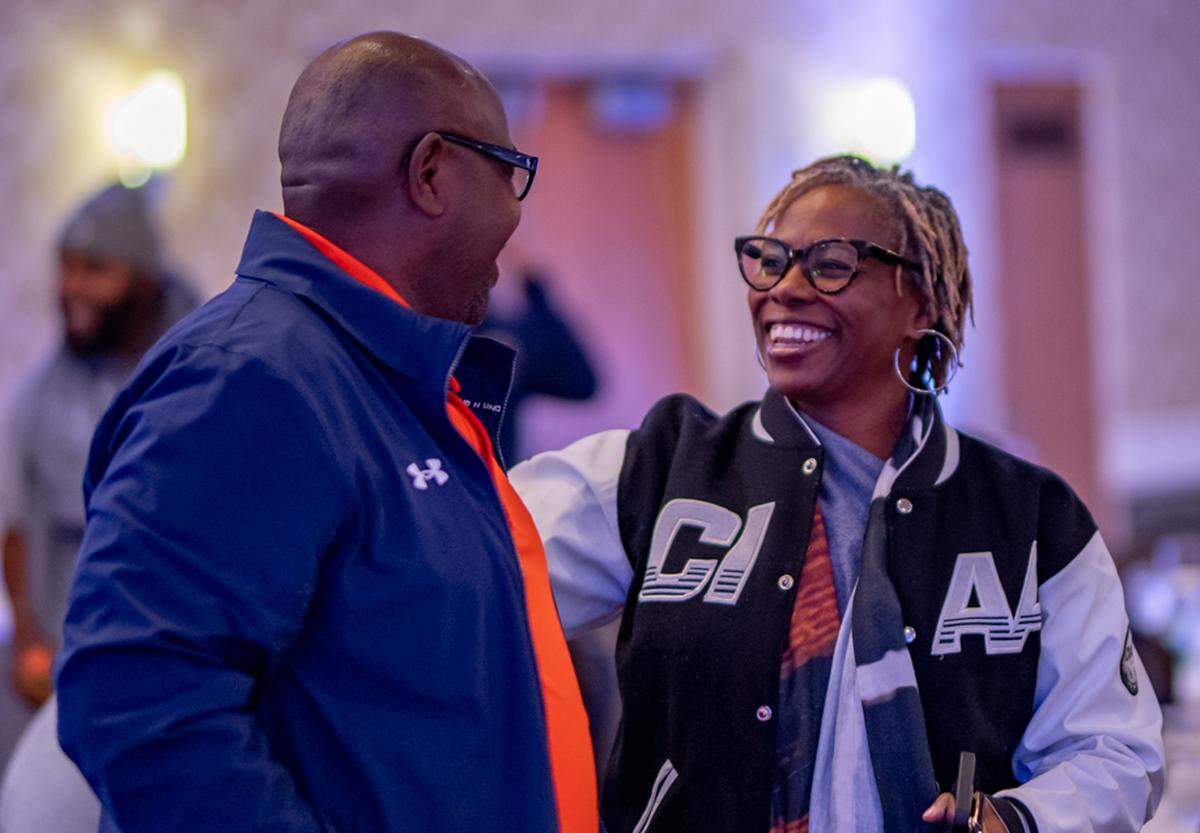
Hampton, CIAA has paved her career
Z: It seemed like your decision to go to Hampton paved the way for a lot of the rest of your career and life in the CIAA. You played in the conference, and you coached there, too, before becoming commissioner, right? What did you coach?
MP: I coached volleyball at Virginia Union, and I was an assistant basketball coach for Virginia Union, and I coached with the men’s team for a year at Virginia Union. And I was compliance. Back then, especially at Division II, you got like 20 jobs. I literally had like 20 jobs. So that’s one of the best entry jobs out there. I had just finished my master’s (at Temple). ...
The CIAA has really been good for me. It has opened up doors that I couldn’t get into before in college athletics. And as a former student-athlete, and after having some success as a student-athlete, academically, and I guess my leadership skills showed up as captains of both of my teams. Those opportunities became readily available upon graduation. CIAA even helped me with my postgraduate scholarships to go to Temple. They helped me apply to post-grad NCAA ethnic scholarships ...
I never had to pay for school outside of my freshman year because they really helped prepare me and saw something in me probably more than I saw in myself. And that doesn’t always happen with female athletes. So it’s truly been a blessing to be under the wings of CIAA. It wasn’t just Hampton people. There were other people in the membership that were part of that decision-making to help move me forward.
Z: So you go on to a variety of places before landing at the commissioner job you have now. When was it your goal to become a conference commissioner? Or was it ever one?
MP: So I left Virginia Union and worked for the CIAA next. I worked at Virginia Union ‘93 through ‘97 and then I went to the CIAA conference office. I loved working for the CIAA then. My job was championships and compliance, so I had multiple jobs then, so I’m running championships, and there were only five people on our staff. We have like 12 people on our team now. So when they complain about work, I’m like, ‘Hold up, I did both of jobs!’ ...
I never told anybody (of my dream to be college commissioner). I just knew that I liked organization. There is something about the number of student-athletes, coaches, institutions you can reach and make impacts. You might not have direct contact with them all the time, but you have the ability to influence policy and legislation that really supports the mission of the work that you’re doing. And for me, I love working on behalf of student athletes. I love advocating on behalf of our institutions. And I learned really how to do it there.
The label of ‘pioneer’ and the pressure that comes with it
Z: In an interview in Andscape, you were asked what it meant to you to be the first Black woman commissioner in all of the NCAA. You said that when you’re the first, you don’t want to be the last. Now, you have mentees all over the country. Has that pressure changed? Has it been alleviated a little bit?
MP: I think women, women of color, or just people — men go through it too — we all learn imposter syndrome is a real thing. There were moments in my first couple of years, I was shocked, ‘I’m the commissioner.’ I remember, we were talking about making a decision, and my president said, ‘You are the commissioner.’ And I said, ‘Oh my God, I am the commissioner.’ Right? I’m like shoot, I’m supposed to make decisions! That’s my job. I’ve been given this power, and having the confidence of what that power means and how to use it for the betterment and not to destroy. You want to make the right decisions. ...
It took me really four years to sit in that confidence. And part of it is, everything that I said I would do as the commissioner, it got done. One of my presidents said, ‘No one will tell your story better than you, so make sure you write them down.’ ... And the more you see the progress, and the execution, and the resolve, the more confidence you have as a leader. It has taken some really hard things to happen in this conference.
There have been scary moments for me, honestly, Alex. We dealt with the House Bill 2. We had to make decisions. We had a huge fight among our teams; we canceled a championship. We’ve had to make decisions about moving our championships out of North Carolina based on bid process and fair process. I mean, those things are scary. What’s the impact? What will the public say? About our brand, about me as a leader? And I think I’ve gained a lot of respect by staying focused on our mission, staying focused on our student-athletes. And I’ve never wavered on that.
Is Charlotte getting the CIAA tournament back after 2026?
The CIAA end-of-season conference tournament spent 2005 to 2021 in Charlotte. The tournament left for Baltimore afterward and will stay there through at least 2026.
Of note: There will be the Black College Invitational in Bojangles Coliseum from March 20-23, featuring high quality men’s and women’s postseason basketball with 16 D1 and D2 teams from the power four HBCU conferences: CIAA, SIAC, MEAC and SWAC.
Z: Any glimmer of hope for the CIAA conference tournament to return to Charlotte?
MP: Every city that submits a bid, and it’s competitive, there’s a glimmer of hope for those who really love this conference, or see there’s value in the business that we bring. The teams that we bring. The exposure that your city gets. So absolutely. But somebody if asked me if it would go back to Baltimore or another city, I would say the same.
Ultimately we want to find or come back to a space that’s going to give us the best opportunity to give our student-athletes the best opportunity in a venue. Our fans the best opportunities in hotels at reasonable rates. And our fans to be a part of an experience that allows the CIAA to have exposure and not be lost in other things that don’t have any value to the CIAA. So it’s a balance.
I think it’s helpful when the state’s involved, the city’s involved, the key leaders are a team. That’s what we are seeing that has made our success the last four years. We’ve been fortunate to be in Charlotte to really help us grow this platform. To recruit amazing talent. To showcase not just Charlotte but the CIAA. And people wanted to come back here. Our headquarters is here. So we’re always trying to find ways to have presence, even if the tournament is not here.
But I absolutely believe that there’s an opportunity. And I don’t make the final decision. That’s the board’s decision. My job is just to get the information, and to give them enough to make an informed decision for where we should be for the next three to four years.
This story was originally published February 5, 2025 at 5:45 AM.