Bigger than basketball: Duke, filmmakers honor CB Claiborne, school’s first Black player
At one point early in a short documentary detailing his journey from his segregated high school in Danville, Virginia, to becoming Duke’s first Black basketball player in the mid-1960s, C.B. Claiborne recalls being part of a group of students who were “trying to change this campus.”
“I participated in sit-ins. I had the shades. I had the ‘fro,” Claiborne says in a matter-of-fact way.
“Coach told me if I didn’t cut my hair, I couldn’t play. So, there were times I just didn’t play.”
Claiborne during his years at Duke often found himself taking stands like that. Against his coach, Vic Bubas. Against professors who doubted his ability to succeed academically. Against a university community that was slow to welcome students who looked like him, and resistant to change.
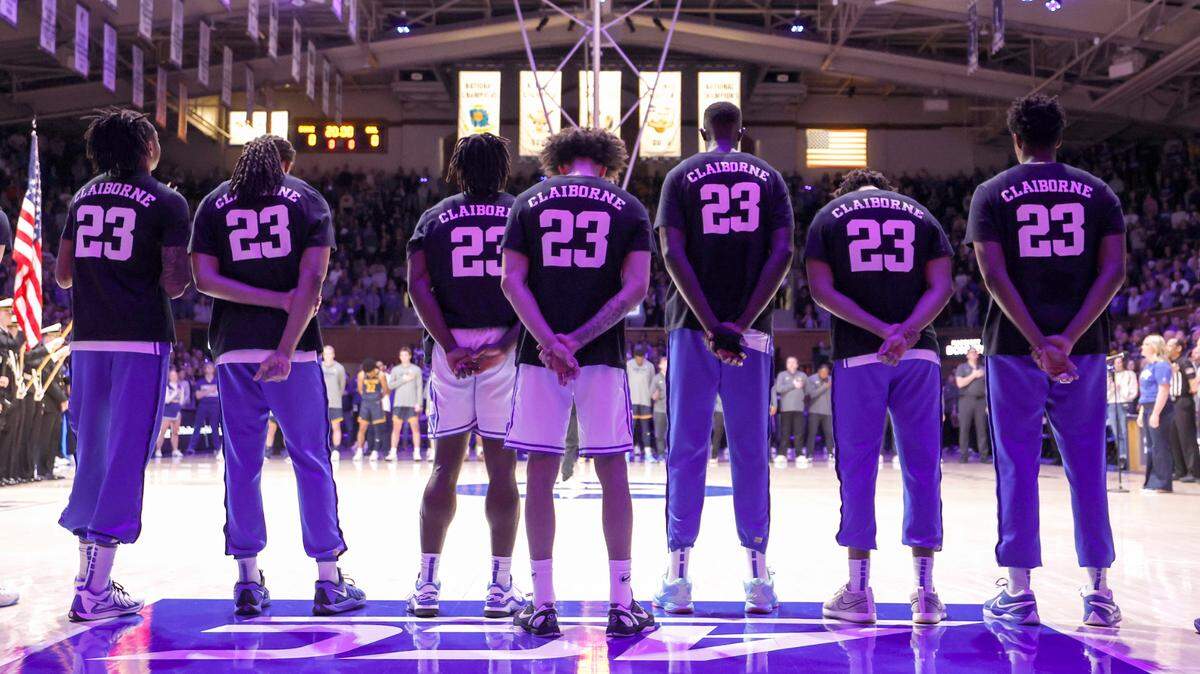
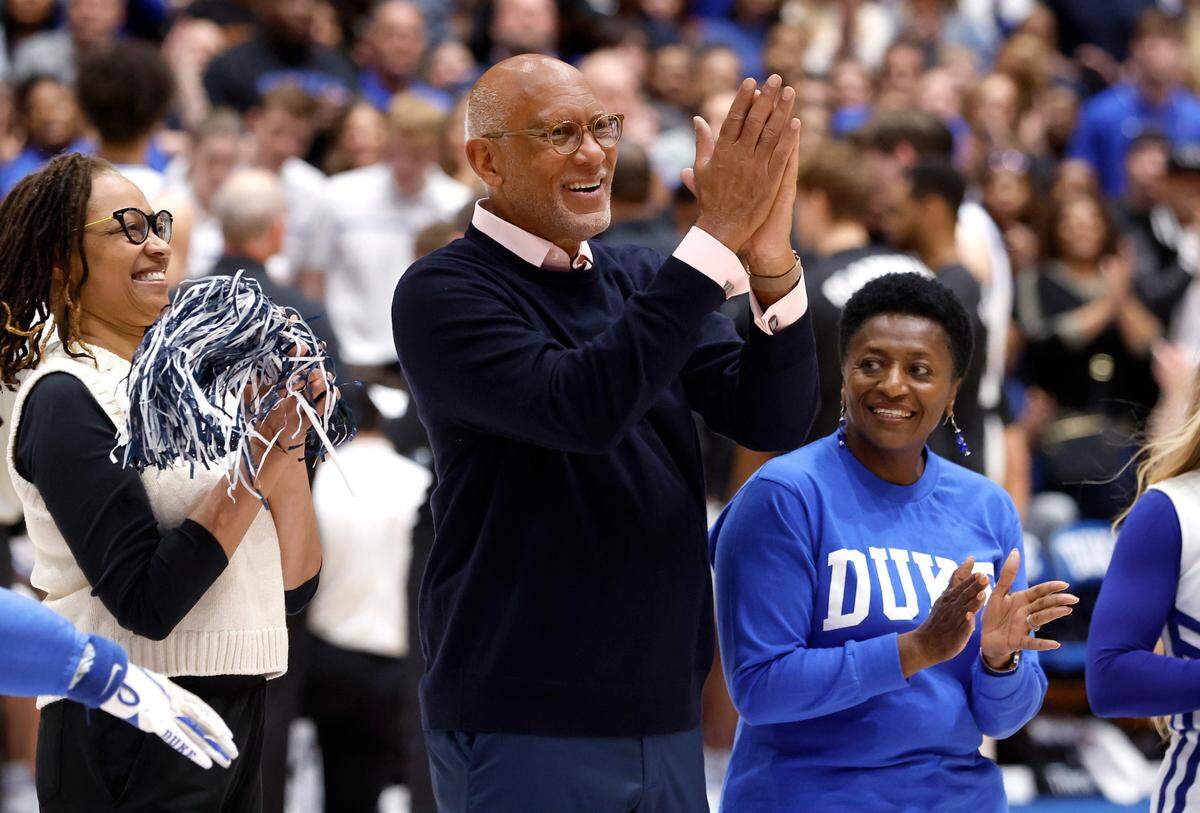
“It was daily,” Claiborne said Wednesday, in the hours before Duke’s victory against California. The Blue Devils wore warm-up shirts in his honor while Claiborne watched and returned to a place he’d helped transform. “I mean, there were things you had to stand up against — or try to, you know, continue to move on when you got these slaps in the face.”
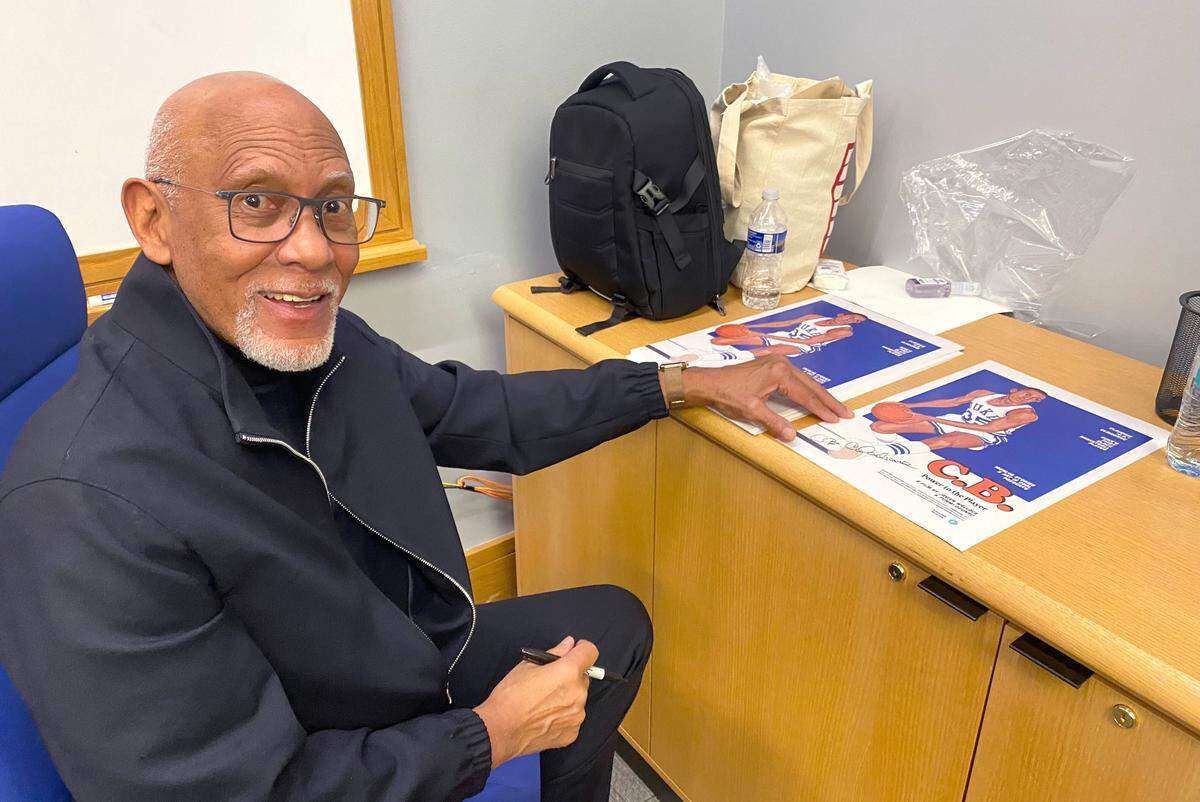
Claiborne then was addressing a group of about 30 invited guests after a pre-release, private screening of “CB: Power to the Player.” The setting of the screening — the Duke men’s basketball theater inside the Krzyzewski Center, adjacent to Cameron Indoor Stadium — offered a physical reminder of how much Duke basketball has grown over the decades.
Claiborne, meanwhile, remains an important if not often overlooked part of the program’s legacy. Toward the end of the film, which lasts a little more than 15 minutes, Duke coach Jon Scheyer wonders aloud why the school and the athletics department, in particular, hasn’t been more proactive in honoring Claiborne.
“Does he belong in, you know, the Duke athletics hall of fame, or the Duke basketball hall of fame? I don’t think there’s any question,” Scheyer says, before referencing the lofty criteria for such recognition. “I don’t know what bigger criteria you could have than what Dr. Claiborne did when he was here.
“I’m thinking, ‘Why isn’t he already in?’”
The documentary that details Claiborne’s story is the product of a collaboration between Javier Wallace, a postdoctoral associate in African & African American Studies at Duke, and Funmi Ogunro, an Emmy-nominated film editor based in Los Angeles and Austin, Texas. Wallace and Ogunro served as producers and co-directors, with Wallace starting the project in late 2023.
Both have indicated a desire to raise funds to turn the documentary into a feature-length film to tell a broader story. The version that premiered Wednesday night, though, has been selected to be shown at the Martha’s Vineyard African American Film Festival in August.
Wallace, who played football at Florida A&M, arrived at Duke in 2021. As a scholar, he found himself immediately drawn to the history of the school’s men’s basketball program and the stories behind its rise to prominence — from its ties to the tobacco industry and literal and metaphorical place on Tobacco Road, to its modern form as a training ground for several NBA stars.
Soon enough, Wallace found himself digging into the story behind Claiborne. The idea that sparked the documentary, he said, was “seeing everything that Duke basketball is and what it means, and the contributions of Black players to this team, and the lack of what I thought was sufficient recognition of the person who made it possible.”
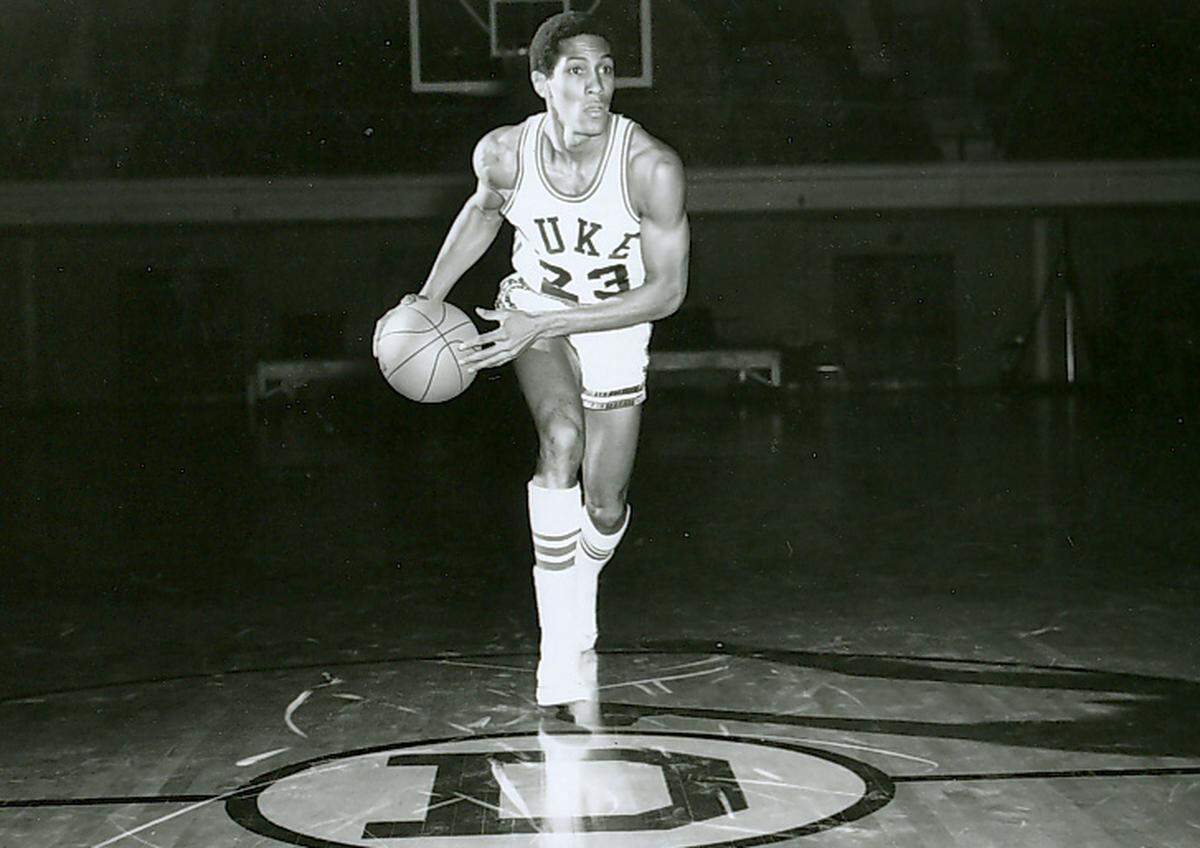
“The work that he did off the court fundamentally changed the university,” Wallace said of Claiborne. “And so I wasn’t satisfied with the story that I was hearing about Claiborne at the university. And I was like, let me just use the power of the resources that I have at my disposal to help push it forward.”
Claiborne arrived at Duke in 1965, two years after the university admitted its first five Black students. In high school, he’d been the captain of the basketball team, the president of his senior class and a member of the National Honor Society. As a Presidential Scholar, he visited the White House and met President Lyndon Johnson.
And as for college, he figured he’d go to North Carolina A&T. In time, though, the chance to break barriers became appealing. His family and a group of mentors encouraged him to go to Duke, which offered Claiborne an academic grant-in-aid — but not a basketball scholarship.
“They didn’t want to offer a Black player a basketball scholarship,” Claiborne says in the film. “There had been no Black player that had gotten a basketball scholarship before, and they didn’t want to break that tradition.”
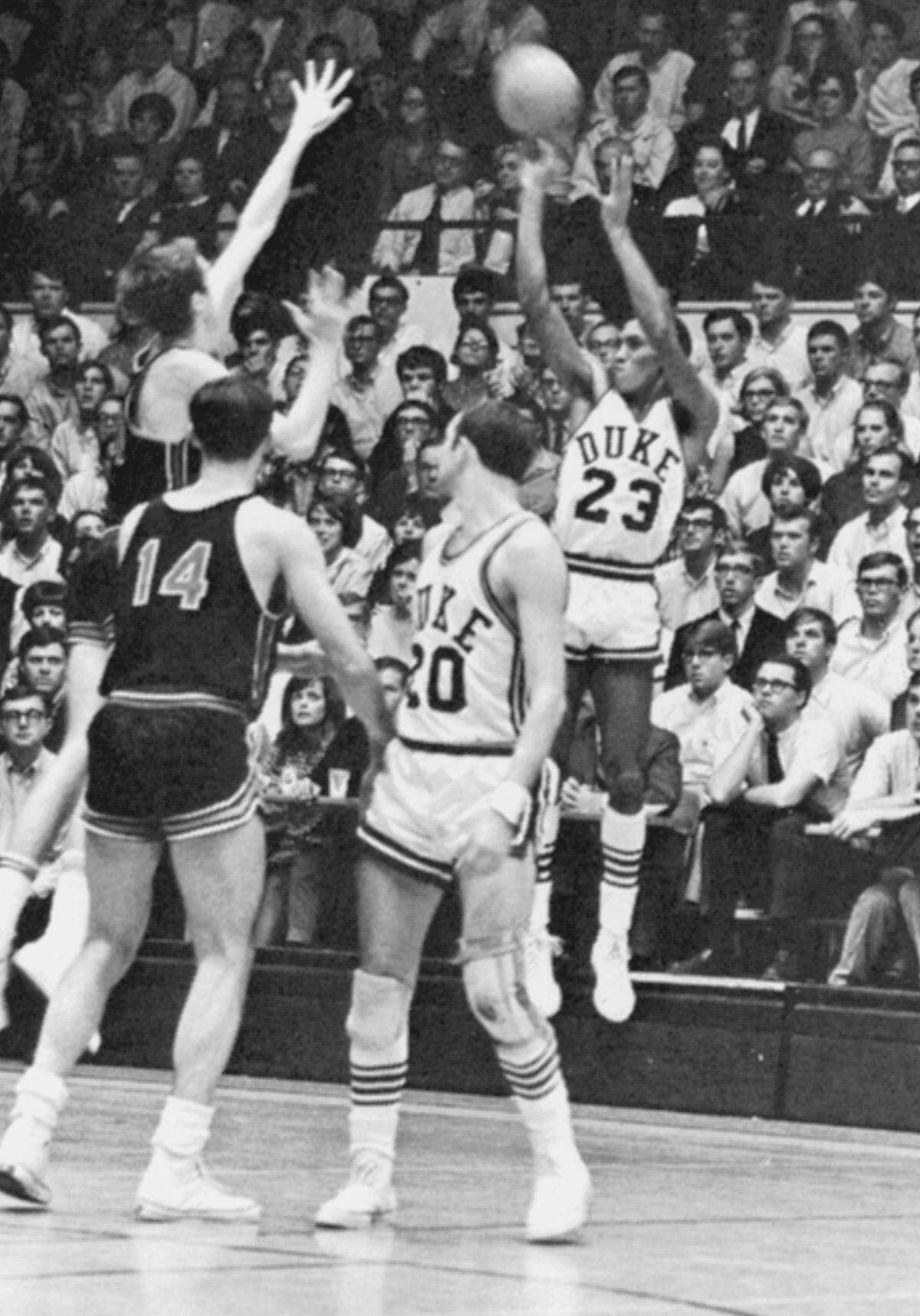
At first he found it off-putting. But then, “I ended up accepting the financial aid, since it meant school would be free and I could still join the basketball team.”
Basketball, though, was only a part of Claiborne’s Duke experience, and arguably not the most memorable. He succeeded academically and earned his degree in engineering, before going on to earn three graduate degrees, including a doctorate. His time at Duke, though, was often lonely. He found a community at N.C. Central and spent so much time there he had a meal card.
At Duke, meanwhile, he became part of a movement in the late 1960s to make the campus more welcoming to the relatively small number of Black students attending the school. In February of 1969, Claiborne was among a group of more than 50 students who occupied the Allen Building, which remains Duke’s primary administrative headquarters.
During the Allen Building Takeover, as it became known, Claiborne and his classmates demanded the school hire Black faculty, create an African Studies department, offer protection to Black students from police harassment and increase enrollment for Black students. As the protest continued, National Guardsman and police arrived, unleashing tear gas and wielding batons — “actually breaking things that they later blamed on us,” Claiborne says in the film.
Still, the university met some of the demands. Change arrived, as slow as it was. On screen, Claiborne recalls it as a moment that “literally changed the university.” Duke hired its first Black faculty member. Black workers saw increased wages. In his next breath, Claiborne says, “I don’t think my career here, or the time I spent at Duke, was about basketball.
“It was really about having an impact on our larger society.”
Claiborne, who lives in Houston, remained in the Krzyzewski Center for a while Wednesday night and mingled with those who attended the screening. It was a group that included family members and at least one classmate who, like him, had been a part of the sit-in at the Allen Building more than 55 years ago.
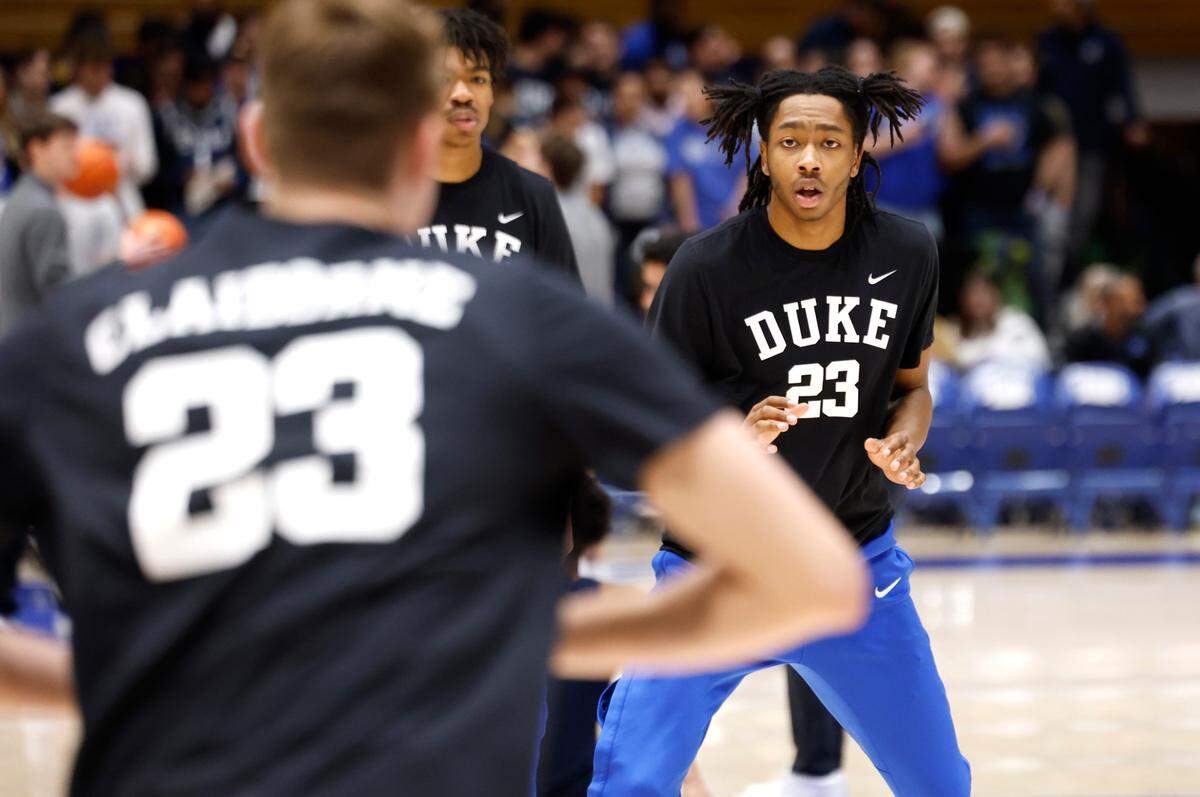
Several of those who attended the screening then made the short walk to Cameron Indoor Stadium, where the Blue Devils wore black warm-up shirts with Claiborne’s No. 23 and his last name stretched across the back. The gesture was about “just paying tribute to him,” said Tyrese Proctor, the junior point guard, and recognizing that “he’s just been a historic figure in this program.”
During the second media timeout of Duke home games, the public address announcer always welcomes back former Blue Devils players or coaches who are in attendance. Sometimes it’s a long list. And during the bigger games, especially, it’s often one that includes some degree of familiar star power. The list on Wednesday night was neither long nor particularly star-studded.
After a late tip-off and with the Blue Devils well on their way to a methodical yet sleepy 78-57 victory against California, there were only two returnees to recognize, both of whom elicited humble reactions from the crowd. One of them was Bucky Waters, the local ACC luminary and former Duke coach.
The other was Claiborne, who’d first stepped foot inside Cameron Indoor Stadium 60 years ago.
Back then he’d found himself fighting for just about everything in a place resistant to progress and slow to change. Now, all that Duke basketball had become in the years since could in part be traced to him, and his courage to tear down barriers.
This story was originally published February 13, 2025 at 11:26 AM with the headline "Bigger than basketball: Duke, filmmakers honor CB Claiborne, school’s first Black player."