
The inside story of Charlotte’s move to the AAC and what comes next
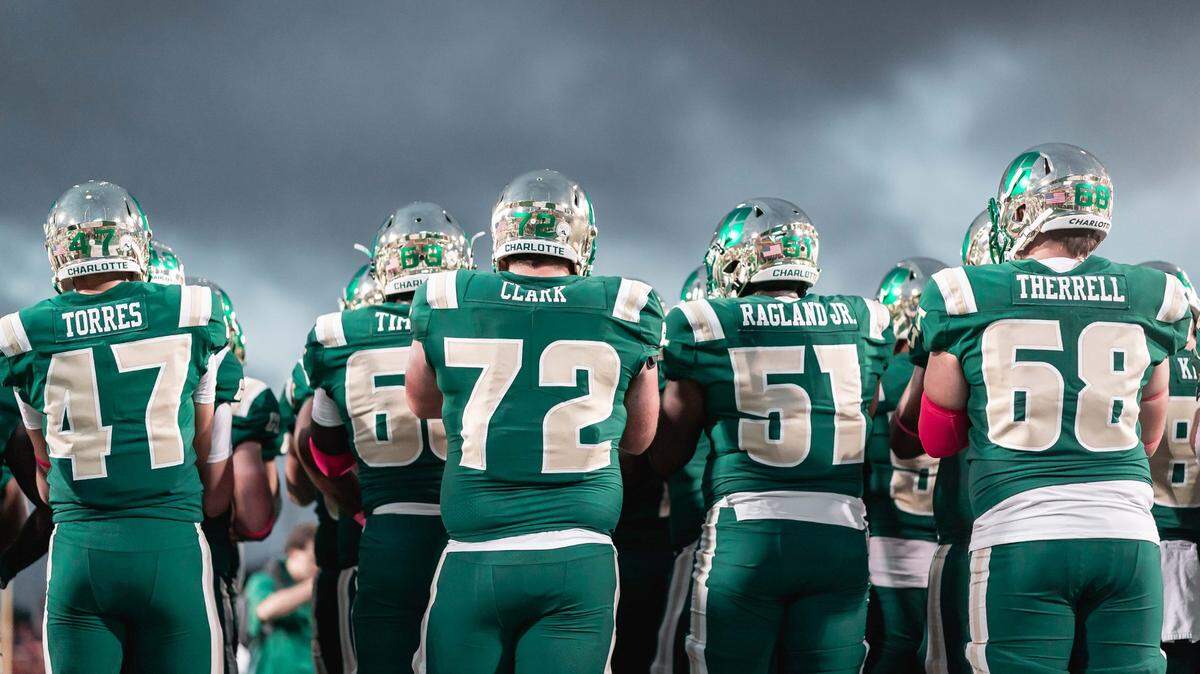
The Charlotte 49ers weren’t waiting for an opportunity, they were ready for it.
It was announced last week that Charlotte would officially join the American Athletic Conference, ending its tenure in Conference USA.
The Observer sat down with Charlotte’s athletic director Mike Hill and university chancellor Sharon L. Gaber for an exclusive look at the work that culminated in the 49ers positioning themselves for a jump to the American.
“We started working on this three and a half years ago. Frankly, we started working on it before that,” Hill said. “From Day 1, this was a priority for us. There had been prior research done by Judy Rose and her team, so when I arrived we updated a lot of things and ultimately decided as a staff that we couldn’t afford to wait for the day when the opening came about, we had to be prepared the day the opening came about. That’s what our goal was. When the opportunity arrives, we have to be ready that day. I feel like we were really prepared for it as a university.”
Back-channel communications about potential realignment started when Connecticut left the American in 2019, Hill said, although the conference axed the idea of adding another member.
Fast forward two years and conference realignment news rattled the college football landscape when Oklahoma and Texas announced their intention to depart from the Big 12 and join the SEC in July. That was the first domino to fall, opening the door for Central Florida, Houston and Cincinnati’s move to the Big 12.
Talks of a merger between the American and C-USA early last week were shut down by AAC commissioner Mike Aresco. Hill stated that Charlotte had three or four scenarios with coinciding plans depending on how the dominoes fell.
“It was a series of chess moves, but the American was the goal,” Gaber said. “Questions we asked were: What’s the best for the student-athletes, the university and our fanbase? We examined the options along the way and how we would maximize in each of those areas. As someone who looks at the big picture of all the things that are going on, (Mike) is thinking through and seeing these opportunities. I was really impressed.”
C-USA’s television deal with CBS expires following the 2022-23 academic year. There was a sense that the conference would lose member programs to outside Group of Five conferences. With seven exits confirmed and three expected within the week, C-USA is facing a total rebuild if it doesn’t dissolve.
“When it became evident that there would be some movement, I contacted the American. We communicated and said that we were interested in exploring,” Hill said. “We were on their radar to begin with. For us, it was important to notify them that we had interest. Then it was a bit of a waiting game.”
Years of preparation came to fruition last Monday as the specifics were confirmed and six C-USA schools would announce their membership with the AAC. Charlotte, Alabama-Birmingham, Texas-San Antonio, Rice, Florida Atlantic and North Texas would leave C-USA for the American.
The AAC was clear in its intention to reload, maintaining the “Power Six” marketing campaign.
“The AAC is adding schools that not only share our philosophy of competition at the highest level,” Aresco said. “Our Power Six campaign is going to be energized. It’s not going away, and I want that to be really clear.”
It was reported by Pete Thamel of Yahoo! that the six additional members would begin play in the 2023-24 seasons, although Aresco stated the date is to be determined. The current AAC member programs receive $7 million annually, as long as the current television deal with ESPN holds. Aresco stated that ESPN believes in the American conference and that the long-term deal is still in place, but wouldn’t talk specifics.
He also declined to say if the six new schools would receive the same distribution as the existing members.
“We’re not able to answer those questions pertaining to financials, and we’re not able to even speculate on our start date,” Hill said. “We’re extremely proud of and happy to have a home in Conference USA. Without C-USA, we would not be playing FBS football today. We’re going to be proud members until we’re not.”
Another point that Aresco made was that the additional member programs must have facilities that match their standards. The 49ers currently have the smallest football stadium in the FBS, as Richardson stadium seats 15,314. But there is a plan.
“We understood going into this process that the stadium-size could be considered a negative,” Hill said. “So we reached out to the Panthers and asked if it were required or necessary for us to play some games at Bank of America Stadium to satisfy the expectations of the American, would they be open to that. Their answer came back the same day, “Absolutely, let us know how we can support your bid.
“Tom Glick and the Panthers deserve a lot of credit as well for being supportive of our bid. With that said, our ultimate goal is to right-size our stadium when the day comes, but I think it really speaks volumes about the community and the city backing this university and our program. The partnership that we have with the Panthers, Hornets and Knights is a big deal.”
Charlotte football coach Will Healy has spoken openly about the plan to renovate, adding 25,000 seats to Richardson Stadium. Hill stated that the university is making minor tweaks to the master facility plans before going public, but those plans have been shared with the AAC.
Charlotte is the home of the fastest-growing, second-largest public university in North Carolina, with an enrollment of 30,164. The 49ers have 157,000 living alumni, with 80,000 of those living within an hour of the city. In terms of attendance, Charlotte’s football program averaged 12,319 in Healy’s first year with the program (2019), a 5% jump from the previous year. That average has increased to 12,623 through four home games in 2021.
“We have a football stadium in the heart of campus that everyone raves about when they see it,” Hill said. “We’re only in our ninth football season. We’ve got to have that attendance drive to justify that (renovating), but pretty clearly based on what we’ve seen this season, the interest is exploding as the growth of the program has under Will (Healy).
“We have the chance to add premium seats and expand capacity when the time is right. I think we’re certainly trending in the right direction,” Hill said. “There are some other things facility-wise that we want to do, all a part of a facilities master plan that we started working on when I first arrived here. The Chancellor has been incredibly supportive of our vision, and when the time comes we’ll raise the funds and build as we see fit.”
Gaber is the first woman and fifth chancellor to serve at Charlotte. Following five years as president at the University of Toledo, Gaber replaced long-time chancellor Philip L. Dubois in July 2020.
“Every great city has a great research university,” Gaber said. “We’re a Research II university, with the goal of becoming a top-tier research university. We’ve got a 10-year plan to get us there. Our community really needs that as it brings in federal dollars, innovation and entrepreneurship.
“Everybody says that athletics are the front porch of a university,” Gaber said. “People in our community are seeing the improvements in athletics, student quality and research and our faculty. While this is a testimony to the strength of athletics, this is a testimony to the strengths of this institution overall.”
The 49ers’ cross-country program made the NCAAs for the first time last year, and men’s soccer, men’s baseball and golf all made the NCAA tournament, with women’s basketball making an appearance in the WNIT. The men’s basketball team has posted single-digit win seasons in three of the past four years.
Charlotte’s donor contributions from 2019 totaled $5,484,455, and the Niners landed a $1 million locker room upgrade from a single donor, revamping the home of “Club Lit” with LED displays and personal iPads for each locker.
“We’re going to have to ramp up our fundraising, there’s no question about that. We can do it, we just have to roll our sleeves up and get after it,” Hill said. “We’re here to graduate student-athletes and win championships, but ultimately we’re here to elevate the university. If we can take advantage of this platform, the university is going to be the biggest beneficiary of that.”
The added exposure and resources increase expectations for the university and its athletics programs. Though the university is less than a century old and the football program hasn’t celebrated its 10th birthday, the Charlotte 49ers are following the trajectory of a program that just departed from the American for the Power Five, Hill believes.
“We’re in serious growth mode here,” Hill said. “I’ve often compared our athletics and university trajectory to Central Florida’s. When you look at UCF, they’re further along their timeline than we are but there are a lot of similarities to be seen there. If we leverage these new resources and exposure that we have, this whole place is on a rocketship. This university - it’s incredible.”
This story was originally published October 27, 2021 at 1:01 PM.