
Jacobs: Transfers bolster ACC basketball teams
For better or worse, there are no player trades in college basketball, although they’re certainly fun to contemplate. Even head coaches chuckle over the prospect. “Don’t count it out, don’t count it out,” Georgia Tech’s Brian Gregory says with amusement. “It could be down the road somewhere.”
Neither is there a system to lend order once players get a formal release to move from school to school, nor an independent broker to represent their interests as they shop for a new landing place. Instead, by word of mouth, through high school and AAU coaches, teammates and Twitter, dissatisfied or restless players let it be known they’re seeking fresh surroundings.
And they’re joining ACC men’s basketball squads in unprecedented numbers, exerting an inordinate influence this season.
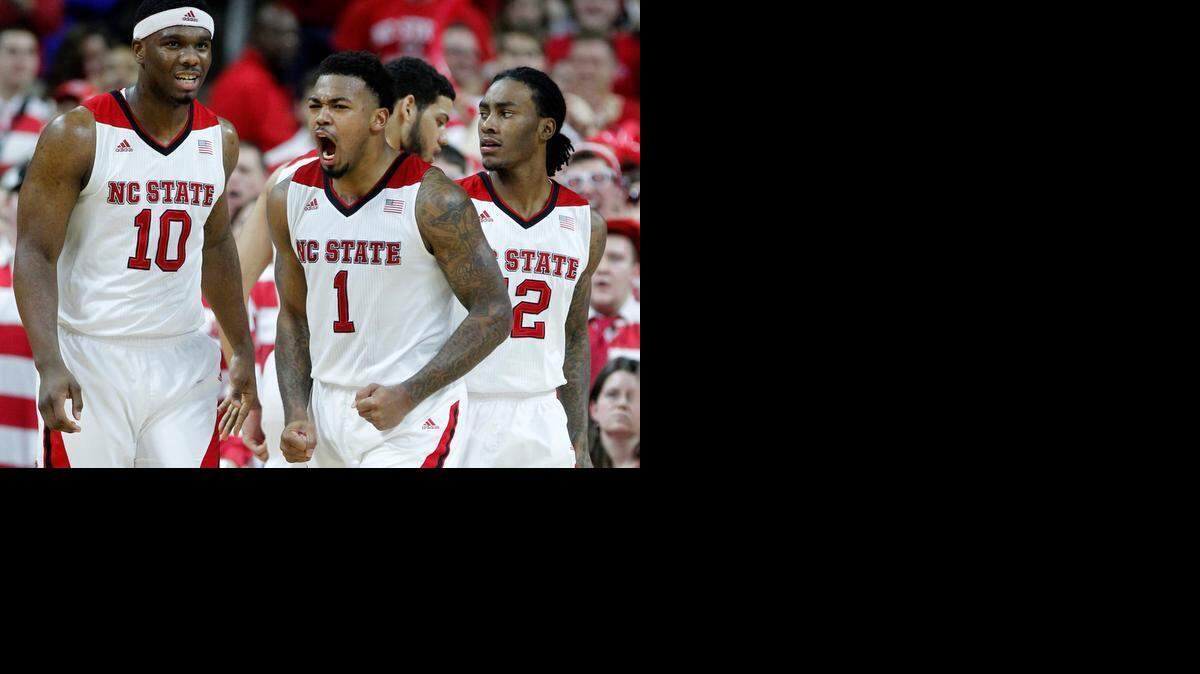
Three of the league’s top scorers – N.C. State’s Trevor Lacey, formerly at Alabama; Boston College’s Aaron Brown (Southern Mississippi); and Miami’s Sheldon McClellan (Texas) – are transfers in their initial season of ACC competition. Lacey and Ralston Turner, a Louisiana State transfer, are N.C. State’s top two scorers. McClellan and Angel Rodriguez, formerly of Kansas State, pace Miami’s scoring. Olivier Hanlan and Brown are the leading scorers for Boston College.
‘Impact guys’
An ACC all-star roster of transfers from four-year programs also would include Clemson’s Damarcus Harrison (late of Brigham Young), Georgia Tech starter Robert Sampson (East Carolina), Syracuse’s Michael Gbinije (Duke), and Virginia’s Anthony Gill (South Carolina). All but Sampson, son of former Virginia great Ralph Sampson, arrived with several years of eligibility remaining.
By one count, 291 Division I men’s basketball players transferred in 2011; by 2013 the number reached 455. “Go through rosters across the country,” says Pittsburgh coach Jamie Dixon. “Teams have significant impact guys from one-year guys to immediate eligibility guys to transfers that have to sit out.” A pair of transfers play reserve roles for Pitt.
Nearly 40 percent of Division 1 men’s basketball players entering college directly from high school will transfer before their junior season, according to the NCAA. A majority of transfers tracked in the NCAA study moved to a lower level of competition or quit playing varsity sports altogether entering the 2013-14 season. Moving to the ACC bucks that trend.
The frequency with which players change teams, a habit some acquire in high school and on the summer AAU circuit, is much-lamented in coaching circles. Yet sometimes circumstances – style of play, personality clashes, coaching changes, roster additions – compel reevaluation.
Recall that Rasheed Sulaimon was praised as a role model last season when, despite clearly getting on the wrong side of Duke coach Mike Krzyzewski, he stayed put. As things turned out, perhaps leaving would have been the best choice for everyone involved. Assuming Sulaimon, who has been dismissed from the team, still wants to play college ball, he’ll have a single season of eligibility remaining after sitting out as a mandatory redshirt.
Amid the galaxy of player-fairness issues currently swirling through college sports, allowing athletes freedom of movement similar to coaches is rightly somewhere in the mix. Coaches come and go, frequently to better themselves professionally, but they can’t imagine giving players comparable flexibility. “It would be a free-for-all,” protests Georgia Tech’s Gregory. “I don’t think they could do that. You’d have kids leaving all the time.”
Almost like a trade
Yet, despite the barrier of the redshirt season, there’s plenty of player movement, anyway.
Georgia Tech, for instance, celebrated its 100th season of basketball by turning to four transfers. All have appeared in every game this season. Among the wizened Yellow Jackets newcomers is junior Charles Mitchell, who came from Maryland and was allowed to play immediately. The NCAA recently adopted a rule banning such eligibility waivers for undergrads under most circumstances, after drifting in the opposite direction for years.
Meanwhile Georgia Tech had three players leave with eligibility remaining. “There’s a part now in coaching,” Gregory says, “as the season goes on, as the spring comes, you’re also constantly re-recruiting your current players.” The only Yellow Jackets transfer who mattered competitively was starting forward Robert Carter Jr., who went to Maryland, where he is redshirting. It’s just a coincidence the shuffle worked out as a trade of Carter for Mitchell.
Until recently the handful of transfers on ACC rosters came from junior colleges. Those players can play immediately and usually have two years of eligibility remaining. Because they often are looked upon, however unfairly, as weak links academically, graduates of two-year schools are shunned by many programs in the ACC and beyond.
No such stigma attaches to athletes who circulate among four-year schools. Many are welcomed to programs that miss on recruits or lose transfers themselves. This season, 10 of 15 ACC rosters include active players who began their careers at another school, a major influx that’s largely eluded notice. Six teams, N.C. State among them, have multiple transfers playing. The majority of ACC programs have major-college transfers waiting in the wings to play next season, too.
Physical maturity
Undergraduate transfers like the Wolfpack’s Lacey and Turner were required to sit out a season under NCAA rules, an experience that parallels freshman ineligibility. During their enforced hiatus, they had an opportunity to acclimate to new academic and athletic demands and to work on strength and conditioning. “That year can be a really advantageous year if it’s used right,” says N.C. State coach Mark Gottfried.
Not incidentally, transfers also bring a physical maturity that often can’t be matched by kids just out of high school. Turner and Lacey are both 23 this season.
Gottfried has adroitly augmented his squads with a scattering of transfers since taking over at N.C. State in 2011-12. Next season, even as he loses Turner, the Wolfpack will add Terry Henderson, a Raleigh product who left West Virginia with two years of eligibility remaining. “I think players begin to see guys that transfer and it works out well, so they’re more likely to transfer themselves because they’ve seen it work,” Gottfried says. Henderson would be the fourth transfer to play for him in five seasons at Raleigh.
“The college basketball game has become a very young game,” Gottfried adds. “A lot of teams rely on freshmen, a lot of teams rely on sophomores. We’ve been able to get to the point where we’ve had some upperclassmen, we’ve had a couple (of transfers) where it’s really worked.”
Count among them point guard Alex Johnson, a valuable reserve who came to Raleigh from Cal State Bakersfield for the 2011-12 season. Johnson, like Boston College’s Brown, fared quite well without an extended adjustment period. They represent a rarer breed of transfer – a graduate student who switched schools and immediately was eligible to play for a season.
Brown is the most notable grad student playing ACC basketball this season. New Boston College coach Jim Christian also added grad Dimitri Batten, formerly at Old Dominion. Wake Forest bolstered its ranks with Darius Leonard, who first enrolled at Kent State and finished his undergraduate education at Campbell. Joe Thomas earned a degree in criminal justice at Niagara before joining Miami’s program. Burly Demarco Cox came to Georgia Tech this season from Mississippi. All have given new meaning to the term “one-and-done,” which isn’t just for freshmen anymore.
This story was originally published March 1, 2015 at 7:45 PM with the headline "Jacobs: Transfers bolster ACC basketball teams."