Black golf pioneer Charlie Sifford honored with statue in uptown Charlotte
AI-generated summary reviewed by our newsroom.
- Eight-foot statue of Charlie Sifford unveiled in Elizabeth Park near uptown Charlotte.
- Sifford became first Black golfer on PGA Tour in 1961 after suing to end Caucasian clause
- Sifford won two PGA Tour events, the 1967 Greater Hartford Open and the 1969 LA Open.
Tiger Woods once said that he probably wouldn’t have made it to the PGA Tour if it were not for Charlotte native Charlie Sifford.
Four years ago, Woods spoke with the Golf Channel about the man who he called “Grandpa Charlie.”
“Charlie was a pioneer,” Woods said. “He was the person who broke down the Caucasian (only) clause that was part of the (PGA) Tour. I named my son after Charlie. My dad would never have been able to play the game of golf and had never picked it up if Charlie hadn’t broken down the Caucasian clause.”
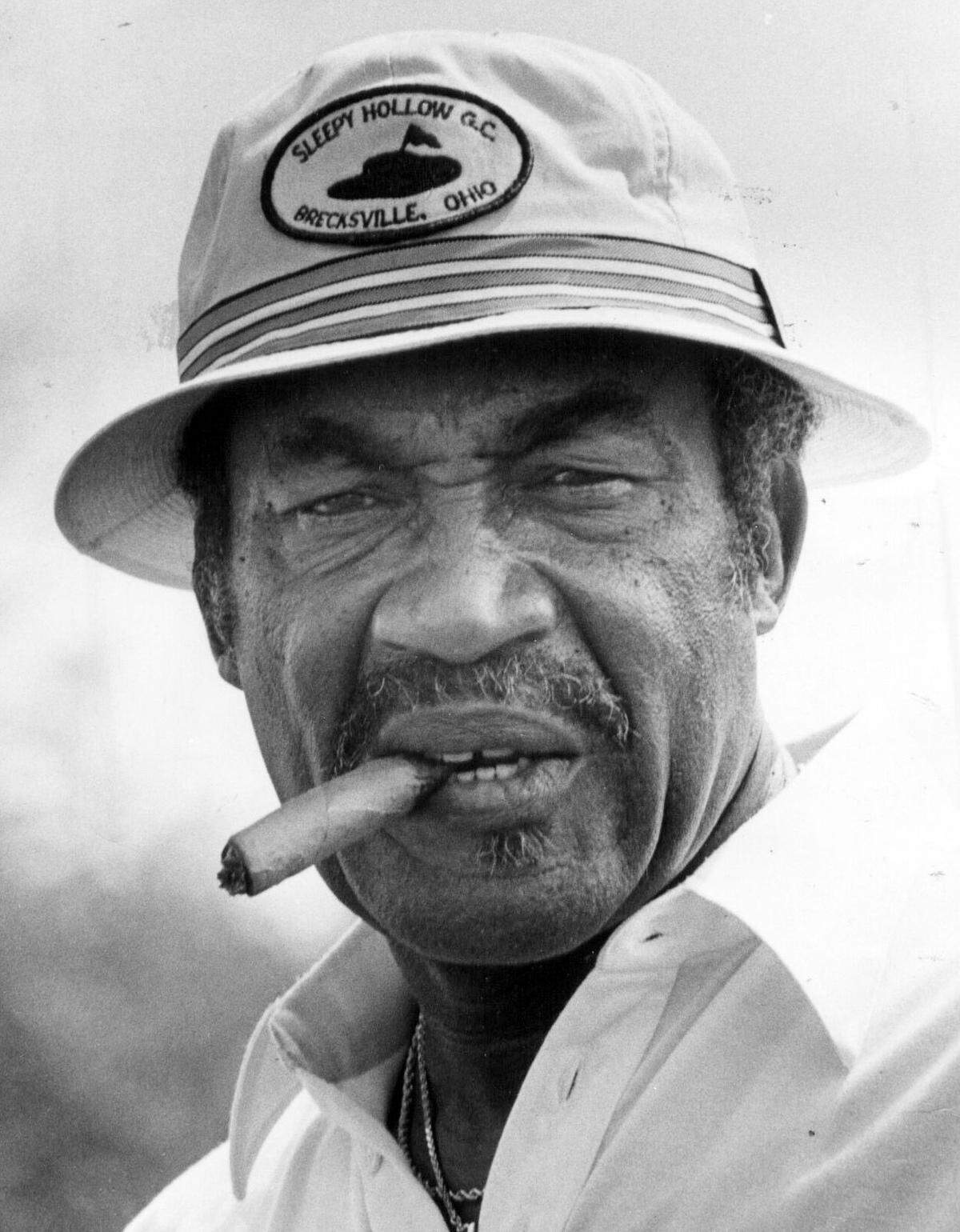
In 1961, Sifford became the first Black golfer on the PGA Tour. He won twice on the PGA Tour and was the first Black member of the World Golf Hall of Fame. In 2014, Barack Obama gave him the Presidential Medal of Freedom.
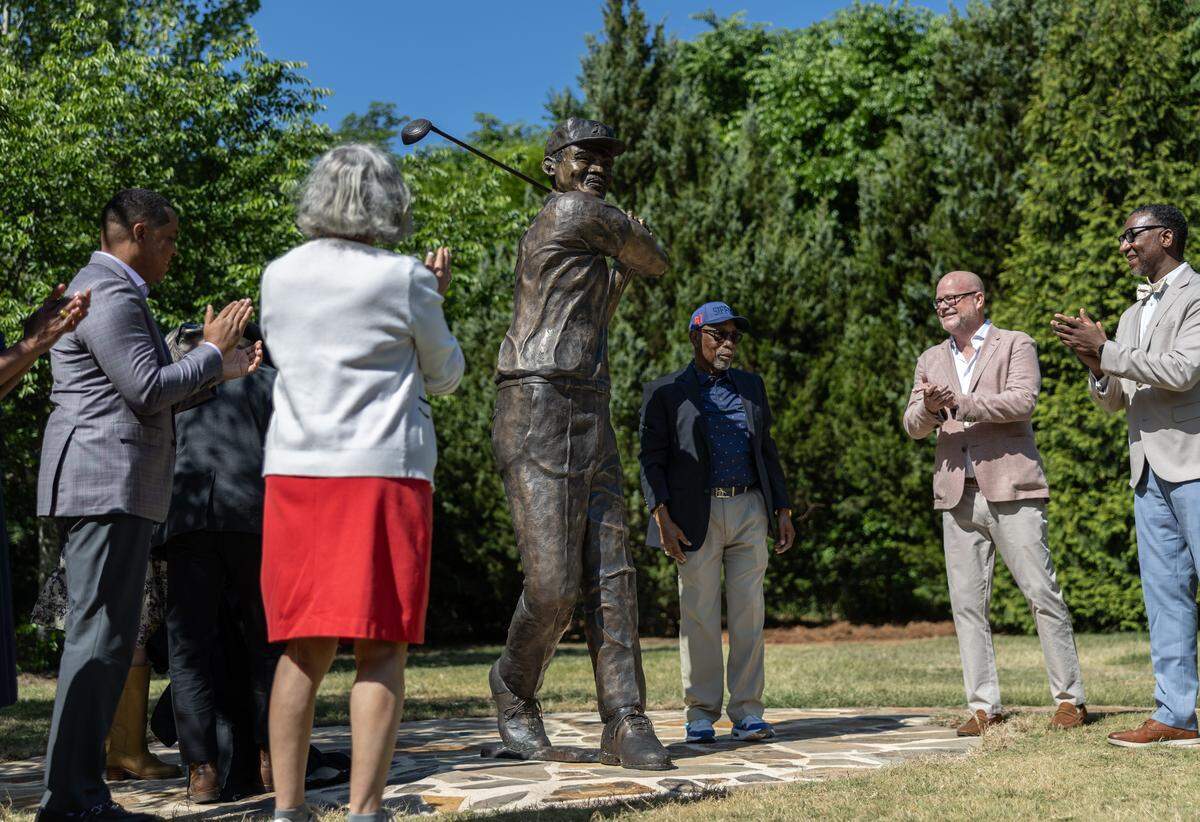
Sifford — who died in 2015 at age 92 — got another honor Tuesday: An eight-foot bronze statue in his image was unveiled in Elizabeth Park, near uptown Charlotte, and not far from the golf course, also near uptown, that bears his name.
The PGA’s Truist Championship, which will be played this week at Quail Hollow Club, and the Charlotte Trail of History — a 21-year-old non-profit that seeks to honor key people who contributed to the growth and development of Mecklenburg County — worked together for Tuesday’s ceremony. And Sifford’s statue sits on the Little Sugar Creek Greenway, just in front of Central Piedmont Community College’s main campus.
Sifford’s memorial sits with 11 others, including Jane Wilkes, a leader of Charlotte health care in the 1800s and civil rights leader Julius Chambers, who also has a high school named for him in Mecklenburg County.
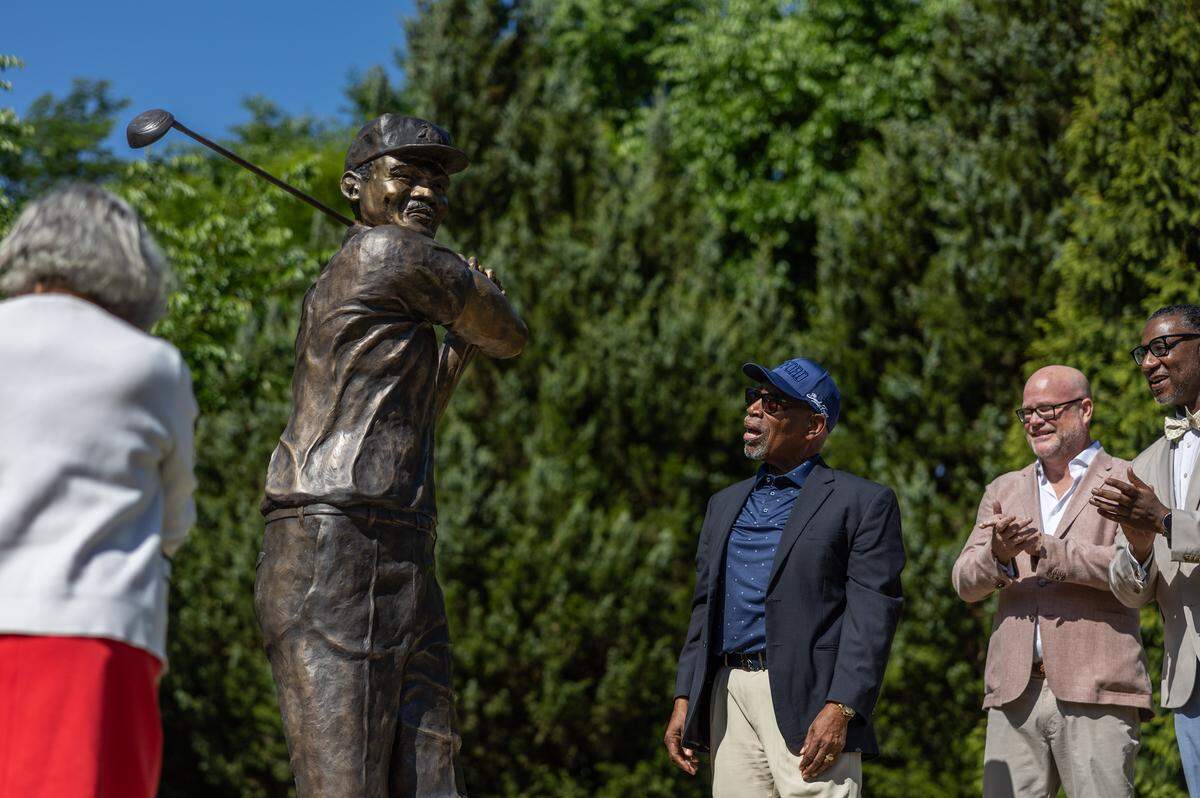
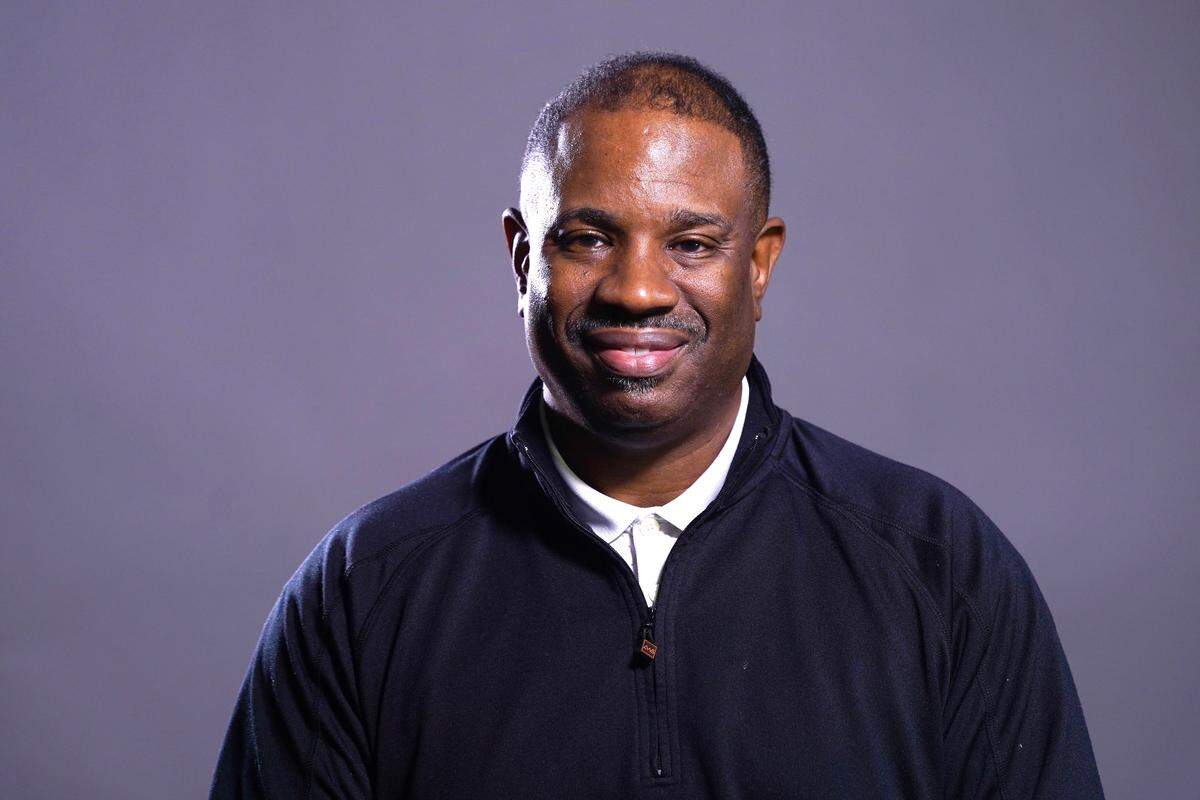
“My father never considered himself a trailblazer or a freedom fighter,” said Charles Sifford Jr., who now lives in Cleveland, Ohio. “He just wanted to play game of golf he fell in love with when he was 10 years old in the city of Charlotte.”
Sifford Sr. was born near South Tryon Street in 1922. At 13, he started caddying at whites-only Carolina Country Club, earning 60 cents a day. He learned the game by watching, using clubs that were left behind or given to him by those he worked for.
Sifford moved to Philadelphia when he was 17 and started playing pro golf in 1948, joining tournaments that Black golfers organized, since they were not permitted to play on the PGA Tour.
Sifford won the United Golf Association’s National Negro Open six times, including five straight from 1952-56.
In 1957, Sifford won the Long Beach Open, which wasn’t an official PGA event but was co-sponsored by the PGA and had some white players in the field. Three years later, he sued to get the Caucasian’s only clause dropped, and in 1961 Sifford became the first Black golfer on tour.
Sifford was a 39-year-old rookie.
“It was a hard battle,” Sifford Jr. said. “We had many hardships, death threats and other things he had to deal with. He was determined that he was going to be the best Black golfer he could be. In order to that, he had to persevere and eventually fight his way onto the PGA Tour.”
After he got there, Sifford played in 422 PGA events. He won the 1967 Greater Hartford Open and the 1969 LA Open, and he finished in the top 60 in overall winnings in each of his first nine seasons.
In 1975, Sifford won the PGA Seniors’ Championship, which was then the biggest event on the 50-and-over tour.
“His passion to play the game drove him to not let anything interfere with his goal,” Sifford Jr. said. “He had a love for the game and wanted to make it more accessible for those that came behind him.”
Four years ago, a Sifford scholarship fund started, Sifford Jr. said, and it’s helped 30 students and student-athletes attend college, mostly at HBCUs. Sifford Jr. said another 10 scholarships will be awarded in June.
And standing on the dais next to his father’s statue, Sifford Jr. said he and his family are grateful for everything, including the newest honor in uptown.
“He would be humble and proud,” he said of his father. “I think never in his wildest dreams did he think a day like this would ever come.”