High school football, ‘a little normalcy’ on the way back? Teams could hit the field soon
Central Cabarrus High coach Zach Bevilacqua said he was happy to hear that football teams could begin to workout in a few weeks if North Carolina’s COVID-19 numbers remained steady.
“If we can get together,” Bevilacqua said, “and start getting a sense of normalcy for the kids and for the coaches and for our football program and for our schools, it would be great. I’ve been following all the other states that have been pushing stuff out, and I think we need to do it slowly and safely, not just from a COVID-19 standpoint but from an injury standpoint, too. If we expect to go full out June 15, we could see a lot of injuries.”
On Tuesday, the N.C. High School Athletic Association announced that it was extended its dead period from June 1 to June 15. That means the earliest that teams could begin off-season conditioning and workouts is more than two weeks from now. Commissioner Que Tucker said that she hoped all sports, including football, could begin June 15 provided there are no setbacks.
Tucker said the NCHSAA would follow guidelines set by N.C. Governor Roy Cooper regarding the return to sports that he released Friday.
Cooper’s guidelines included allowing non-contact sports like baseball, softball and golf to return but limited contact sports like football and basketball to “athletic conditioning drills and practices in which dummy players, sleds, punching bags and similar equipment are used but athletes are not playing the actual sport.”
Tucker said local school systems may impose more stringent protocols than the NCHSAA standards and push back the return of high school sports in their community beyond June 15, if that system deemed it necessary.
Charlotte-Mecklenburg Schools athletic director Sue Doran said the district will “continue to monitor progress during Phase 2 of North Carolina’s re-opening as well as await further communication from the NCHSAA. CMS is discussing and planning for a return yet to be determined.”
In other news from Tucker’s Zoom call Tuesday:
▪ She said she understood that as more than 400 NCHSAA teams begin a possible return to sports, that some students could contract COVID-19, but she said “it’s our goal to do everything in our power to protect the health and safety of our student-athletes, and our coaches and our communities.”
▪ Tucker said the goal would be for fans to be at games this fall, but that would ultimately depend on how COVID numbers are trending. She said she’ll depend on guidance from Gov. Cooper, the Department of Health and Human Services, the State Board of Education and member schools to determine that.
Tucker said not having fans at football games would be “tough” for high schools’ financial budgets.
“We’re not at the point where we’re folding up the tent for football this fall. We are hopeful that at least we can have some fans.”
Tucker said the NCHSAA would lean towards guidance from the Department of Health and Human Services if fewer fans than stadium capacity are allowed due to social distancing rules and said it would work with schools on the best way to implement it.
“Friday Night Football is a big deal in just about every county in this state,” Tucker said. “And then when you start saying to certain people that, ‘Well, you’re not going to be able to get into this home game,’ then that becomes problematic. So how do you do that in an equitable manner?...As we get closer to that, those will be very real issues and challenges that we will have.”
▪ The NCHSAA will approach the season as if it will begin on time Aug. 1, but if the start gets pushed much into September, it will first consider trimming regular-season games and then possibly shortening the playoffs. Tucker’s preference is not to shorten the winter season, which would begin in November.
“But everything’s on the table,” Tucker said. “We’re looking at all of it, and knowing that anything is possible.”
▪ There is nothing in the bylaws to prevent the NCHSAA from moving football to the spring, as some coaches around the state have suggested, but Tucker said such a move would be one of last resort.
▪ Tucker said the association finances are down, eight to 10 percent from normal. It missed a $1 surcharge from spring sports playoffs tickets as well as state finals in basketball. “We’re all taking a hit, whether it’s big or small,” she said.
Bevilacqua said he was glued to his social media Tuesday to get information from the meeting, and was mostly happy about what he heard.
He was concerned, for example, that some smaller school systems might get an earlier start due to fewer COVID-19 cases in their communities than larger systems like Cabarrus or Mecklenburg.
“If we didn’t have a sweeping statewide idea of what could go on,” he said “and left it to more individual school systems, I think the smaller systems could go faster. It would be hard to look at that, competition-wise, and say it’s equal.”
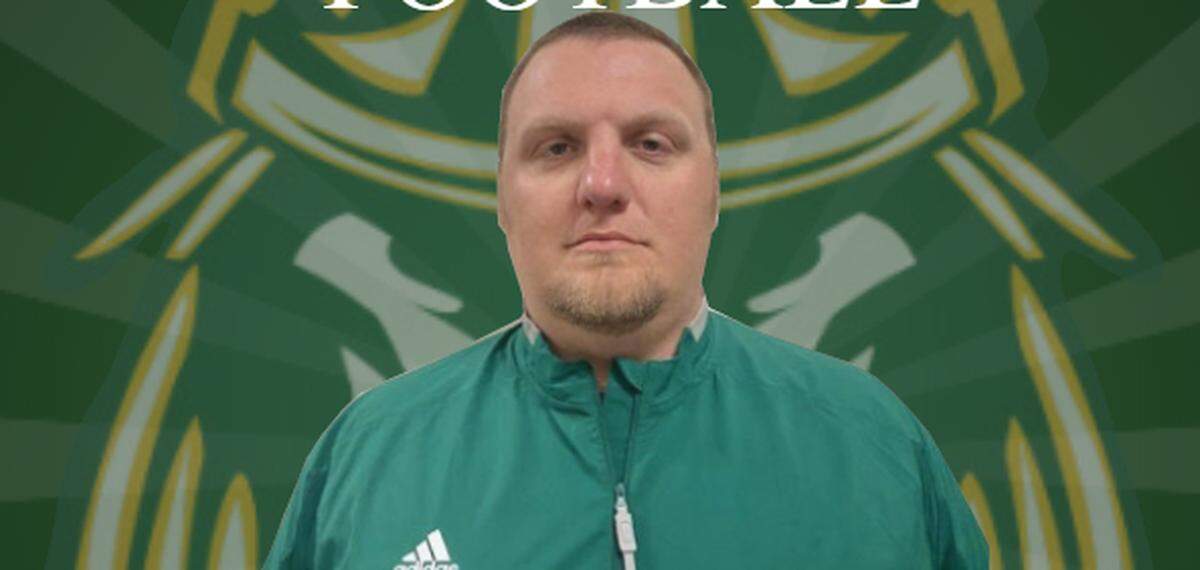
Bevilacqua will be a first-year coach at Central Cabarrus next season. He was an assistant at Sun Valley High in Union County last year. He’s already lost spring workouts with his team and barely got to meet them.
His first official day was the day schools closed in March.
But Bevilacqua likes all the steps the NCHSAA has taken so far, including slow-walking summer workouts.
“I think with anything, we have to take all of our directions from the CDC and health agencies and make sure people are extremely protected, as much as we can possibly protect them,” he said. “But we deal with lots of communicable diseases in the football season in general. We deal with kids having flus and mono, and while they’re not at the scale of what COVID-19 is, if you have an outbreak of mono on your football team, it will have a huge effect on your season.”
Tucker said the association would consider a special waiver for parents to sign before their student-athletes play in a pandemic. Bevilacqua also liked the sound of that idea.
“The big thing we as coaches have to understand is that if a parent says, ‘We’re not comfortable doing it,’ far it be it for us to try to persuade that parent,” he said. “Otherwise, as soon as something happens to that kid, your persuasion is what put that kid out there.”
At 36, Bevilacqua said he’s not concerned about coaching in the pandemic. His wife works in the health care field and he said they’ve had numerous conversations about it. He said if he had a teenage son, he would let him start football workouts next month.
He’s just glad the NCHSAA is giving him the chance.
“I think we have to calculate the good with the bad,” he said, “and I don’t know if I can sit in my house and not do things the rest of my life. I’m ready to get out there and be around my players and around my staff and, like I said, get that normalcy back. I know the risks associated with it, but we’re all measuring the risk.”
This story was originally published May 26, 2020 at 3:41 PM.