Charlotte teen collapsed during a basketball game. A new friend helped him through it
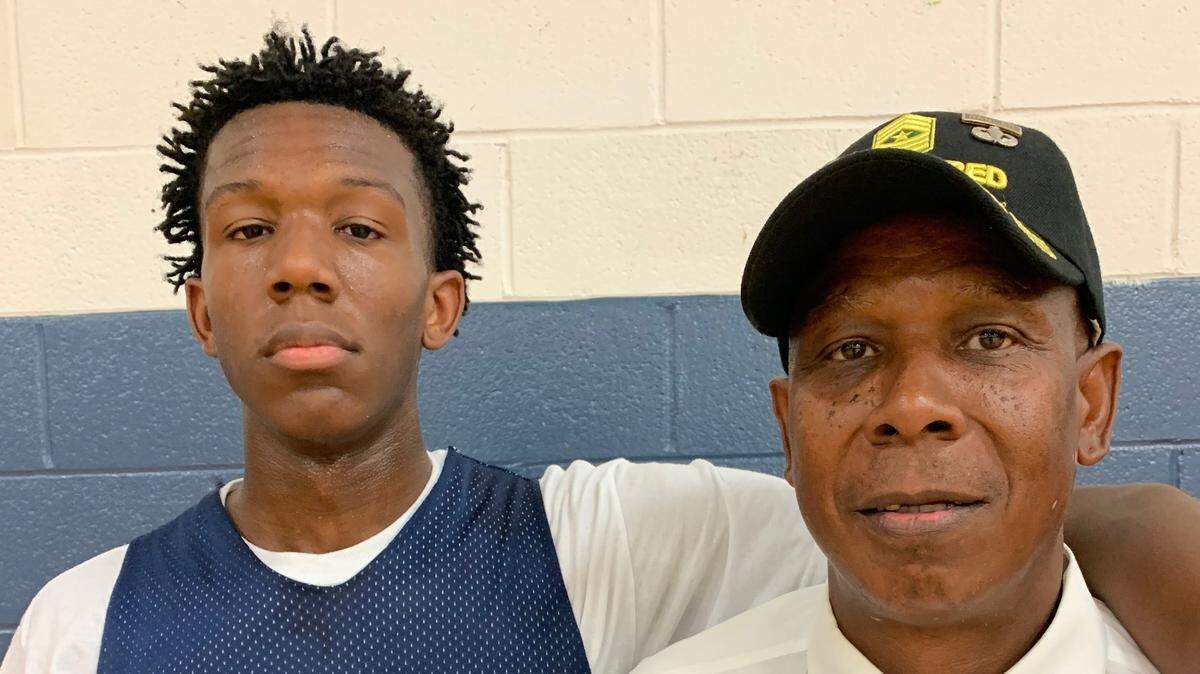
Three days after Christmas, Nick Hamrick passed out while playing a high school basketball game in Winston-Salem. His heart, literally, gave out.
In Concord, Hamrick’s father, AD, a U.S. Veterans Hall of Fame inductee, was doing work force training for the homeless near Charlotte Motor Speedway. As he was teaching, his phone rang.
Hamrick’s coach, Jermaine Jackson, tried to explain what happened: At the beginning of the game, Nick was about to set a screen for a teammate. And then Nick, 6-foot-8 and all arms and legs, just fell down.
And it was the way he fell down: like when a boxer knocks out his opponent out cold.
Jackson told AD Hamrick, who also goes by Adrian, that his 16-year-old son had passed out. Then he handed the phone to Nick’s mother, Nicole Smith.
“Adrian,” she said to the teen’s father. “Come.”
‘My team needs me’
It was the way she said it, AD Hamrick said, the tone in her voice. Nicole didn’t need to say another word.
“The spirit let me know it was serious,” AD Hamrick said. “No parent can ever imagine your child actually dying on the court, but it crossed my mind, you know. So once that happened up, I hung up the phone. I started driving. I said a prayer.”
As he drove to Winston-Salem, the details started to become more clear. There was an issue with Nick’s heart and he had to be revived, twice, using a defibrillator.
“God just happened to have two nurses in the stands that day,” AD Hamrick said. “And one happened to be a trauma nurse, and if they hadn’t been there, Nick wouldn’t be here today.”
Nick, who plays for LaMelo Ball’s 1-of-1 Prep team, was transported to the hospital by ambulance, with his mother in the front seat. Talking to Nicole Smith on the phone, as he drove, AD Hamrick could hear his son, groggy but awake.
“I’ve got to get back!” Nick Hamrick kept saying, his torso shooting up with all manner of medical equipment attached to him. “I’ve got to get back! My team needs me.”
‘My eye felt funny’
The morning of Dec. 28, Nick Hamrick woke up and did what he always does: He had a banana and two peanut butter and jelly sandwiches (he never eats heavy before a game).
“I remember icing my ankle, the morning of, and being ready to play,” he said.
He remembers leaping up for the jump ball to start the game, and he remembers teammate Orlando Lovejoy scoring a basket off the first play.
Next?
“I remember waking up in an ambulance and thinking, ‘What happened?’ ” Nick Hamrick said. “I remember people telling me stories and reaching out. I was confused and shocked.”
He wasn’t in pain, except for his eye.
He had actually fallen awkwardly, and the right side of his face smashed against the floor. He needed six stitches to close a gash caused by the impact of the fall.
“To be honest, I wasn’t scared,” Hamrick said. “I was grateful to be alive.”
Hamrick spent a week in the hospital and doctors never really figured out what went wrong, according to his father. They implanted a defibrillator just above his rib cage, on the left side. His dad jokes that Nick’s so skinny, that if he raises up his left arm, you can see the edge of it just poking out.
AD Hamrick said it seemed a little weird to see his son in the hospital, smiling and texting and — other than looking like he went a round or two with Mike Tyson and got hit in the eye — he looked like he always did.
But he also knew he wanted to know more about heart conditions and basketball players, because he knew his son wanted to keep playing. So AD Hamrick started researching his son’s condition. Some friends told him about former Charlotte Christian basketball star Omar Carter.
A new friend with a shared past
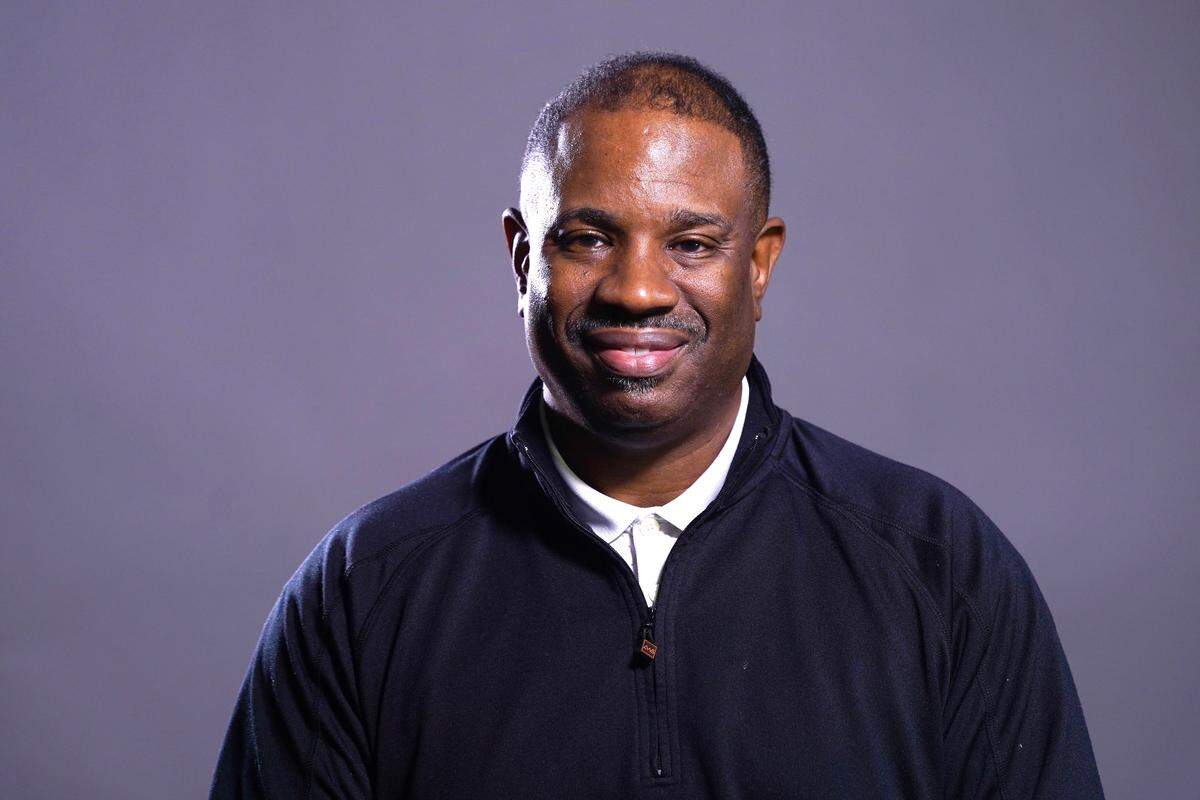
Omar Carter was 16 years old, same as Nick, when he went to his mom complaining of chest pains. He was a star player at Charlotte Christian School when Charlotte Christian was a state power.
Doctors did a litany of tests. They diagnosed him with an enlarged heart. He finished high school and played at Appalachian State, and he played professionally overseas.
“I didn’t have what (former Loyola Marymount star) Hank Gathers had, (which was a thickening of the heart),” Carter said, “and I played 10 years after that, so my heart muscle was just a tad bit thicker than a normal person, and what happened in 2013 surprised everybody.”
In July 2013, Carter was playing in a summer league at the Grady Cole Center. Just one week earlier, a longtime rec coach and former Johnson C. Smith player, Anthony “Bird” Anderson, had died of a heart attack in the same gym.
Carter had a sudden cardiac episode during the game and fell to the floor. He was unconscious for 13 minutes receiving CPR until medical transport arrived. He was placed in medically induced coma and later recovered. Carter is now 33, working as a senior accountant at a real estate law firm. He was 25 when it happened.
One year after the incident, Carter and his mother, Stephanie, established the Omar Carter Foundation to help teach CPR and how to use the Automated External Defibrillator (AED), a machine that analyzes heart rhythms and delivers electric shocks to people in situations like Carter’s and Nick’s.
Some of Carter’s friends knew the Hamricks, and introduced them.
“I know he’s scared,” Carter said this week. “I was, too. I just talked to him and listened to a lot of the questions he had about what he’s going through. I suggested some places for them to go. But I told them I’m not a doctor and I can’t tell them what he has. I try to be as supportive as I can.”
Nick and his father both said the conversations have been invaluable.
“That support has helped me get through this,” AD Hamrick said. “It’s given us comfort as we’ve gone through this process.”
But what now?
Ultimately, the biggest question is this: Will Nick play basketball again?
He’s a sophomore in high school with Division I recruitment. And if you ask him about returning, his answer — and his smile — comes quickly.
“It’s just part of who I am,” Nick said. “It’s not something you can turn off, my love of basketball. It’s a little scary to go back, but my love of basketball overcomes any fear. It (the heart issue) could happen again or it couldn’t. I’m still going to go back and play regardless. I have assessed the risk with the doctors and my parents, and we prayed about it, and we’ll make sure it’s as safe as possible.”
The doctors want him to wait six months before coming back, but have cleared him for light workouts. Nick has a national medical leadership congress to attend in Washington in May that will last two weeks, so the family had already planned for a lighter-than-normal summer travel season anyway.
But Nick is already beginning to put a little pressure on Mom and Dad.
“The doctors said the chance of this happening to him playing high school basketball is no different than him walking to school with his books,” AD Hamrick said. “But the defibrillator is there, at least for the first 90 days. So we’ll keep that and it will give us feedback about the functioning of his heart.”
So for now, Nick said he’ll go to practice when he’s ready and cheer on his teammates, stay involved. He’s very focused, however, on putting his jersey back on soon.
And Omar Carter thinks Nick should come back, too.
“A lot of athletes and individuals I know personally and have read about are still doing extreme sports,” he said. “There’s a Boston Marathon runner my doctor told me about who had sudden cardiac arrest and is still running. (Former North Rowan star) Henderson Lentz had a cardiac arrest in high school and a defibrillator and he’s playing baseball (at Catawba). At the end of the day, listen to the doctors, and it’s a family decision. But if you’re able to do it and you’re young enough, pray about it, but I’d love to see him come back from this.
“It would definitely be a story to tell.”
This story was originally published January 9, 2022 at 6:30 AM.