The transfer portal dilemma: The new reality for high school football players
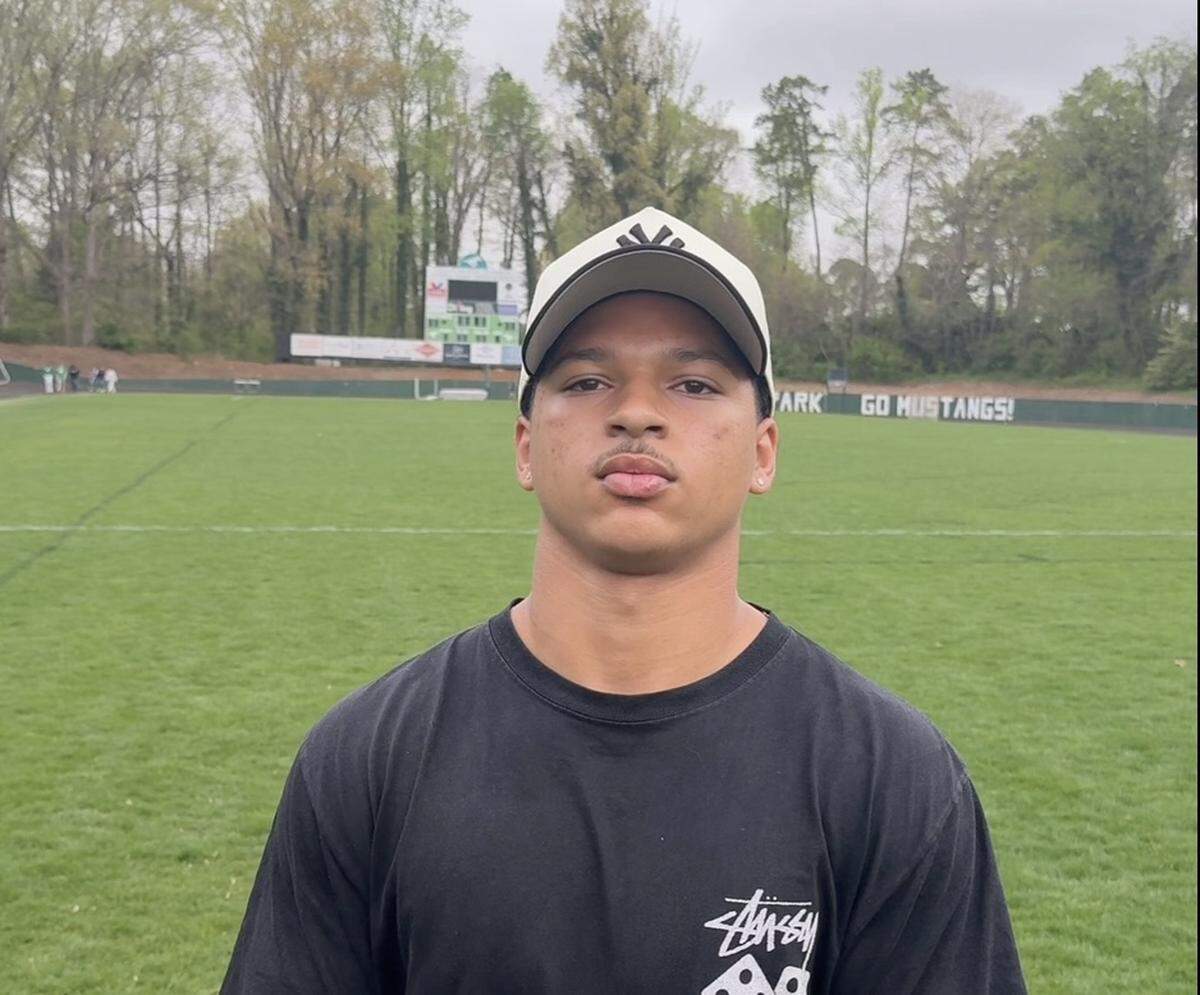
On a sunny weekday morning at Myers Park High last month, Mustangs All-American Rodney Dunham was standing in the open end of the school’s natural grass football field, about to do an interview and a photo shoot.
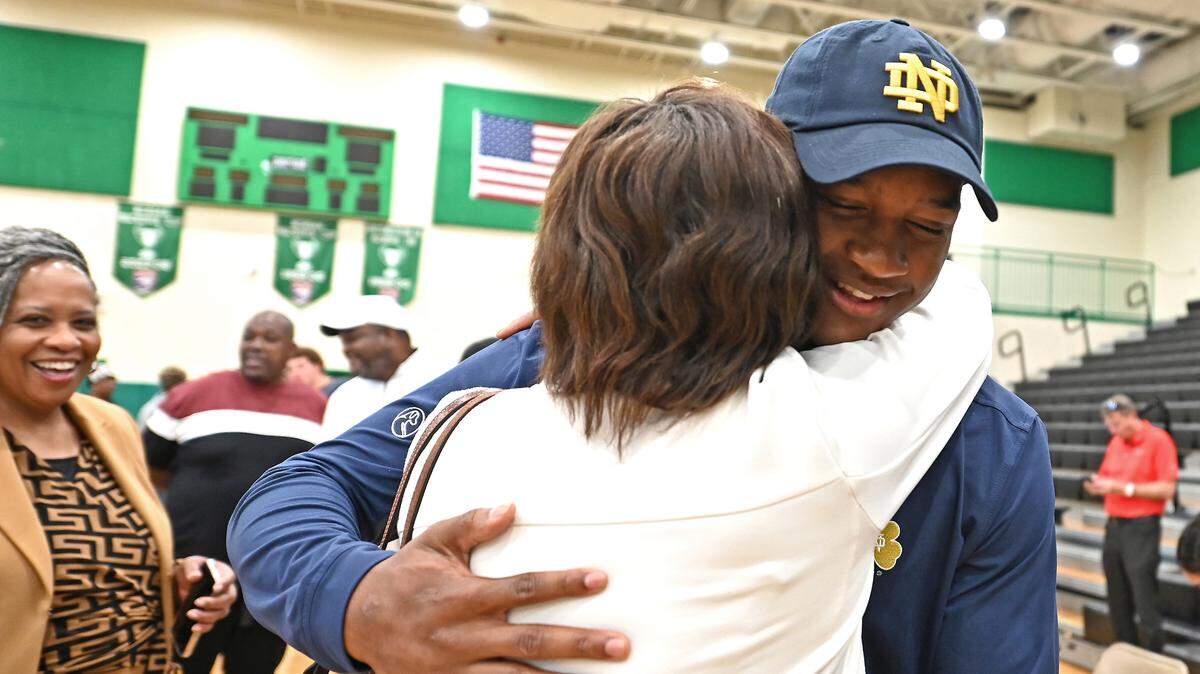
A few days later, Dunham would commit to Notre Dame, likely a few months away from earning the type of NIL money that will dwarf what some families in Charlotte make in a year.
Maybe one day, Dunham — a 6-foot-4, 230-pound defense end ranked among the nation’s top 15 high school football players — turns pro and dons an NFL jersey.
But most high school football players nationwide are not Rodney Dunham.
Many more are like his teammate, 17-year-old running back Josh Falzarano. And getting to a Division I college, much less getting an NIL check, is becoming harder and harder for guys like him.
College coaches, with pressure to win now, are building rosters through the transfer portal and many simply don’t have time to wait for teenagers to develop.
That’s put a lot of downward pressure on high school recruiting.
Just three years ago, Scholarship Stats, a company that tracks recruiting nationwide, found that more than 1 million boys played high school football and 9.4% played in college. Of those, only 3.1% played in Division I.
Last year, the NCAA released its own figures: 7.5% of high school players played in college and 3.0% in Division I.
Falzarano said the dip is easy to see.
“It’s pretty hard,” Falzarano said, “because, you know, a lot of these schools are looking at the top guys, and being a guy of my stature, it’s just pretty hard to get recruited.”
So what changed?
Myers Park football coach Chris James played high school ball in Atlanta and then four years at Gardner-Webb, a small Division I school about an hour west of Uptown Charlotte.
James wasn’t a sure-fire prospect like Dunham, but back when he was playing, good high school football players often found homes at the Division I level. That’s not always the case today. James said he’s coached or coached against many players who used to get the Division I or Division II “call” who are dropping down, or in some cases not being recruited at all.
“That, to me, is the hardest part of the job,” he said. “A guy like Rodney sells himself. There’s not anything I have to do. The tough part is a guy like (Falzarano) that has tape and played a lot of football but isn’t 6-5, 230 or 240 and doesn’t run a 4.2 40, but is a very productive and good football player. Five years ago, he’s a college kid, no doubt.”
James said he sees the frustration with lots of players.
“I tell them, ‘I know you’re frustrated. I know you’re angry,’” James said. “And I know you watch these rankings and you watch all these offers go out and kids are committing and you went to middle school with them. You played with them. Some of them, you might feel you’re better than. It’s just the day and age we’re in with the portal.
“It’s not going to get any easier.”
An ongoing NCAA antitrust settlement case could also have an impact. If adopted, there would be new roster cap rules, for example.
Instead of D1 schools having 85 scholarships and 35 walk-ons, for a total of 120 players, there would be a strict roster cutoff of 105 scholarships only. The walk-on — an avenue for many borderline high school players who hope to play at the D1 level — would be eliminated.
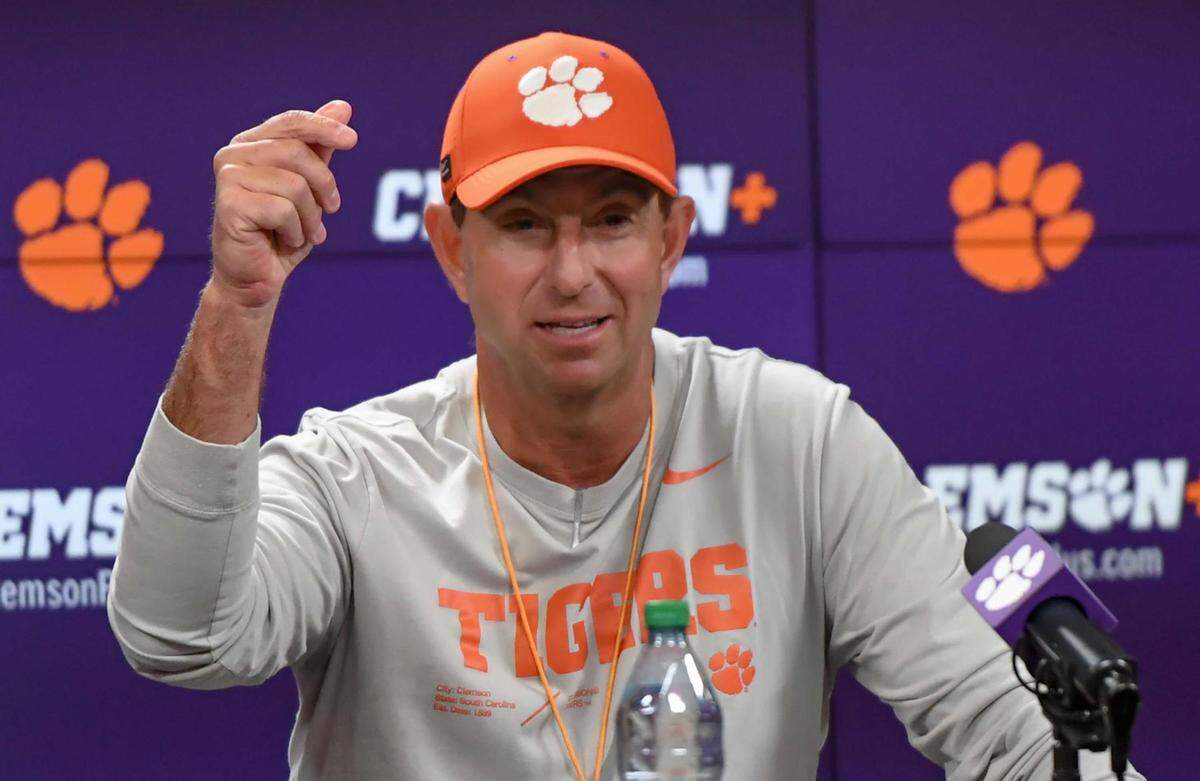
Clemson coach Dabo Swinney said the 105-player cap would be the “worst thing in my whole coaching career.” Swinney believes walk-on players, who often earn scholarships, contribute mightily to practice and team chemistry.
Downstream, that’s another hurdle for high school players to deal with, along with the NCAA granting extra eligibility to college athletes for things like COVID or junior college play.
“We’ve got college players getting those NIL checks that don’t want to leave,” said Palisades coach Jonathan Simmons. “And we’re dealing with ever-changing rules and rules that were there to protect the players are being taken away. Now you’ve got JUCO kids getting years back. That affects high school kids. Now instead of that player (in college) graduating and (college coaches) saying, ‘We’ll get a high school kid to replace him,’ it’s ‘We’ll get another college guy, or six or seven of them.’ They’d rather have a grown man, and being able to transfer, again and again, with no penalty, makes it easier.”
It’s not just prep football players being squeezed
Barbara Nelson retired recently after winning more than 800 basketball games and nine state championships. She said recruiting is totally different than when she started in the mid- to late ‘80s. Nelson also coached in college a few years at Division II Wingate.
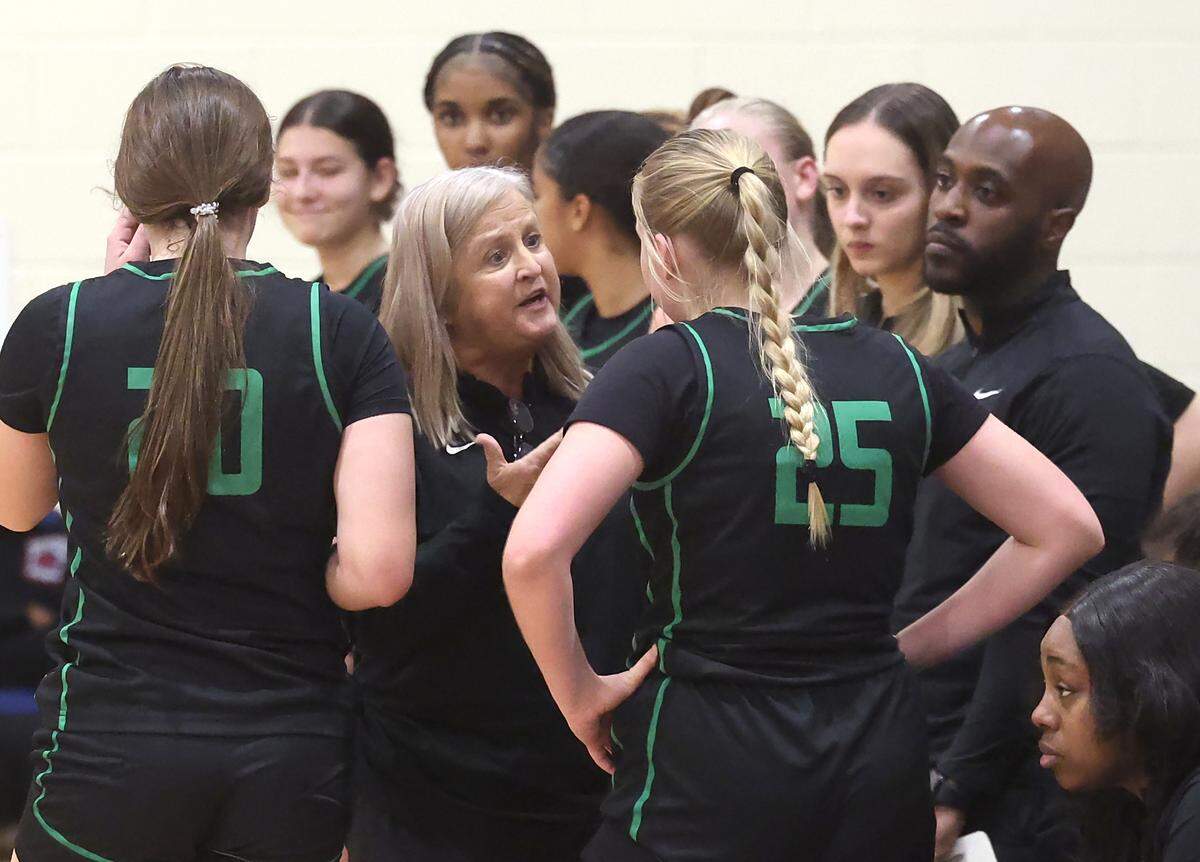
She said girls’ basketball players face the same pressure as boys’ players in football and basketball.
“I’m sad for these kids who are working really hard and they might not be a top 50 or 75 recruit,” Nelson said. “They’re having a hard time finding a place to go and find value. (College basketball has) been a great opportunity for so many kids. I can honestly say I wouldn’t want to be a college coach in the landscape today. The loyalty is not there, and I’d say it’s both ways. For the college coach, I don’t think they buy into the relationship anymore. It’s transactional. And it’s both ways. Scottie Pippen’s son put his name in the portal as his team was going into the Sweet 16. How do you do that?”
Nelson said she sees girls players being squeezed out of D1 and sometimes D2 scholarships as colleges play the portal game, just as with football and men’s basketball.
“It’s just really hard right now,” she said, “and (kids) may have to be OK going to a level they never thought they would have to go.”
Hough High girls’ soccer player Riley Pickels is one of the lucky ones. A junior goalkeeper, she had serious interest from Tennessee, UNC-Greensboro and East Carolina before she committed to N.C. State last fall.
“A lot of the younger girls on the team come up to me and are like, ‘Hey can I see your email templates and what you did to get recruited,’” Pickels said. “You have to know how to advocate for yourself. It comes down to how much are you willing to get your name out there, go to camps and keep calling when they don’t call back.”
College coaches facing pressure, and change
Johnson C. Smith football coach Maurice Flowers will begin his fourth season this fall and he said recruiting is nearly “100 percent different” than when he started coaching his alma mater.
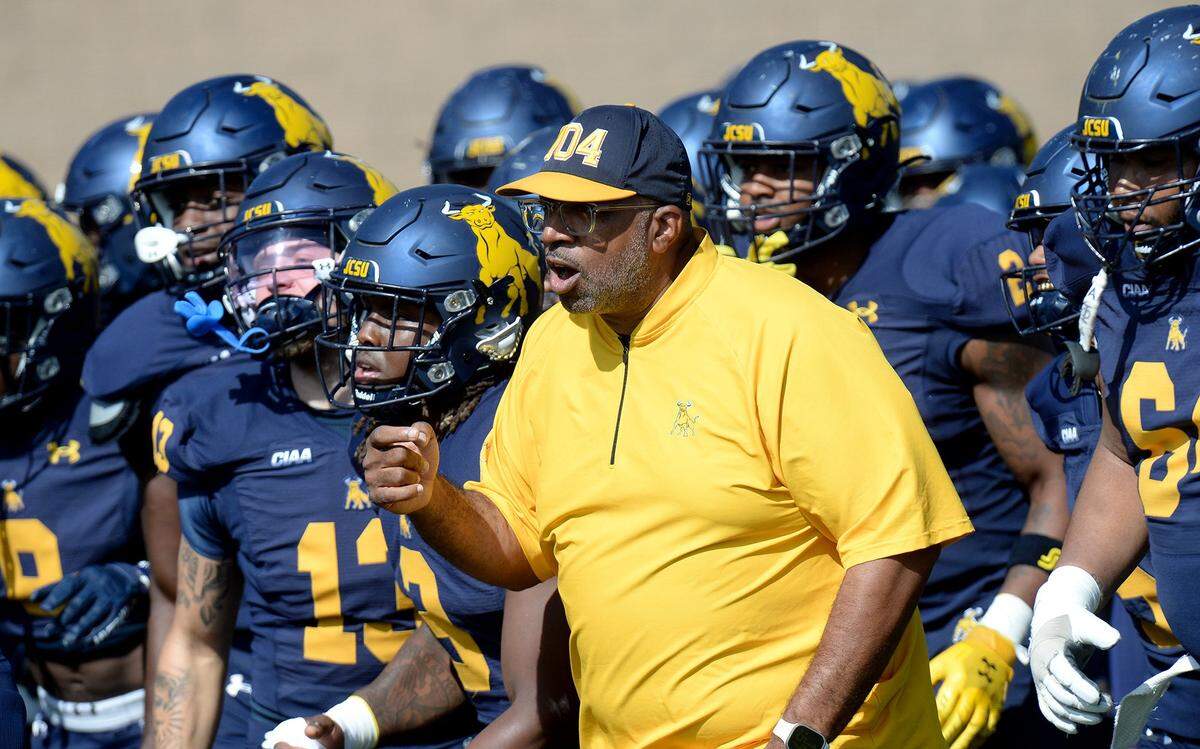
He said players who would normally go to a big D1 school are going to a smaller D1, and guys who would normally play at smaller D1s are falling to D2 and below. And he said not as many kids are finding a home now as were just a few years ago.
Flowers said there’s a simple reason for that.
“The climate today is college coaches have to win now,” Flowers said. “Listening to the (major college) coaches, the general consensus is, most of us feel it takes two years for a high school senior to get ready to be a productive college player, by IQ and by body and weight, to take the physical pounding needed. What do you do? You get the older player in the portal who’s experienced and who’s got those two years of college behind him. Who does this leave out in the cold? The high school football player.”
Flowers sees a future where fewer high school players make Division I than even the 3 percent currently doing so. He think the potential 105-man roster limit rule will only exacerbate that. And, more than anything, he thinks college football needs some regulations around the portal and NIL.
“Right now,” he said, “it’s the wild wild west. That’s how (major college) coaches are describing it. On our level, we’ve got people from the FCS level and other D2 schools trying to poach our players. There’s no regulation saying you can’t make contact. Most of the time, when a guy is in the portal, contact has already been made: by a coach, by a handler, by a family member. The young men, the student-athlete, they’re getting caught in the cross hairs a lot of times, because some of these deals are sometimes just talk, and then you get in the portal and you can’t go back to your old school.”
Advice to the high school kid
For the high school player who isn’t a Rodney Dunham, Flowers’ advice is simple.
“Adjust your expectations.”
Flowers said that high school players need to understand they may have to play down a level or two — or three. But be prepared to really work, he said, on selling yourself to the schools you’re interested in.
“It really starts in 10th and 11th grade,” he said. “Go to all the camps. A lot of times parents and players only go to the (big school) camps and hundreds of guys are there and most of the time, the coaches already know who they are recruiting, the people they will give scholarships to, so you’re just one of the hundreds out there performing. So to camps at all levels of football.”
Next week, Simmons, the Palisades coach, is putting on a “Recruitment Day” for Charlotte-Mecklenburg Schools’ athletes to be seen by college coaches. Simmons believes that allowing coaches to see hundreds of recruits in an afternoon would be better than going school to school and might tempt some college coaches who might not come through Charlotte to attend.
“It’s added exposure,” said Simmons, who played at JC Smith. “It’s live, in-person evaluation from college coaches. And that’s really the only way they’ll offer, if they’ve seen you in person. A lot of them are dealing with limited budgets. Everybody only thinks D1, but trying to travel to 19 or 20 (CMS) high schools in a day is nearly impossible. If we bring all the coaches and all the kids to one site, all the coaches can at least attend one time.”
Simmons said these types of events will become more important as time goes on — and the transfer portal only continues to grow.
“Talented players will always have a home,” he said. “It’s the developmental player that’s in flux now. It’s that kid who gained 20 pounds over the summer or grew three inches or switched positions and needs more time. That player is suffering. Before he could get recruited and developed. Now that guy has to go D2, FCS, D3, JUCO and work his way up. That’s why you have to love it. You can’t just like it. You may have to go on a journey to get where you want to go.”
The chase goes on
At Myers Park, Falzarano, the rising senior running back, is ready to go anywhere football might take him.
Falzarano is 5-7, 170 pounds and his coach, Chris James, calls him a “very productive” and “very good” football player.
Last season, he ran for 453 yards and five touchdowns, averaging a healthy 5.2 yards per carry. He caught 12 passes for 148 yards and a touchdown.
“Josh will be a three-year varsity guy for us,” James, the Mustangs’ coach said. “And he’ll (run the ball) for us pretty much by himself this year. He’s can catch the ball, run between the tackles. He’s a track guy and somebody, if you get him on campus, that will be successful.
“But the problem is, how do you get him on campus?”
Falzarano said he’s going to Junior Days at universities and constantly calling and emailing coaches, trying to build a relationship.
He said the answer is always kind of the same: Come to our camp and let us see more of you.
“It makes me push myself more to become a better player and prove these coaches wrong,” Falzarano said. “But it can be frustrating, too. I heard most of these colleges are looking at the transfer portal more than recruiting kids out of high school. So the chances will probably decrease for us.”
Falzarano is asked whether some kids might stop playing, knowing that the dream of playing in college is dwindling, seemingly by the day.
“I think possibly,” he said, looking down. “Just because of how strong the transfer portal is.”