Why are NC’s best prep football coaches migrating to SC? Money
Five years ago, Mike Palmieri made statewide and regional news when he decided to leave a nationally ranked football program at Charlotte’s Mallard Creek School, which he had led since the school opened in 2007.
Palmieri led Mallard Creek to three state titles in a row and sent dozens of players to college. He’d coached future NFL players. Mallard Creek had as deep a talent pool as anywhere in the South.
But the reason Palmieri left for a then-two-year-old Denmark High School, about an hour outside Atlanta, was pretty simple.
It’s the same reason so many other top-tier coaches have left the Charlotte area and North Carolina in recent years, in football and other sports, too.
“It was a great run at Mallard Creek,” Palmieri told The Observer, “but it got to a point where honestly, it was a financial situation more than anything. My son was about to graduate high school and I felt I wanted to try to find something where I could be more financially stable and this was a great fit.”
Palmieri said he nearly doubled his salary when he left North Carolina.
The coach Palmieri replaced, Terry Crowder, made $98,967.36 in fiscal year 2019, according to Open Georgia, a State of Georgia public records database. Palmieri, at the time, had spent 14 years teaching and coaching at Mallard Creek.
According to numbers provided to The Observer by Charlotte-Mecklenburg Schools, a teacher with 14 years of experience in 2020 and a bachelor’s degree earned $57,725 as a 10-month employee. Because football coaches, like Palmieri, were paid on an 11-month scale, that 14-year employee would’ve made $63,497.50 in 2019. Add in the head football coach’s stipend, which was $5,006.40, and that coach would gross $68,504 annually.
“I’m coaching Mallard Creek 13 years and a first-year coach (in Charlotte-Mecklenburg Schools) is making the same amount (in supplement money) that I’m making. Me and my wife are like, ‘This is not fair, and it’s time to go.’” Palmieri said. “You put so much work into a school system, and nothing against new coaches, but they shouldn’t make the same amount of money. There has to be some type of financial advantage for doing something for so long.”
Football coaches in North Carolina significantly lag behind their counterparts in nearby states. A 2022 review by The Columbia State, a sister paper of The Observer, showed that 34 coaches in South Carolina earned more than $100,000 annually.
Three years later, a new Observer study shows there are just four N.C. coaches making six figures.
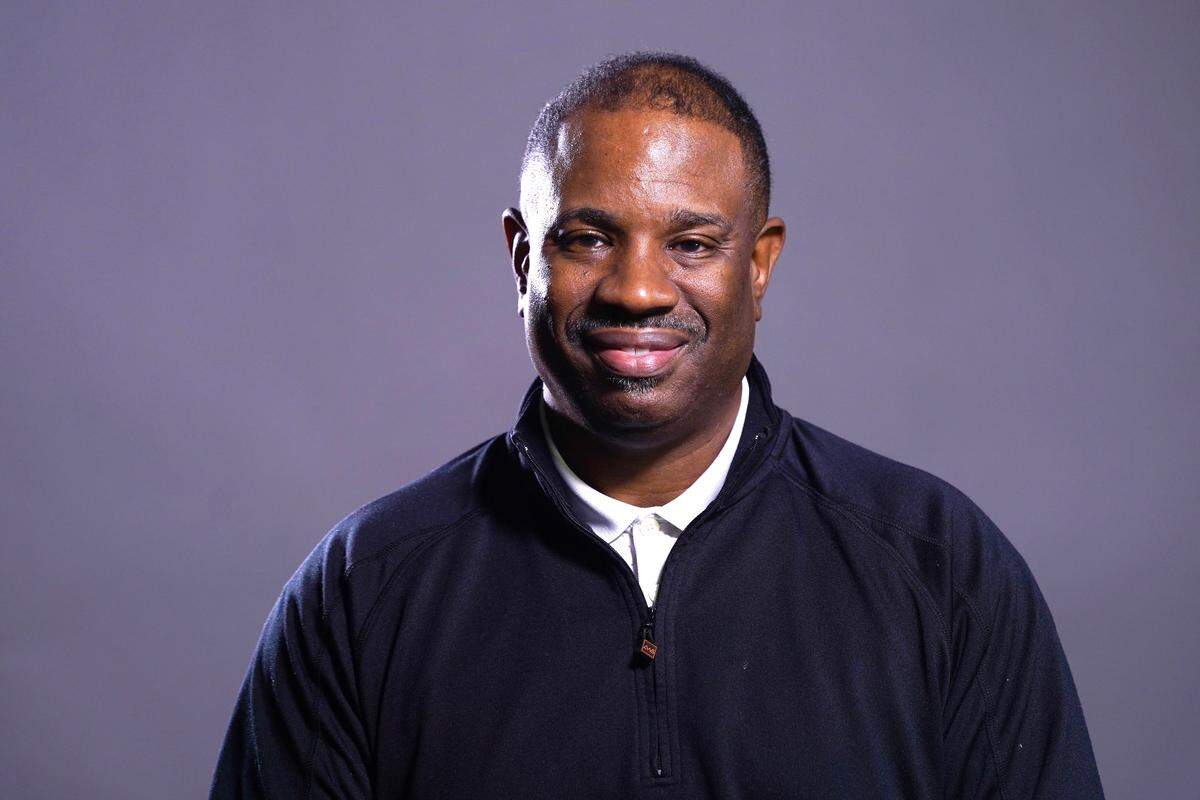
“I didn’t even know there were that many,” said Darryl Brown of Grimsley High School in Greensboro and president of the N.C. Football Coaches Association.
Coaches in NC being ‘abused’
Brown’s team won the N.C. 4A state championship last December, a playoff bracket that annually ranks among the nation’s most difficult by MaxPreps. Heading into the 2025 season, Brown’s team is ranked No. 16 nationally by USA Today and features arguably the nation’s top recruit in quarterback Faizon Brandon, a Tennessee commit.
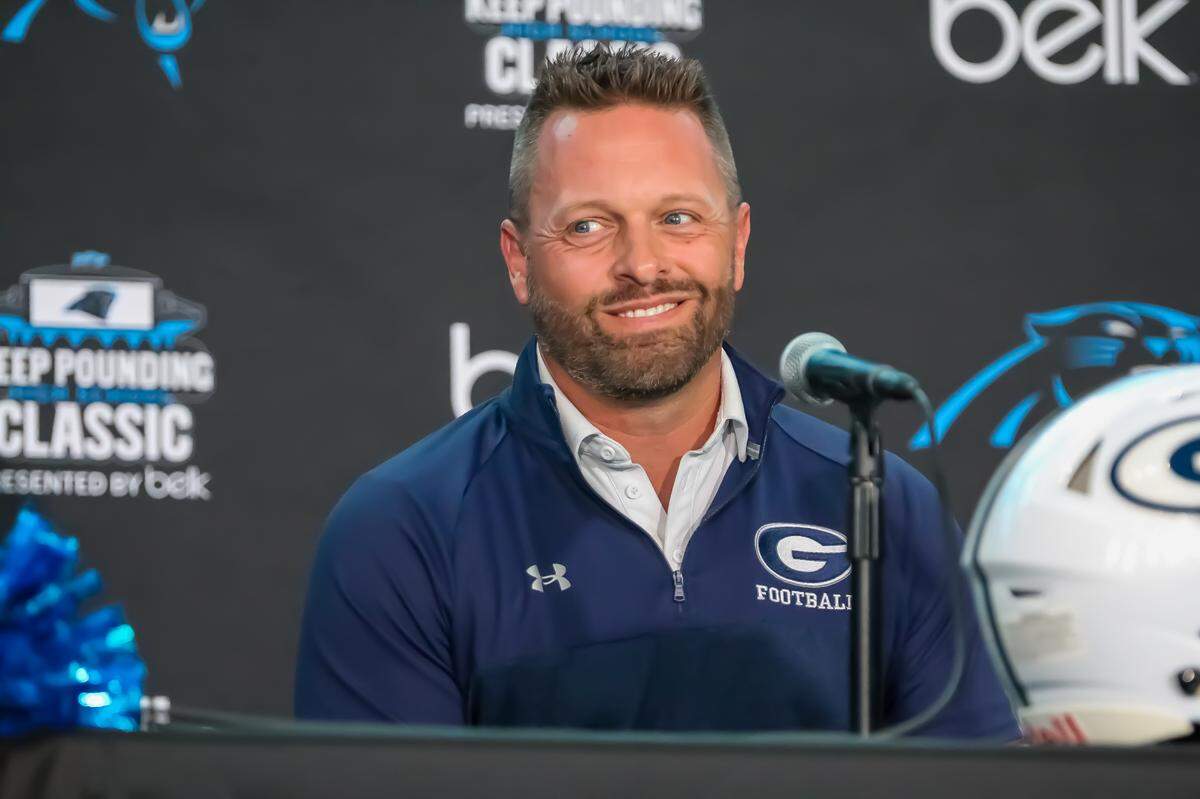
“I’m just disappointed there aren’t more” coaches making six figures here, Brown said. “You go across (the state) line and you’ll see different, or in Georgia. Coaches are abused in the state of North Carolina, for what they do, for the time they put in. I haven’t done the math, calculating how much they make an hour, but it’s not even close (to S.C. or Georgia coaches). And there are so many good coaches in this state and we just lose them to other places. And that’s hurting our schools, hurting our athletic programs and hurting young people. We’re in this profession to help them, but we’re not doing anything to keep good people here.”
For comparison, in 2015, 17 Georgia high school football coaches were making six figures. By 2019, it was 44.
Today, at least 20 coaches in Georgia make more than $120,000, according to NWGAfootball.com, which tracks salaries statewide. Carrollton High coach Joey King, who coached Trevor Lawrence in high school, makes more than $225,000 annually, according to publicly available data.
Narrowing the focus a little, North Carolina is a lot larger than South Carolina — with 10.6 million residents compared to 5.4 in S.C., according to recent U.S. Census data. There are more than 500 high schools in North Carolina and fewer than 300 in South Carolina. Annual GDP in North Carolina is nearly $800 million, compared with $327 million in South Carolina.
But when it comes to high school football pay, South Carolina is the king.
And it’s not even close.
Stars leaving in droves
In the Charlotte area alone, three of the state’s best football coaches have left for South Carolina or Georgia and enjoyed major success.
Palmieri hasn’t missed the playoffs since leaving.
After winning seven straight state championships at Independence and building arguably the Carolinas’ best football program, Tom Knotts left Charlotte-Mecklenburg Schools, mostly over money, and more than doubled his salary at Dutch Fork High near Columbia.
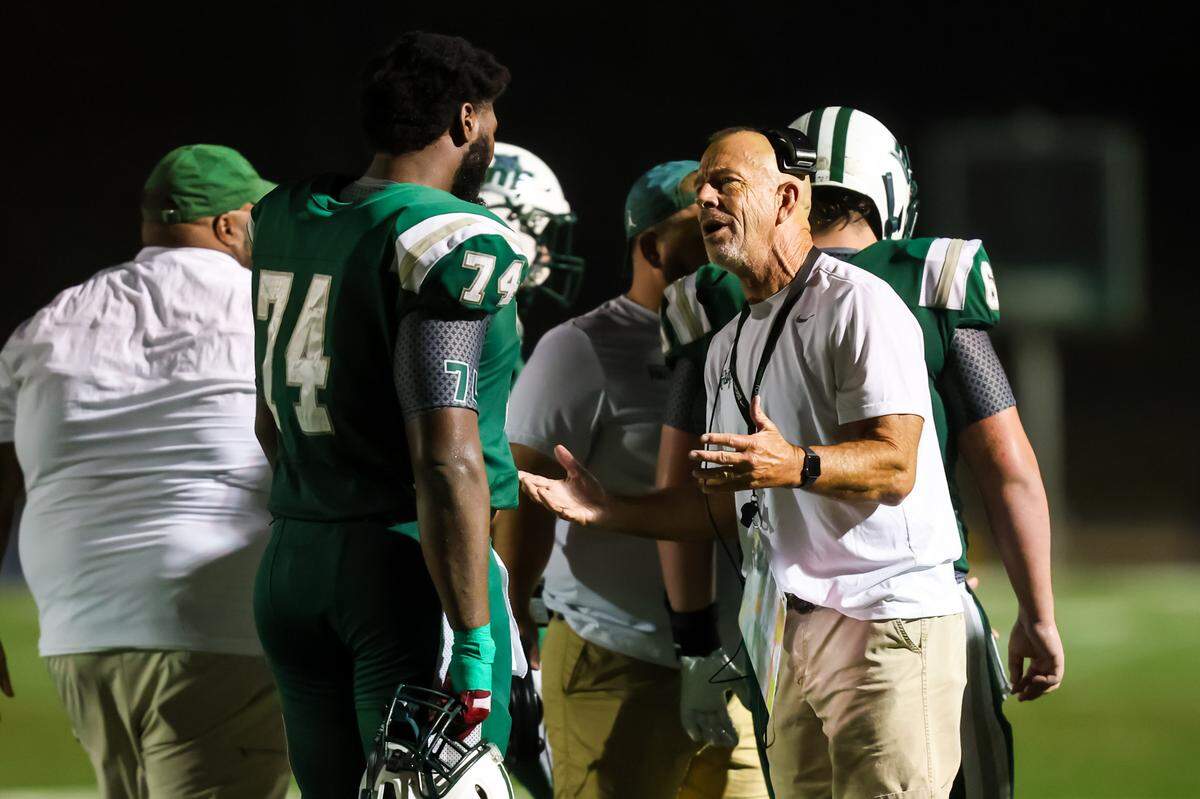
In nine seasons at Independence, Knotts was 132-6.
Knotts’ salary when he was hired in South Carolina was $104,142 plus playoff incentives, The Observer reported at the time. Knotts also said he would draw more than $3,000 per month from his N.C. retirement. At his new school he also had fewer teaching responsibilities, better facilities and an administrative assistant.
Since starting at Dutch Fork in 2010, Knotts’ teams have played in 12 S.C. state championship games and won nine, including an S.C. 5A title in December.
A few weeks before winning its third straight title last December, Dutch Fork played crosstown rival Irmo in a conference championship game. Both teams were unbeaten. Dutch Fork won 24-14 but got its closest game of the season.
Irmo’s coach? A former Knotts assistant named Aaron Brand.
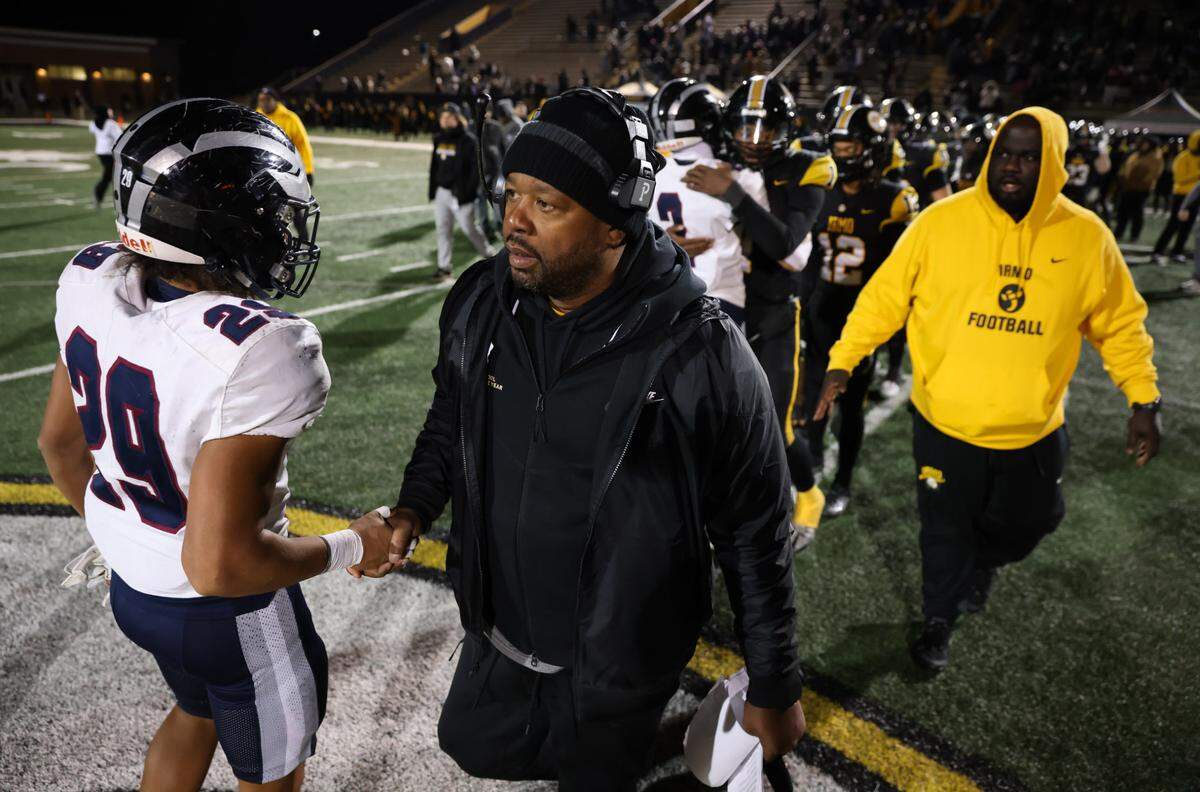
Before coaching at Irmo, Brand was head coach at West Charlotte and Chambers high schools in Charlotte.
Brand led West Charlotte to a state semifinal and later led Chambers to the N.C. state championship game in December 2018. He left for Irmo a few months later, a move that doubled his salary.
He called it a “golden opportunity.”
Brand’s starting base salary at Irmo was just over $100,000. And Brand taught three classes at Chambers.
That changed in his new job.
“He got (the) pay raise, and no teaching,” Knotts told The Observer about Brand’s move. “That’s also important. Teaching a full load is unheard of down here in South Carolina. They value quality of football and they know what it takes for coaches to be prepared.”
An NC farm system?
Another former Charlotte-area coach who left for South Carolina is Bobby Collins, now head coach at Rock Hill’s South Pointe High School.
Collins was the first coach at Hough High in Cornelius when the school opened in 2010. Collins stayed four seasons before he decided he had to leave.
“I was looking at my bills one night,” Collins said. “I’m a father, too. I mean, I’m taking care of your kids every day, but I’ve also got to take care of my own.”
A big part of his frustration, Collins said, was how Charlotte-Mecklenburg Schools paid its supplements, which resulted in a near 50% tax hit.
“In the state of South Carolina,” Collins said, “90 percent of the coaches, their supplement is part of their salary. It’s not a separate check.”
Collins thinks, ultimately, South Carolina school systems make football a priority, whereas N.C. schools — at least not yet — haven’t matched that.
And he thinks it could have long-term consequences.
“The great part about North Carolina is that a lot of younger guys are able to get jobs,” Collins said. “But when you’ve got a veteran coach, a guy like (West Charlotte’s Sam) Greiner, who has won two state championships at two different programs, you know, you’re a little closer to retirement, you want to go someplace where your family can live a different life.”
Collins is asked if he means that North Carolina could become a de facto coaching farm system for S.C. schools.
Said Collins: “100 percent.”
“And I don’t say that in a boastful way,” he said. “But you take a look at some school districts here (in Rock Hill), the lowest-paid coach on staff might get paid more than a (Charlotte head coach). Everybody’s doing the same work. I was the same guy at Hough that I am at South Pointe, except you know, now I have 22 paid assistant coaches.”
At West Charlotte, the reigning N.C. 3A state champion, Greiner said he has six.
A flawed system in North Carolina?
Greiner led West Charlotte to its first state championship in nearly 30 years in December. In 2017, he led Harding to its first state championship in more than 50.
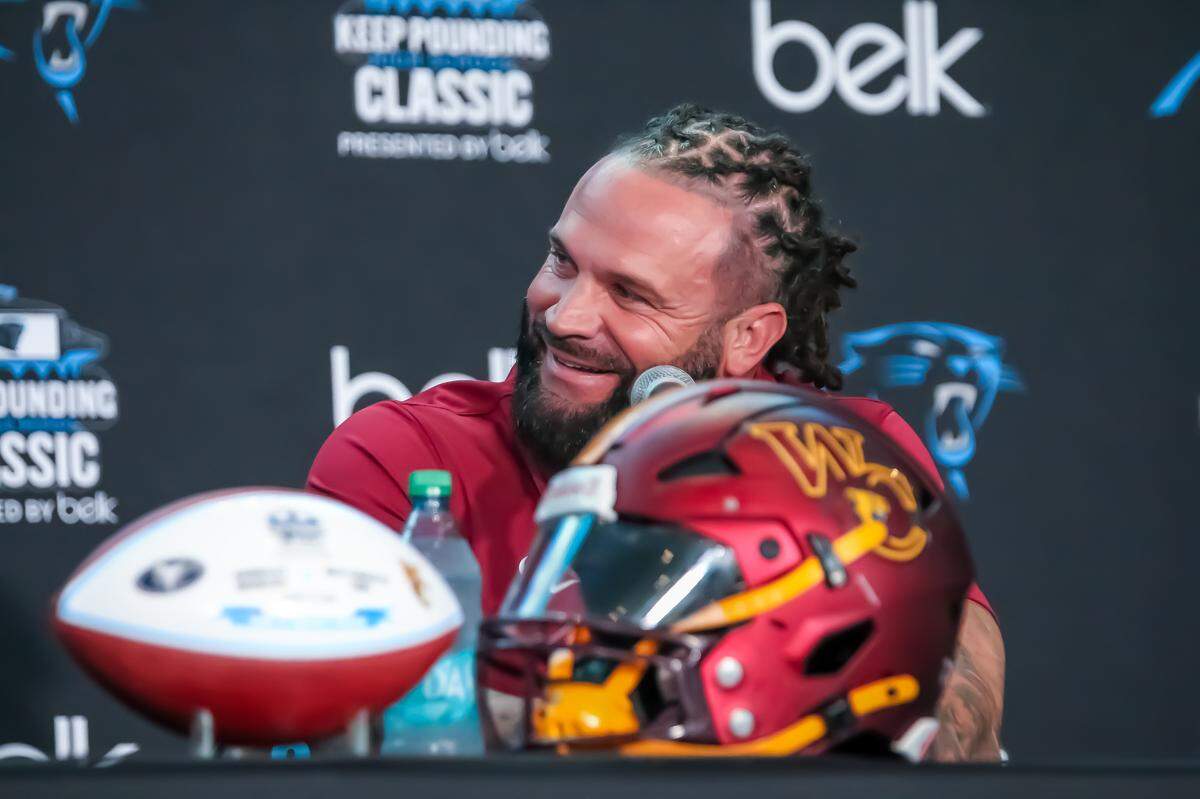
En route to each state championship, Greiner worked two months essentially for free, because CMS doesn’t pay anything additional for coaches working in the playoffs.
Greiner’s supplement was the same as the coach whose season ended in October.
“We’re flawed in that system,” Greiner said, “and we’ve got to make changes. I might be able to make it to retirement, but a lot of younger guys, they’re going to leave if they don’t get anything. You take a guy like (Independence High’s) DJ McFadden, they’re going to come knocking down his door. And if our football needs to stay at the great quality it’s at, to keep the great players and make sure they are getting whatever they need to be successful for the next level, we need to keep those coaches here. And we’re behind the 8-ball on that.”
Greiner points to a state like Florida, which like North Carolina has suffered from low pay. A new bill could be voted on by Florida’s House and Senate as early as January that would give most high school coaches a big raise.
For football coaches, it could mean a minimum stipend of $22,000 for a head coach and $15,000 for a coordinator.
“Florida figured it out,” Greiner said, “and they’re a hotbed for talent like we are. That’s the whole key. You have to look at yourself in the mirror.”
Like Collins of South Pointe, Greiner worries that South Carolina will continue to get this state’s best and brightest if the pay disparity continues.
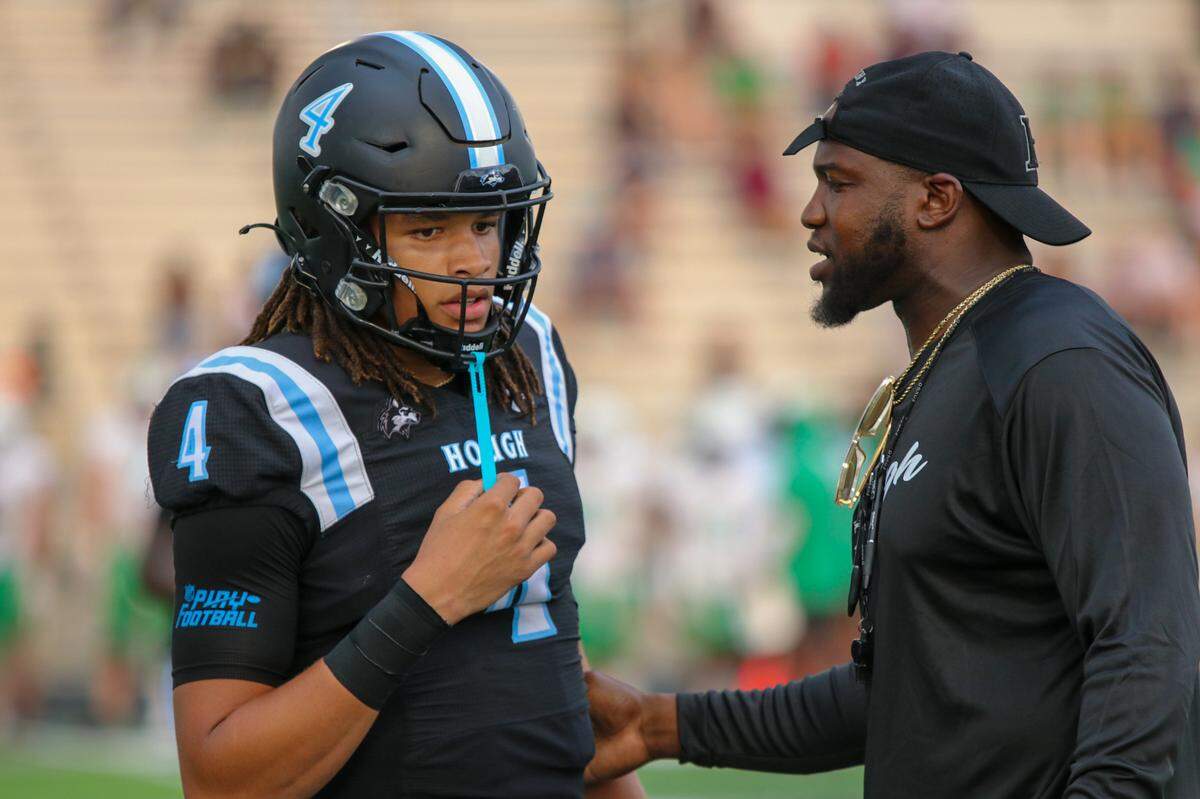
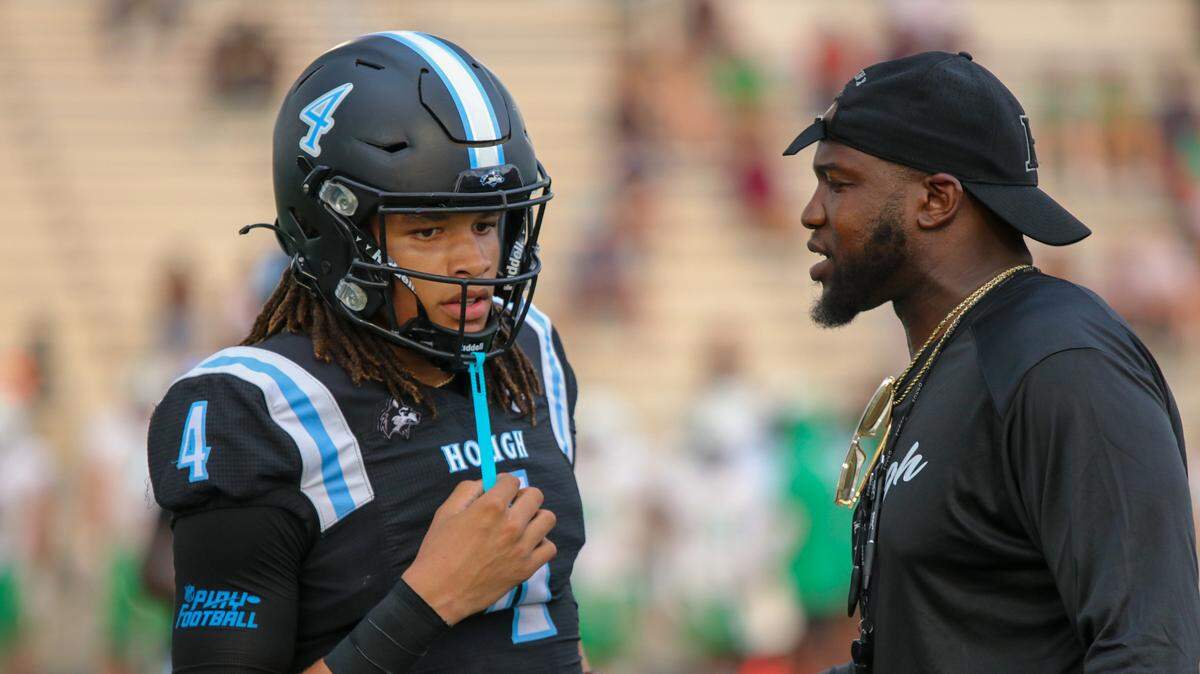
Hough’s Shawn Baker — who, like Independence’s McFadden, is a rising star among younger N.C. coaches — agrees with Greiner. He said it’s hard to not look across the border, especially when you don’t have a lot of time in the N.C. retirement system and have plenty enough time to grow in the S.C. program.
“You know, coaches do a great job in North Carolina and the first opportunity they get, they go across the border,” Baker said. “There’s a lot of hard work that people don’t see, especially if you want to have a good program. You have to work a lot. And to get compensated for it is great.
“I think teachers need to get paid more money, but some teachers don’t work as many hours as we do. Like we’re in the building at 6:15, 6:30 and sometimes we’re not leaving until 8:30 or 9 at night because of practice. We’re waiting on parents to pick up kids. You’ve got (college) coaches coming. You’re trying to get kids recruited. And football brings in a lot of money for the school. It takes care of a lot of sports that are in the red, man, you know?”
Eventually you have to take care of your family
Back when he left Charlotte for Georgia, Palmieri said it was really hard to leave.
“If CMS was paying better, I would look (at staying),” he said then. “I’ve had opportunities to take jobs that paid more than CMS. But my family is getting older and I have more needs, so it is a factor. Money is a big factor. There’s lots of great athletes in this city and lots of great people, but eventually coaches have to take care of their families.”
Now, six years later, Palmieri said the boost in salary has given him peace.
“You’re doing the same job, working the same long hours, but you’re able to take care of your family,” he said, “and you don’t have that financial burden and stress. It gives you more peace of mind in life. Making more money isn’t everything, but it does help with the stress.”
Palmieri said current and future CMS and N.C. coaches are likely to come to the same conclusion he did if things don’t change.
“If they don’t start paying the best coaches, they’ll lose them,” he said. “There’s lots of good coaches in (the Charlotte) area and they won’t stick around long. They’ll get opportunities to help their family and I can’t blame them for that. Hopefully, (administrators) begin to realize how important it is to have good coaching for the community. But these guys can go 30 to 40 miles and double their salary. I don’t see how it can’t be changed.”
This story was originally published May 29, 2025 at 5:30 AM.