CMS football coaches won’t get a raise in 2026-27, extending 8-year stipend freeze
Charlotte-Mecklenburg Schools’ football coaches will not be getting a pay increase for the 2026-27 school year.
CMS told The Observer, via email, that an increase in coaching stipends was not included in its 2026-27 budget request.
“The district has a very long list of needs across the organization, and those needs must compete against each other for a limited amount of available resources,” the district wrote in its email. “As a result, not every important need can be included in the budget request each year.”
That means this will be the eighth straight year that the district’s coaches in all sports, including football, have worked without any pay increase. And prior to 2018, the district’s coaches hadn’t received a raise in 14 years.
In the 2018-19 school year, a football coaches’ stipend, paid in addition to the teacher’s salary, went from $4,172 to $5,006. That amount, however, is paid as a bonus and taxed at nearly 50%. And those supplements don’t cover spring and summer workouts, or if a team makes the playoffs.
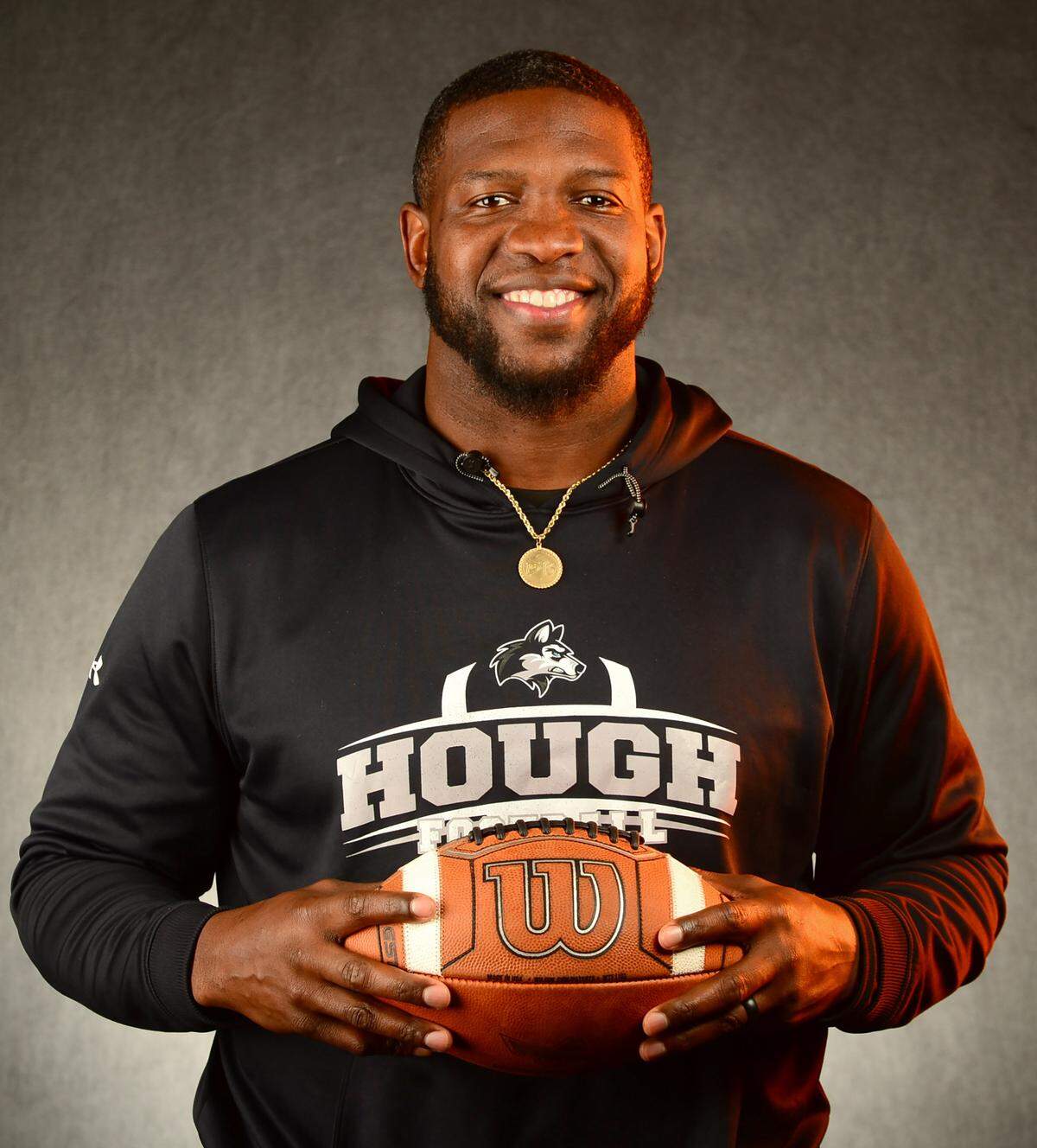
“Man, we all kind of knew that was probably going to happen,” Hough football coach DeShawn Baker said. “And it’s going to continue to happen, and we’re going to lose good coaches. North Carolina has really good coaches. Charlotte has really good coaches, but we’re going to keep losing them. Coaches are going to get tired of (low pay).”
Last October, Charlotte-Mecklenburg officials were bracing for a potential boycott by its high school football coaches over the pay issue.
The coaches planned to sit out a practice or maybe a game, and took their cause to traditional and social media. After getting what they thought was encouraging news from the district, they backed off the boycott, instead wearing black T-shirts with “Coaching for Change” on them in solidarity during a game.
The coaches’ actions, however, did not pay off.
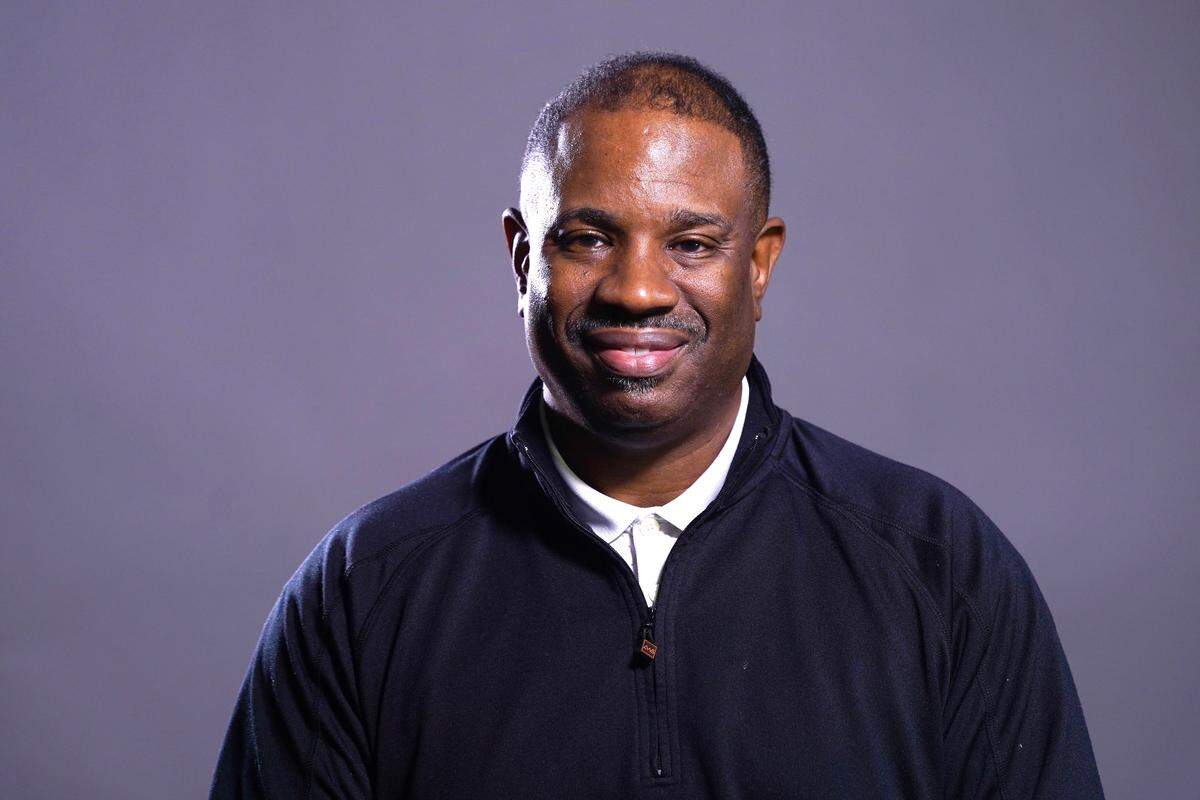
“It’s disappointing to know that all the hard work that was put in to bring awareness to that issue didn’t lead to an opportunity to meet (with CMS),” Mallard Creek’s Kennedy Tinsley said, “or get an opportunity to actually get some change.”
The boycott that didn’t happen
A group of CMS coaches talked about poor pay throughout the start of the 2025 season and eventually the boycott was discussed.
CMS got wind of it and on Oct. 6 the district sent an email to schools asking them to have a plan in place in case a boycott happened, saying games would go on as scheduled. Each school was given three days to prepare a contingency plan.
The email also said the CMS athletic department was “actively working on a proposal to review coaches’ stipends, which will be submitted to the Budget Department as a request for the 26-27 budget work session for consideration.”
The Observer obtained a copy of the email. The coaches said they were pleased to hear of plans to address pay. They ultimately decided to back off the boycott, thinking they had gotten some movement from CMS.
“It’s amazing if it comes through,” the coaches told The Observer at the time, “because it’s not been given. It’s been earned. This is long overdue.”
The longstanding pay issue
North Carolina has more than 400 public high schools, but a Charlotte Observer study in the spring of 2025 revealed that only four N.C. football coaches make more than $100,000, including salary and stipends.
They were: Hoke County’s George Small ($114,298), Princeton’s Travis Gaster ($108,053), Richmond Senior’s Brad Denson ($106,274) and Shelby’s Mike Wilbanks ($100,063).
According to a study done four years ago by The State in Columbia, The Observer’s sister paper, 34 coaches in South Carolina earned more than $100,000 annually. North Carolina is more than twice the size of South Carolina.
▪ And coaches in states like Alabama and Georgia far outpace South Carolina in six-figure salaried coaches. According to a recent Sports Illustrated report, six coaches in Georgia made more than $148,000 in the 2025 season, topped by Carrollton’s Joey King, who coached Trevor Lawrence in high school. King earned a reported $225,007.
▪ As of the 2025 season, Alabama had six coaches above the $140,000 mark, topped by Thompson’s Mark Freeman, who made $162,054.
▪ The Houston Chronicle found 25 coaches in the Houston, area alone making more than $127,000. And according to reporting from The Star-Telegram in Fort Worth, Texas, the average salary of 142 Dallas-Fort Worth coaches three years ago was $116,287.
The lowest paid coaches in the Houston area earned $90,000. In North Carolina, a $90,000 salary is just outside the top 10.
The local pay disparity
Charlotte-Mecklenburg Schools is the undisputed hotbed for N.C. recruiting and top teams, annually producing nationally ranked teams and players.
The district’s pay scale, however, doesn’t reflect that reality.
Hough’s Baker said that’s a reason why so many top notch coaches have left the area, including Mallard Creek’s Mike Palmieiri, who won three state championships, and Independence’s Tom Knotts, who won six, plus another at West Charlotte.
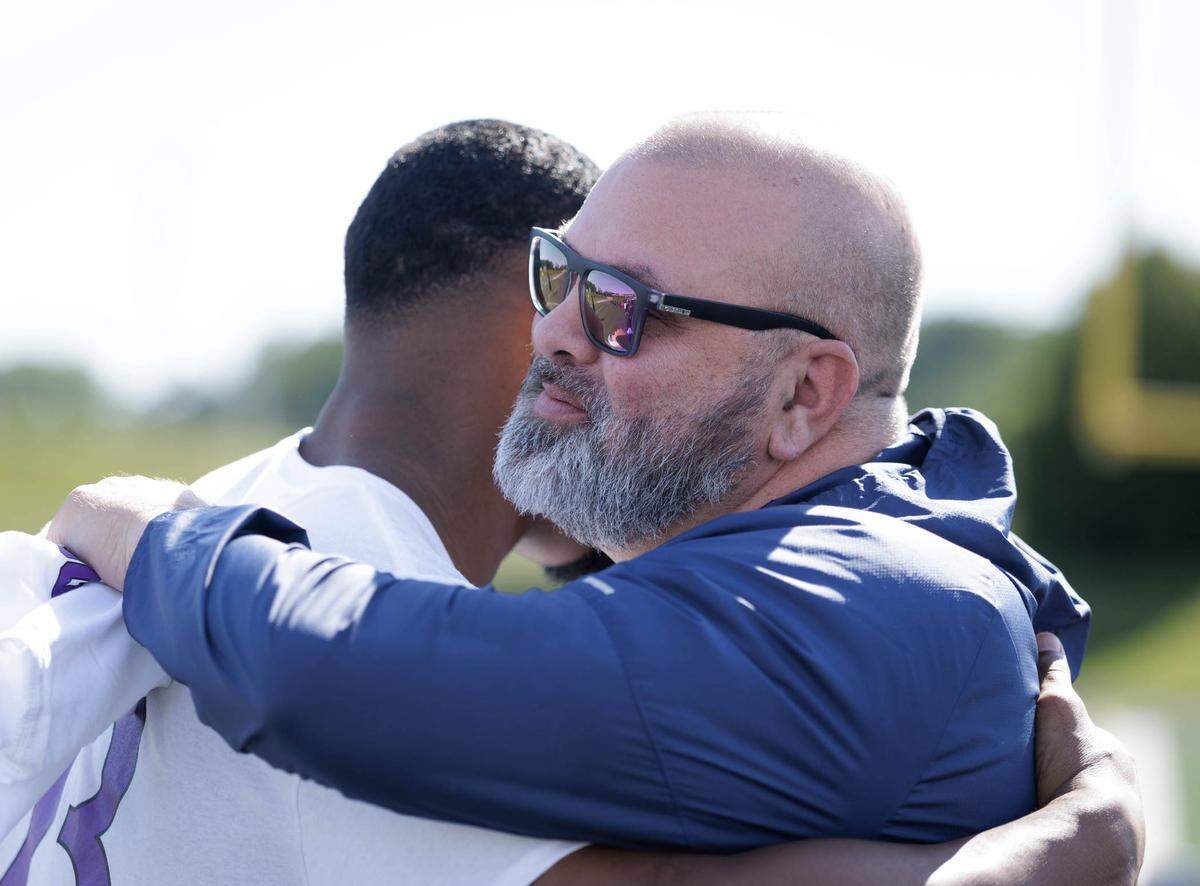
Palmieri and Knotts more than doubled their salaries after leaving for jobs in Georgia and South Carolina.
“At the end of the day,” Baker said, “you’ve got to take care of your family. You’re taking time away from your family to do this and we’re here long hours during the season and the season (started Monday with spring ball) and we probably won’t finish until December. That’s a long time, and then you’re right back at it.
“So what do you do? We’ve been crying and complaining about this stuff for years and it hasn’t changed yet. So, you know, you’ve got to keep your head down and keep coaching.”
As of April 2025, no Mecklenburg County coach ranked among the top 100 in North Carolina in terms of total pay. The highest was No. 118.
Mecklenburg County and Wake County are the two largest school systems in North Carolina. Wake County, according to The Observer study, had nine coaches making more than the highest paid coach in Mecklenburg.
And Cabarrus County Schools — which neighbors CMS — recently made some sweeping changes to its coaching pay scale.
In 2016, Cabarrus County football coaches got nearly $7,000 a year, while CMS was at $4,100.
Today, Cabarrus County has a stair-stepped system, something the CMS coaches are pushing for.
Cabarrus County football coaches with 0-4 years experience get $5,325; 5-8 years is $6,500; 9-12 years is $7,895; and 13-above is $9,450. That approaches double what CMS coaches receive.
So what happens now?
In its email, CMS said stipend increases could still happen.
“Across the district,” it wrote, “departments continuously review how funds are being used to determine whether resources are producing a strong return on investment and supporting our Student Outcome Focused Goals. When opportunities are identified to repurpose funds from lower-impact areas to higher-impact priorities, departments can make recommendations to reallocate those resources.

“In the case of coaching stipends, if additional revenue is generated through athletic activities or if departments identify funds that can be repurposed, those resources could potentially be used to support stipend increases.”
Coaches, however, believe that type of reallocation is a long shot, particularly this close to a new season starting.
But they say they are not giving up.
“I think we have to continue to push,” Mallard Creek’s Tinsley said. “It’s not right, you know? And we’ve got to do what’s right. The bottom line is, slowly but surely, the value of education is decreasing. That’s what I’m seeing and that’s my fear. When good coaches are not valued, when you devalue a job, you’re going to get foolishness. Things are going to get more challenging, harder, and that’s not fair to our schools or the school communities. So at least fighting, or putting up a fight is, to me, the least that we can do.”
This story was originally published April 21, 2026 at 6:00 AM.