
Lessons from Charlotte — and Cal Ripken Jr. — helped mold Cardinals manager Mike Shildt

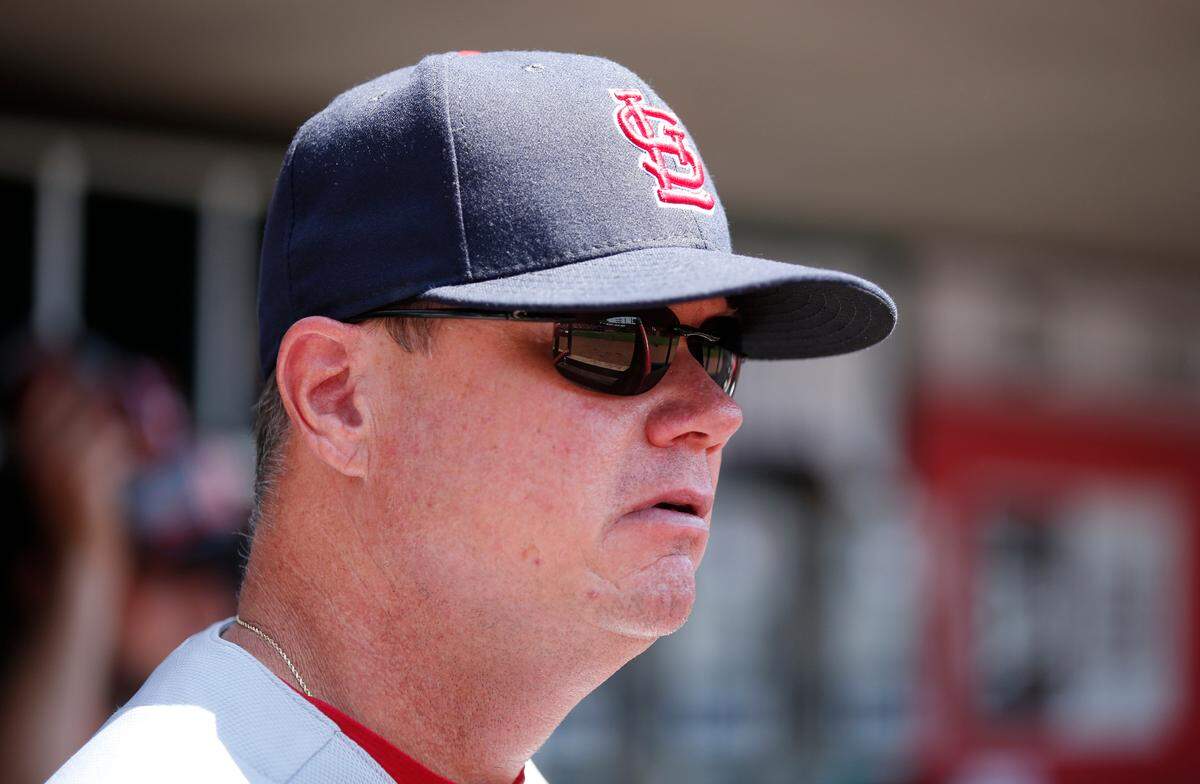
Mike Shildt can look back on his time growing up and living in Charlotte and point to any number of people who helped him get to where he is today — interim manager of the St. Louis Cardinals.
The list would include former Olympic High baseball coach Bob Rhodes, former West Charlotte High baseball coach Gary Weart and athletics director Debbie Jones and Charlotte 49ers coach Loren Hibbs.
“But they’re too numerous to mention everybody, really,” Shildt said.
One name does stand out to Shildt, however: Hall of Famer and former Charlotte O’s star Cal Ripken Jr.
Shildt and Ripken built a relationship in 1980, the one full season Ripken played in Charlotte as a minor-leaguer and one of many that Shildt spent as the team’s clubhouse boy and all-around gopher.
“Cal was great to me,” said Shildt, 49, who was promoted when the Cardinals fired Mike Matheny on July 14.
Ripken, who would later set a record of playing in 2,632 consecutive major-league games over 16 seasons, remembers that season in Charlotte and the 11-year-old kid he hit grounders to, as well.
“It makes me smile and reflect on such a fun time in my life,” Ripken said in an email. “I will be watching (Shildt) and probably root for the Cards a little more.”
Shildt grew up in Charlotte’s Starmount neighborhood, near SouthPark Mall. His mother, Lib, was an administrative assistant to O’s general manager and owner Frances Crockett. When Mike’s school day was finished, Lib would pick him up and they’d head to Crockett Park, the O’s home in Dilworth before it burned down in 1985.
“He was this little rug rat running around at first,” Lib Schildt said. “He was just one of the clubhouse boys, doing various amount of things. Then they’d let him shag balls with the players. Those years clinched his love for baseball.”
Shildt was a batboy and also helped with the duties that keep a clubhouse running — polishing players’ shoes, picking up towels, running errands.
“I wasn’t just wiping the shoes down,” Shildt said. “I’d use paste and really buff them up.”
Shildt eventually graduated to working in the press box, where he helped official scorekeeper Ed Walton, sometimes operated the scoreboard and made food runs for hungry reporters.
The 1979 and 1980 seasons were especially memorable for Shildt. Those were the years Ripken played for the O’s.
“Mike really latched on to Cal,” Lib Shildt said.

The two talked baseball endlessly and Ripken often hit grounders to Shildt during the O’s ’80 Southern League championship season (Ripken also played briefly for the O’s in 1979).
“My season in Charlotte was very meaningful to me and was a big year for my development as a ballplayer,” said Ripken, now CEO of Ripken Baseball and founder of the Cal Ripken Sr. Foundation. “It was a great time and I formed many friendships with many people in and around the team like Mike and the other guys in the clubhouse. It makes me feel good that he said I had an impact on him all those years ago.”
Shildt soaked up his time with Ripken.
“Cal was the first to come in every day,” Shildt said. “We had great coaches who worked with him, but he owned what he did. He’d be serious about batting practice, play the game, then be the last to leave. He’d go in with (manager) Jimmy Williams and talk about the game afterward.”
The way Ripken laid the groundwork during his days in Charlotte for his career in the big leagues continues to resonate with Shildt and how he deals with players in what is now a big-league clubhouse.
“It just teaches you how important habits and work ethic are,” Shildt said. “You develop that down (in the minors). Everybody has ability, but that’s no longer what separates you. It’s how motivated and consistent you are.”
‘Because they’d have me?’
Shildt continued his duties with the O’s after Ripken left for the majors. He played Little League and later for the Olympic High Trojans and American Legion Post 262.
Although he threw a couple of no-hitters in Little League, Shildt never developed into a star player. But he was good enough at Olympic to have hopes of playing in college. First considering Wingate, he changed his mind when two Post 262 teammates said they were going to UNC Asheville.
Asked why he chose the Bulldogs, Shildt answers with a laugh:
“Because they’d have me? My mailbox wasn’t exactly filled up with recruiting letters.”
Wearing jersey No. 8 — a tribute to Ripken, who was by then a star with the Baltimore Orioles — Shildt was a three-year letter winner as an infielder with the Bulldogs. But he realized he had reached his ceiling as a player during a road game against Tennessee during his freshman season.
“I kept hitting foul balls into the first-base dugout and, as a right-handed hitter, that’s not good,” he said. “So it got me thinking that if I wanted to stay in the game at a higher level, it would be coaching, not playing.”
Shildt graduated with a business degree from UNC Asheville. He began his coaching career as a Bulldogs assistant for two seasons and spent one fall as interim head coach. One day, while working to make ends meet in the bakery section of the Fresh Market in Asheville, he heard the head-coaching job was open at West Charlotte High.
Shildt applied and got the job, taking over the day before the 1994 season started. He would lead the Lions to back-to-back winning seasons in 1995-96 and was named the Observer’s coach of the year in 1996.
His high school coaching career ended when West Charlotte’s administration replaced him with a full-time faculty member to comply with an N.C. High School Athletic Association rule that discouraged non-faculty coaches.
“I owe a debt of gratitude to Gary Weart, Debbie Jones and West Charlotte,” Shildt said. “That’s where I cut my teeth in coaching.”
Developing with 49ers
Shildt was quickly hired by the Charlotte 49ers’ Hibbs as an assistant, working as the team’s hitting instructor, recruiting coordinator and third base coach.
“He was an even-keeled guy, not too high or too low,” Hibbs said. “That bodes well for the pro level, where it’s not ‘rah-rah’ like in college. So I think him coaching with us was a great fit for him. I was sure he could make the transition from college to the pro ranks.”
Shildt was, in fact, thinking about what coaching professionals might be like.
“That was college baseball at its highest level, back when they were in Conference USA the first time,” Shildt said. “There were guys with pro ability and that helped me understand what I’d be dealing with at the next level.”
After two seasons with the 49ers, Shildt worked as an associate scout for the MLB Scouting Bureau from 1999-2003. He then joined the St. Louis organization, where he began working his way up the coaching ladder.
In eight seasons as a minor-league manager for the Cardinals, Shildt won three league championships.
Now in his second season in St. Louis, Shildt was the Cards’ bench coach when Matheny was fired. Shildt was named interim manager, effective through the end of the season.
.JPG "Cardinals Matheny Fired Baseball(5).JPG")
The Cardinals, sitting in fourth place in the National League Central, are 4-5 under Shildt entering a weekend series that begins Friday against the Chicago Cubs at Busch Stadium.
He had to figure things out in a hurry. The first full series he managed was against the Cubs at Wrigley Field, with each game being nationally televised by a different network.
“Handling the media, all that, was more stressful and time consuming for me than the baseball side of it,” Shildt said.
Shildt recently built a house in Matthews and lives there in the offseason. He also founded the On Deck Baseball Academy, which has programs to develop young players, in Pineville, and is a co-chairman of Baseball For Life, an area nonprofit that sponsors a mentoring program.
Shildt said he’s not concentrating on trying to keep the manager’s job past this season. John Mozeliak, Cardinals’ president of baseball operations, told the St. Louis Post-Dispatch that “due diligence” for a search for a permanent manager would take place during the season but the hunt would continue in the offseason.
“I can’t get too wrapped up too much in that,” Shildt said. “I never want this to be about me. This is a good place for us to succeed. We’ll see what happens. But I understand it’s a results-oriented business.”
And a certain former Charlotte O will be watching. Although Ripken says he and Shildt haven’t seen much, if any, of each other in the years since they left Charlotte, he hopes that will change now.
“That seems to be how the game is,” said Ripken. “People advance and move on and fall out of touch but you always have that bond. I hope to see Mike again and I am sure we will go right into stories from Charlotte and have a great time and a good conversation.”
Queen City managers
Mike Shildt isn’t the first Charlotte native to manage a big-league team:
Grady Little: A Garinger High grad, Little managed the Boston Red Sox (2002-03) and Los Angeles Dodgers (2006-07). He had a long career as a minor league manager, including for his hometown Charlotte O’s in 1983-84.
Tommy Helms: Better known as a solid player out of West Mecklenburg High who had a .267 lifetime batting average during a 14-year career in the big leagues, Helms had two brief stints as the Cincinnati Reds’ manager in 1988 and ’89. Helms replaced Pete Rose in 1988 when Rose was suspended for 27 games for pushing an umpire. Helms again replaced Rose for the final 37 games of the 1989 season after Rose was placed on baseball’s ineligible list for gambling on baseball. Helms also managed the Charlotte Knights in 1990.
This story was originally published July 27, 2018 at 2:40 PM.