Test crash! William Byron provides “valuable data” during Next Gen run
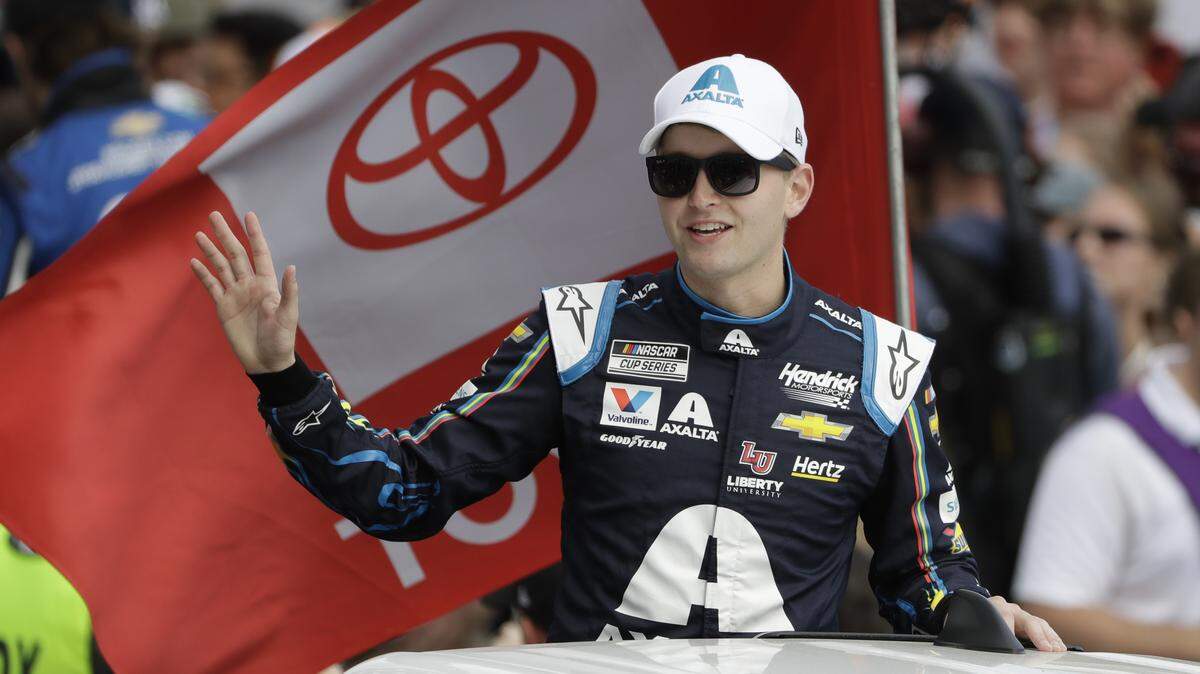
NASCAR is continuing to refine its Next Gen car, a new model that Cup Series teams will begin racing in 2021. Charlotte native William Byron was the latest driver to test the new car. He was also the first to crash it.
“We were probably six or seven laps into a 25-lap tire run,” Bryon said in an interview released by NASCAR Tuesday. “I had been a little free for a couple of corners, but nothing major. That time, I just got loose and figured I’d be able to save it but wasn’t able to.”
Byron participated in a two-day trial of the 2021 car on Monday and Tuesday at Auto Club Speedway in Southern California. Around halfway through Tuesday’s session, Byron brushed a backstretch wall, causing the session to end early, but Bryon and his No. 24 crew chief Chad Knaus had positive feedback about the ride overall.
“I’ve been happy with it,” Byron said. “Especially as we’ve been adjusting it more and tailoring it to this track. This is the biggest track it’s been on so far.”
Byron ran the test on the two-mile oval raceway at Fontana. Previously, tests had been driven at Richmond (Austin Dillon), Phoenix (Joey Logano) and Homestead-Miami (Erik Jones). Each of the three car prototypes used in the tests were built by Richard Childress Racing.
The latest prototype, which Bryon tested, will likely be the version that hits the track in 2021. It will feature larger wheels (18 inches of aluminum versus 15 inches of steel) with a single, center-locking lug nut instead of the longtime five-lug pattern.
“As soon as it started to go for us, I thought the steering felt better and the car felt more stable,” Bryon said.
Byron added that it took some time to adjust to “how fast everything is” in the new model.
“You just have to get used to that timing and rhythm of when the car does step out,” Byron said. “How quickly can you catch it when it slides the front tires, how quickly does it come back. All those things are a lot different from what we do now.”
The changes are all aimed at making it easier for crews to work on and cheaper for teams, sponsors and manufacturers to run. The single lug-nut, for example, was a necessity for the larger wheel, according to NASCAR officials, but it shouldn’t dramatically alter the timing or choreography of pit stops. What will likely change, is how teams run their schedule before races.
“The components are smaller and more nimble, and it’s a lot more compact in the packaging of the car,” Knaus said. “What and when we can change things is going to be significantly different. What you would change at the track might change from what we’re doing now. You’re going to have different knobs to turn.”
German wheel manufacturer BBS has been announced as the vendor for the wheels, but NASCAR has not yet released a full list of partners and parts suppliers for the Next Gen car. Technique Inc., owned by former Indy car racer Ronnie Johncox, will likely develop the chassis for the new car.
“Our goal was to take all the feedback we received from the first three tests and implement that into what we consider our pre-production prototype,” NASCAR Senior Vice President of Innovation and Racing Development John Probst said Monday. “This is what we intend to race in 2021.”
Three more tests are scheduled over the next two months at Atlanta, Bristol and Dover, in that order, following Cup Series races at those tracks.
Byron’s brush with the wall on Tuesday delivered some damage to the body of the car, but it also alerted NASCAR officials to potential improvements and showed how the car handled impact.
“This is exactly why we test,” Probst said. “We were able to put almost 300 miles on the car the past two days and captured some valuable data.”
The crash was tracked with an incident data recorder and high-speed camera, according to Probst.
“We’ll take the car back to North Carolina and evaluate it,” Probst said. “This gives us a good opportunity to make sure the car holds up as expected during an incident. We’ll review everything available to us and move forward.”
This story was originally published March 3, 2020 at 10:57 PM.