iRacing never replaced real racing, but NASCAR still needed it
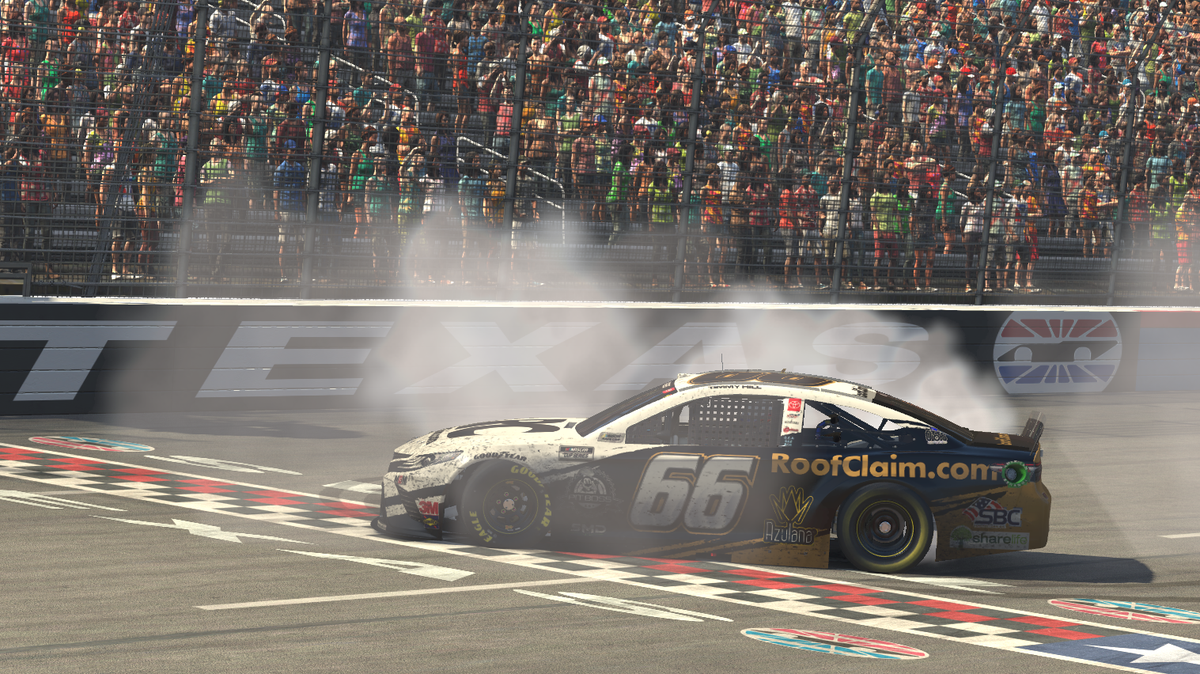
When sports were canceled eight weeks ago, I had no idea what to expect. I guess no one did.
I was driving to Atlanta Motor Speedway and was about half an hour from the track when my phone started blowing up with texts and Twitter notifications. Without looking, I knew what the messages said: NASCAR wouldn’t race. Events for the weekend were postponed, just as all other sporting events and seasons had been indefinitely postponed the day prior. I pulled over at a gas station and messaged my editor, then found a nearby hotel lobby to write a quick story about the latest sport to get shut down by COVID-19.
In the days and weeks that followed, I assumed I would be covering coronavirus news, as many of The Observer’s sports writers have transitioned to primarily reporting on the pandemic. Instead, less than 48 hours after writing the phrase “word came Friday that the (NASCAR) season had been suspended to help stop the spread of COVID-19,” I found myself writing about racing — virtual racing.
Since that first virtual exhibition race featuring NASCAR’s Cup drivers, the Replacements 100, took place in impromptu fashion during Atlanta weekend, I have found iRacing to be a constant over the two months without real racing, and I suspect this period will turn out to be a significant moment in NASCAR’s history.
“What we did was groundbreaking for sports,” iRacing executive producer Steve Myers told me. “And I think it has potentially helped motorsports in a way that no other sport could take advantage of during this time where the rest of the world is shut down.”
There were a lot of moving pieces that had to work together to put each Pro Invitational race in front of roughly a million people on FOX networks each week. It required buy-in from the drivers, including names like Dale Earnhardt Jr. and Kyle Busch, the television networks, iRacing and NASCAR.
Spotters Kevin Hamlin and T.J. Majors organized the Replacements 100 race by mobilizing their network within a few hours of learning about NASCAR’s shutdown.
“T.J. and I kind of just started texting people,” Hamlin said. “Obviously we wanted big names. William (Byron) and I were sitting next to each other on the Hendrick plane when we were putting this together and bouncing ideas off of each other.”
That Twitch-streamed race reached nearly 30,000 viewers, but it wasn’t necessarily about building something to last. It was about building something for people to enjoy in the moment. Across the industry, there has always been an eagerness to return to the real track despite iRacing’s success. It has been painful to hear and write about the job cuts at NASCAR, speedways, teams and media outlets. iRacing cannot make up for that.
“It’s definitely the next-best thing to actually being at the track,” Hamlin said.
Despite the hiccups brought on by navigating the platform, including Kyle Larson’s use of a racial slur and drama over lineups and sponsorships, I have appreciated the fact that I can sit down each week and do what I was hired to do: write about racing.
I have appreciated watching Clint Bowyer and Jeff Gordon cut up with each other in the FOX NASCAR Studios. I have appreciated being able to see what drivers actually say and do while they’re racing. I have also especially appreciated the fact that money did not change hands during the process; There were no additional incentives or deals made between iRacing, NASCAR, FOX and individual drivers for the Pro Invitational races. It was about the industry coming together for the good of the industry and its fans.
“It was obvious that this was providing value to the sport,” Myers said. “I think the most important thing was the sponsors and keeping them happy.”
So as I write this now, I’m sitting down to watch the final virtual race of the Pro Invitational Series at the historic North Wilkesboro Speedway. The track, which closed in 1996, has been scanned for the virtual platform and revived in a new digital fashion for the modern era. In many ways, I feel I’m watching NASCAR in the same way.
This story was originally published May 9, 2020 at 3:22 PM.