
As the Coca-Cola 600 turns 60, NASCAR’s longest race is haunted by an emptiness
Perhaps it is fitting that the two sports with the deepest North Carolina roots serve as bookends, one at the end of everything that came before and one at the beginning of an attempt to regain normalcy here. In March, at the start of the coronavirus pandemic in the United States, the virus did what nothing else could and ended the ACC tournament with stunning abruptness.
It was a Thursday in Greensboro, the city that has hosted the event more than any other. The night before, the world began to change. Tom Hanks and his wife announced they’d tested positive for COVID-19. An NBA game just ended, right in the middle of it. Inside the Greensboro Coliseum, a disquieting anxiety settled while the word began to spread:
The rest of the ACC tournament, starting Thursday, was to be played without fans.
That morning, John Swofford, the league’s commissioner, explained why the tournament would go on. Within the hour, other conferences began canceling theirs. And soon enough, moments before Florida State and Clemson were scheduled to tip off in front of 20,000 empty seats, Swofford announced that the ACC’s tournament was over, too.
Since, there have been 10 weeks of stay-at-home orders and quarantining. Ten weeks of social distancing and wearing masks. Ten weeks of horror stories about the virus and all the consequences it has brought: Lost lives and lost jobs. Sports have become an afterthought and yet, as much as anything, their absence has been a constant reminder of all that’s different.
Now the flags will wave and the engines will roar again Sunday at Charlotte Motor Speedway. If basketball is this state’s dignified sporting statesman, which came to prominence in old gyms that were more like cathedrals when they were built around the middle of the 20th century, then racing is basketball’s untamed, black sheep of a cousin.
The sport roared to life out of the North Carolina foothills in the 1940s, the spawn of bootleggers rumbling down twisting roads near moonshine stills, and it wasn’t too long before Tom Wolfe deified Junior Johnson as “the last American hero.” More than a half-century later, NASCAR has long abandoned some of those roots.
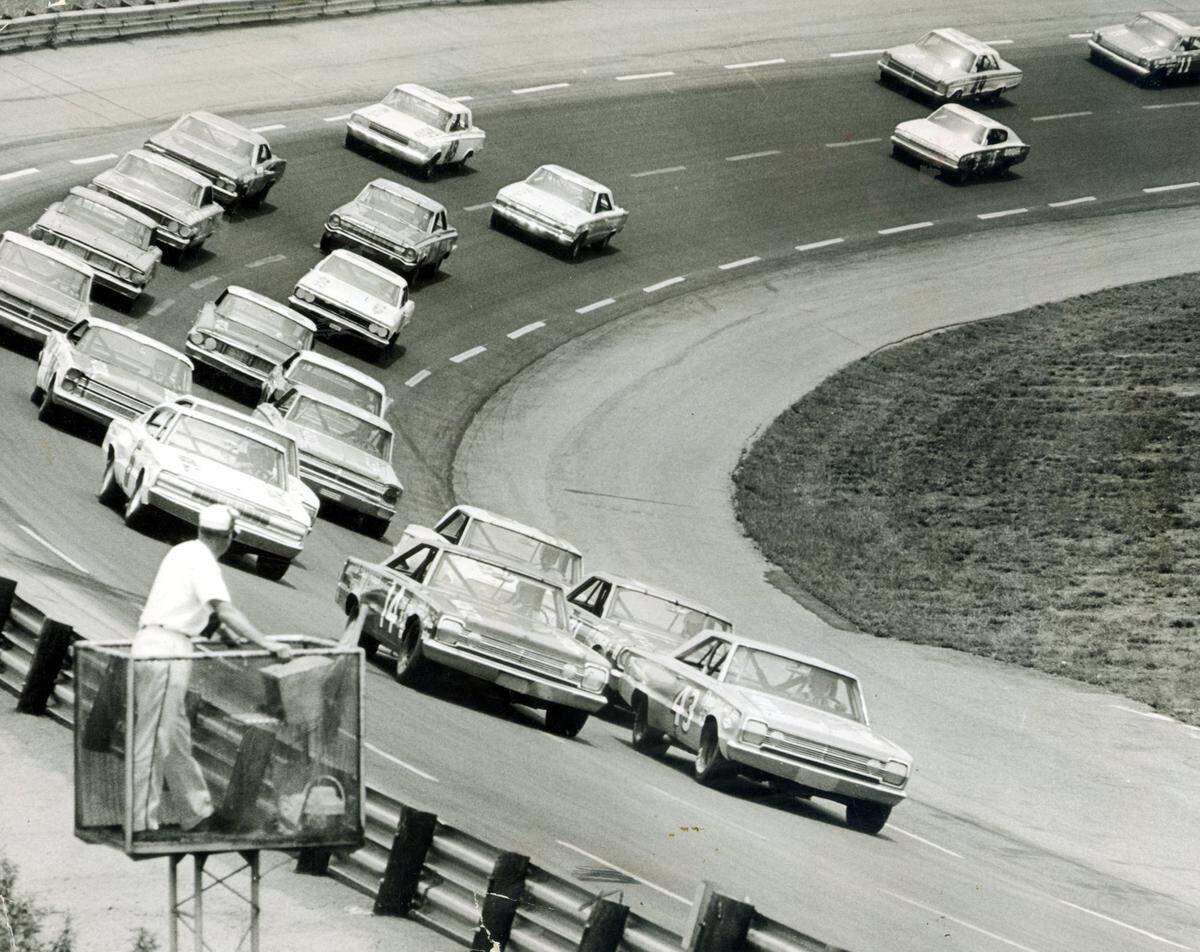
The tracks at North Wilkesboro and Rockingham are lonely, sad places these days. Charlotte Motor Speedway will be lonelier than usual Sunday, too, but only because spectators aren’t allowed to attend the Coca-Cola 600. This will be the 60th anniversary of the speedway’s first race, originally called the World 600 back in 1960, and the 61st running of that race.
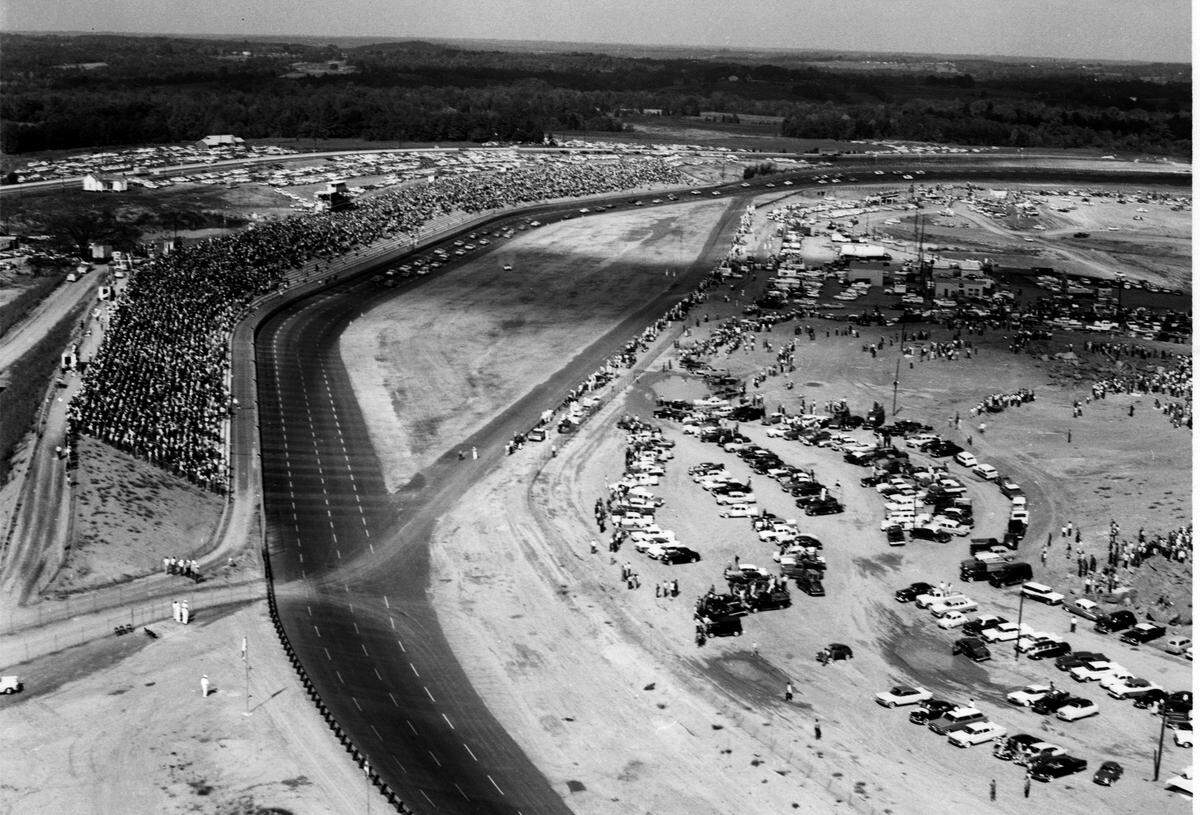
Just the sight of the cars speeding around the track, the sound of the engines, will bring some sense of what life was like in North Carolina before. And yet six decades after the first go-round at the speedway, the resumption of a long tradition will feel strange, too, with the empty grandstand. A great many people who every year make pilgrimages to Concord will be somewhere else.
Charlotte’s other Mayor
Harry and Judy Wiley would have been outside their 38-foot Winnebago on Sunday, inside the family campground that always feels more like one big reunion this time of year. They would have been near turn four, the same spot they’ve been in since 1995.
They’ve been coming to the Charlotte Motor Speedway since even before then and haven’t missed a race there since 1977. The Wileys renewed their wedding vows at the speedway in 2006. They’ve watched their friends grow older over the years. They’ve watched generations of children grow up.
There’s a rhythm to a race, the drivers going round and round. Each lap might bring something different, and sometimes does, but there is familiarity in the spectacle. That’s how it is for the Wileys, year after year, when they pull into Charlotte for weeks of fellowship leading into the Memorial Day weekend race.
Usually, Harry said, they arrive on Mother’s Day weekend and stay until Memorial Day.
Harry, 73, is such a familiar face in the campground near turn four that its other inhabitants have taken to calling him the mayor. He’s not sure how it began, exactly, but figures it’s because he could always tell people where to find things around the speedway — the nearest Walmart or restaurants. Around the campground, Harry became the man people sought when they needed something fixed. Find Harry, and he’ll take care of it. The mayor.
“It’s humbling, really,” he said of the nickname during an interview last week. Over the phone, his kind Southern drawl came through clearly. “It’d just about bring you to your knees, that people thought that much of ya.”
Harry and his wife love racing. The thrill of the speed. The sound of it.
And yet missing the race in person isn’t what they’ll most miss Sunday. No, what they’ll miss most are the people they won’t get to see; old friends in familiar places around the grounds, children or even grandchildren nowadays who come back and look a little more grown than they did the year before.
Every year, Harry said, the 600 “is a homecoming beyond your imagination.”
“All of our friends — our true, true friends, are there at the speedway with us,” Harry said.
He and his wife live in Johnson City, Tenn., not far from the Bristol Motor Speedway, which is also something like a second home. Even so, Charlotte Motor Speedway is different, Harry said, because of the way that campground is laid out near turn four. As soon as they pull in every year, the Wileys feel something like a warm embrace.
That the trip can’t happen this year is “heartbreaking,” Harry said, but he understands. Now, back home, he and his wife plan on pulling their Winnebago out in front of their house. They’ll hook a television up to the side of it and watch the race like they normally do — only now they’ll be about 160 miles away. Maybe some friends will stop by, Harry said, and keep them company.
In one way, he’s happy that his favorite race is back and will be run. But in another, he said that not being there, among people who have become family, makes him so sad that he almost feels as though he’s lost somebody close to him.
“It’s not that bad as going to your daddy’s funeral,” he said. “But it’s damn close.”

‘It’s like smoking a cigarette’
Ronnie Mounts would have been in 38 rows up Sunday, in section H of the General Motors section of the grandstand at the speedway. He has had seats there for a long time now, going back more than 20 years. They are fine seats, indeed, some of the best anyone can have.
They’re a little bit like sitting at the 50-yard line of a football game. From his seat that he has had for more than two decades, he can look out straight ahead, across the track, and see the winner’s circle. As long as he has been coming to the speedway now — just about every year for as long as it has been open — Mounts has come to know the folks who run it. They take care of him.
Since the speedway opened in 1960, Mounts has attended all but four of the 600s. And he only missed those four, between 1962 and ‘65, because he was serving in the Army. He was a younger man then, serving his country, and he knew he’d have a lot of days to come, God willing, to sit in stands and the watch the cars race around.
Now he’s 77, and who knows how many days he has left to bask in the sounds and speed.
“I hate that I can’t be there,” he said of this year’s running of the race he loves.
Mounts spoke by phone, with a gravely dialect straight out of the West Virginia mountains. He is from there, near the same land where the Hatfields and McCoys feuded throughout the last half of the 1800s. Mounts can tell stories about the land, and that feud, but the thing he likes talking about the most is racing, and going to races, in particular.
He went to his first one in 1957, he said. He remembered the year but not the track.
“It’s been so long,” he said.
He can say for sure that what he experienced hooked him. He had an uncle who raced in the 1950s and, once that uncle stopped racing, Mounts went all in with Richard Petty. Then he stuck with Bobby Allison after that, and then Dale Earnhardt, and from Earnhardt to Kevin Harvick. Now he’s been a Kyle Busch man since 2008.
Some things about the way NASCAR has changed over the years has bothered Mounts, the way it’s bothered a lot of people who became loyal to the sport and then watched it change before their eyes. He didn’t like how it abandoned places like North Wilkesboro and Rockingham. He didn’t like the expansion to tracks out west, or in other places without roots. He hasn’t liked some of the rules changes over the years. But he keeps coming back.
Every year he’s there: Row 38, Section H of General Motors.
Now there’s the virus.
Mounts will watch it on TV, and he knows it won’t be the same. Not without that familiar noise ringing in his ears. He has come to appreciate over the years that nothing can really replicate the experience of watching a race in person. A broadcast doesn’t do it justice.
“Adrenaline goes through my body when I go there,” he said. “When I go to any racetrack.”
Mounts has been married now for 59 years, to a woman named Deborah. In casual conversation earlier this week, he referred to her as “my old lady.” As in: “I even stopped going to church to stay in on Sundays to watch the car race. My old lady gets mad at me.”
And so watching a race on TV isn’t anything new. But watching this race on TV will be.
The sport is back. The speedway will host another 600-mile drama. Mounts will have to wait a while, though, to achieve the kind of high that only comes when he’s there in person, 38 rows off the track.
“I reckon it’s like smoking a cigarette,” he said of being there. “It’s hard to get it out of your system.”
From the World 600 to Coca-Cola 600, he’s been at all 60
Hill Overton would have been in the media center on Sunday, or maybe somewhere along pit road. Since the first race there in 1960, he has always been somewhere. The Charlotte Motor Speedway has hosted 60 of these 600s, and Overton has been there for every one.
He’s not sure if anyone else can say the same thing. Bruton Smith, maybe?
Before the speedway opened, Overton attended his first stock car race at another track in Charlotte, in 1949. He was 13, and he knew what he’d just seen had changed him. When the speedway opened in 1960, “obviously I had to go.”
A lot of the races run together in his mind now. Overton will turn 84 on Monday. Of all of those 600s, he remembers the first one the best, simply because that was the first one he ever saw. He attended it as a fan, and now he can tell stories about watching chunks of the track break apart under the weight and roar of the cars, and how those broken pieces wrought havoc.
As Overton told it over the phone, Jack Smith was leading that first 600 for a time. That is, until, a piece of the track came loose and ruptured his fuel tank, spewing gas everywhere and knocking Smith out of contention.
“If you’ve ever seen a grown man cry, Jack Smith did,” Overton said.
He spoke with a deep voice, befitting of the work he eventually found at the speedway. After attending the first seven or so 600s as a spectator, he got a job with World 600 Broadcasting in 1968. He worked out of pit road at first, as a spotter, and then eventually found his way behind the microphone.
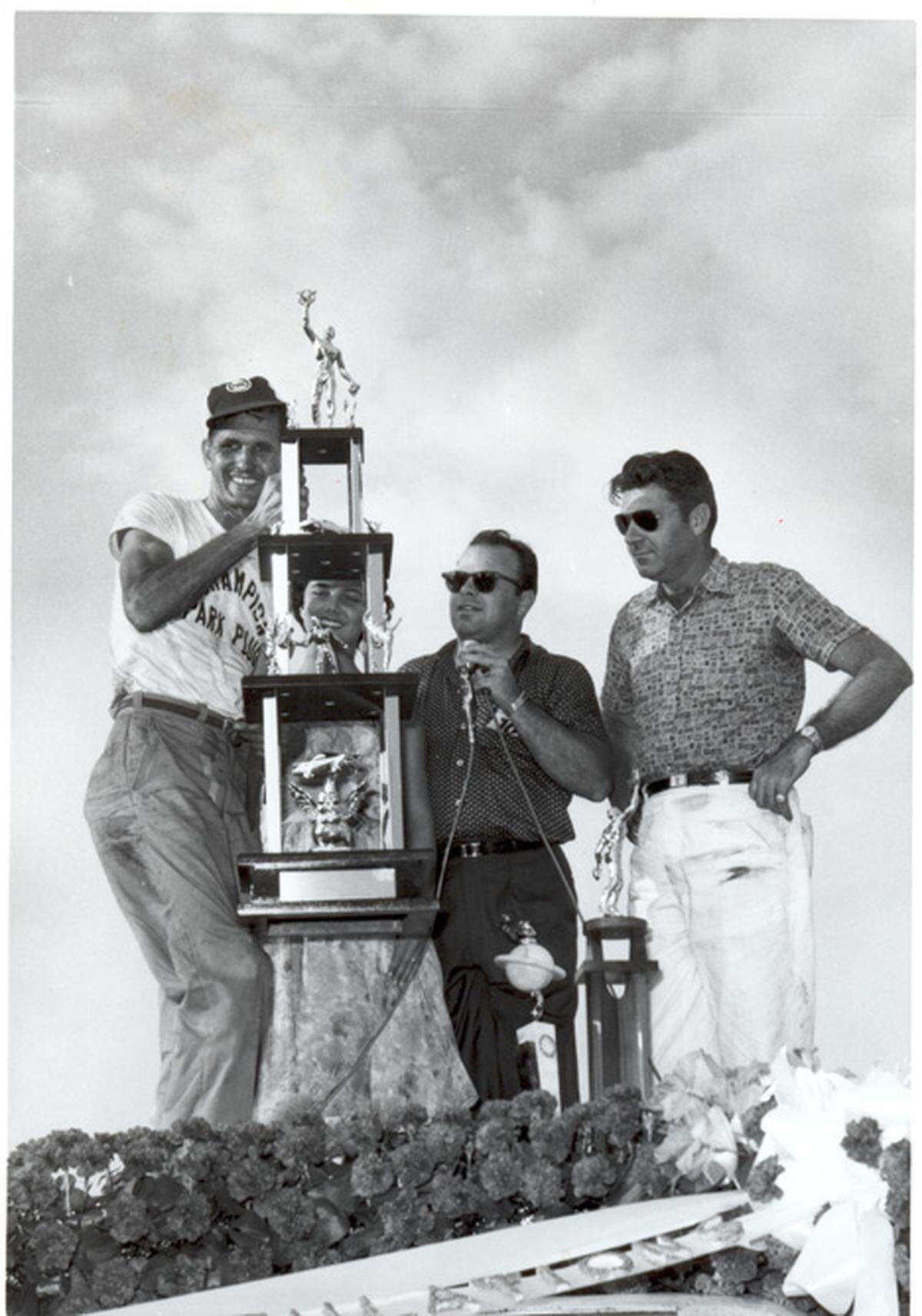
Over the past 52 years, Overton has done a lot of radio and public address work out of the speedway, with a lot of programs and stations, most of which are no longer in existence. He served as a public address announcer at several speedways. At Charlotte Motor Speedway, he for years interviewed the winner from Victory Lane over the PA system.
Every larger sporting event, whether it’s the ACC tournament or a NASCAR race, has those behind-the-scenes characters that have been around so long that they come part of the event themselves. At the speedway, that’s Overton. He long ago became a part of the culture of the 600. Drivers have come and gone. Generations of fans. Overton has always been there.
And now, on Sunday, he’ll likely miss the 600 for the first time in his life.
On Friday, he still hadn’t given up hope of securing a credential. All week, he said during a phone interview, he’d been asking for one and hoping that NASCAR might relent.
“Man, you’ve got to let me in,” Overton said he told Scott Cooper, who’s in charge of media at the track. They go back a long way. Cooper had to tell him NASCAR was running a tight ship, that there weren’t many media passes to be had. Overton offered to park his car somewhere along the back stretch, and watch the race on the big screen.
“They probably don’t care that little Hill here just wanted to make his 61st in a row,” he said with a laugh.
NASCAR is only allowing four credentialed writers in the press box per race, including The Associated Press and one local reporter. Infield media centers are closed.
He understood the restrictions, given the pandemic. And yet the thought of not being there, of missing something that he’s attended, well, forever, brought on some sadness. Overton spent his youth in Matthews, went off to N.C. State and then spent some time in the military before he eventually settled in Monroe.
There, since the late 1960s, he has hosted a 20-minute show on the local, small-town radio station, WIXE, “The voice of Union County.” His show is called “Let’s Talk Racing,” and if the season is right, Overton mixes in some discussion about the Charlotte Hornets, or some college basketball.
Broadcasting has always been Overton’s side gig; he was a salesman for Haas Automation for decades. Racing, though, has been his passion. Sometimes that first 600 doesn’t seem like so long ago. Only 60 years. He can still see Fireball Roberts winning the pole in a black-and-gold Pontiac. Overton can recite the speed: 134 mph, and he thought, “Man, they’ll never go faster.”
Now he can laugh at the memory as he prepares to do something he’d never done before: Watch from home while the speedway hosted a 600 without him.
“As they say, all good things come to an end,” he said, “and I guess this is the time this is going to come to an end, most likely.”
A muted 60th anniversary
The last major sporting event in North Carolina ended late the night of March 11. Syracuse defeated North Carolina in the ACC tournament. Fans filed out of Greensboro Coliseum amid an eerie quiet, after word had spread that the tournament would continue on without them. A day later, that was no longer true. The college basketball season was over, though nobody knew that for sure at the time.
Sunday marks 74 days since then. About two-and-a-half months of a different world, with empty arenas and fields, courts and racetracks. Now sports are coming back, slowly, and in North Carolina the return begins with the race at the Charlotte Motor Speedway. It will be celebrating its 60th anniversary, a milestone befitting of a celebration. Given the times, most of the people who love it most will be somewhere else, waiting to return.
This story was originally published May 24, 2020 at 6:00 AM.