Jeff Burton talks NASCAR race at Texas, the choose rule and 2020 playoff predictions
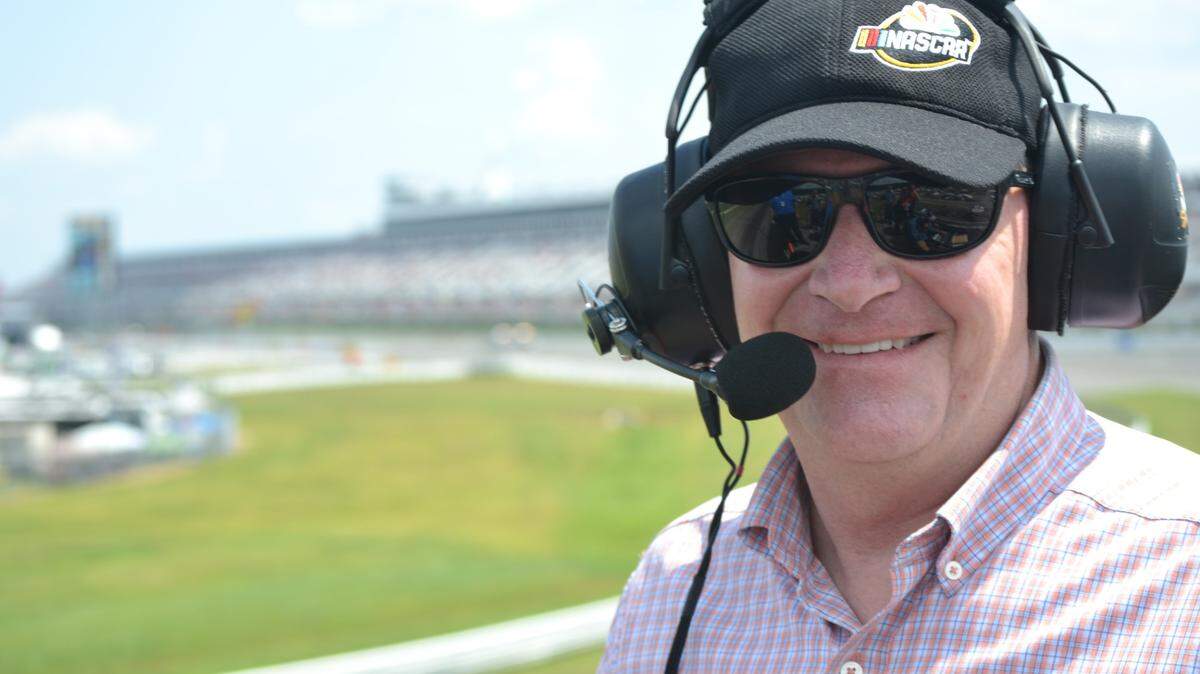
Jeff Burton knows what it takes to win at Texas Motor Speedway, but the track’s Hall of Fame member and inaugural NASCAR Sprint Cup Series race winner has never seen Texas under these conditions: Without practice and with a new traction compound. He called it a “crew chief’s nightmare.”
“The car wants one thing on one end and another thing on the other,” Burton said. “And drivers have to be really, really disciplined in how they drive and how they approach the track.”
Burton, a two-time Texas winner and 21-time Cup Series race winner, hasn’t competed in years, but he’s still tapped into happenings around the sport as an NBC Sports NASCAR analyst. He regularly watches his son, Harrison Burton, compete in the Xfinity Series.
With the NBC network primed to take over the remainder of NASCAR’s broadcast coverage for the 2020 season, Burton provided a preview of his thoughts on topics that fans will likely hear him discuss on-air as the regular season winds into playoffs.
He spoke with The Observer about his hesitancy with the choose rule, who he sees as an underrated driver this season and what he told Harrison after his son’s recent fist fight with Noah Gragson.
This interview has been lightly edited for brevity and clarity.
Alex Andrejev: There was so much going on at the All-Star Race. What was your impression of it?
Jeff Burton: I really like the trying of things. I think the All-Star Race is a great place to do that. I really liked the car designs. I thought it was a good mix between a traditional paint scheme and something new. It gave the sponsors room — especially some of the cars that have multiple sponsors — to have better spacing and the cars still had a traditional feel to them, so I thought that was a rousing success. The lights underneath the cars, I could do without that, but I understand a lot of young people like it. I’m not young (laughs). And then the race itself, I think it was a little less drama-filled than I thought it would be. Some of that is just Chase Elliott was, you know, Chase Elliott. His car was so fast and I thought he just dominated the event. (Ryan) Blaney was really good. (Kevin) Harvick was really good. It probably wasn’t the excitement I thought it would be, but that’s racing. You never know. But it was awesome to see and to hear fans. They bring such an energy. It’s hard to describe for people that have never been to a NASCAR race. It’s not just a race. It’s an event.
AA: I was walking around the parking lot before the race and talked to some fans who said they hadn’t been watching on television, but they still came in person, coronavirus or not.
JB: Race fans are committed. They love the sport. They love to pull for their driver and pull against another one, and that’s what sports are about. I work on TV and we want the stands full. We know there’s an experience at the racetrack that people need to go have. TV is there if you can’t go to the race, and I think we do a really good job of covering it, but being there in person is a whole other experience. Race fans love the smell, the feel. That’s the thing people don’t realize if you haven’t been to a race, is the feel of it. Like the energy of the cars and the sound and what it does to your body. It’s just a hell of an experience.
AA: Did you like the choose rule? How much do you think it impacted the racing?
JB: Ultimately, we didn’t see it in regards to the front of the pack, but it probably had a bearing mid-pack. Some people probably made some moves that they wouldn’t have made otherwise. So it wasn’t a huge impact nor do I think it’s going to be, but there are some events, some tracks, some opportunities that it could be big. If you’re fourth and everybody wants the top (lane) or everybody wants the bottom and you take the opposite land and now you’re on the front row, there’s an opportunity there. So anytime we can do things to mix up the field or make things happen, I’m all for it, especially when it’s in the control of the drivers. That’s a rule where drivers can put themselves in positions that they otherwise couldn’t. I always want to see the drivers have the largest role in what happens on the racetrack.
AA: Do you want to see it at future races?
JB: I’m a little bit of a purist. I love double-file restarts. We should never go back on that. At the end of the day is it going to make the race better? The drivers say that they want the choose cone because if you’re driving second, you should be able to pick whatever line you want. The guy that’s running behind you should not have an advantage. That’s the theory behind this. And I get that theory, but it’s been (double-file restarts) forever and the sport’s worked fine. What are the unintended consequences? That’s what I want to spend the most time thinking about. Is there some benefit to the sport by the best car not starting in the front? Sometimes the best car is in second and sometimes the sport gets really exciting because you take the best car or driver and put him in a bad situation.
AA: Did you like the All-Star Race being at Bristol?
JB: Charlotte Motor Speedway has done a phenomenal job with the All-Star Race. Some great stories have come out of there, great racing, but yeah, I think it’s a good idea to change it up. Try different stuff. (Speedway Motorsports President) Marcus (Smith) and his team are innovative. They’re very creative. They work exceptionally hard and yeah, I think those guys want to see good races as much as anybody.
AA: So what do you think of the no practice? And the midweek races?
JB: As a driver, I didn’t want less races, I wanted them in a shorter period of time. I feel like our season lasts a little too long. I’m not saying we have too many races. I like the idea of double headers, maybe one weeknight race. And to be blunt, drivers have opinions that are based on the information they have, but drivers do not have the fans’ perspective. You don’t make a schedule based on the drivers. You make a schedule based on the fans. If the TV ratings are really good for weeknight races, that shows there’s an appetite for it. If they weren’t, then maybe let’s move on. Fans get to make that vote. That’s what NASCAR and the networks and the track operators are going to look at.
AA: What about the no practice?
JB: Right, so I think we’ve learned something by not having practice. I think what it has shown us is that we don’t need three, 50-minute practices at the Cup level. But let me be clear about something: This sport also has to have a mechanism in which younger drivers have an opportunity to improve. With the limited access to testing and the limiting practice, there are long-term consequences that have to be considered in regards to younger drivers. Because every time you go on the track, that’s an experience. Every time you tell your team, “Hey, my car is doing this” and they make this change, that’s an experience. We don’t need two-and-a-half, three hours of practice on a weekend, but we do need enough practice so that young drivers, young crew chiefs, developing teams can do things to move the ball and make things better for themselves. We don’t need practice every week. What if I told the Cup garage two years ago, “We’re gonna go to Bristol and we’re not going to have any practice. We’re just going to line ‘em up.” There would have been a revolt. Nobody has complained a damn time except for when people feel like they’ve been unlucky with the draw. What we’ve learned is that we have all these preconceived notions about how things have to be. And maybe that’s not how they have to be.
AA: Looking to Texas, you’re a multi-time winner there, how would you approach that track without practice or qualifying?
JB: It’s one of the most difficult tracks. There and Kentucky. Going into races without practice at all. I actually feel worse for the Xfinity drivers than the Cup driver because they’re going to roll off first race weekend. With the traction compounds and the traction they’re putting down, you never really know how that’s going to respond. The reason Texas is so hard is because both ends of the race track are so radically different from one another. It’s a crew chief’s nightmare, because the car wants one thing on one end and another thing on the other, and drivers have to be really, really disciplined in how they drive and how they approach the track. Turn 1 is so flat. It’s just one of the weirdest, strangest corners on a racetrack on the circuit, so it’s a challenging weekend in my opinion. Really, really difficult weekend for the teams and drivers with no practice, but they’ve been doing it. They’ve been doing it and have done a hell of a good job with it.
AA: The PJ1 (traction compound) seems to really have been a factor in recent races. Why do you think that is?
JB: The reason this year is different is because when they’re getting on the track, it doesn’t have that much time on it. And the PJ1 is a developing science, meaning that on this track, at this temperature, at this humidity with a different degree of banking, it did that. It’s different at the start of the race than at the end of the race. They have zero data to go on other than what happened last year. Well if the track conditions are completely different and you have a different tire, then everything’s different. It’s just a huge unknown, and the teams adapting to that midstream, it’s been fascinating to watch. It really shows you how good they are. It’s been really impressive.
AA: Who do you think will run well at Texas given the unknowns? And then looking ahead to playoffs, I mean, is Kevin Harvick going to run away with this season?
JB: No, Kevin Harvick and Denny Hamlin have been the two best. Period. End of story. Blaney has been really good. I think it’s Hamlin, Harvick and Blaney. Those are the three, in my opinion, that are running the best, the most consistently. Blaney doesn’t have as many wins as other guys, but if you look at how well the No. 12 car runs, they seem to always be fast. And speed is what you need. When I think about Texas, Kevin is so good and Hamlin is so good at rhythm tracks. Rhythm tracks meaning that you have to be so precise at the speed that you carry to the corner, the angle that you’re approaching the corner, where your left side tires? That’s their strength. They get into a rhythm and they can do it lap after lap after lap. They don’t make mistakes, so Turn 1 at Texas? That has Kevin Harvick and Denny Hamlin written all over it, because of their abilities to be right on the edge of where they need to be and do it every single lap. So those two, they stand out. But who knows? The other driver that no one’s talked about that every time I look up is running silently in the top seven or eight is Jimmie Johnson. If you look at what he’s been doing and you throw the finishes out. I know you can’t throw the finishes out, but if you did that, you see potential there. They have an opportunity to surprise people. I’m not saying that they’re going to go on a streak and win five races, but assuming they get in the playoffs, they’re going to be a little more dangerous than people realize.
AA: So do you think he’ll get a win before playoffs?
JB: I think it’s possible. I’ve learned not to make predictions. You never know what’s going to happen, but it will not surprise me if Jimmie Johnson wins a race before the year’s over.
AA: What about the rookie class? Who do you think is the top rookie right now?
JB: That’s a good question. Obviously, Cole (Custer) getting the win last week separates him. If you look at every single week, how they all run, Cole probably had the least successful years to that point. But he got it done. The opportunity presented itself, he stepped up and made it happen, so I think that goes a long way for Cole’s confidence and it also allows the organization to take a breath and let him be him. And it gives them some blue sky, right? Like you want to see your young driver having some success and Cole showed ‘em, give me the car, put me in a position, I can do it. Drivers need time to grow. John Hunter (Nemecheck) has done a really good job. No one predicted that John Hunter would run the way he’s run. They’ve all done a good job. (Tyler) Reddick has been the most fun to watch, but who didn’t predict that? That’s just his personality. He’s going to be on the gas making stuff happen. They’ve all had good years. They’ve all had their rookie moments where they looked like rookies. And they’ve all had their moments where they look like veterans, and they’re all capable drivers given the right opportunity.
AA: We haven’t talked about Kyle Busch yet. He’s been struggling.
JB: To this point, it’s been really frustrating for Kyle. There’s no way around it. They just don’t have enough speed. They’ve been slow. And there have been some races where they’ve just been really, really bad and that’s just not what you expect from Kyle Busch and his team. But I’ve said this before on NBC’s NASCAR America, you never count that guy out. There’s too much talent to count out. He and (crew chief) Adam (Stevens) get going at the right time, they can roll off three or four more wins. There’s too much ability there, too much experience. It hasn’t shown up yet, and unless they have some miraculous turnaround in the next nine races, they’re gonna have some ground to make up in the playoffs, but it’s not too late. You never count them out.
AA: Did you have any fatherly advice for Harrison after that fight with Noah (Gragson)?
JB: People put their whole life into this. And, you know, I think a lot of times people look at young drivers and they don’t give them enough credit for how hard they work. Harrison and Noah, they’ve known and raced each other for a long time, and these things happen. When the race is over, people are emotionally charged. They’ve put everything into it. They spend so much time preparing, and then you have two-and-a-half hours to go do it and it doesn’t work out, it’s emotions. That’s what you saw. I don’t want drivers to lose that. I don’t want my son to lose that. I don’t want Noah to lose that. I want people on the racetrack who care. And sometimes when you care, you’re going to say and do things that maybe you wish you hadn’t. So my advice was, “Okay. Now go to Texas. Put it behind you.”