
Old money: Keeping Panthers’ vets fresh, earning a piece of the pie requires a plan
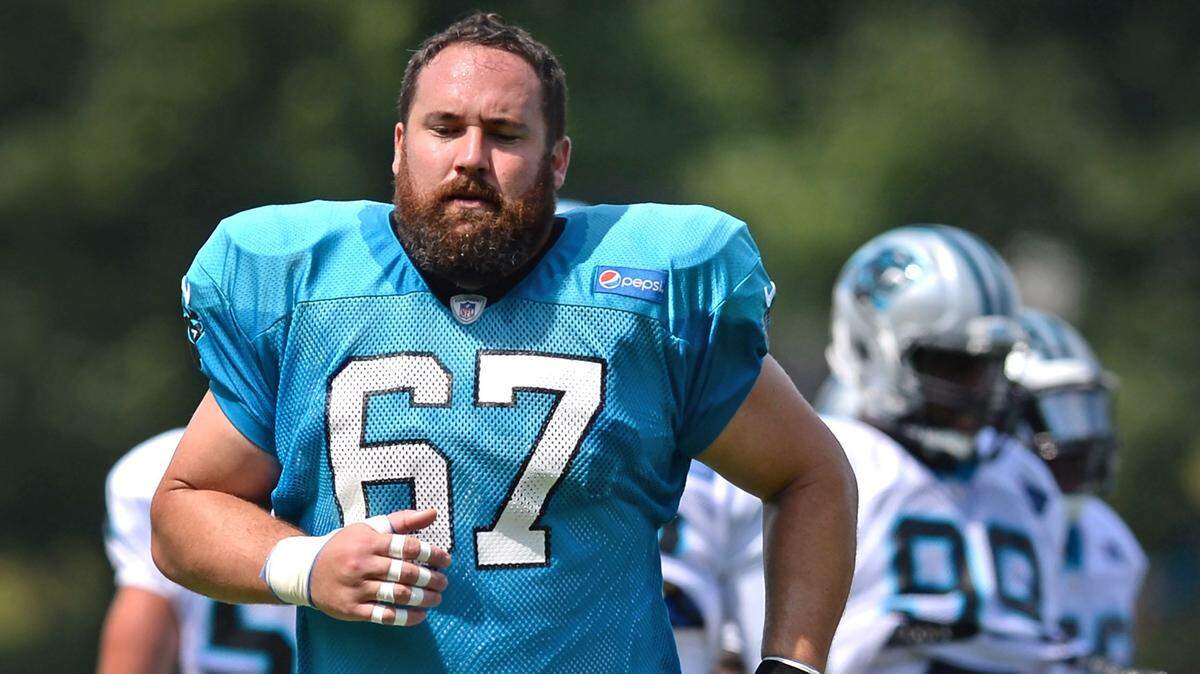
Man, does Ryan Kalil love pie.
Apple pie, to be specific. And his mother, Cheryl, makes his favorite.
Only problem is, he hasn’t been able to eat it in a few years. His metabolism is just different now.
It’s also been years since Kalil, the 33-year-old veteran Pro Bowl center for the Carolina Panthers, has been able to recover from a Sunday afternoon football game by the following Thursday.
“Every guy has their weekly maintenance,” he said. “As you get older, there’s just more of it. Early in your career, you start feeling ready to go about Thursday, Friday. As you get older, it gets closer and closer to the game. Now ... you need every second you can get to get ready.”
Carolina has a locker room full of veterans, including Kalil. Defensive end Julius Peppers is 38. Linebacker Thomas Davis is 35. Tight end Greg Olsen is 33, and safety Mike Adams is 37.
Kalil, Peppers, Davis and Adams are in the final year of their contracts. Kalil said he will retire in the spring. Olsen has signed through 2020.
The Panthers are the fourth-oldest team, by average age, in the NFL. But each of these veterans is still playing at a high level.
All are starters at their respective positions. Last year, Peppers tied for the team lead in sacks with 11, and in 2016, Olsen became the first tight end in NFL history to record three consecutive 1,000-yard receiving seasons.
It’s all about how they take care of their bodies. The fact that they’ve been able to lengthen their careers to such an extreme is all in the details.
Like not eating so much pie, for example.
And many of those details are in the hands of the Panthers’ strength and conditioning coach, Joe Kenn.
The house that ‘House’ built
Everybody calls Kenn “House.”
As in, “As big as a ...”
He’s creative and intense. He once competed in the Scottish Highland Games in a kilt. And there’s a reason his players buy in.
“He’s constantly evolving,” Kalil said. “I’ve had coaches in the past that have just sort of found one way, and they’re stuck with it. That’s it. It’s on a concrete tablet, no changing it at all. But Joe Kenn is constantly evolving, constantly reaching out to other professionals. He’s constantly listening, reading about new things and trying (them). Listening to the players. ...
“He does a great job in (seeking out) the things that keep us fine-tuned.”
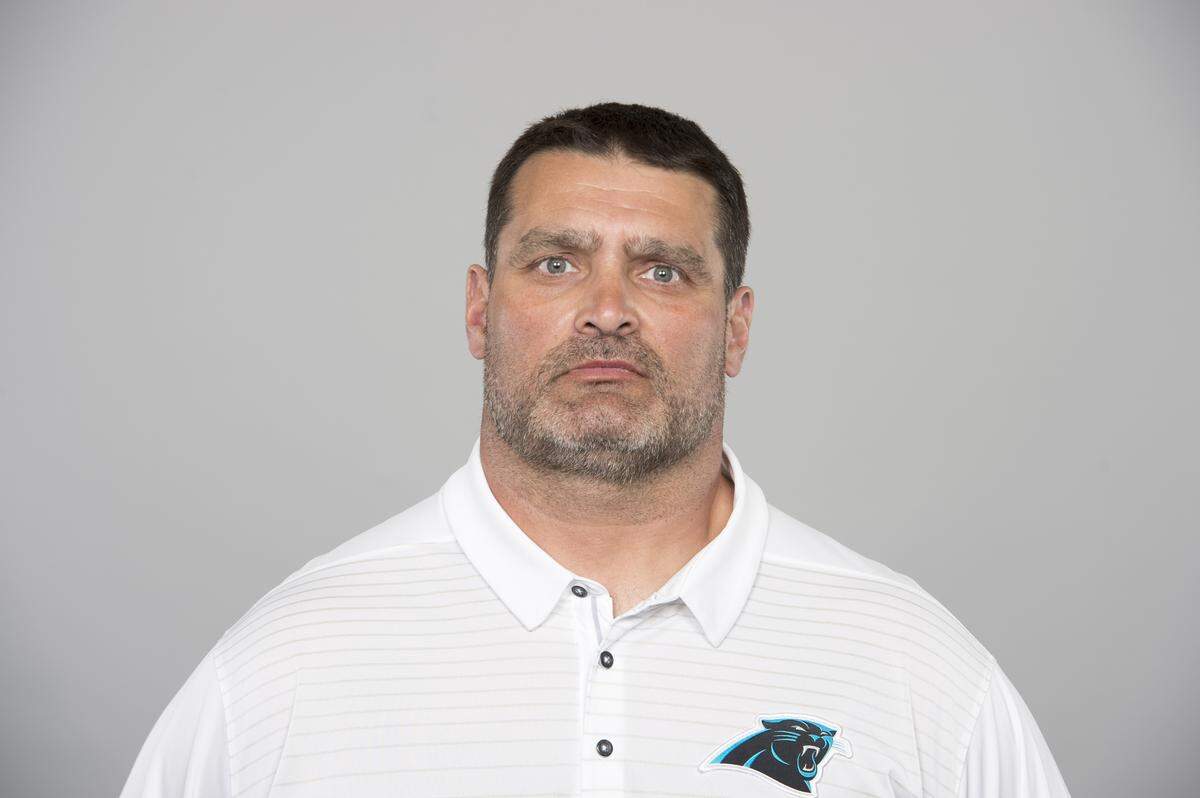
In 2015-16, Kenn was named the NFL’s strength trainer of the year. His methodology has a lot to do with that. Throughout his eight years with the Panthers, Kenn has evolved his programming to reinforce two-way communication between strength and conditioning coach and player.
“As the strength coach, I have to do a very good job at understanding that I’m a service to them,” Kenn said. “It’s not about my program, it’s about the whole program. ... There is no ‘my way or the highway’ either way, with the player telling me something or me telling the player. We’ve got to figure out what works best for that person, especially during the season.”
For example, Davis’ injury history is unique and storied. He successfully recovered from three ACL surgeries on the same knee, the first player in NFL history to do so, and became a three-time Pro Bowler. When it came to his personal strength program, he wanted to implement a lot of the same things that got him through those knee injuries and the rehabilitation after.
So instead of Kenn dictating a plan to Davis, they collaborated. Listening to Davis as Davis listened to his body was important to Kenn.
“Coming back from three ACLs, there are things that Thomas Davis is doing that, whether you believe it or not, you believe it with him,” said Kenn. “No ifs, ands or buts. We know what Thomas is doing every single year in regards to in-season programming, and so far, it has worked. ...You can’t deny the production.”
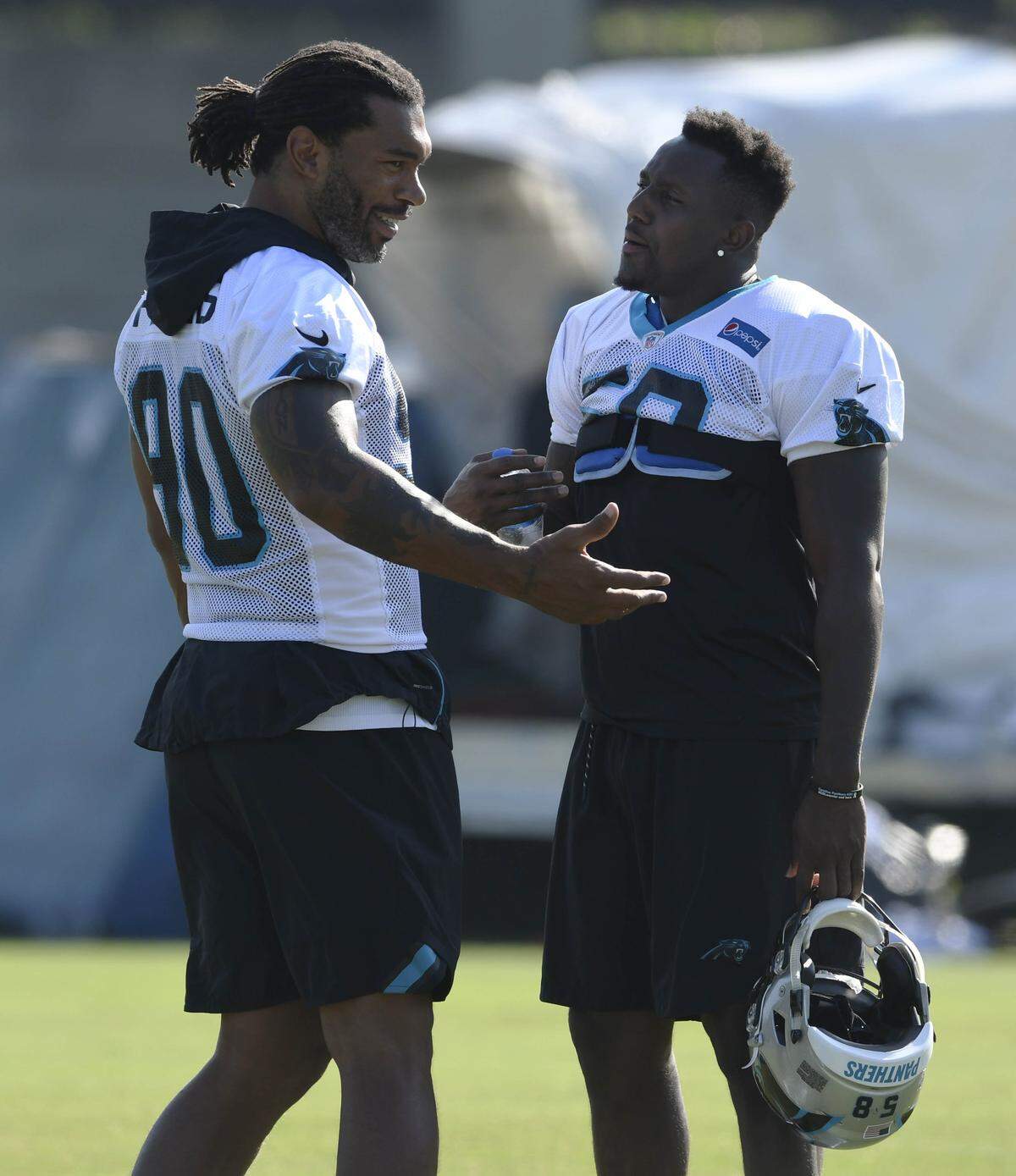
In the seven years Kenn and Davis have been working together, Davis has racked up 432 tackles and missed only three games.
Olsen and Peppers have their own routines with Kenn, too.
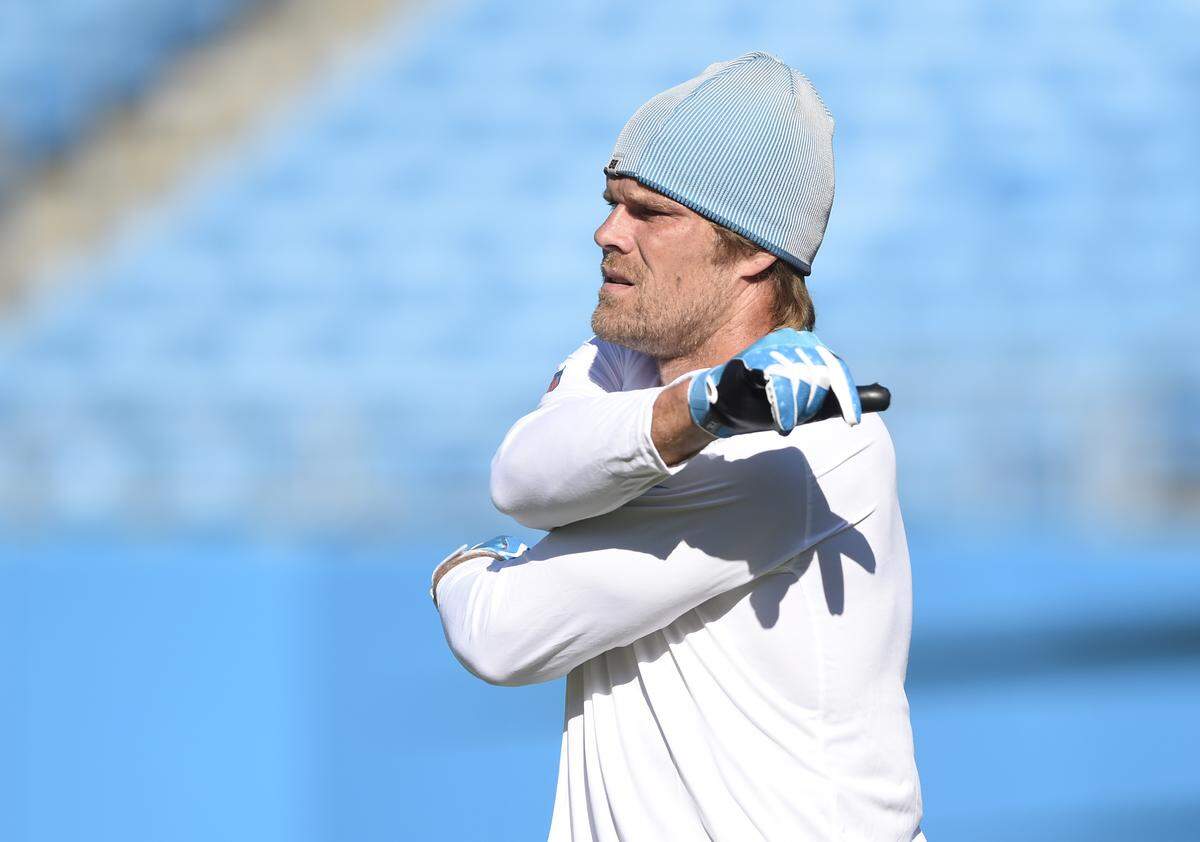
The day after each season, Olsen goes into Kenn’s office and meticulously writes his goals for the following year on a sheet of paper. He leaves it for Kenn.
Then it’s Kenn’s job to create the regimen that helps achieve them.
Olsen warms up the same way every day, even counting out the same steps as he does so. They’ve done it this way for years, because Kenn trusts Olsen’s process as much as Olsen trusts Kenn’s.
“There’s a reason why he plays at a high level later in his career,” Kenn said. “He’s a 365-day all-out, he just knows. He knows what he needs to work on and he’s as meticulous as everyone I’ve ever been around.”
And when Peppers returned to the Panthers in 2017, the coaching staff, the strength coaches and the athletic trainers had to create a program that carefully considered his age and his rotation in the defensive line.
Kenn expected Peppers, a future Hall of Famer, to have a lot of personal preferences regarding his workout program to recommend to Kenn.
Not the case.
“Pep was very coachable,” Kenn said. “We asked him when he first got here if he needed anything special, and he said, ‘I’ll do whatever you need me to do.’”
Details matter
Olsen, Peppers, Kalil, Adams and Davis all require different programs, because their bodies are different.
And that’s true across the locker room. So Kenn has to be a master of detail.
There are many to consider. Adams, for example, spends much of practices and games sprinting to cover receivers. That’s his “weight training,” Kenn said. And the daily contact is different.
So when Kenn gets Adams in the gym, he asks him to max out with weights differently than players who take snaps closer to the line of scrimmage.
.JPG "panthers_practice082718_304 (1).JPG")
But even between offensive and defensive linemen, the closest players to the snap, the details matter when planning a program.
And even along the offensive line, specifications must be made. Kenn sees guards making much more contact on a snap-by-snap basis than tackles.
Each variable means an adjustment to the workout.
Kenn even has parameters for managing the effects of stress on veterans’ bodies.
“With the older players, people on the outside often look at it as just a physical stress,” he said. “But don’t forget the mental stress. Generally, you’ll see guys evolve and their families evolve. Sometimes you look at Tuesdays, and that might be their off day. But now it’s a more strenuous day than any practice for them because now they’re trying to do a full day of ‘Dad’ work in one day. That has to be factored in.”
Injuries play a part, too.
Peppers, the team’s most senior player, had labrum repair surgery this offseason and did plenty of “Dad” work of his own as he recovered and decided with his family whether to return for what may well be his final year in the NFL.
Last year, Peppers’ talent, his workout regimen and the rotational efficiency of the defensive line helped him max out on all of his contract incentives.
This year when the team extended Peppers, they were a little savvier to the physical ability he still has. The one-year, $5 million extension he signed this spring has its incentives rolled into the salary.
Through training camp and the first three weeks of the preseason, Peppers worked on the side of the practice fields with Kenn.
As his teammates practiced, Peppers ran sprints and pushed sleds according to Kenn’s specialized plan, first rehabilitating his shoulder and then getting his body into game shape. He grew out his beard a little, too, and this year it has flecks of gray in it.
On Monday, Peppers was cleared and practiced fully with his teammates for the first time since January.
In a photo from practice, Peppers lunged toward a hit pad, arms outstretched. His reflective helmet visor glinted in the sun.
Underneath it, Peppers was grinning.
This story was originally published August 30, 2018 at 7:00 AM.