
How Panthers coach Matt Rhule became ‘one of us’ and learned to see beauty in people
One day during their years together at Western Carolina University, where they were both assistant football coaches, Matt Rhule presented Geoff Collins with a challenge and a way to fill some time during the offseason.
They should train for a marathon.
Collins is now the head coach at Georgia Tech, and the Carolina Panthers on Wednesday introduced Rhule as the fifth head coach in franchise history. But back then, in the early-to-mid 2000s, they were ambitious and mostly anonymous, two young coaches trying to break through in a profession that, at its lowest levels, can stretch bank accounts and leave dreams shattered.
By then, Rhule and Collins had been close friends for years. In 1998, Collins gave Rhule his first coaching job as an assistant at Albright College, a Division III school in Reading, Pennsylvania, where Collins was the defensive coordinator. When Collins took the same job at Western Carolina in 2002, he recruited Rhule to join his staff there. Their friendship grew.
“We have a thing that we’ve used for the last 22 years,” Collins told the Observer. “When we talk about recommending people to each other, as to hire and join coaching staffs, we always ask each other, ‘Is he one of us?’ So I think that’s kind of a badge of honor. For me or Matt Rhule to say, ‘You’re one of us’ is a pretty big deal.”
To be “one of us,” as Collins described it, means to have “really good energy.” It describes someone who “cares about players, cares about people — goal-oriented, driven, passionate about what they do.” Collins believed Rhule possessed those qualities in the early years of their relationship. Then came the marathon training.
Rhule was in his late-20s then, Collins his early-30s. Neither was necessarily a runner. They both weighed about 230 pounds. Both still looked like the linebackers they were in college — Collins at Western Carolina and Rhule as a walk-on at Penn State. They trained for six or seven months, Collins said, and often ran between 12 and 16 miles up and down and around the curves of twisting mountain roads in western North Carolina.
They ran around the Western Carolina campus, in Cullowhee, and ran to the neighboring towns of Sylva and Dillsboro and back. The runs gave them a lot of time to talk. They talked often about the future — not so much about the Catamounts’ upcoming season, but about where they saw themselves and how they planned to arrive there.
“You get to really know somebody at a deep level,” Collins said, “when you’re spending two hours at a clip running the road together in the mountains of North Carolina, talking and sharing themes and philosophies and belief systems and dreams and visions and goals.”
Late in their training, a scheduling conflict forced Rhule to run a different marathon than the one he and Collins had planned. Collins still ran the race and, before it, Rhule gave him a note to carry in his pocket. He told him not to open it until 20 miles in.
Collins thought Rhule had written “some long, meaningful note” about their friendship — about how much they’d grown during their training and how much they meant to each other. When Collins reached for the note after the 20th mile, though, he opened it to find something much shorter written in large letters:
FINISH THE RACE.
It helped push Collins to the end.
“In reality, that’s really what I needed at that point,” he said.
Over the years, Collins has told that story to his players. He has often talked about finishing metaphorical races, whatever they might be. Fifteen years later, Collins still keeps that note. When Rhule became the Panthers’ head coach Tuesday, his old friend thought about those words. All at once, Rhule had reached both a finish line and a point of new beginning.
EARLY PLAN TO BE A FOOTBALL COACH
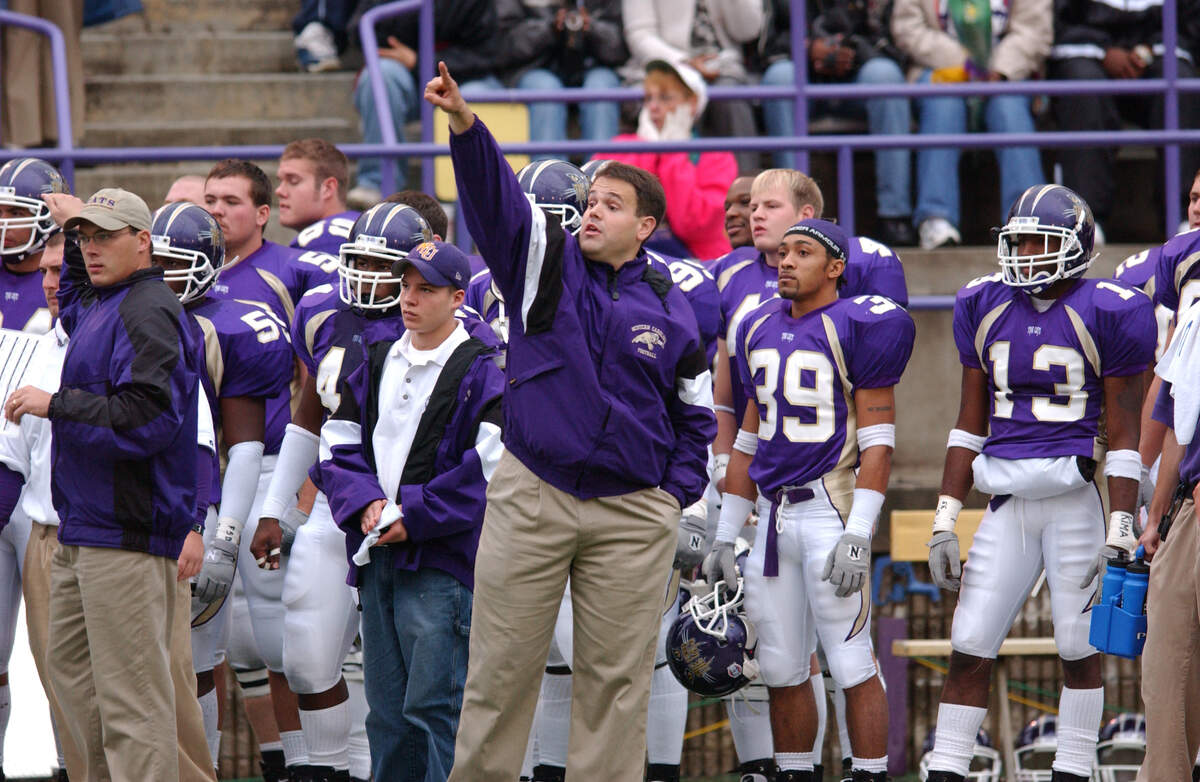
The people closest to Rhule say the only thing he ever wanted to do was become a football coach. They don’t say it in a figurative way, as if to mean Rhule arrived at the goal in high school or college. They mean it in a literal way, and insist that Rhule aspired to become a football coach from the time he was a small child.
Rhule will turn 45 at the end of January. And so it has been about 40 years, then, since he told his father, Denny, his plan for life: He was going to grow up and play football at Penn State. And then he was going to become a coach. Denny Rhule, a minister and himself a former high school coach and physical education teacher, remembers the moment clearly. He said Matthew, what Denny calls his only son, was 5 or 6 at the time.
“And I kind of patted him on his head,” Denny recalled Wednesday, before his son’s introductory news conference, “and said, ‘Yeah, good — go for it.’ And that’s exactly what he did.”
Matt Rhule was born in State College, the home of Penn State and its football program that, by then, under Joe Paterno, had become part of college football’s mythology. Rhule was the oldest of his parents’ two children; his sister arrived three years later. He grew up the way a lot of Pennsylvania-born children of the time did, in a home with reverence for Paterno and the Nittany Lions.
The family moved for a short time to Kansas City, where Denny went to seminary and became a minister, and then the Rhules moved to New York City when Matt was about 5. He spent the next 11 years of his childhood there, and at times accompanied his father to his place of work at a church near Times Square, “back when Times Square was Times Square, and not Disney Square,” Denny said.
The church provided structure and services to people in need, Denny said. In his earliest years, Matt encountered and interacted with those who were less fortunate, who came to the church for some guidance and hope.
“He was around a lot of different people,” Denny said of his son, “and I think that really helped him develop a wide picture of the beauty of people. And I think that’s really helped him in coaching, I really do.”
The family lived on Roosevelt Island, a small strip of land in the East River, between Manhattan and Long Island. When Matt was 11 or 12, he began playing football on Saturdays in a league on nearby Randall’s Island. Once or twice every fall, Denny drove Matt back to State College for Penn State football games, and he maintained his aspiration to one day play there.
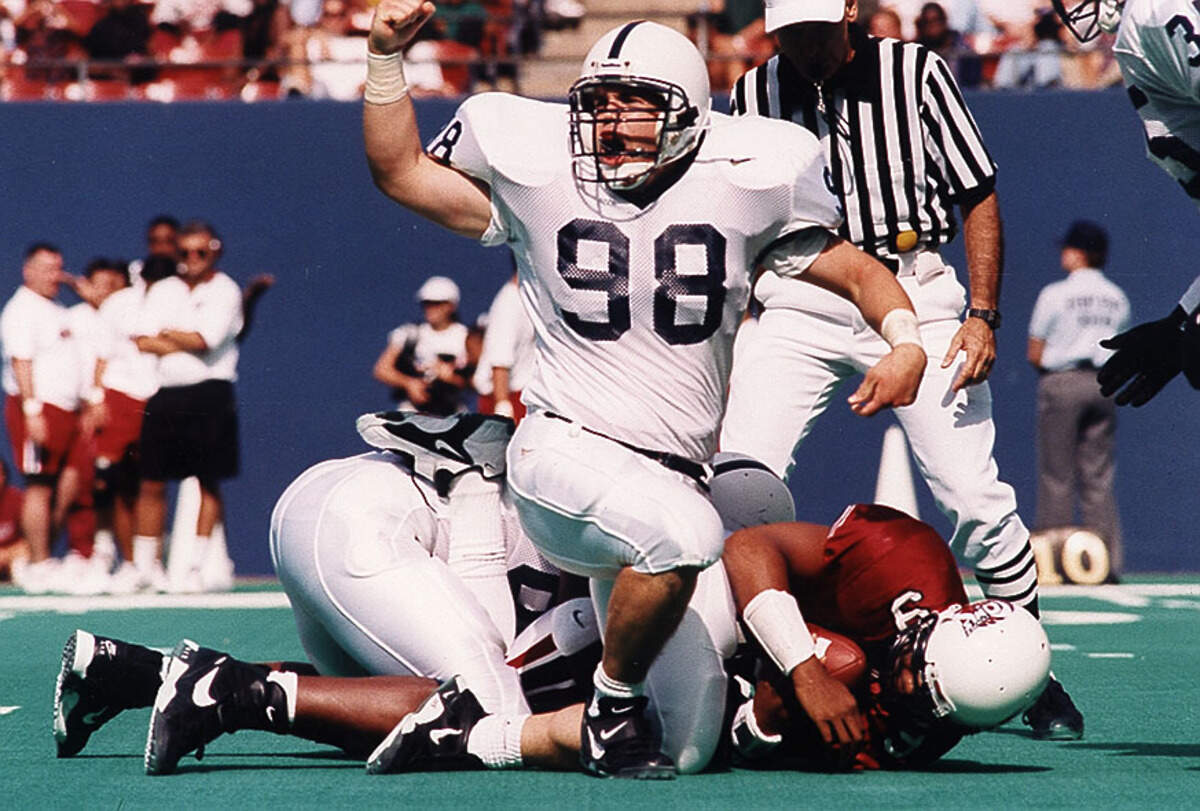
The Rhules moved back to State College before Matt’s junior year of high school. After playing at State College Area High School, Matt had opportunities to play college football at lower-level, smaller schools in Division II or Division III. He decided, instead, to walk on at Penn State, where he spent four years as a reserve linebacker — a practice player, in effect.
Years later, the story of how Rhule became a walk-on at Penn State impressed his future boss. It might have been easier for Rhule to go somewhere else. Undoubtedly, he would have stood a greater chance of contributing on the field. Rhule chose a different, perhaps more difficult path.
“That’s a determination to do what you can with what you’ve got,” said David Tepper, the Panthers’ owner.
JOINING A FRATERNITY OF YOUNG COACHES
At 44, Rhule has joined a fraternity of younger NFL head coaches. Some of their ascensions have been more foreseeable than others, or at least easier to follow. Zac Taylor, the 36-year-old head coach of the Cincinnati Bengals, was the starting quarterback at Nebraska, where he was once Big 12 Offensive Player of the Year.
Kliff Kingsbury, the 40-year-old head coach of the Arizona Cardinals, was a prolific quarterback during his college years at Texas Tech. He later returned to his alma mater to become the head coach. Sean McVay, the 33-year-old head coach of the Los Angeles Rams, became an NFL assistant coach not long after his playing days ended at Miami University in Ohio.
By comparison, Rhule’s path to becoming an NFL head coach seems more improbable than some of his peers. He wasn’t a well-known player in college. He began his coaching career at a small school without much pedigree. From there, he became a graduate assistant at the University of Buffalo, where the coaching staff was fired after one season.
Rhule then became a graduate assistant at UCLA before he received the call from Collins about coming to Western Carolina. Soon, he was on his way to Cullowhee, where he interviewed with Kent Briggs, who was then the Catamounts head coach. It took about five minutes, Briggs said, for Rhule to win him over.
“He had that knack, has that personality,” Briggs said. “... When you see him, and when you listen to him, you just know. I mean, he went down there and interviewed for Baylor, they knew. Interviewed for the Panthers, they knew. When he interviewed for me, I knew.”
Rhule came to Western Carolina as a linebackers coach. Soon enough, before his first season with the program, Briggs placed him in charge of special teams. At the time, Briggs said, his players viewed special teams with skepticism. They didn’t necessarily appreciate the importance of it. After the first meeting with Rhule, that perception changed.
Rhule was 27. He was a full-time Division I coach for the first time and, during his first sales pitch, he convinced players to believe that the kickoff coverage team and the punt return team and the field goal team — those units so often overlooked, collectively — were among the most important teams they could be a part of.
“Before it was over with,” Briggs said, “everybody on the team wanted to be a part of a special team.”
During his years in Cullowhee, Rhule lived in the same neighborhood as Briggs and Collins. Rhule hadn’t been married to his wife, Julie, for too long. Collins had been married for about a year. It was a simpler, quieter life in the mountains, where Rhule received an annual salary of around $30,000.
“And I was pushing hard to get him that,” Briggs said.
To that point, the most significant break of Rhule’s young coaching career might have been the phone call he received from Collins that eventually led him to the North Carolina mountains. After four seasons with the Catamounts, Rhule did not wait for another break. He decided, with the help of his wife, to attempt to create his own.
He and his wife had been together since their college years at Penn State. They met while working at a Chili’s restaurant. Rhule was a fry cook, which meant that he placed items in the fryer and pulled them out when they were crisp and cooked. Julie was a server.
“He claims I kept ordering fried food for the customers, which is not accurate,” she said Wednesday, after her husband’s news conference.
She was drawn to Rhule because of his intelligence and “his love for life.” She sensed an earnestness and genuineness that she appreciated.
“I’m one of those people that I always go with my gut,” she said.
By the time Rhule completed his fourth season with the Catamounts, he and Julie had welcomed their first child. Bryant was 16 months old when Rhule and his wife drove back home, to Pennsylvania, around Christmastime. Approaching Philadelphia, Julie encouraged her husband to take a right on Interstate 81 into the city, to Temple University.
Ordinarily, they would have remained on the highway and bypassed the city. This time, he turned onto 81, drove toward the Temple campus and sought an audience with Al Golden, who was then Temple’s head football coach.
“At the time, I was in the staffing industry,” Julie said, remembering what she’d told Rhule, “and I said you just need to walk in the office and tell Al Golden he needs to hire you. And Al, to his credit, gave him a chance. And the rest is history.”
TACKLING DIFFICULT ASSIGNMENTS
Before the Panthers introduced Rhule on Wednesday, a video on a large screen flashed highlights. One of the earliest clips showed Rhule’s introductory press conference when he became Temple’s head coach in 2012. He’d spent six years as an assistant with the Owls and another with the New York Giants before he became head coach for the first time.
Temple had long been considered one of the most difficult jobs in college football. It was a place that rarely experienced large-scale success. Before Rhule’s arrival, the Owls had reached the 10-win mark once in 80 seasons. Then Rhule led them to 10 victories in his third and fourth seasons.
He likely could have had his pick of jobs, in time. He chose, instead, to accept an offer to become the head coach at Baylor where, for years, revelations of sexual assaults, instigated by football players, made national news. During that time, Baylor became a poster child for crisis mismanagement.
Art Briles, the former head coach, lost his job. So did Ken Starr, the university president, and Ian McCaw, the athletic director. To varying degrees, all had either covered up or ignored evidence related to allegations that Baylor football players raped and sexually assaulted women on campus. The football program became toxic, an example of the worst of big-time college sports.
The university turned to Rhule and asked him to restore dignity to a tarnished program. He said yes and, upon his arrival in Waco, Texas, in December of 2016, he inherited “a dumpster fire,” said David Smoak, a sports talk radio host in Waco.
“I think he had to learn along the way a little bit about exactly what he was dealing with,” Smoak said during a phone interview. “He used the word (on Wednesday) that when he took over at Baylor, he called it a disgrace. … There’s some Baylor fans that probably thought that was a little bit over the top, but it was bad.”
Rhule’s responsibilities extended well beyond the field. He was tasked, in some ways, with rebuilding Baylor’s character, if it could be rebuilt at all. As Smoak recalled, Rhule “immediately” required players to do community service. Rhule also asked his parents, who’d lived nearby during his years at Temple, to move to Waco.
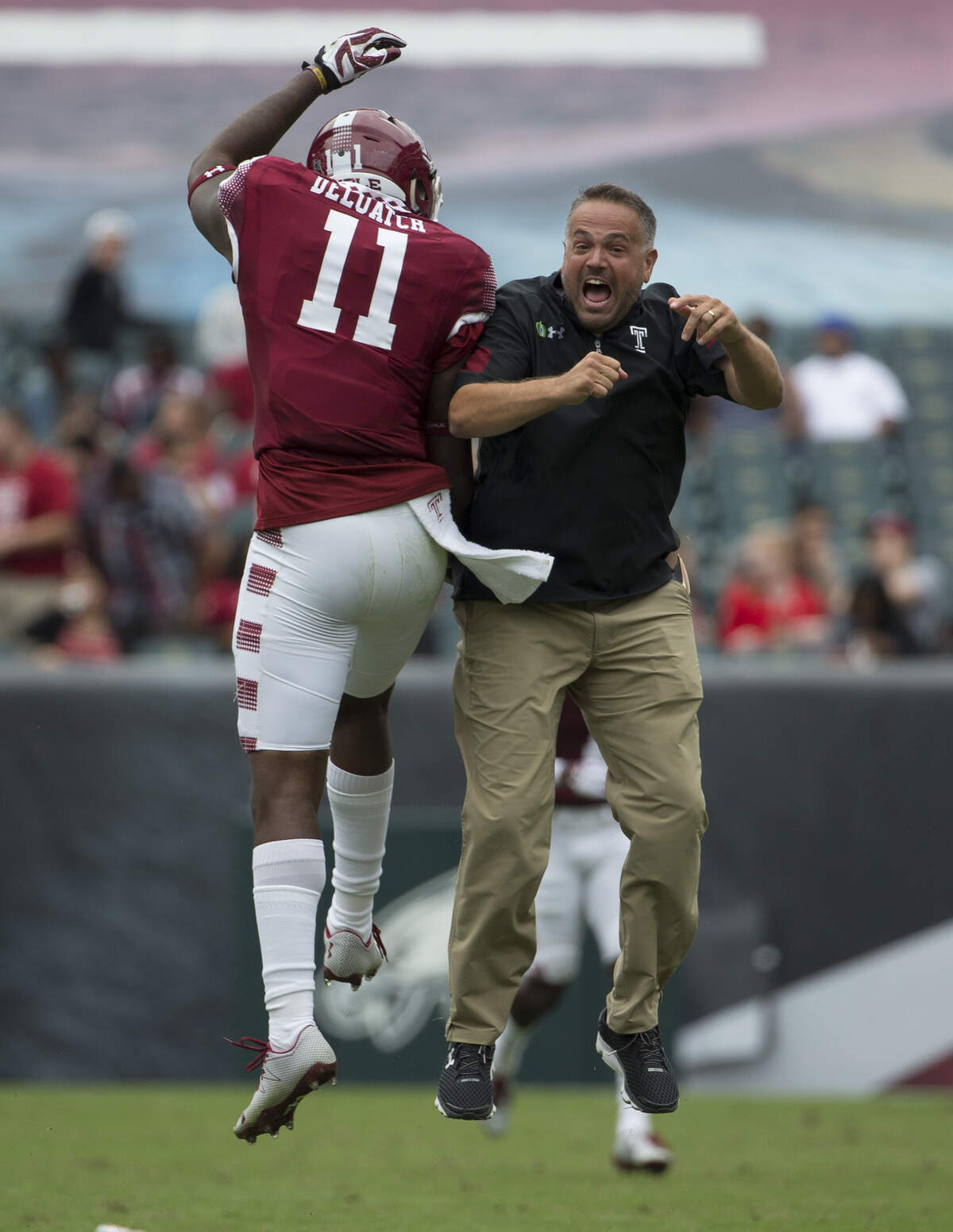
The request came after Denny Rhule and his wife, Gloria, visited Matt for two weeks. They spent hours quietly walking around the Baylor campus. They talked and they prayed, Denny said, about the challenges Matt faced. Early on, it became clear to Denny why his son had chosen to go to Baylor, why he’d taken a job that others might have run from.
“I really felt like he felt called here,” Denny said, from Waco, “to be a part of a solution.”
Soon, Rhule’s parents moved to Texas. Denny, who practices what he described as the “ministry of service,” began leading weekly Bible study sessions. He counseled players who were fathers, themselves. Denny became a presence on the Baylor sideline, watching his son work the way his son had watched him work decades ago at the church in Times Square.
Rhule led the Bears to one victory in his first season in 2017. They won seven games the next, and 11 the one after that, in a season that ended earlier this month with a defeat in the Sugar Bowl. In three seasons, Rhule became a national name, known for his energy and his talent and presence as a speaker.
When he arrived in Charlotte to be introduced as the Panthers’ head coach, he texted Collins. They exchanged messages about returning to the mountains near Cullowhee, this time to buy a couple of vacation homes. Neither one of them would be too far away.
AN IMPRESSIVE SPEAKER
Tepper is the NFL’s wealthiest owner, a man accustomed to walking into a room and owning it — to making deals and getting things done. After Rhule finished his time in front of the cameras on Wednesday, Tepper found himself envious of what he’d just witnessed. He said he wished he could speak like Rhule can, with the charm of a small-town preacher and skill of a motivator.
The connection between Rhule’s oratory talents and his father’s profession, as a minister, has often been made. Denny, though, insisted he is not responsible for his son’s gift as a speaker.
“I can remember him growing up and if he misbehaved he would have an oral argument just to logically get out of the situation,” Denny said. “His grandmother said he’s always going to be a lawyer.”
Rhule never considered any other profession, though. He didn’t budge at the end of his first graduate assistantship, when the coaches at Buffalo lost their jobs. He didn’t lose faith during those years at Western Carolina, where one turn off of the highway, and an impromptu meeting at Temple, kept him on the path of a boyhood fantasy.
Rhule has made his name, in more recent years, for excelling in unenviable positions. Recent success aside, the head coaching job at Temple has never been seen as a launching pad. Baylor, before Rhule’s arrival, had become radioactive. Rhule has always been drawn to challenges, and that’s what has long attracted him to the NFL.
“I wanted to be a part of the greatest game, at the highest stage,” he said Wednesday.
To his right, members of the Roaring Riot, the Panthers’ fan club, cheered some of his remarks. Tepper and his wife, Nicole Bronish, sat in the front row. Some of the Panthers’ greatest players, including Steve Smith and Julius Peppers, stood near the back. Rhule talked about his process, the way a lot of coaches do nowadays.
Everything had happened so quickly. After Baylor’s season-ending defeat, Rhule and his family escaped to Mexico for a quick vacation. When they returned, Tepper and Marty Hurney, the Panthers’ general manager, were waiting outside the driveway. Rhule pulled in the garage, popped the trunk, and Tepper and Hurney brought the bags inside.
They spent most of a full day talking. By the end of it, Tepper liked Rhule enough that he didn’t want him to interview with any other team. Rhule thought about the offer for a bit, but there wasn’t much to think about.
“I know how Matt operates, and how he works, and I know the kind of people that he aligns with and does great things with,” Julie Rhule said. “And so when I met everyone at the house the other evening, I looked (at Matt) and I said, you’re absolutely crazy — these are your kind of people. You’re going to do great things with them, and it just feels right.”
Tepper saw enough from Rhule to believe he’s the man to rebuild a franchise. He liked that there was “no bullshit” from Rhule, that he “speaks plainly — does what he says.”
In some ways, it has been that way Rhule’s entire life. He has finished one race, which ended with him becoming a successful college head coach. Now another marathon begins, not far from the hills he used to run in Western North Carolina.
This story was originally published January 10, 2020 at 6:00 AM.