
Derrick Brown could do anything with his life. He never needed the NFL, yet here he is
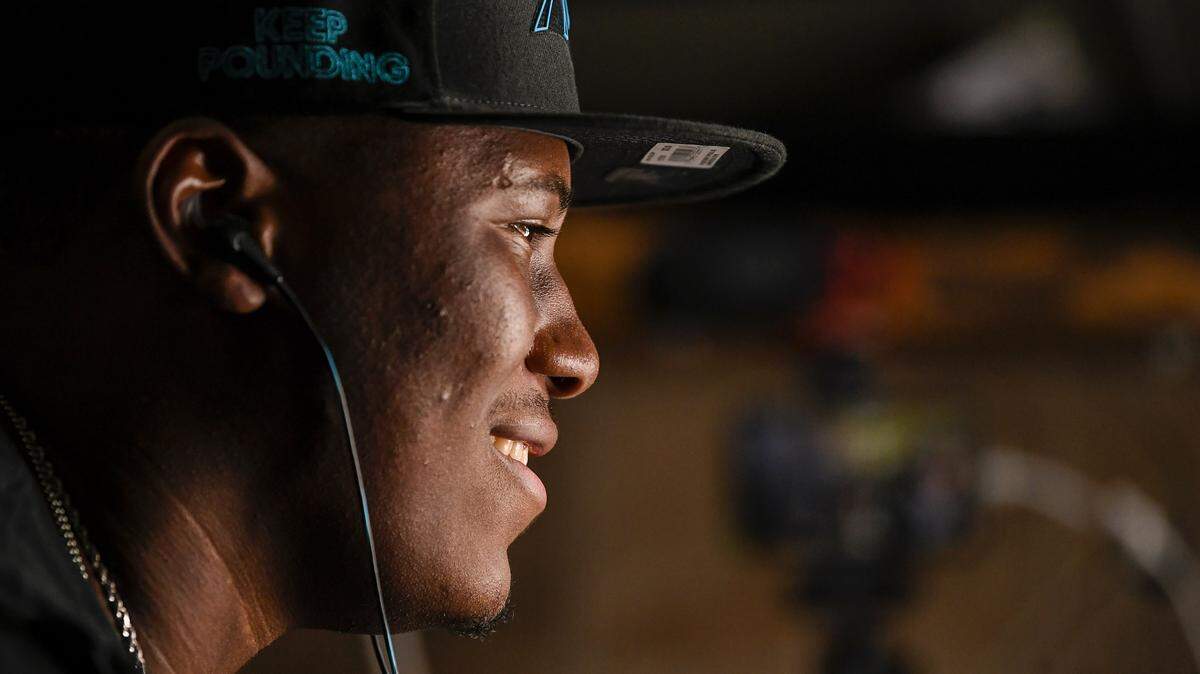
The first thing people usually notice about Derrick Brown is his size, and about 10 years ago, that’s what Korey Mobbs noticed.
Mobbs, the head football coach at Lanier High, in the sprawling suburbs northwest of Atlanta, had visited a park that day to watch the next crop of soon-to-be high schoolers. There, amid a mass of middle schoolers, stood a seventh-grader who made the other kids appear even smaller, by comparison — a boy trapped inside of a man’s body.
That seventh-grader was Brown. Eventually he became one of the most coveted high school players in the country, and then an All-American at Auburn, and eventually, on Thursday night, the Carolina Panthers’ first-round selection in the NFL draft.
By his freshman year of high school, it was clear enough he had a future in football. Brown’s size, and his ferocity on the field, are two of the most important reasons he became a top-10 draft pick. And yet in some ways those qualities belie the characteristics that were just as important in his development. Brown never wanted to be known as just a big guy who played football, though Mobbs has plenty of stories about what Brown did on the field at Lanier in Buford, Georgia.
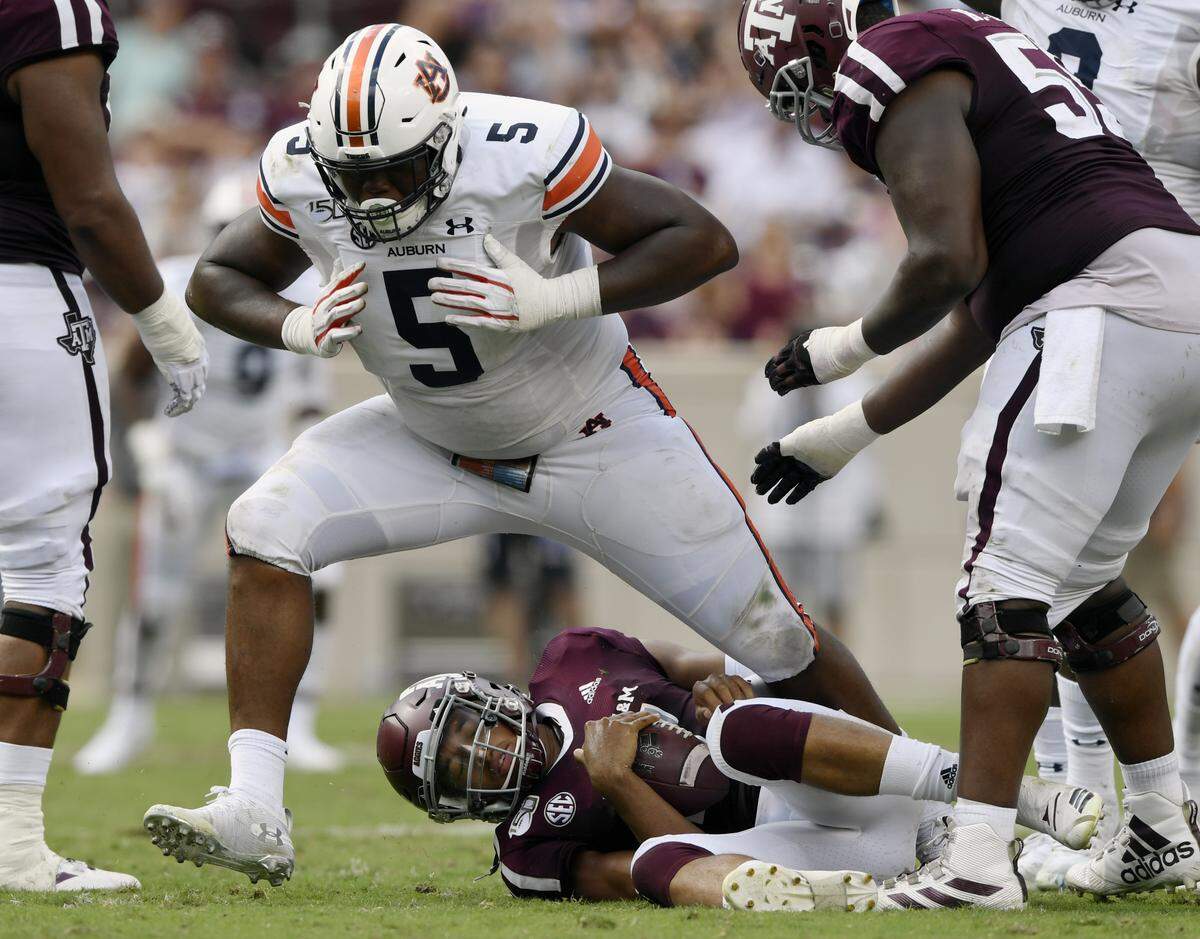
They still talk about Brown’s Friday nights there, and probably will for a long time. There was the time that Brown, an especially large and strong defensive lineman, rushed a punter by himself. He ran through the offensive line, tossed aside the few players standing in front of the punter and then blocked the kick before scooping it up.
He made it about 30 yards until several opponents managed to drag him down.
“They were kind of hanging onto him,” Mobbs said.
There were the times during Brown’s senior season when Mobbs lined him up at quarterback in the Wildcat formation — the poor kids who tried to tackle him; he scored four touchdowns that way. There were all the visits from college coaches, from all over the place, who tried to entice Brown to choose their school. In the high school class of 2016, Brown was the top prospect in talent-rich Georgia, and one of the best in the nation.
“You name it, that (college) head coach visited our place,” Mobbs said.
Among all the moments that came to Mobbs’ mind about Brown, though, his favorite story has nothing to do with football. It came after Brown had moved on to Auburn, where he met, or perhaps exceeded, the considerable expectations that surrounded him. One day during a college break, Brown came by Lanier to visit with his old coaches and teammates. Brown was sitting in Mobbs’ office when his phone buzzed.
Brown answered, and Mobbs knew well the voice on the other end: Brown’s mom, Martha.
“She was getting after him a little bit because he hadn’t taken the trash out that morning,” Mobbs said. “Here he was, a big-time star, All-American at Auburn, and she’s still holding him accountable for things that he’s supposed to do when he’s at home.
“And that, to me, is just a picture of — he wasn’t able to slide. He wasn’t able to slide at our place, and he certainly wasn’t able to slide at home. And that’s really what kind of taught him that accountability piece (and) that’s been huge for him as he’s moved through his career.”
The people closest to Brown — his friends and former teammates, the coaches who helped him reach this point — can all tell similar stories. Ask them what enabled Brown to reach this point, to become a first-round draft pick and the man the Panthers believe will play a leading role in the future of the franchise, and in response they’ll tell stories about his upbringing, and his appreciation for structure and accountability.
Like a lot of NFL draft picks, Brown, 22, has always possessed enviable and obvious physical attributes. What separates him are the things that aren’t so obvious: The nudges from his mother to stay with football or take out the trash; Brown’s interest in pursuits beyond the field; his natural inclination to pursue leadership opportunities.
He became a first-round NFL draft pick in part because of his physical talent, but his football success is a byproduct of his drive off the field.
Don’t hit Drew Brees too hard
In his younger years, football was not necessarily the end-all, be-all, as it is for some kids who grow up believing that sports might be their only path to success. In Brown’s case, he had to be coaxed into staying with the game in middle school. In high school, it became part of his identity but not the entirety of it. He also sought leadership positions in school, where he joined the student council and another student-driven leadership organization.
Brown’s closest friend in high school was Ashton Barnes, a running back who went to the Air Force Academy on an athletic scholarship. Barnes graduated from the academy last weekend, in a virtual ceremony held over the internet because of the pandemic. He and Brown became friends in elementary school, and grew closer in part because of their aspirations beyond sports.
“We’re just similar in terms of being goal-driven, and we really wanted to be the best,” Barnes said. “We both come from really good families that really want us to succeed.”
Four years ago, they were seniors about to graduate from high school. Now Brown is entering the NFL as a top-10 draft pick, while Barnes will soon move farther west, to California, to join the inaugural class of the Space Force. This is not necessarily the sort of future either one of them could have guaranteed and yet Barnes spoke as if both paths were somewhat expected, because of the way he and Brown prepared themselves.
On the field, Brown possessed the talent of an All-American and the drive of someone trying to hold onto his place on the team. The more recognition Brown received, Mobbs said, the more he tried to deflect his success onto his teammates, or coaches. Brown couldn’t receive an accolade, or go through an interview about his accomplishments, without finding a way to mention the Lanier Longhorns.
That was part of what made Brown good, Barnes said: The people around him wanted to work as hard as he did.
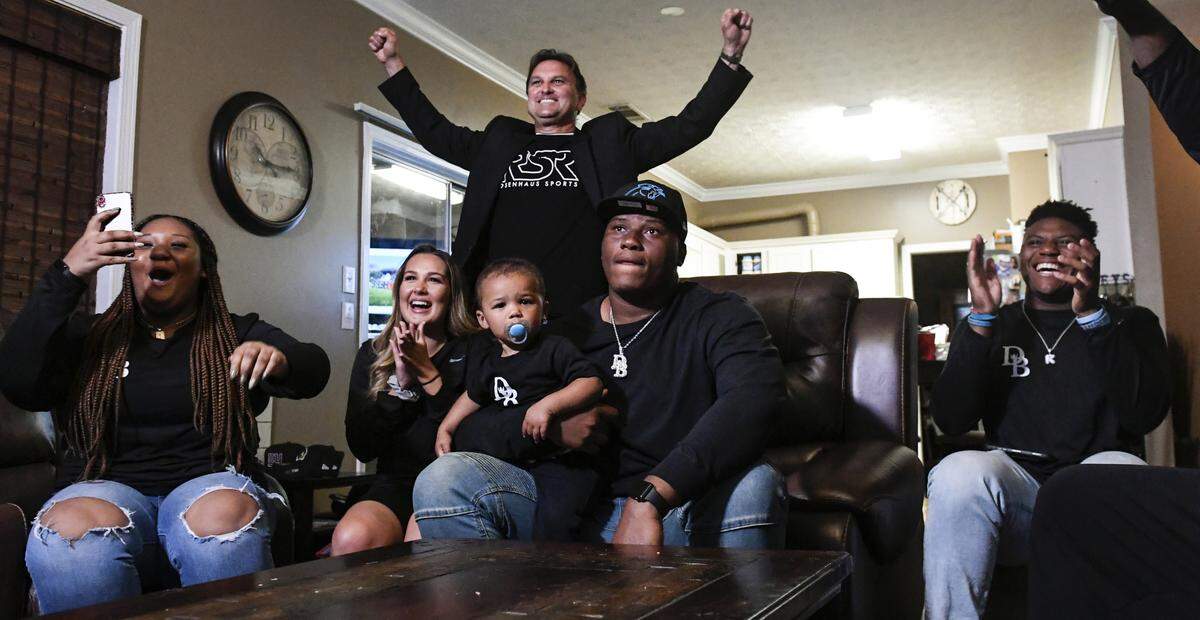
On Thursday night, Barnes watched his closest friend’s NFL dream become a reality. He might have been able to share it with Brown, in person, if not for the coronavirus that forced the NFL to move the draft from Las Vegas to the internet. Nonetheless, Barnes celebrated with Brown over a video conference on Zoom. It was a perfect moment, Barnes said, notwithstanding his allegiance to the New Orleans Saints.
“Hopefully he doesn’t hit Drew Brees too hard,” Barnes said.
Baby Barack
Brown could have left Auburn after his junior season and been a first-round pick then. Janice Robinson, the coordinator of student-athlete development at Auburn, knew Brown well enough to know that he appreciated school and the college environment. And yet she thought he might go, anyway, given everything he stood to gain and what people feared he might lose should he return.
He risked becoming injured. He risked that his stock might somehow fall.
When Brown told her he was coming back, Robinson didn’t think about football.
“I was like, ‘Good, because you’ve got to be president,’ ” she said Friday.
President?
Like in his high school years, Brown sought off-the-field leadership opportunities at Auburn. He represented the football team on the university’s Student-Athlete Advisory Committee (SAAC). By the time he was a junior, Brown had become the vice president of the organization. His senior year, after deciding to return, he was president — the first football player to do so in 20 years.
Brown’s off-the-field pursuits led some of his teammates to nickname him “Baby Barack,” after the United States’ 44th president. Brown also served on the Southeastern Conference’s leadership council. A lot of high-profile college athletes, if not most of them, don’t seek the kind of off-the-field leadership positions Brown sought, Robinson said. She knew he was different.
“He was very curious,” she said. “He always wanted to know why — well why is it this or why is it that. Well, let’s research this, or I’ve got an opinion on that. So his curiosity really stood out to me. And also his determination. He always followed up.”
Mobbs, Brown’s high school coach, credits Brown’s drive — and his intellectual curiosity — to his parents. Brown’s relationship with them was well-documented throughout his years in college. His father, James, is a sheriff’s deputy in Gwinnett County. His mother, meanwhile, is an associate manager at Walmart store No. 878, in Cumming, Georgia.
Earlier this week, the Walmart corporation released documentary series chronicling Brown’s football journey. The series, called “Raising a Giant,” is comprised of four videos, each about six minutes long. When Brown met with reporters Thursday night over a video conference, hours after the Panthers selected him, he was asked about his mother working at Walmart.
The question assumed that Brown would want her to stop working there, now that he’s heading toward a significant payday. Brown didn’t necessarily bristle at the question, yet he spoke as though he didn’t agree with the premise.
“She loves what she does,” he said. “And that’s the situation she wants to be in.”
He spoke with a similar matter-of-factness about his decision to turn down millions and return to college for his senior season. And then his decision, after that one, to play in Auburn’s bowl game last season instead of sitting it out to avoid the prospect of injury. The first decision, about coming back to school, was about his desire to earn his degree, which he did, in business. The second decision, about playing in the bowl game, was about his desire to finish what he started.
“That’s not normal” Gus Malzahn, the Auburn head coach, said on Friday, comparing Brown’s decision to play in the bowl game to the decisions countless other college players have made in recent years to skip theirs. “But he’s not normal. And his parents are such wonderful people, and they have truly given him the foundation for who he is.”
Malzahn described Brown as “the most well-rounded” player he’d ever coached. He told stories about the mission trips that some of Auburn’s juniors and seniors have gone on in recent years to the Dominican Republic. Brown, Malzahn said, was a leader there, too, helping his teammates deliver supplies and lay foundations of houses that were being rebuilt after some had burned to the ground.
Brown’s roommate on those mission trips, and his roommate during Auburn football road trips, was usually Sam Sherrod. He arrived at Auburn as a walk-on, in the same incoming class as Brown. They became fast friends, the All-American and the walk-on, and when Brown learned he was to become a father, he went to Sherrod for advice, and to calm his nerves.
Brown’s girlfriend delivered their son, Kai, in December, 2018. If anything, Sherrod said, fatherhood gave Brown even more of a focus, and that anyone he lines up against in the NFL should be concerned.
“He’s going to be kicking their ass,” Sherrod said. “Because he’s got a son, Kai, so he’s going to do everything he can to benefit him.”
To this point, football has appeared to come relatively easy to Brown. Yet it has appeared that way, people close to him have said, because of how hard he has been on himself. In high school, most of the players on other teams posed little competition. Brown would have been an attractive prospect based on his size and strength alone. By his junior year, he had his pick of colleges, and they wooed him relentlessly until he chose Auburn on signing day of his senior year.
A lot of kids “would let that go to their head,” said Mobbs, the high school coach.
“But it kind of did the opposite for Derrick,” he said. “It made him work even harder.”
Four years later, Brown enters the NFL amid the same sort of attention and hype that has long followed him. A decade ago, Mobbs noticed Brown’s size first. It was what everyone noticed first, given the obvious. Soon enough, though, Mobbs came to appreciate Brown’s other traits — the ones when, combined with his physical gifts, most led him to this point.
The day after Brown became the first player from his high school to be drafted, Mobbs looked back and thought about what enabled Brown to arrive at this moment. Mobbs didn’t talk about Brown’s size, or what he did on the field, as much as he did his decision-making, starting with the people he chose to surround himself with.
“He knew how to choose his friends wisely,” Mobbs said, and he said Brown sought the company of “high-flyers.” One of those friends is now on his way into the Space Force, a high-flyer in a literal sense. And now Brown is on his way to the NFL, continuing his journey in football that’s always been about more than the game.
This story was originally published April 25, 2020 at 6:00 AM.