Panthers won’t move to Rock Hill until at least 2023. A look at facility, what’s next
Hiram “Chip” Hutchison III can hear the noises from his backyard.
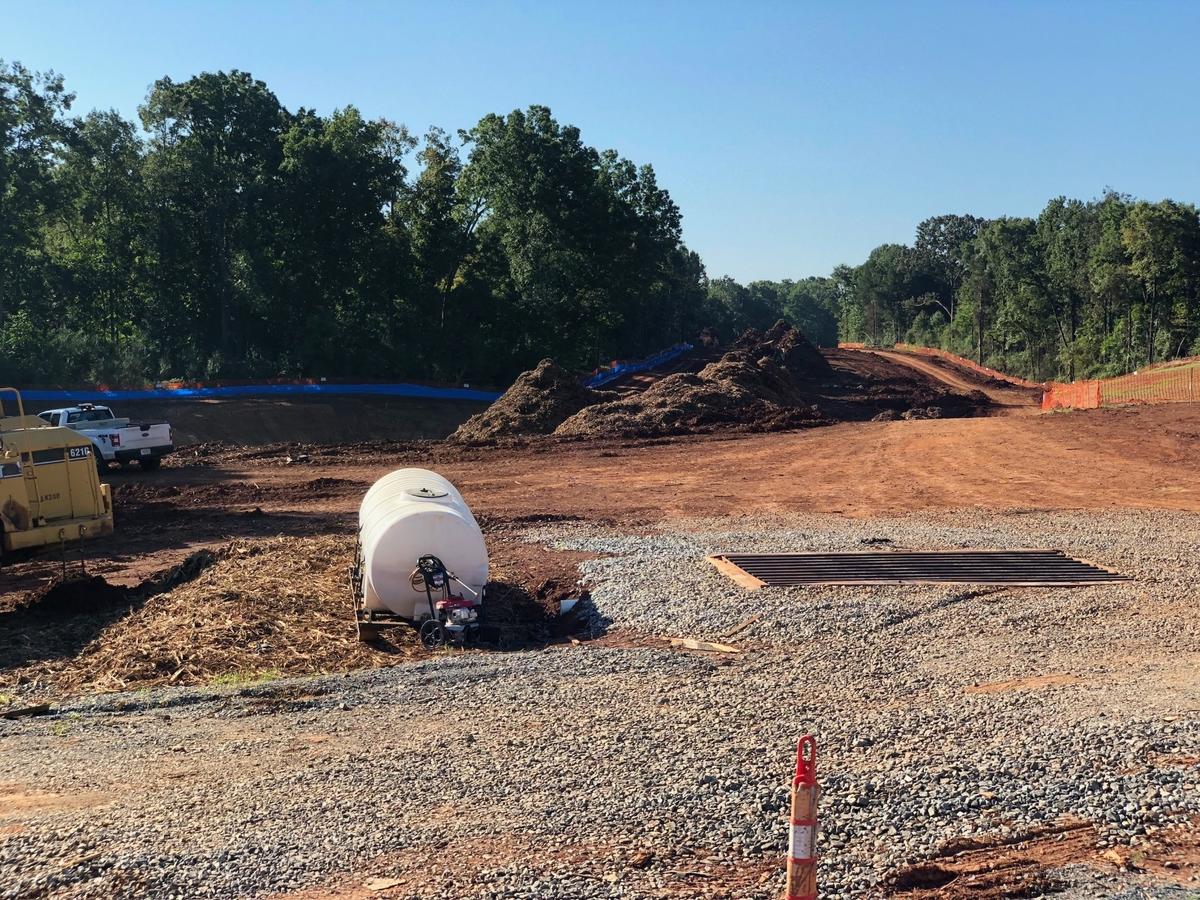
Over the past few weeks, the rip of chainsaws, tractors and the “beep, beep, beep” that accompany large construction projects have become the norm.
For now, it’s mostly trees being wiped out. But soon, not far from Hutchison’s house, steel beams will be erected and buildings and football practice fields will start taking shape.
“The sound of progress and excitement,” Hutchison said.
Clearing the land is one of the first steps in a years-long project to construct the Carolina Panthers’ new practice facility and headquarters in Rock Hill, South Carolina, which will move most of the team away from uptown Charlotte for all but 10 games every fall.
It’s just taking longer than originally planned.
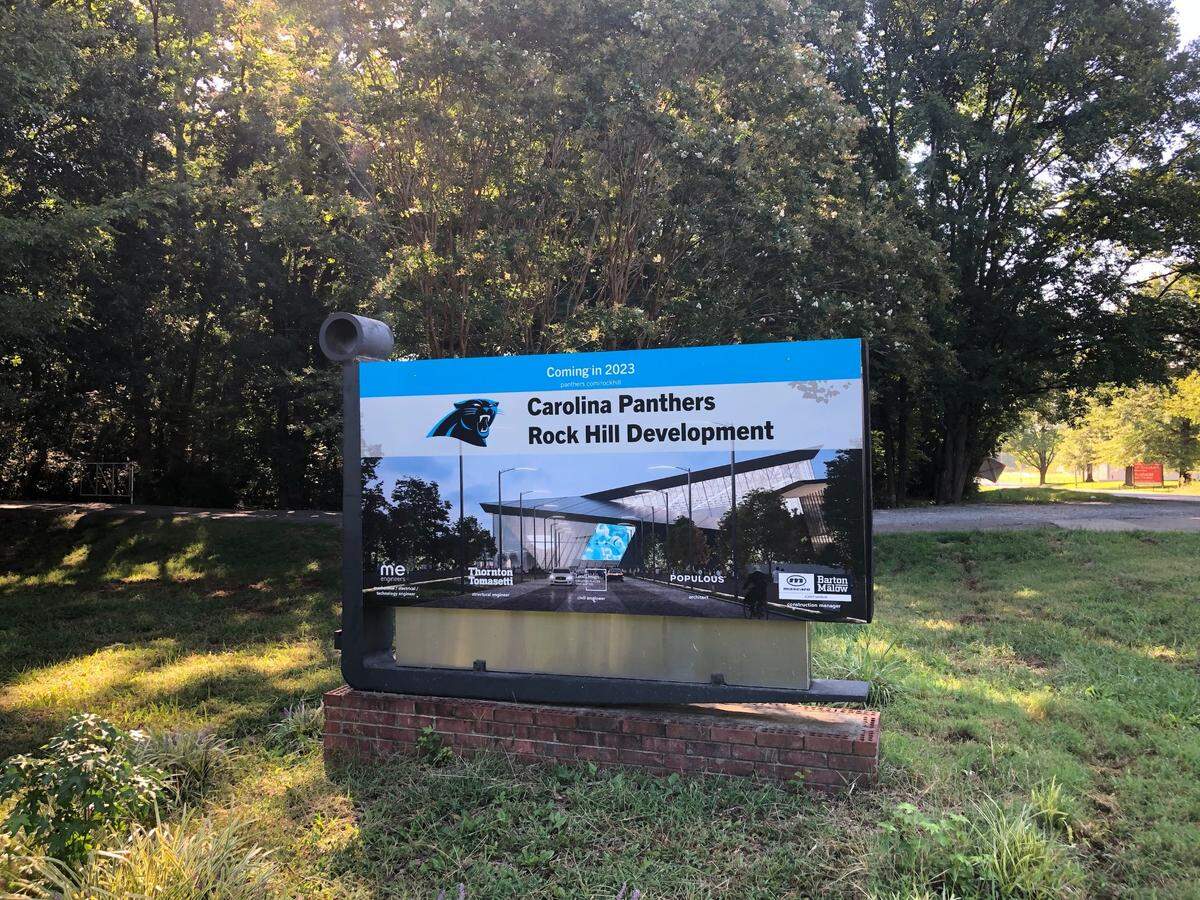
A sign sits nearby the site announcing a “Carolina Panthers Rock Hill Development” is coming in 2023. There’s dirt where trees once stood and where a new road will eventually be placed.
After initial plans to open the first phase of the new facility in August 2022 were scrapped due to the COVID-19 pandemic, the Panthers are targeting May 2023 as their move-in date. But even finishing by then will be a tight fit, and the effects of this delay and any that may follow will ripple beyond the football team.
Delays to the Panthers’ new home
The Rock Hill headquarters is meant to be more than a practice hub. It’s a destination.
Carolina is following the example of the Cowboys’ glamorous “The Star” facility that houses businesses, hotels, restaurants and more development popping up around it. The Vikings’ TCO Performance Center is another example.
Panthers owner David Tepper is hoping to build something that rivals the best in the league. The team’s new home in Rock Hill will include a 640,000-square-foot practice facility and a more than 110,000-square-foot sports-and-entertainment venue with potential to hold a variety of events from soccer games to high school championships and corporate events and concerts.
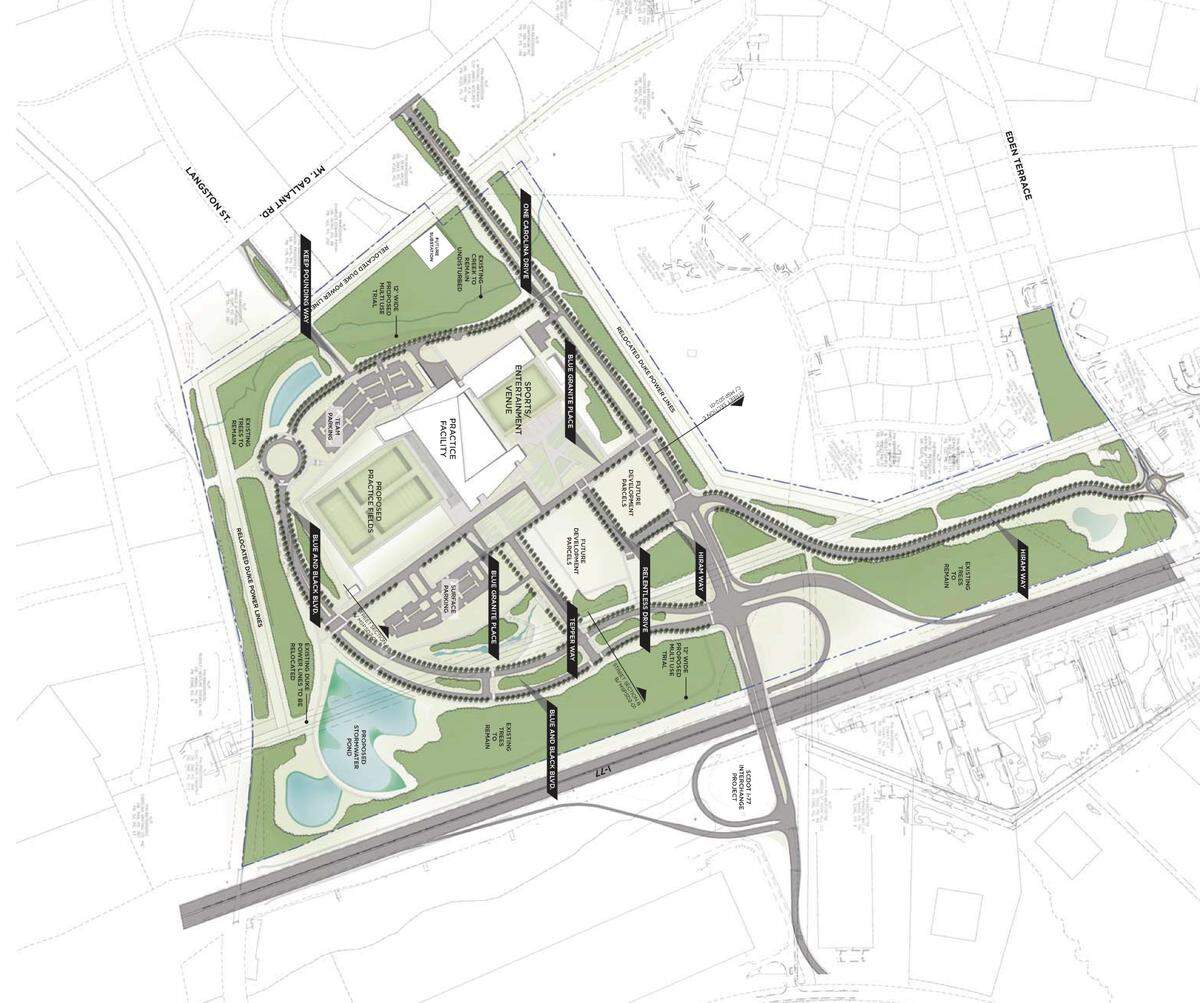
That’s in addition to team offices, an Atrium Health orthopedic sports medicine facility, apartments, hotels, trails, retail and restaurants. The first phase will include building a road network for the headquarters and practice site. In total, more than 13,000 feet of new public streets, 2,600 parking spaces, sidewalks and trail networks for cyclists and pedestrian walkers and runners will be constructed.
While the coronavirus pandemic is a leading cause in the delays, it’s not the only reason, including a hold up in signing the land development agreement that delayed the groundbreaking. There are final details that still need to be worked out.
“I think COVID has an affect on everything. Personally, I would like to believe that had COVID not been in our community, we could have been further along on this,” Rock Hill mayor John Gettys told The Observer. “But these things take a life of their own even without COVID. And they’re very difficult. As I’ve told a lot of people, you can’t get a $3 billion development and not expect that there will be some trying times working to make that happen. To think otherwise, I think is just a bit naive.”
The Panthers purchased more than 240 acres off Interstate 77 for more $16 million in late March to build their new home, and the team had already bought the nearby Waterford Golf Club earlier that month. South Carolina offered about $115 million in incentives for the team to move there from their home at Bank of America Stadium. The Panthers organization is investing over $1 billion to develop and build the facility.
Surrounding the headquarters site are an additional 880 acres made up of largely commercial and industrial properties on one side and some rural residential properties. That land is noted in a tax incentive deal should the property owners choose to sell to the Panthers, giving Tepper more expansion opportunities.
The team has already received $225 million in tax breaks from York County for project infrastructure, on top of the incentives from the state, and the project’s delay has created long-term ramifications for the city of Rock Hill. There’s an economic impact of a potential year or more of lost tax revenue for the city from businesses that may choose to relocate there. Starting later and being on a new timetable also means construction crews and their beep-beep-beeps will be around longer.
“We certainly would rather it be open, in not so much that we want it all opened up quickly, it’s the back-end that is delayed a little bit further out. The developers that will be on site five years from now or six years from now will now be eight or nine years,” Gettys said. “So that impact bothers, not bothers us, but that impact is something we’re not as happy about, because of the delays that have come in.”
From the team perspective, the Panthers will have another year of training camp away from their new home. The hope is to have training camp in Rock Hill in 2023, but that’s not guaranteed.
“If you go down there, there’s definitely work being done there. COVID has delayed everything,” Tepper said of the project Wednesday. “I think we’re probably three seasons out. Hopefully, we’ll have training camp down there.”
The team was supposed to host training camp this year at their usual site at Wofford College in Spartanburg, but the NFL required all teams to practice at their home facilities due to COVID-19.
In the contract with Wofford, the Panthers have agreed to hold training camp at the school in 2021, but that could change. The contract also leaves open the possibility of training camp happening there in 2022 before the team plans to completely relocate to Rock Hill. However, the impacts of COVID-19 long-term remain unknown, including when the league will allow teams to hold training camp away from their facilities again. Now that the Panthers have successfully hosted a training camp at their facility in Charlotte, they know it’s possible — and cheaper.
“As far as Wofford, I really can’t say, it’s really a COVID question,” Tepper said. “It’s also a question of what we’ve done here, and how much we really have done a lot of things inside the stadium. You guys are aware of some of them, every player had a suite up here (to work in). I think there was a recognition of what we could do up here and how it was done up here, but we haven’t made any decision. Certainly COVID plays a lot in that and if we’re allowed to even.”
Past and future
The year 2023 is still a long way off. Slowly over time, what exactly the Panthers’ new space, about a half hour away from the team’s stadium in Charlotte, will look like will come into focus.
A new interchange off I-77 is being built to accommodate the facility. South Carolina pledged $40 million to build the change to the interstate (Exit 81 on I-77), supported by a $34.6 million federal grant awarded to the S.C. Department of Transportation. New roads are being built with names like Tepper Way, Blue and Black Boulevard, Keep Pounding Way and One Carolina Drive.
But one name stands out that doesn’t seem to fit: Hiram Way.
Paved as the north entrance off of Eden Terrace, it was named in honor of Hiram Hutchison Jr., and his son, Hiram “Chip” Hutchison III, who are part of the family that sold the land to the team. The 200-plus acres had been owned by the Hutchison family since 1840 when it was purchased from the Catawba Indian Nation, but the family first leased it in 1795. The Hutchison family is one of the oldest families in Rock Hill with their legacy found all over the city.
When Chip Hutchison first heard that there was a high-profile buyer interested in purchasing his family’s land, he joked that it must be the Panthers after hearing Mick Mixon, the radio voice of the Panthers, speak at an event about how the team was looking to purchase a large plot of land in the area.
Team owner David Tepper and COO Mark Hart came to the Hutchison’s house and talked it over with some of the family on the back porch, that now echoes with the sounds of deforestation. Hiram Hutchison, Chip’s father, had some reservations about the Panthers owning the land. They had interest from buyers over the years who wanted to develop it, but it had never been the right fit.
Tepper swayed them.
“We’ve watched Rock Hill develop and grow right around us,” Hutchison said. “So I truly feel like the reason we never had to develop this property was because of David Tepper, the faith that he was going to come and do this for us. Not just for the family, but we’re talking about for Rock Hill and York County, South Carolina, the Charlotte region. It’s just a huge economic boost.”
The Panthers reached out to Hutchison for ideas for naming one of the street names after the family, and one that was volunteered by Chip’s wife was Hirams Way, honoring Chip and his father, who negotiated details with the Panthers’ lawyers. The team went with Hiram Way.
The family hopes they’re acknowledged by the Panthers with more than a street name.
For now, it is clear that something is being built on that site, but the full picture isn’t yet visible from the land in Rock Hill. That’s years down the road.
“All towns and cities in the southeast have had to evolve from the old textile industry and Rock Hill was one of those. And throughout the past 30 years, all these cities, the size of Rock Hill had to morph and come up with a new identity and Rock Hill did becoming a sports tourism town. That’s our identity,” Hutchison said alluding to the town’s football legacy. “There’s not a real downside. Unless you’re somebody that doesn’t like growth.”
This story was originally published September 4, 2020 at 9:00 AM.