What is NFL restricted free agency? Why Panthers probably won’t be active with tenders
The Carolina Panthers are gearing up for a busy offseason. And among the decisions they’ll need to figure out are those involving their internal pending restricted free agents.
Unlike unrestricted free agents, restricted free agents have a level of team control. Teams can offer tenders to pending restricted free agents to control their respective free agency outlooks. While unrestricted free agents are able to sign anywhere they please — barring the use of a franchise tag — restricted free agents must receive offer sheets to potentially head elsewhere.
How restricted free agency works
Restricted free agents are players with three years of accrued NFL experience. Incumbent teams have the option to offer tendered contracts to their pending restricted free agents to gain control of their rights.
If the Panthers offer a first-, second- or original-round tender to a restricted free agent, that player will need to obtain an offer sheet from an opposing team to leave their current squad. The incumbent team will then have the right to match the offer and retain the player.
If the incumbent team chooses not to match the offer sheet, the acquiring team will obtain the player but will also be forced to give up the value of the tender to the incumbent team.
For instance, if a restricted free agent entered the league as a fifth-round pick, and the Panthers offered an original-round tender, the team signing the player would need to give Carolina a fifth-round pick in return for not matching the offer sheet.
If the Panthers give an original-round tender to a former undrafted free agent, the tender becomes a “right of first refusal” tag, which only offers Carolina the opportunity to match an offer sheet without the benefit of compensation if it declines.
The first-, second- and original-round tenders all come with different one-year contract offers attached to them. The player can avoid restricted free agency and sign his tender at any time after it is extended. Teams can rescind offer sheets at any time as long as they aren’t signed as contracts.
If a pending restricted free agent isn’t offered a tender by the start of free agency at 4 p.m. on March 12, that player will automatically join the unrestricted free-agent pool.
The disadvantage for players who aren’t tendered is that they can’t openly negotiate during the “legal” tampering period (March 10 to March 12) ahead of the new league year.
How much does each restricted tender cost?
The first-round, second-round and original-round tenders all have different values. A first-tender costs exponentially more than a second-round tender. And a second-round tender costs much more than an original-round tender. The price of each tender also rises with the salary cap each year.
According to Over the Cap, the projected values for each tender in 2025 are as follows:
First round: $7.47 million
Second round: $5.35 million
Original round: $3.27 million
Who are the Panthers’ pending restricted free agents?
The Panthers have five pending restricted free agents:
▪ RB Raheem Blackshear: The former undrafted free agent closed out his third season with the Panthers as the team’s primary kick returner. While he had to wait until Week 16 to receive touches on offense, Blackshear finished the campaign with 80 rushing yards on 15 carries.
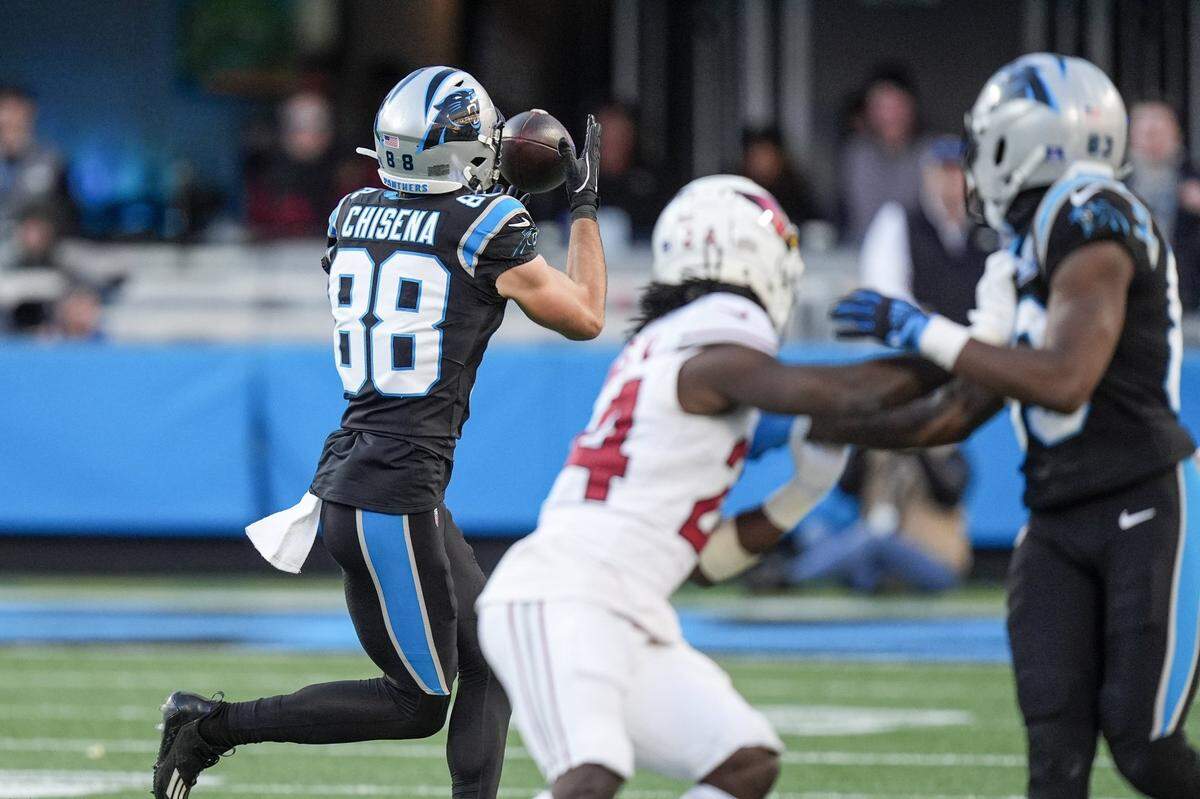
▪ WR Dan Chisena: Known for his speed and special teams prowess, Chisena signed with the Panthers’ practice squad midway through the season. He was eventually elevated to the main roster, playing in six games and collecting three catches for 37 yards.
▪ WR/RB Velus Jones Jr.: An interesting hybrid player, Jones signed with the Panthers toward the end of the 2024 season. He wasn’t used much, even as he was pegged as a deep-depth running back.
▪ C Cade Mays: The 2022 sixth-round pick was cut following his third training camp with the Panthers this past September. He ended up signing with the New York Giants’ practice squad to start the season. Mays was later called back to Charlotte after Austin Corbett suffered a season-ending biceps injury. Mays eventually succeeded multi-purpose backup Brady Christensen as the team’s starting center down the home stretch.
▪ WR Deven Thompkins: The former Buccaneers receiver spent the summer with the Panthers but suffered an injury and was eventually waived. Given his Tampa Bay background with head coach Dave Canales, Thompkins got another shot on the main roster when injuries disrupted the depth at wide receiver in the middle of the campaign. He finished with four catches for 20 yards.
Why Panthers aren’t likely to be heavily involved with restricted free agency
The majority of the Panthers’ restricted free agents were injury fill-ins during the 2024 season. To offer a $3.27 million tender to most of them would be an odd, if not poor, use of resources.
The tender would immediately count against the Panthers’ cap situation (currently projected to be around $24.8 million), which is already middling at best. And while the Panthers could rescind the tender at any point, putting $3.27 million on hold for a minor role player isn’t all that advantageous for a team that needs to upgrade several spots.
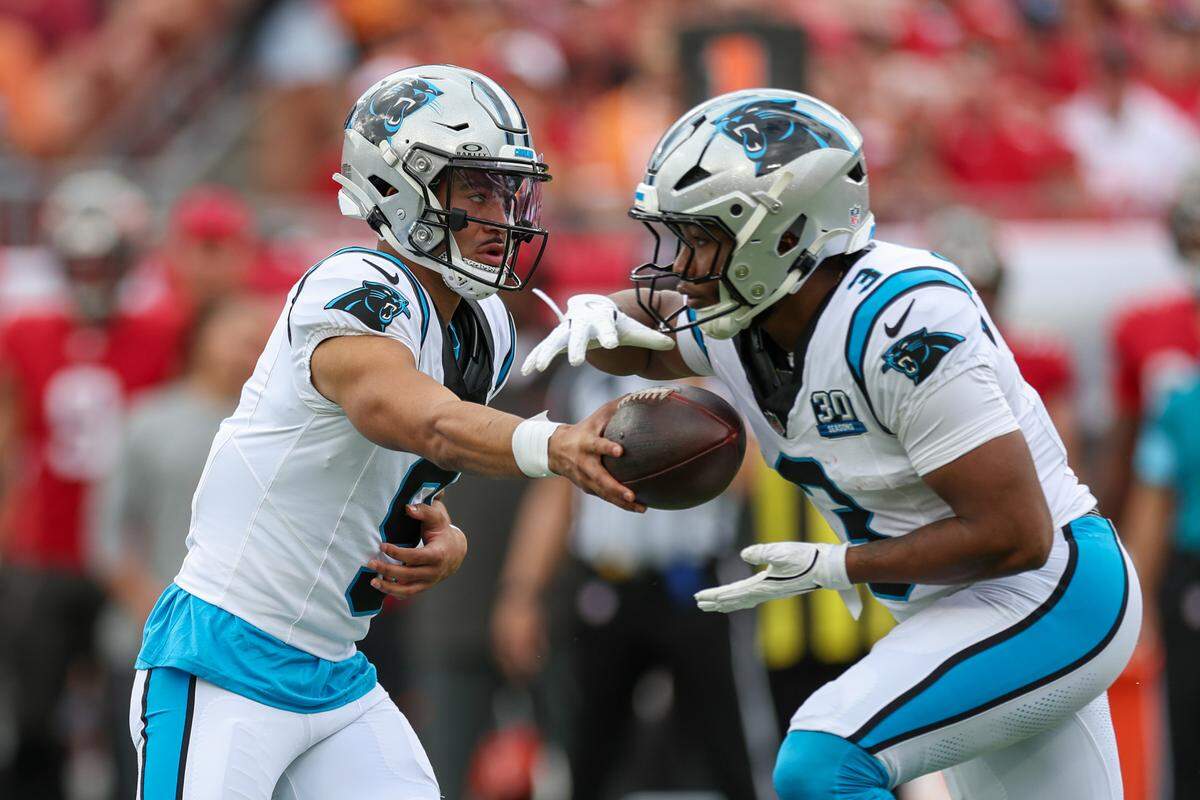
Of the five players set to hit restricted free agency, Mays and Blackshear are the most logical — though, it’d be a surprise for both to receive tenders.
Blackshear got some Pro Bowl buzz as a returner last season, but he didn’t touch the ball offensively until Week 16. Returner is a position that comes with volatility outside of the elite players, so investing that much money with a tender on Blackshear still seems somewhat unlikely.
Mays, on the other hand, was the team’s starting center for the majority of last season. He is a former Carolina draft pick, and he’s shown versatility as a guard as well.
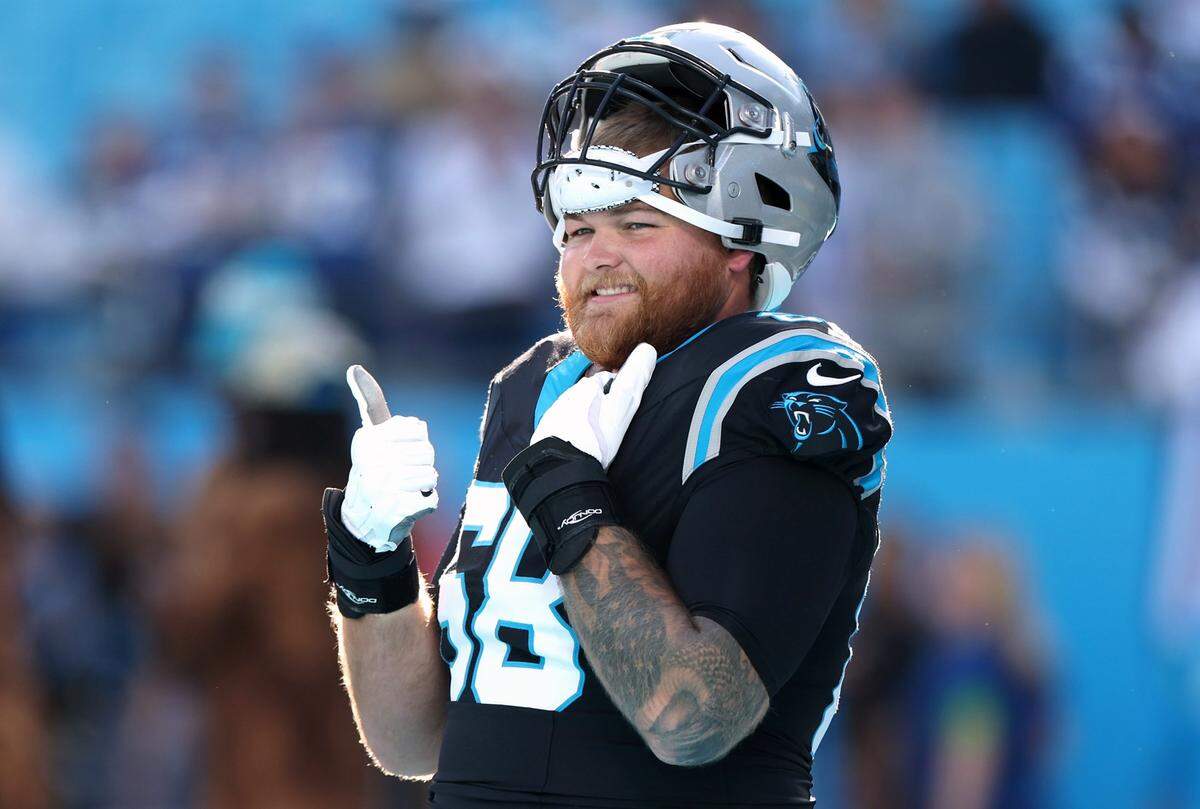
Mays, who turns 26 in April, hasn’t hit his prime yet, and if the Panthers think he’s a fit as a long-term starting center, it’d make sense to tender him to protect him from other teams. The team could then negotiate a better contract for both sides after the tender is issued. If they want to avoid the tender in general, they could also look to negotiate a deal before the start of free agency.
Chisena, Thompkins, and Jones were all late-season additions from the practice squad. They are likely to hit unrestricted free agency before receiving potential offers to return.
This story was originally published February 20, 2025 at 5:00 AM.