Strength in numbers: How Panthers’ analytics team aided efficient offseason
The Carolina Panthers want to escape the doldrums of the NFL abyss. And in order to do that, the organization needs to improve, not just on the field, but throughout the totality of Bank of America Stadium.
The front office doesn’t need to reinvent the wheel, but it has to be willing to grease its operation enough to have it spin in the right direction. That means adapting to new, more efficient ways of working — in the building and on the field.
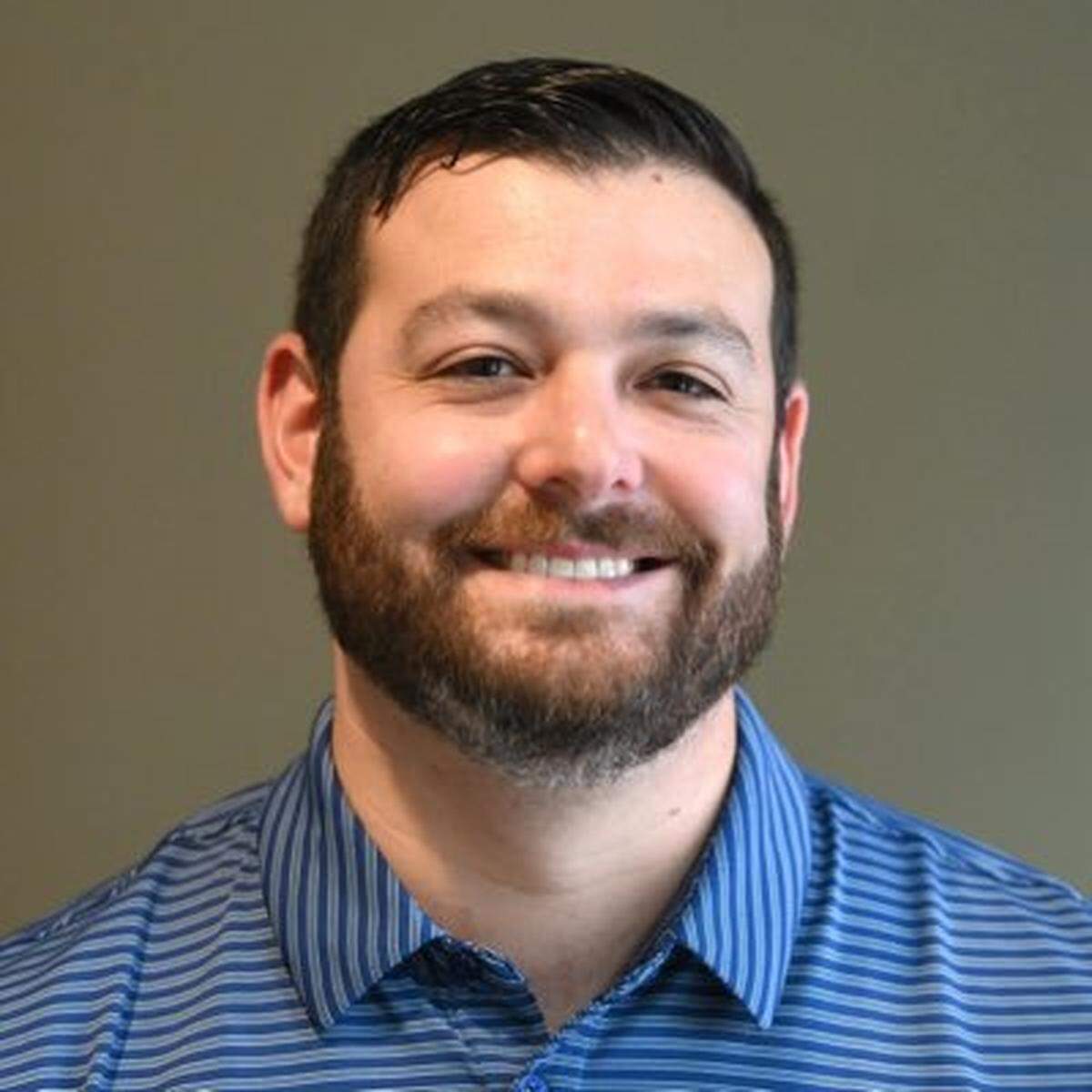
And for what it’s worth, second-year general manager Dan Morgan and executive VP of football operations Brandt Tilis feel like their front office is headed in the right direction after a busy offseason in Carolina. The leadership duo has built a revamped analytics department, led by former Pro Football Focus and SumerSports VP Eric Eager, and that group has helped Morgan and Tilis navigate and streamline their roster-building approach in Year 2.
Eager, the team’s VP of football analytics, and his department aren’t breaking down film like traditional evaluators. The group’s findings are based on pretty much everything else, from height-weight-speed comparisons to draft-round probability to risk-management projections. There are answers within the numbers, and those findings help Morgan and Tilis make crucial decisions in crunch time.
“I’m so prepared because we have already gone through every different scenario, and I can just be confident in the decision-making part of it,” Morgan told The Observer.
.JPG "CLT_MiniCampDay2_2 (1).JPG")
During Day 1 of the NFL Draft, for instance, Morgan was weighing a trade offer from the Los Angeles Rams. The Panthers owned the eighth overall pick in the first round, and the Rams were interested in trading up from No. 26.
A massive trade back would have greatly affected Carolina’s draft haul in April. And while a plethora of picks sounded terrific on the surface, Eager’s job was to give Morgan the data about the potential triumphs and pitfalls of such a decision.
“There’s just a lot of trying to balance the risk, and talk about the size of the decision we’re about to make,” Eager said. “And I think that doing that is sobering in the sense of making sure that we know that the gravity of the kind of time we put into it versus sort of the shiny object in the moment, which is a trade offer.”
After receiving the information from Eager, Morgan was able to make a quick, informed decision and pass on the trade offer in favor of selecting Arizona wideout Tetairoa McMillan.
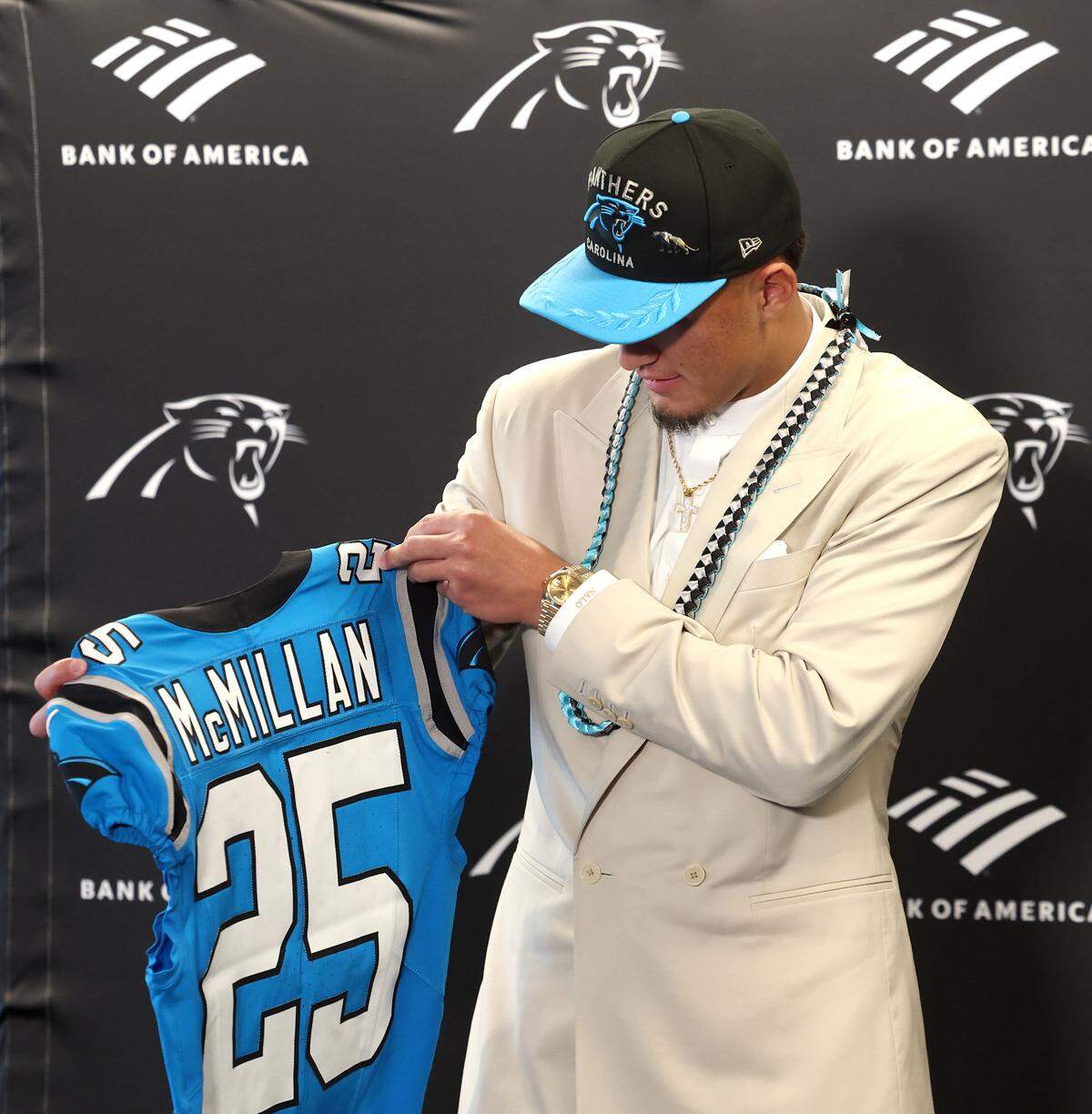
And while the Rams’ offer, the details of which have remained between the two teams, could have made for an interesting twist during draft weekend, the decision to decline the deal ended up helping the Panthers land — based on their draft board — a pair of draft steals on Day 2 in outside linebackers Nic Scourton and Princely Umanmielen.
Morgan was able to trust the analytics because of the work that Eager and his team — overseen by Tilis — had done dating back to Eager’s arrival following last year’s draft. Morgan and Tilis credit the group with aiding the tandem, not only in the draft, but during a whirlwind free agency period as well.
“I would say that the totality of the draft and free agency was as collaborative of an effort as I’ve ever seen, in a front office — from like scouting, analytics, our coaching staff — just everybody on the same page,” Tilis said.
Data oriented, not data driven
Tilis has seen what it takes to go from an NFL bottom feeder to a perennial contender.
He started with the Kansas City Chiefs in 2010 when the AFC West franchise was an NFL afterthought. But he closed out his 14-year tenure with three Super Bowl rings.
Morgan was hired as GM in January 2024, and Tilis was announced as his second in command shortly thereafter. The duo essentially divides the modern-day GM responsibilities. Morgan — the top decision maker — takes on the bulk of the talent evaluation and roster management, and Tilis focuses on contracts and salary-cap maintenance.
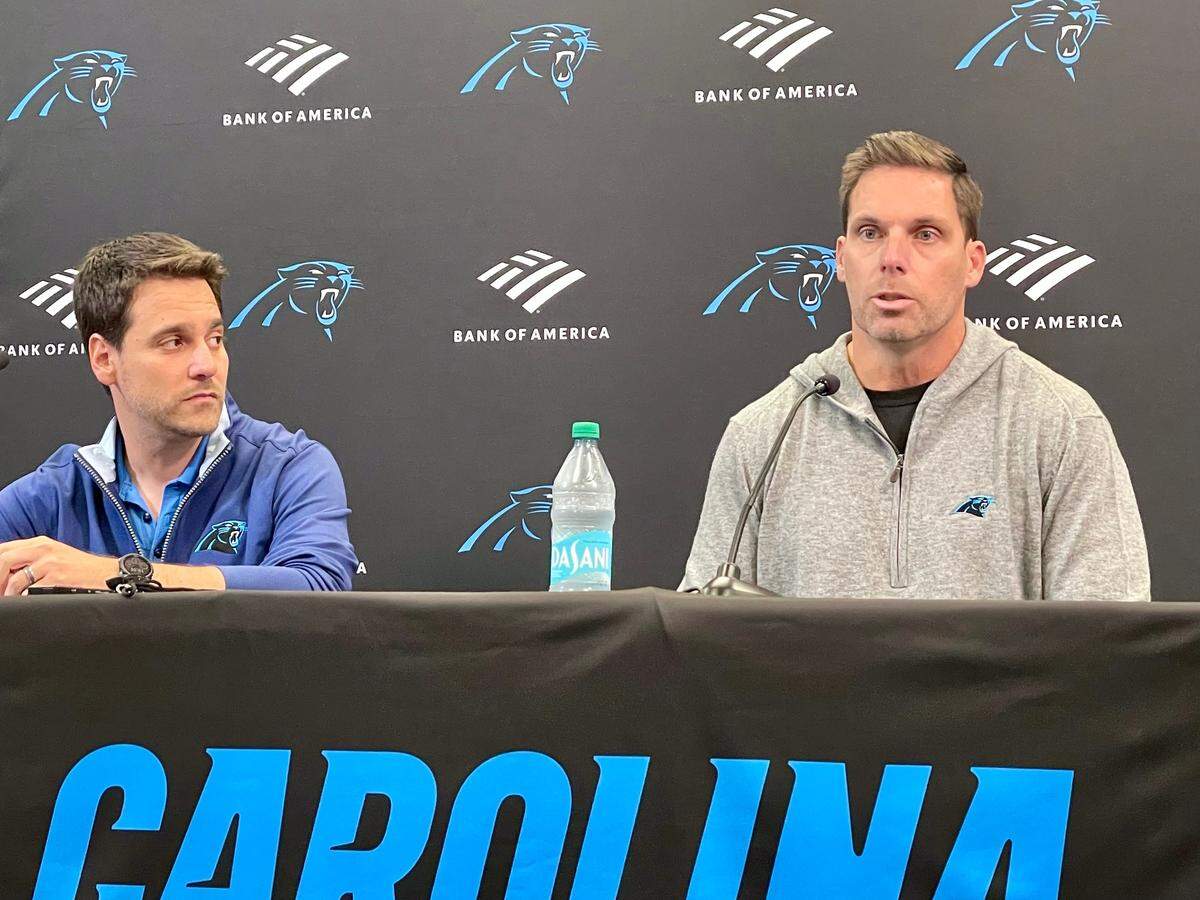
Both execs cross into each other’s lanes at times, but for the most part, they play to each other’s strengths. Morgan says he and Tilis are in constant communication, and they hold each other accountable when it comes to balancing the roster with the salary cap.
“We’ve got to prove that we know what we’re doing, but I do think that this model is the future of the NFL,” Tilis said. “Because the GM job is so massive right now, and … very few people are well-trained to take it over. I think you need a lot more experience. So I think if you see an older person come in for the first time as a GM, who has been assistant GM for a long time, they might have a shot at taking the whole thing over, maybe.
“But now you’re seeing a lot of younger GMs come in, and the cool thing about this new generation of leaders is like a lot of them are humble enough to say, ‘I don’t have all the answers. I need a lot of help here.’ And so you see like bigger staffs, you see different kinds of people coming in.”
When Tilis was hired, he was adamant that he wanted to build a strong analytics department. With the buy-in from Morgan and team owners David and Nicole Tepper, Tilis hired Eager during his first summer on the job.
“That was something I knew was important to the Teppers — was being data oriented but not necessarily like data driven, and so I knew I needed a strong analytics group,” Tilis said. “I’d had a lot of experience with analytics. … So I knew what I wanted and I knew where I wanted to be, and I just knew I needed a lot of help to get there.”
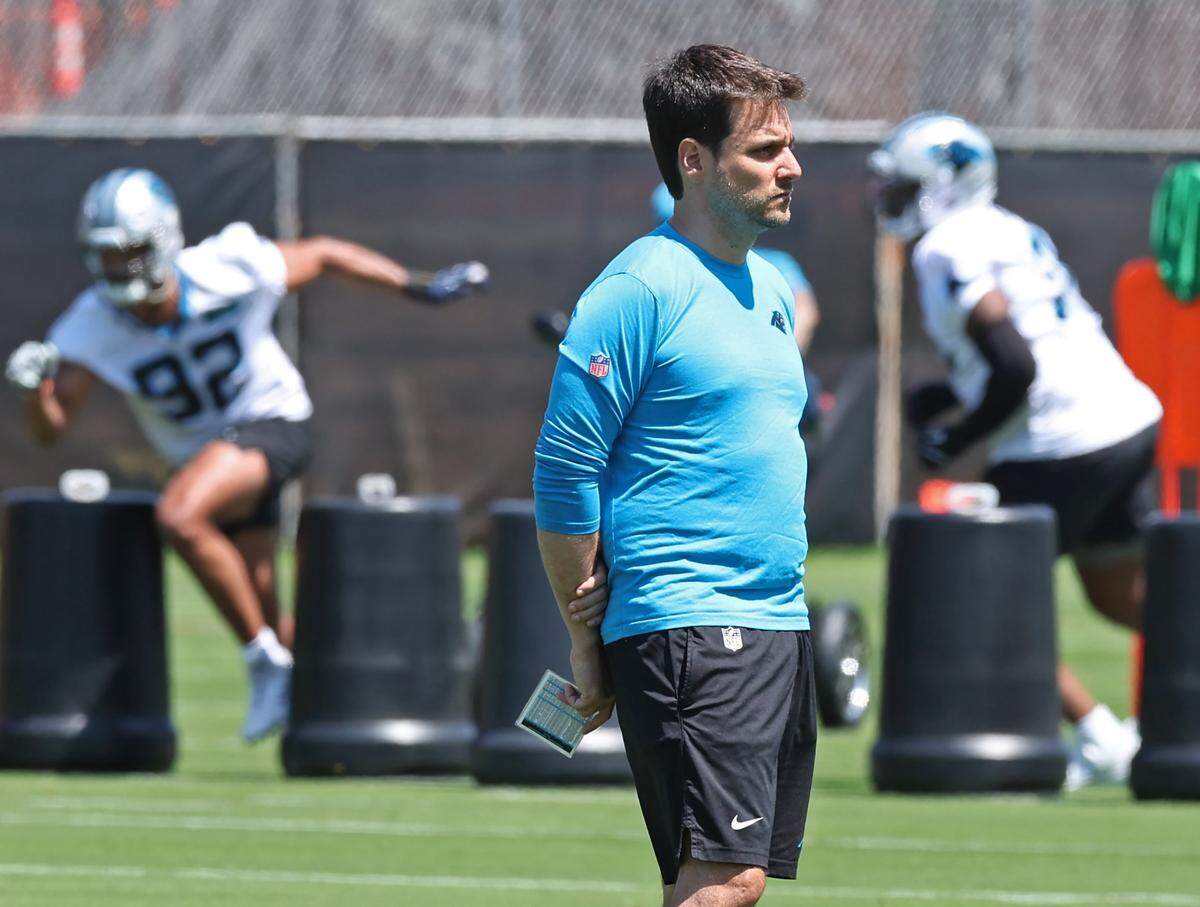
Tilis and Eager had first met as judges in a negotiating competition held by the Tulane law program in January 2019. The pair bonded over their shared passion for the Chiefs.
Tilis kept tabs on Eager as both ascended in their respective fields. They kept in touch, and Tilis identified Eager as a potential asset for an NFL franchise.
“I thought to myself, if I ever get a chance to build a real analytics department, I would bring Eric with me,” Tilis said. “And Eric kept on ascending (elsewhere), so the more he was ascending, the more I was like, ‘I’ve got to get some real juice in a building to bring in somebody like Eric at this point.’ So, I just kind of waited for the opportunity and that was it.”
Eager, who played tight end at Minnesota State-Moorhead, has a Ph.D in applied mathematics from Nebraska and was an associate professor for several years before entering the sports realm. He believes people “can learn anything from anybody,” and that is how he’s approached his position in Carolina.
“I think that the biggest thing culturally, for me, was to make sure that not only that Dan and Brandt know that when they ask a question it’s the most important thing in the world to me at that moment,” Eager said, “but that when anybody across coaching, football ops, anything like that, asks a question, it’s going to get answered, because that’s what we’re here for.”
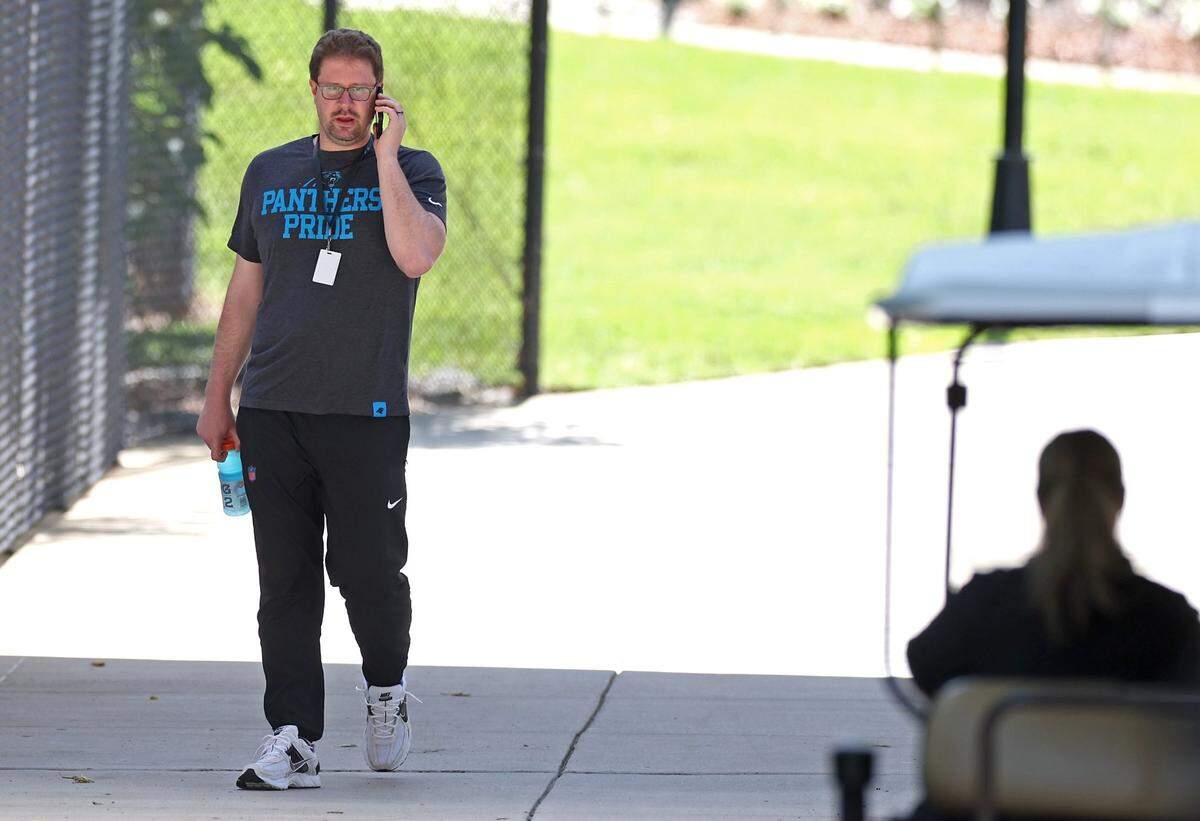
After spending the bulk of last season earning the trust of Morgan, Tilis and various departments, the analytics team — including Benjamin Contrino and Mike Lounsberry — was positioned to assist in the offseason process with the backing of the top bosses.
“I think it’s very clear that when Dan and Brandt value what we do, everybody else does,” Eager said. “But the folks that are in the scouting department, the folks that are in the player personnel department — besides our analytics group — they need to feel like this is helping them, because it is our whole team trying to win and not just a few people.”
At the beginning of the offseason, following a 5-12 campaign, the Panthers’ brass got together to review the team’s roster needs in 2025. And while the pro personnel department zeroed in on potential targets, Eager and his team crunched the numbers with various projection models.
The detailed projections gave the front office data to help create contingency plans for their top targets. Instead of going all in on one or two targets, the Panthers were prepared if their top choices, including defensive tackle Milton Williams, headed elsewhere.
“We had a number that we weren’t gonna go over,” Morgan said. “So we literally got to that point, and we were like, ‘We’re not going any further.’”
Williams signed with the the New England Patriots for $104 million over four years. The Panthers were able to quickly pivot and land nose tackle Bobby Brown III and defensive lineman Tershawn Wharton for a combined $66 million in contract agreements.
Trading places with draft picks
The Panthers spent the morning of Day 2 of the NFL Draft negotiating with teams in front of them in the second round. The analytics department had built a mock draft simulator to get a feel for how the board might shake out before the Panthers selected at their No. 57 spot.
With notable talent still left on the board after the first round, Morgan and Tilis wanted to be aggressive, and both made calls to be prepared for a potential swap should the situation arise. Tilis negotiated an eight-pick swap with the Denver Broncos that saw the Panthers move up to No. 51 to land Scourton, who had a first-round grade on the team’s draft board.
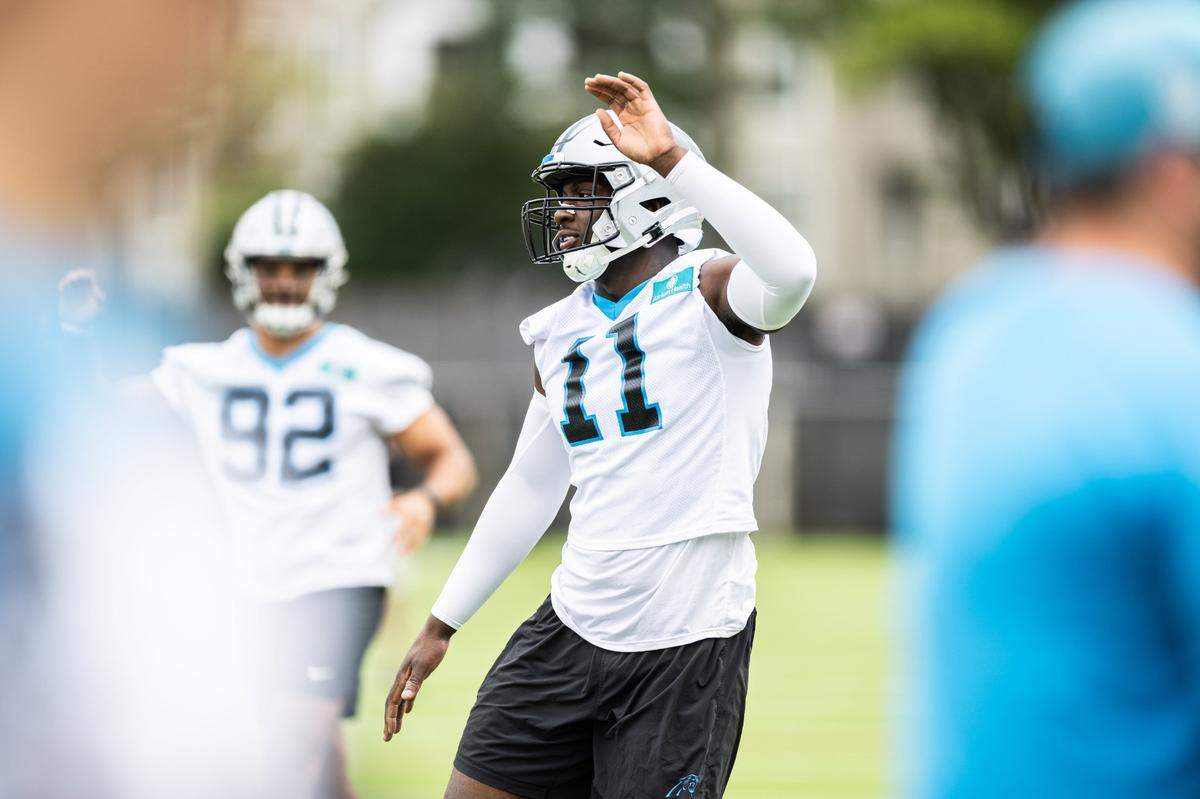
Denver and Carolina swapped second-, third- and fourth-round picks. The Panthers also sent a seventh-round pick to the Broncos in exchange for a sixth-round pick. Tilis was adamant about the late-round swap — based on comparable value — which allowed the Panthers to move up a round on Day 3 and eventually select Colorado wideout Jimmy Horn Jr.
“We don’t have to win every deal, but at the same time, we can’t lose the deal, either,” Tilis said.
Later in the evening, the Panthers realized they’d need to trade up in the third round to land Umanmielen, who had a second-round grade on their board. The team had kept its ammunition with the pick swap in the previous round, so Morgan felt good about tossing a fifth-round pick to New England to move from No. 85 to No. 77.
“Definitely wouldn’t have been as easy to do that if we had already given away a pick,” Morgan noted.
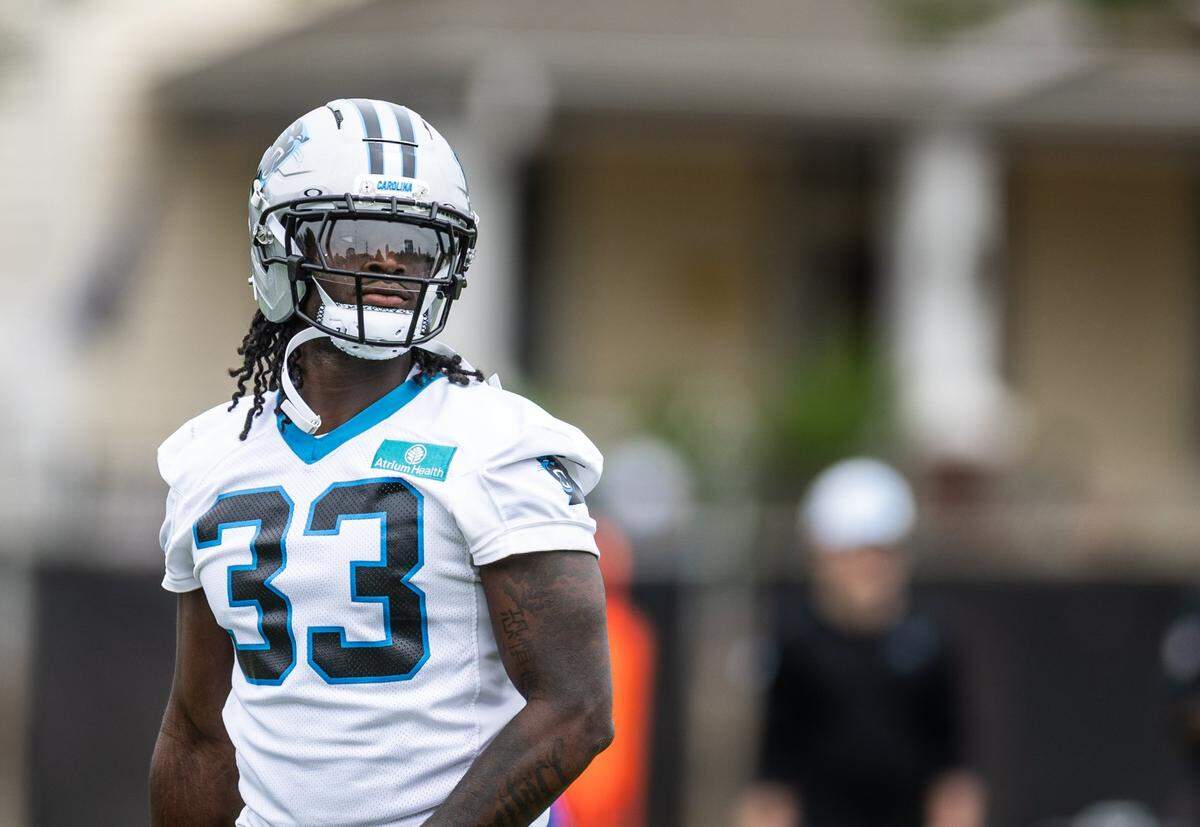
The mock draft simulator eventually aided another important decision in the fourth round. Morgan and head coach Dave Canales were enamored with Georgia running back Trevor Etienne on Day 3, and the simulator predicted a fourth-round run on running backs.
“We knew that we had to take Etienne in the fourth,” Morgan said. “We knew that he wasn’t gonna be there, just based on the probability (projection) that Eric had. And he was right, too, because as soon as we drafted him … the (two) running backs just flew off the board.”
Strength in numbers
The Panthers’ analytics department — at least in this new iteration — is still in its infancy. With a full offseason under its belt, the group can go back to the drawing board and find new ways to aid Morgan and Tilis in their mission to build the best football product possible.
The department has become a valued asset to the leadership duo, and the team’s offseason haul is proof the group has made an impact on the roster-building process.
“I think you’re only as strong as your team,” Morgan said. “Having those guys to bounce ideas off of, and ask their opinions about things — it’s super valuable.”
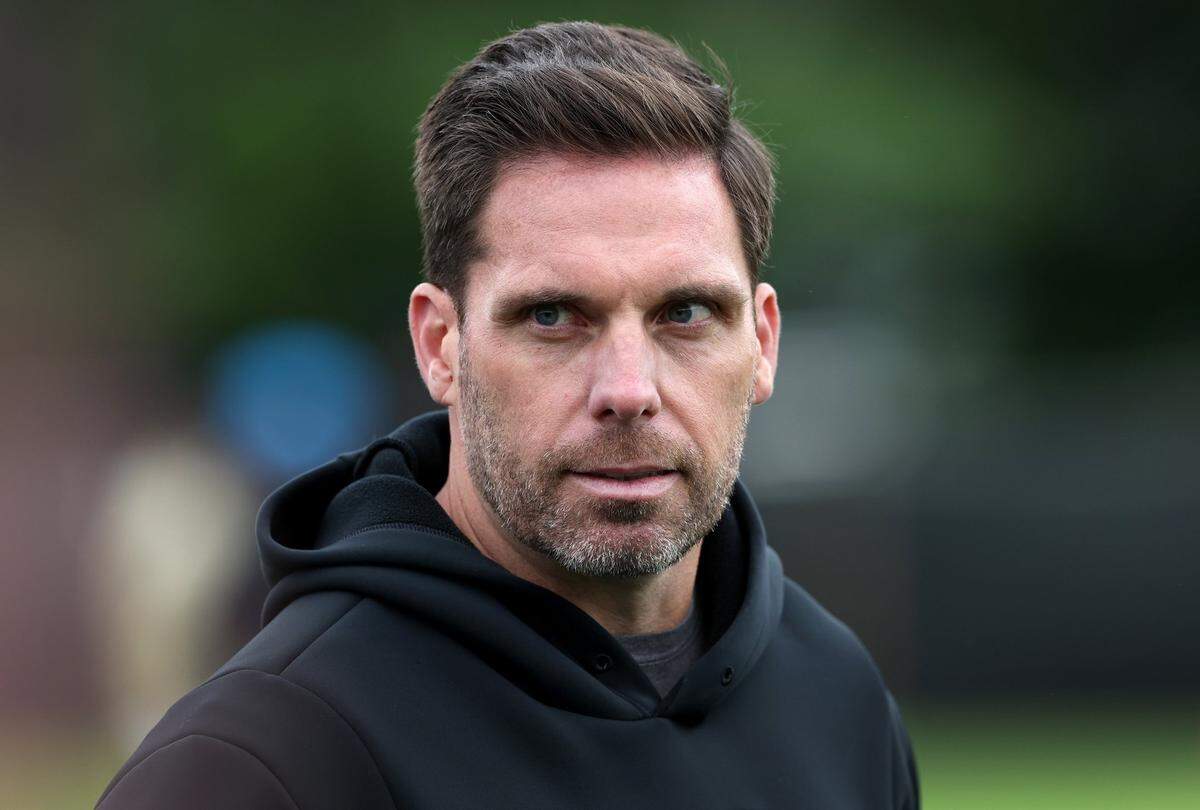
Tilis, who spearheaded the construction of the department, has empowered Eager and his team to continue to collaborate with the other football minds in the building. In order for the franchise to take advantage of the data collected by the group, everyone has to buy into the value that it brings to the front office and the coaching staff.
“Everybody is on the same team, and so everybody is an asset to everyone else, to help them do their jobs better (and) to help us win games,” Tilis said.
And ultimately, the most important numbers for the Panthers in 2025 will be in the win and loss columns.
This story was originally published July 22, 2025 at 5:00 AM.