Grading Carolina Panthers’ 2026 NFL Draft class: Freeling, Hunter headline group
The Carolina Panthers got better during draft weekend.
The Dan Morgan-led front office added seven new prospects to the depth chart over the span of three days, and at least five of those new players could become long-term starters for the reigning NFC South champions.
The team’s first three picks — offensive tackle Monroe Freeling, defensive tackle Lee Hunter and wideout Chris Brazzell — should all compete for first-team reps this summer in training camp. And the first three picks of Day 3 — cornerback Will Lee, center Sam Hecht and safety Zakee Wheatley — will also provide youthful depth at worst during their rookie campaigns. Seventh-round pick, linebacker Jackson Kuwatch, will also look to make an immediate mark on special teams.
Let’s grade the 2026 draft class:
First round (19th overall): Monroe Freeling, OT, Georgia
The Panthers have the most expensive offensive line room in the league. They’re paying 2022 first-round pick Ickey Ekwonu — who might not play this season after undergoing patellar surgery — more than the team’s entire tight end room this season. They’ve also got heavy dollars invested in right tackle Taylor Moton and guards Rob Hunt and Damien Lewis.
So, it’s logical for Carolina to want to get cheaper and younger in the trenches, especially as a massive contract extension decision looms for quarterback Bryce Young. If Young ultimately signs for big bucks in the near future, the Panthers will need to cut costs, and having a surefire starting tackle under a rookie contract will help the team keep other expensive cogs in the machine.
Freeling is a natural fit for the Panthers’ zone blocking scheme. While he started less than 20 games at Georgia, the 21-year-old lineman had a plethora of highlight blocks from his college tenure. Freeling is a rare athlete at the tackle position, and his ability to get to the second level of the defense and finish blocks on screens and run plays should provide a major boost for offensive coordinator Brad Idzik’s scheme designs. Freeling, though, is known more for his pass protection than his run blocking, and his long limbs and surge off the line should help keep Young safe in the coming years.
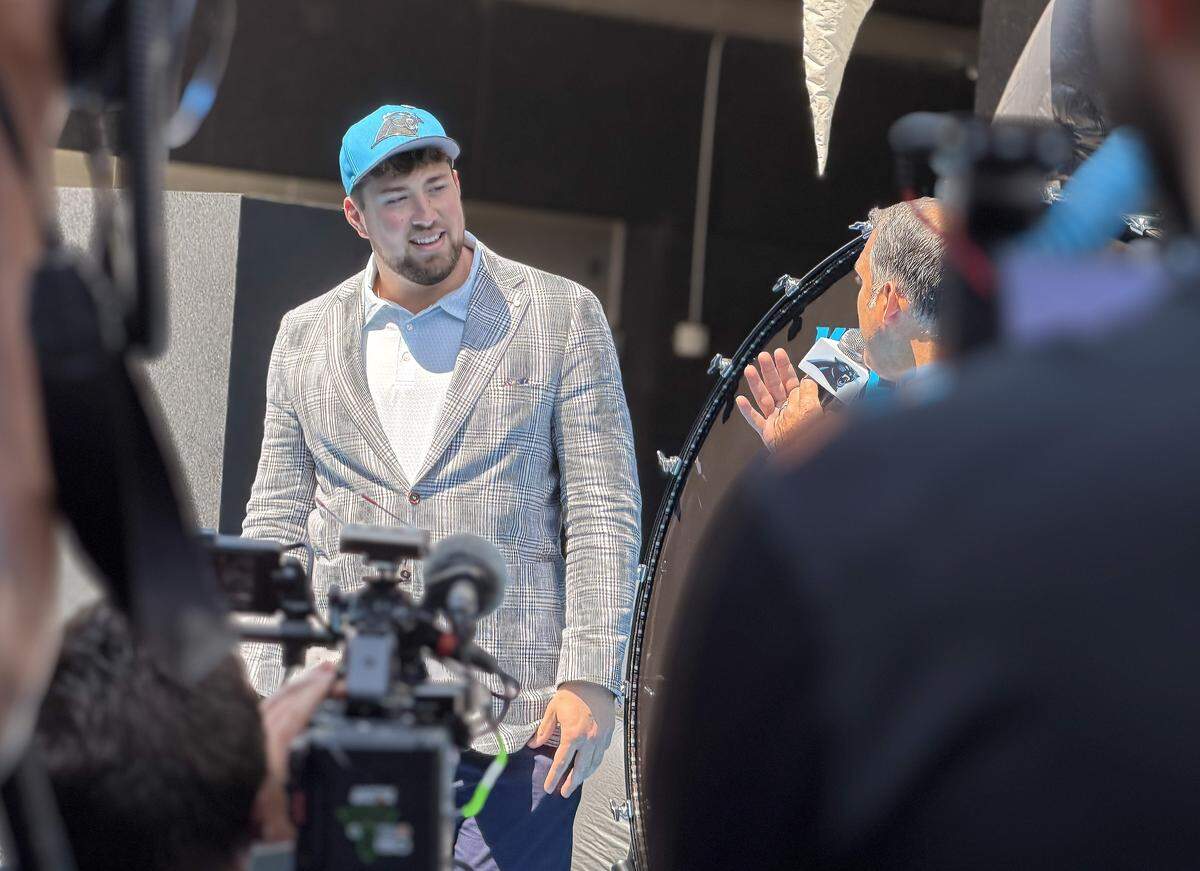
The Panthers might not get Ekwonu back this season. And even if they do, he isn’t likely to play up to his norm before the end of the campaign. While Carolina signed former Green Bay Packers left tackle Rasheed Walker in free agency, the three-year starter is set to make swing tackle money in 2026. The position was still an area of short-term and long-term need heading into the draft, especially with Moton being on the wrong side of 30.
Moton is signed through 2027, but given his age (31) and recent injury hiccups, the Panthers could decide to move on from him before his deal is up. The Panthers can save $14.5 million if they move on from Moton after the upcoming campaign. That savings could make signing Young to a long-term extension a bit more palatable. And moving on from Moton could open a door for Ekwonu to return on a one-year “prove it” deal as well.
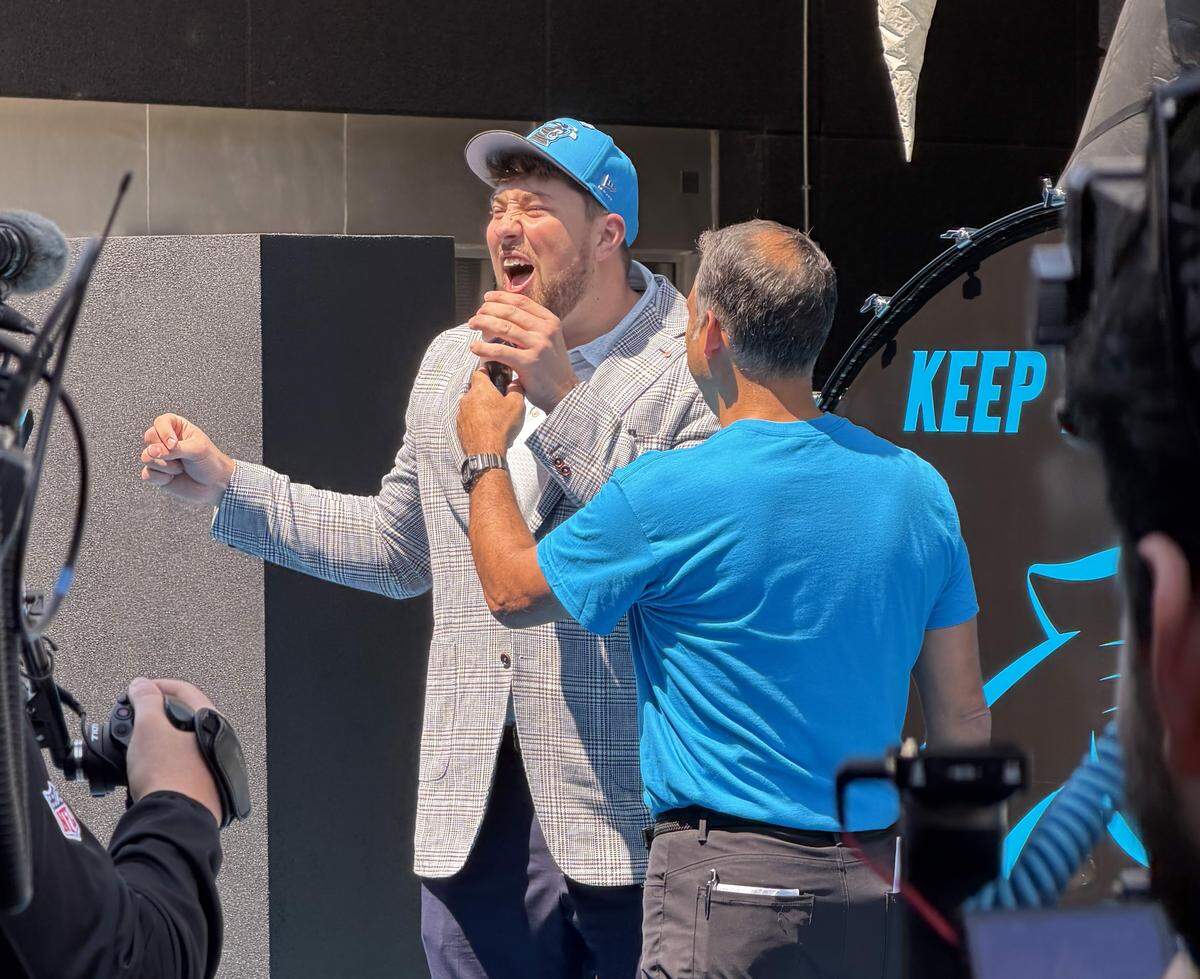
For now, though, Freeling should enter a competition with Walker for the starting left tackle job. Given the investment made in Freeling, and the relatively affordable deal that Walker got, the rookie might have the leg up in competition. With Walker making backup money, Freeling starting isn’t a poor outlook.
Freeling was projected across the first-round board by analysts heading into the draft. However, when the Detroit Lions passed on him for Clemson offensive tackle Blake Miller at No. 17, and the Minnesota Vikings took Florida defensive tackle Caleb Banks at No. 18, the Panthers pounced on him at No. 19. Carolina went with Freeling over Oregon safety Dillon Thieneman, Texas A&M wideout K.C. Concepcion and several other notable prospects.
Freeling plays a premium position and has uncanny athleticism and upside, which made his value — if he lives up to his pedigree — tremendous for Carolina. Now, they need to develop him into a long-term starting lineman.
Grade: A-
Second round (49th overall via MIN): Lee Hunter, DT, Texas Tech
The Panthers traded up two spots in the second round by swapping a fifth-round pick for a sixth-round pick with the Minnesota Vikings. Carolina used the move up the board to select Hunter.
The well-traveled defender, who played at three different schools, is known primarily as a run-stopper. The 6-foot-3, 318-pound lineman can take on double teams and stop ball-carriers in their tracks. While he has shown flashes of pass-rushing prowess, the Panthers ultimately selected Hunter because of his tendency to dominate the trenches with violent force.
Morgan said the Panthers traded up to select Hunter because their board was thinning out with top-graded prospects. So, they went up and grabbed their guy. Hunter, essentially, fills the void left by A’Shawn Robinson, who was released for a $10.5 million cap savings in March. He will rotate with Derrick Brown, Bobby Brown and Turk Wharton as one of the primary four linemen on the front.
Ultimately, Hunter’s impact needs to be felt on early downs. If he can develop further as a pass rusher, this pick — and the marginal trade up for his services — will age splendidly. While there was plenty of nationally lauded talent on the board when Hunter was selected, the massive man should be put in a position to succeed as a rookie in the trenches.
Grade: B
Third round (83rd overall): Chris Brazzell, WR, Tennessee
The Panthers passed on wideouts in the first two rounds, but they got a genuine playmaker in the third. Brazzell is the type of deep threat the Panthers have lacked since D.J. Moore was traded to Chicago in 2022.
With Brazzell in the mix, the Panthers can get creative with their route concepts. They can also set up underneath routes for more consistent success. During his college career, Brazzell averaged more than 15 yards per catch. He has breakaway speed, and he can go up and get the ball as well.
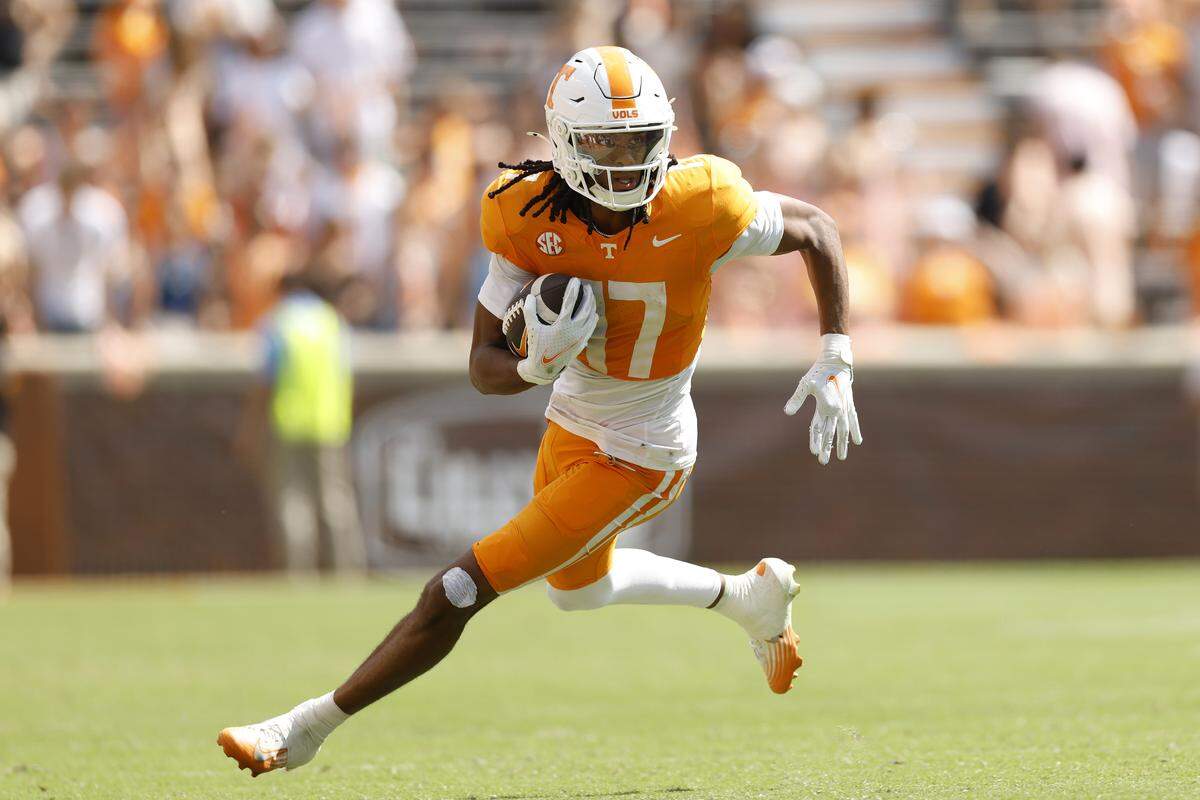
The second-generation NFL playmaker can push the likes of Jalen Coker, Xavier Legette and John Metchie in camp. He can also complement Coker and Tetairoa McMillan in three-receiver sets under Idzik.
Brazzell’s development could eat into the playing time for Legette, a 2024 first-round pick, but that’s not something the Panthers should be concerned about. The former Tennessee Vol is here to make an impact, and if that means that he unseats Legette in the starting lineup, then so be it.
Grade: B+
Fourth round (129th overall): Will Lee, CB, Texas A&M
The Panthers were slated to pick 119th in the fourth round. Instead, they made a pair of trades with the Jacksonville Jaguars and Chicago Bears to move up from the middle of the sixth round to the top of the fifth round with one of their selections. They did this by moving back five spots in the fourth round twice.
After settling in at No. 129, the team selected Lee. The former JUCO standout split the final three seasons of his college career at Kansas State and Texas A&M.
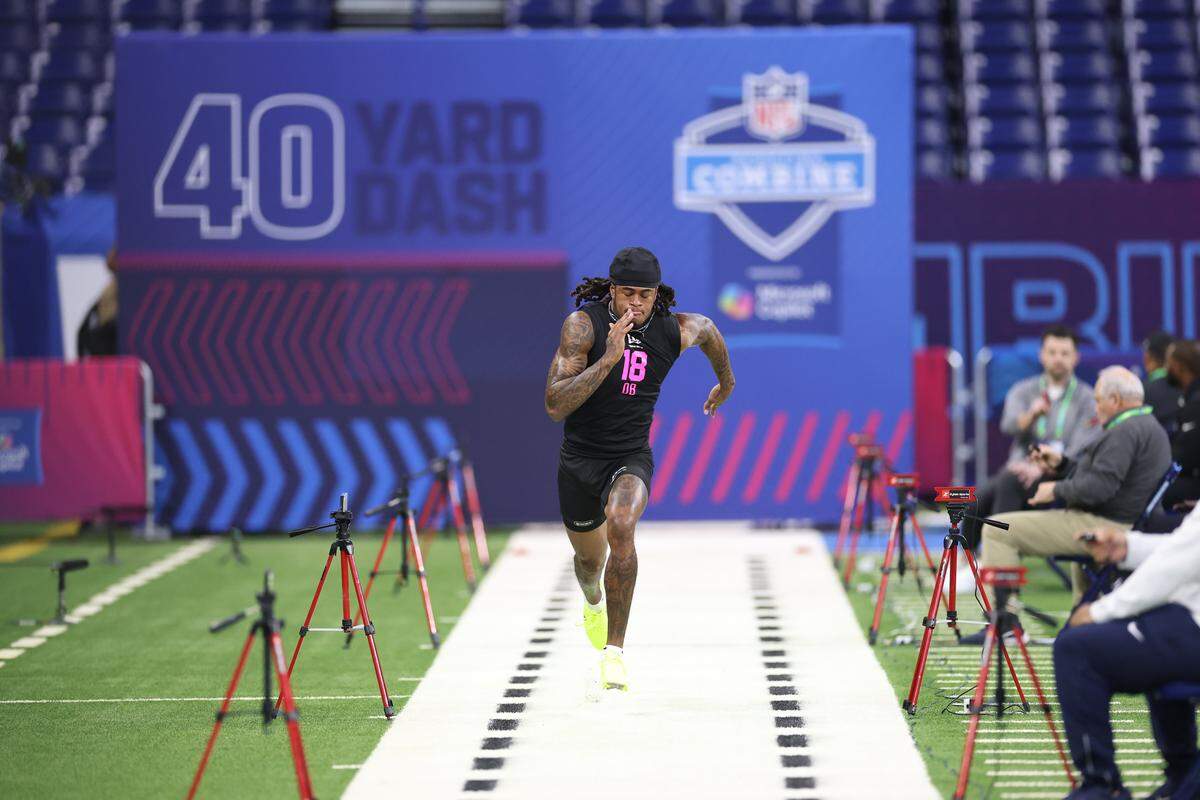
Lee, 23, fits the size (6-1, 189 lbs.) and length (nearly 33-inch arms) preferences of the defensive coaching staff. He’s played in multiple schemes, and he is capable of playing man or zone coverage. And during his two years at Texas A&M, where he was a teammate of Nic Scourton in 2024, Lee produced 18 pass breakups and two interceptions.
With Corey Thornton coming off a season-ending injury and Mike Jackson set to become a free agent in 2027, Lee’s addition is notable. While Carolina re-signed Akayleb Evans and Robert Rochell in March, Lee will probably be positioned as the favorite for the top backup outside cornerback job in camp. However, he will need to fend off Thornton — who is now healthy — in training camp to stay immediately behind Jackson and Jaycee Horn.
Grade: B
Fifth round (144th overall): Sam Hecht, C, Kansas State
The Panthers’ two fourth-round trades helped them land a potential starting center for the long haul. With the move up the board in the fifth round, Carolina selected Hecht, who was considered a potential third-round selection by several national draft analysts.
The 6-foot-4, 303-pound lineman is a technique-driven blocker with scheme versatility. While he doesn’t have prototypical size at the position, he is athletic. He ran a 5.1-second 40-yard dash with 1.73-second 10-yard split in Indianapolis.
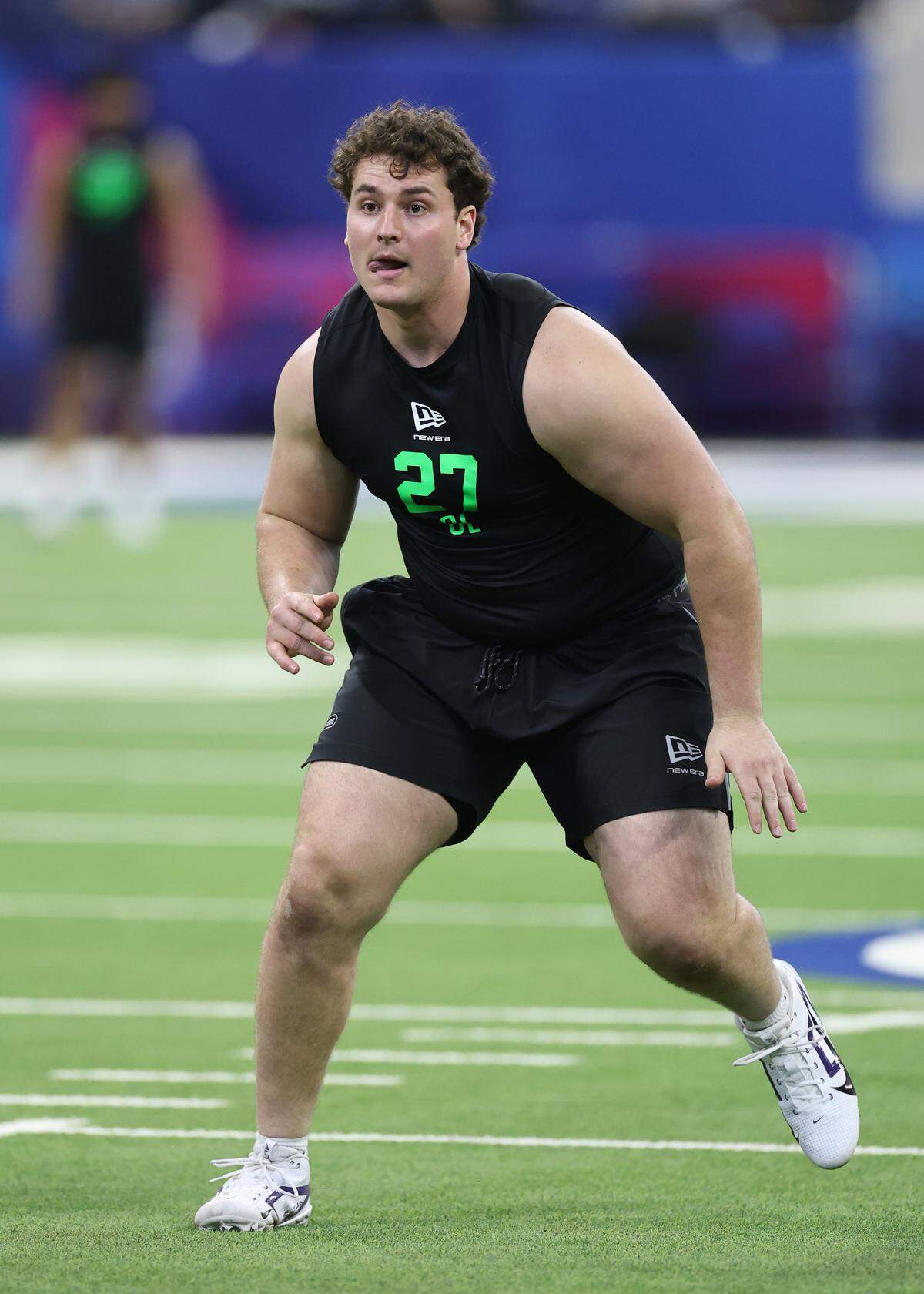
Hecht also has plenty of experience, as he started 25 games over the past two seasons at K-State.
The rookie can come in right away and compete with free-agent addition, Luke Fortner, and 2025 holdover, Nick Samac, for the starting center job in training camp.
Grade: A
Fifth round (151st overall): Zakee Wheatley, S, Penn State
Like Hecht, Wheatley was consistently projected as being a potential Day 2 pick by analysts before the draft. Instead, the Panthers pounced on selecting him in the fifth round following a trade-up deal. The Panthers swapped a sixth-round pick (200th overall) for a seventh-round pick (227th overall) with the Miami Dolphins to climb up seven spots in the fifth round.
Wheatley has terrific size for the safety position, as he is listed at 6-foot-3 and 203 pounds. The former Nittany Lion was a two-year starter at Penn State and produced 223 total tackles (five for loss), six interceptions and two forced fumbles across five college seasons.
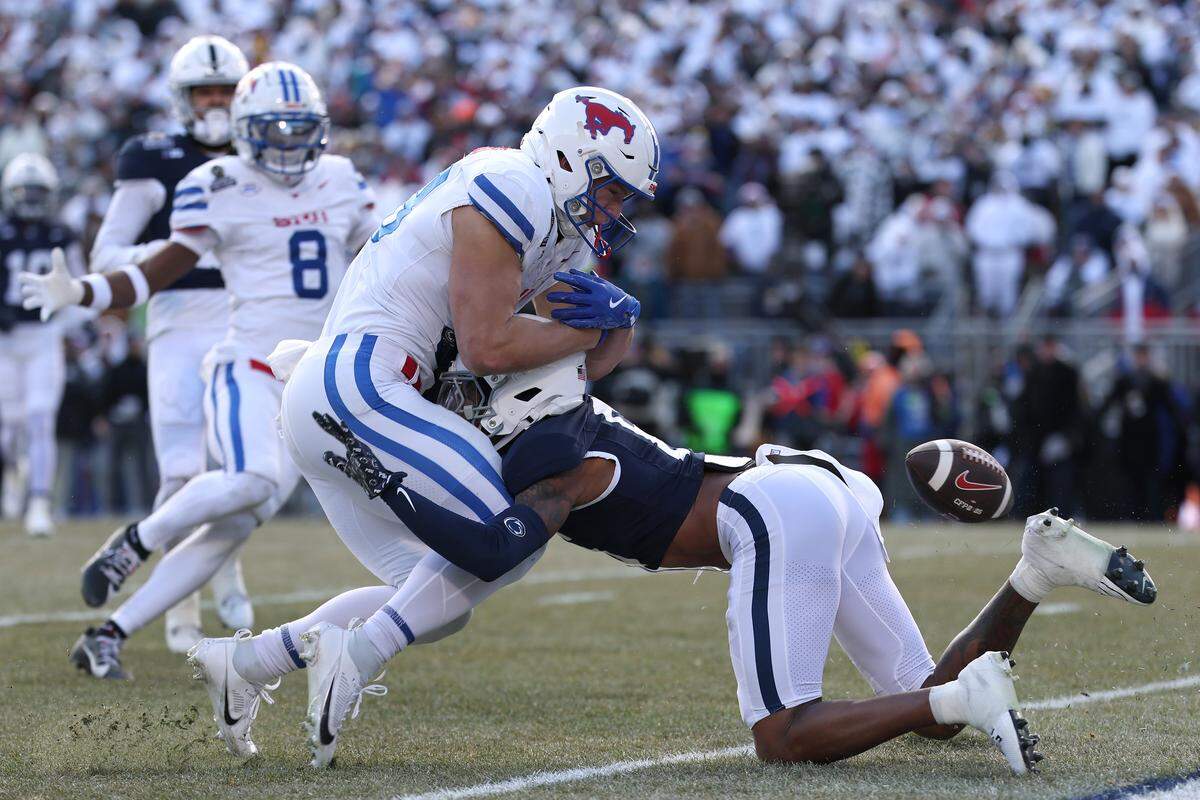
Wheatley fits into the Tre’von Moehrig mold of a bigger safety with versatility. He can play in the box or the post, and he should be able to play dime linebacker as well. The Panthers are likely to have him compete with 2025 fourth-round pick Lathan Ransom on the back end, as Moehrig and fellow Penn State alum Nick Scott lead the group.
As a fifth-round pick, Wheatley shouldn’t be rushed into the starting lineup. But if he can crack the big nickel rotation, he should have some sort of early impact on defense. He will certainly be used on special teams out of the gate.
Grade: B+
Seventh round (227th overall): Jackson Kuwatch, ILB, Miami (Ohio)
The Panthers took a flier on a one-year wonder in the seventh round. Kuwatch, who transferred from Ohio State to Miami (Ohio) in 2023, had a breakout campaign in 2025.
The linebacker had 14 total tackles in his first three college seasons. Last year, he collected 109 tackles (10 for loss) and five sacks.
Kuwatch has impressive size (6-4, 232 pounds), so there’s something to work with there. He impressed at the Shrine Bowl in January, and he can be an immediate contributor on special teams.
He is likely to battle Claudin Cherelus and Bam Martin-Scott for defensive depth reps this summer. This is a low-risk, solid reward selection.
Grade: C+
Overall grade
It’s hard to fault the Panthers on any of their seven selections from draft weekend. While one could argue they should have made different moves in different spots, the logic of each individual pick makes sense for the team’s short-term and long-term needs.
Freeling, Hunter, Brazzell, Lee and Hecht all have pretty clear starter upside. Wheatley is a really intriguing player, and he fits the dynamic the team wants in a defensive back, so he could end up a first-teamer down the road as well. Kuwatch was worth a flier in the seventh round, and that’s all that selection really is at this point.
Carolina is hoping this group has a similar return on investment as last year’s class. If all works out, that immediate impact could push the Panthers even further into playoff contention in 2026.
Overall: B+