
A tale of two teams: How the Hurricanes built Cup contenders in 2006 and 2026
If you’ve just hopped on the Carolina Hurricanes bandwagon, here is a good primer on the teams’ history in the Stanley Cup Final.
The Canes are back in the Final for the third time, having lost in 2002, and won in 2006, and if you want to understand how they got here, it helps to look at how they won their first — and to date only — title.
Twenty years ago, a half-finished roster led by a 35-year-old Rod Brind’Amour shocked the hockey world. Now, a former nanotechnology researcher with a calculator has built a team doing it again. One franchise. Two very different blueprints.
Here’s the story.
2006: A Cup team built in a hurry
When the NHL lockout wiped out the entire 2004-05 season, the Hurricanes weren’t supposed to do much. Only the rebuilding Washington Capitals were given longer odds to win the Cup.
Brind’Amour — not yet the captain, just a veteran coming off a lost year that sent him to Switzerland to play any hockey at all — looked around and saw something else. General manager Jim Rutherford had been quietly stacking the deck.
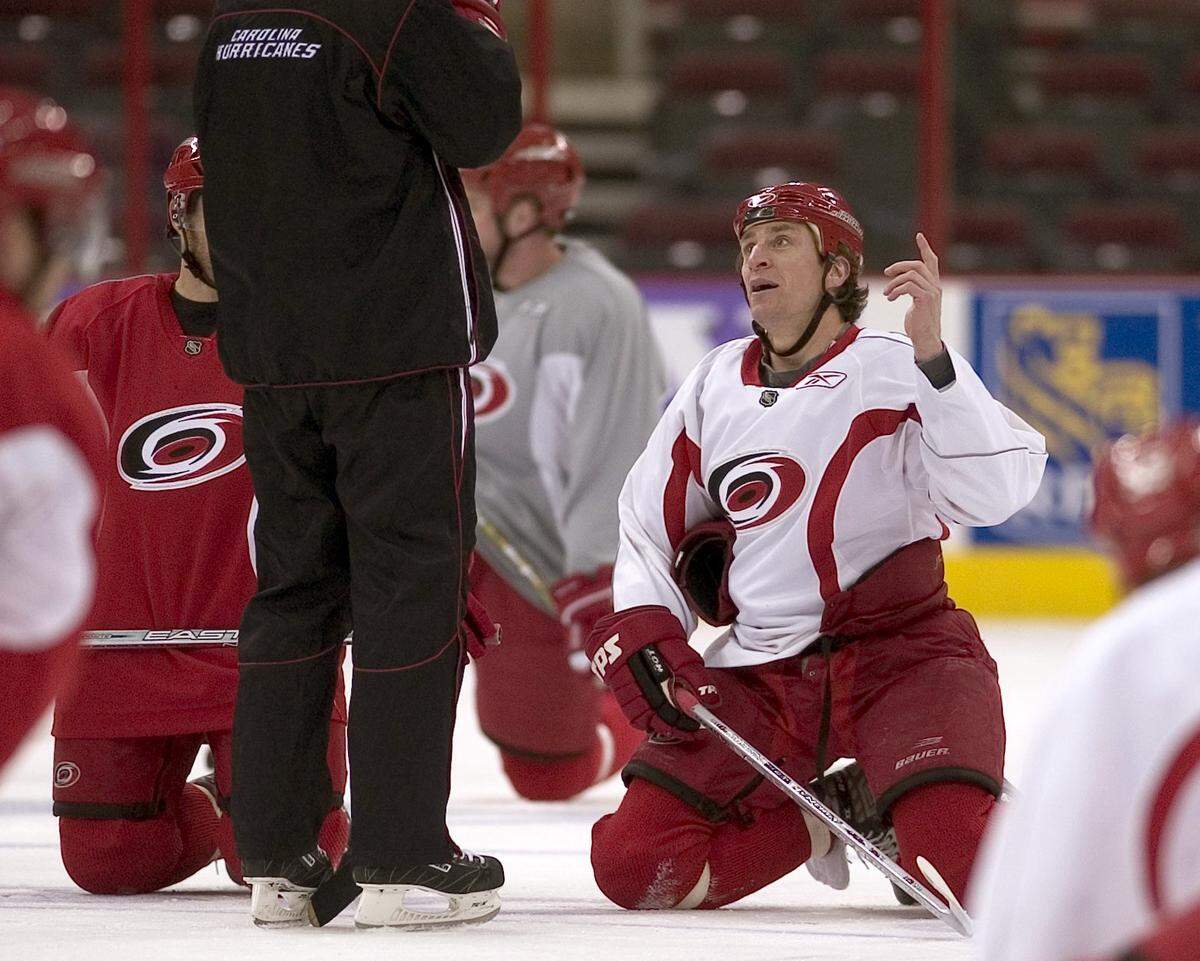
“I remember us getting Stiller because I first saw it on a ticker,” Brind’Amour said of forward Cory Stillman, according to the News & Observer. “I was like, ‘We just picked up Cory Stillman, and it was like for nothing?’ Then Ray Whitney, for nothing. And the big one for me was Gerber. We got him to add to that team … All these pieces and we weren’t taking anything off the team.”
“I remember thinking, ‘This is adding some serious firepower.’”
The pieces had come together quietly over two offseasons. Before the lockout, Rutherford traded for goalie Martin Gerber and pulled Justin Williams from Philadelphia. At the 2004 draft, the Canes moved up to grab winger Andrew Ladd at No. 4 — a steal in a draft class topped by Alex Ovechkin and Evgeni Malkin.
Then came the lockout. And then came the rule changes that quietly handed coach Peter Laviolette the league.
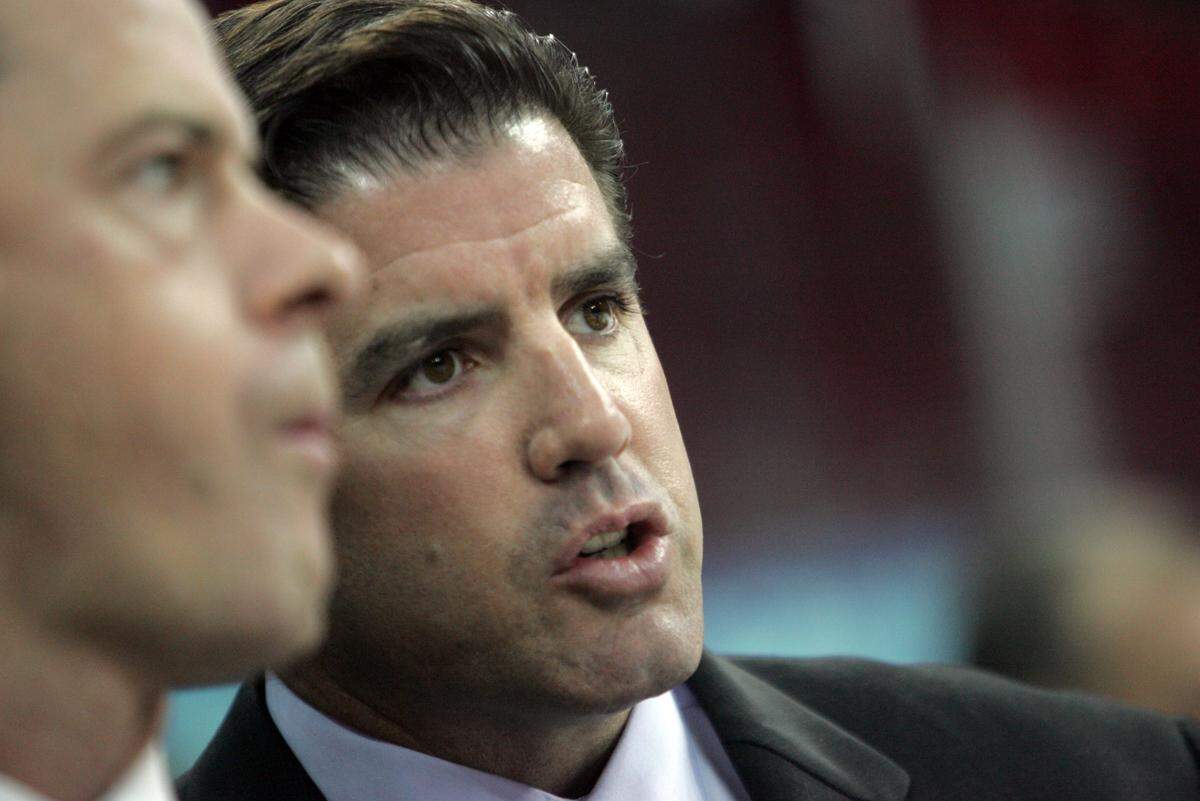
The new NHL cracked down on hooking and holding, scrapped the two-line pass and introduced the shootout. The plan was simple: open the game up for speed and skill. Laviolette had been preaching exactly that brand of hockey — possession-heavy, fast, aggressive — long before the rulebook caught up.
“He gets a lot of credit for having a plan and obviously he had the roster to be able to push that pace,” Eric Staal said.
Staal, the No. 3 pick in 2003, spent the lockout dominating the AHL with the Lowell Lock Monsters, getting his swagger back. He returned to the NHL ready to be a star.
The new salary cap helped, too. In 2002, when Carolina lost to Detroit in the Final, the Red Wings’ payroll was twice Carolina’s. The post-lockout cap was set at $39 million — $26 million less than Detroit had spent four years earlier. Suddenly the chasm was a gap, and the gap could be coached over.
Free agency opened Aug. 1, 2005. Rutherford struck out on Paul Kariya, who picked Nashville at the last minute. Driving down I-95, Rutherford pivoted immediately and called Ray Whitney, a salary-cap casualty Detroit had bought out.
“That turned out really well for us,” Rutherford said. “He fit in for a lot of different reasons, but that was probably the strangest part of putting that whole team together.”
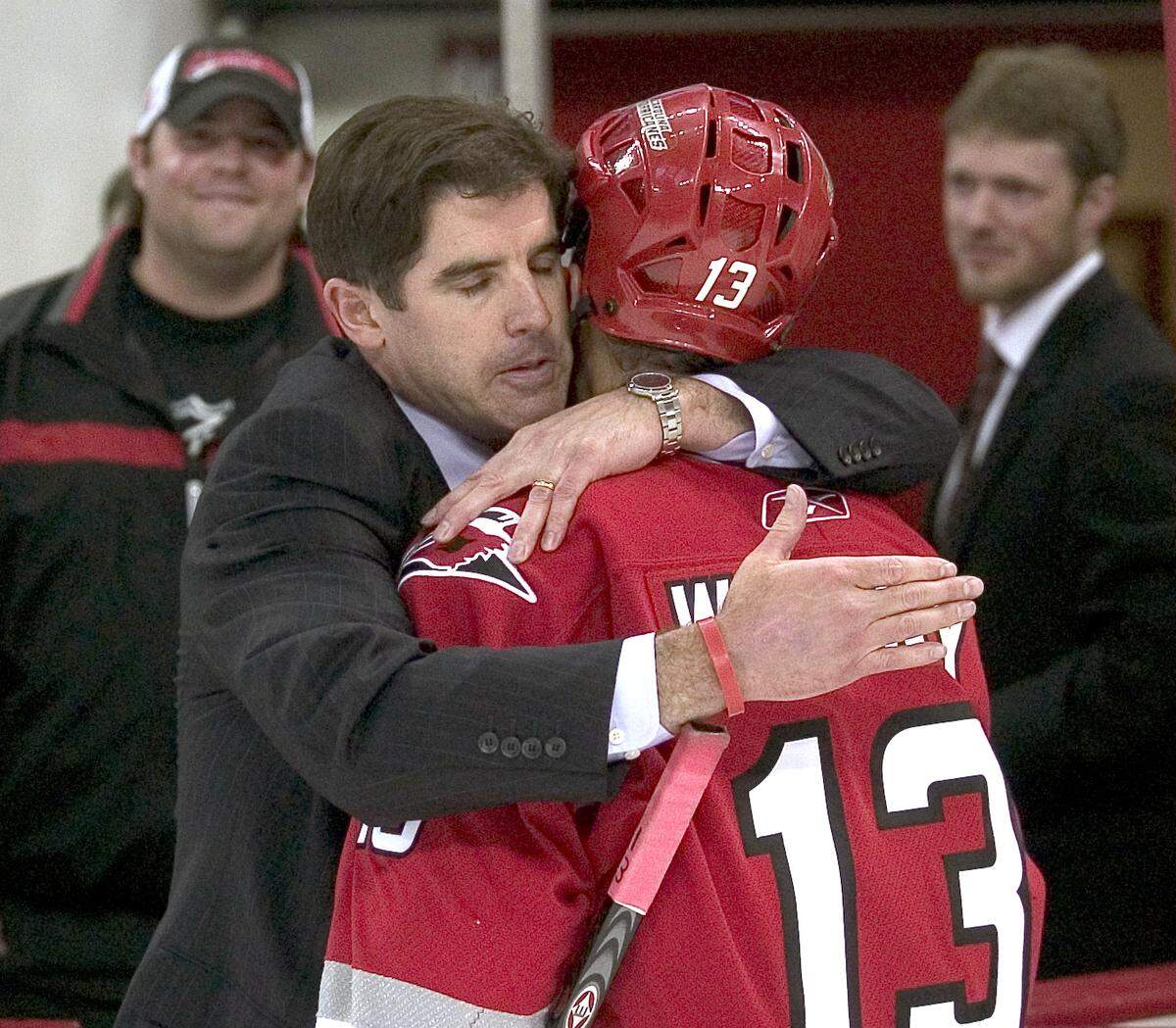
Stillman. Whitney. Oleg Tverdovsky. Defensemen Mike Commodore and Frantisek Kaberle. Center Matt Cullen. In-season blockbusters for Doug Weight and Mark Recchi when injuries hit. And rookie goalie Cam Ward stealing the starting job from Gerber in the playoffs, then beating his hometown Edmonton Oilers in Game 7.
Veteran defenseman Aaron Ward saw the shift the moment Stillman signed.
“A lot of times from when I got here in 2001, we got guys who underperformed elsewhere. … Jimmy that summer sent the message to everybody. These were established, well known veterans. You knew their names because they played top minutes elsewhere.”
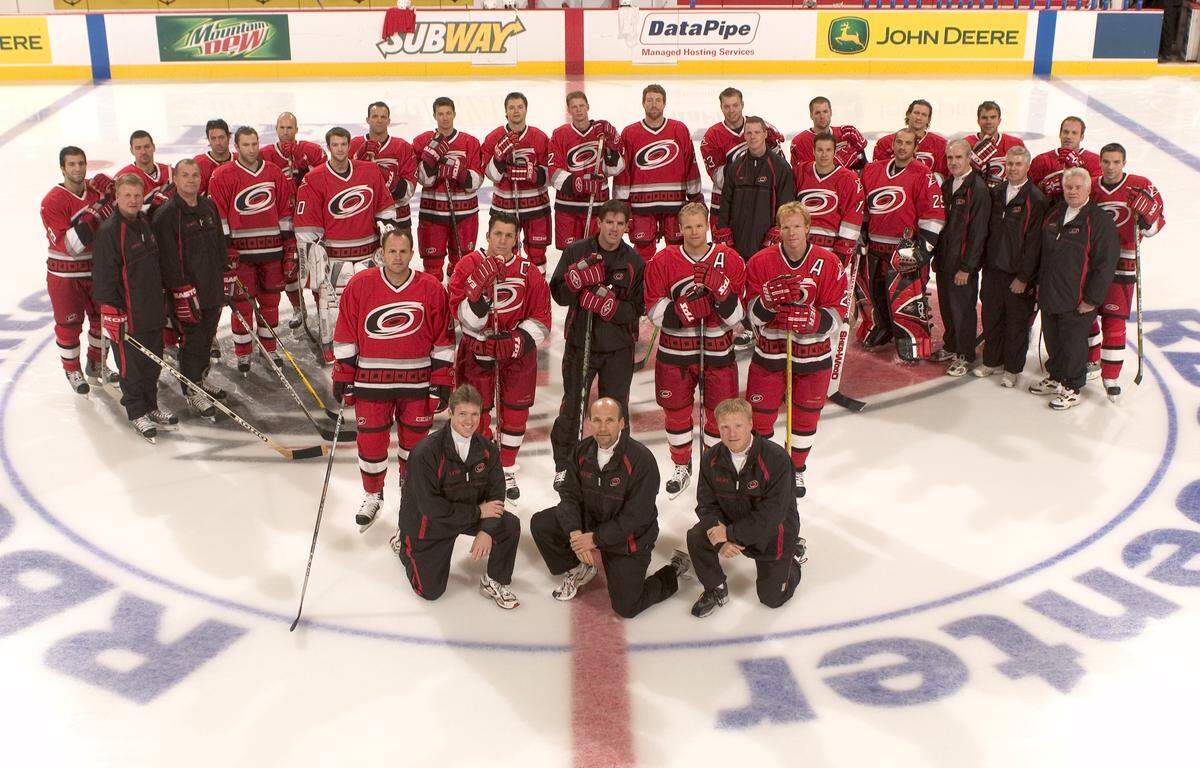
Eleven months after the lockout ended, Brind’Amour was hoisting the Cup.
2026: A Cup contender built by the numbers
Fast-forward to today. The man who built this year’s team didn’t start out as a hockey guy at all.
Eric Tulsky, an expert in nanotechnology research, joined the Canes part-time in 2014 to help build an analytics department. He went full-time a year later. When Don Waddell abruptly resigned in May 2024, Tulsky got the GM job.
“It would have shocked me,” Tulsky told the News & Observer in 2024, according to a recent profile. “A month before I took a job with the Canes (in 2014), I did not even think it was possible I could work in hockey.”
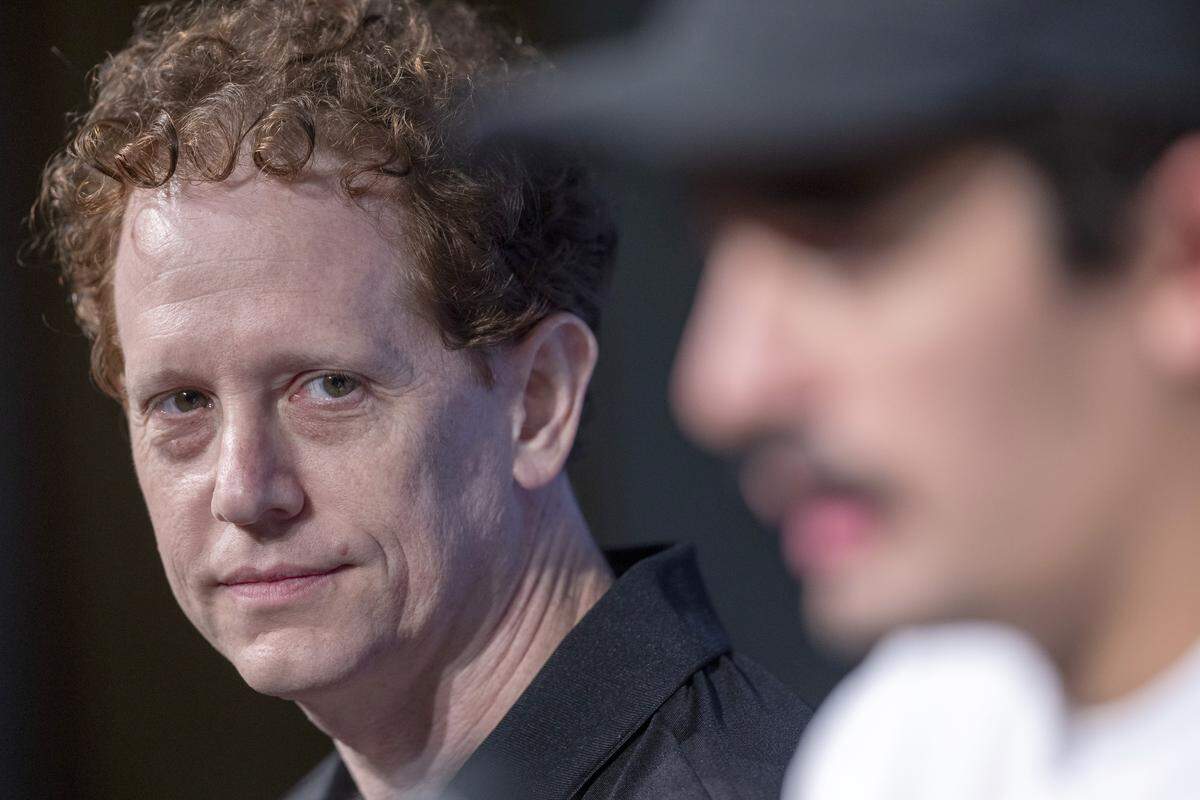
Now his roster is in the Stanley Cup Final — built around coach Brind’Amour’s preferred style and the analytics that support it.
Tulsky’s first offseason was a teardown and rebuild. Out: Brady Skjei, Brett Pesce, Jake Guentzel, Teuvo Teravainen, Stefan Noesen. In: Eric Robinson, Tyson Jost, Sean Walker, William Carrier, Jack Roslovic and Shayne Gostisbehere.
Then came the big swing. In January 2025, Tulsky pulled off a three-team deal that landed superstar Mikko Rantanen from Colorado and Taylor Hall from Chicago. When Rantanen wasn’t a fit, Tulsky flipped him to Dallas 42 days later — for a haul of draft picks and forward Logan Stankoven.
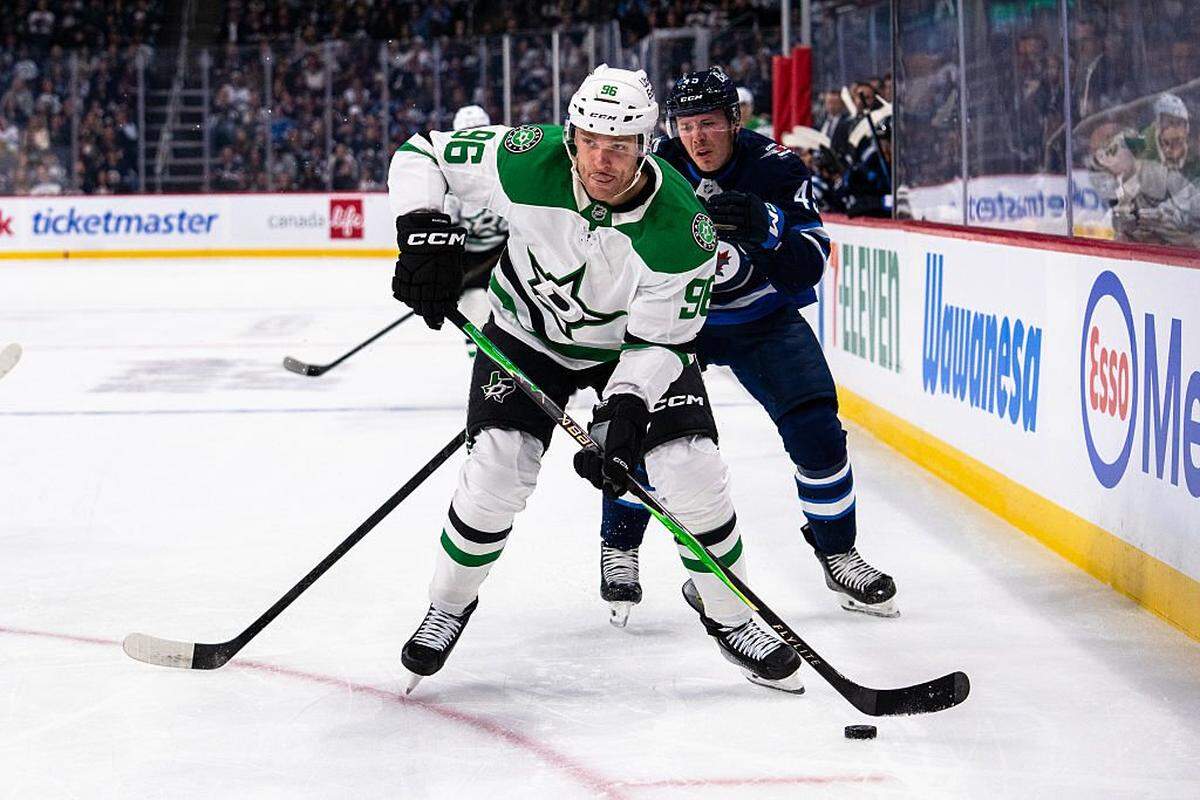
The Canes made another Eastern Conference Final, lost again to Florida, and Tulsky went right back to work.
Second offseason: let veterans Brent Burns and Dmitry Orlov walk. Signed defenseman Mike Reilly for depth. Reportedly considered a $12.5 million offer sheet to Edmonton’s Evan Bouchard, which spooked the Oilers into extending him.
Then the pivot — and the masterstroke. Tulsky traded for Rangers defenseman K’Andre Miller on July 1 and signed him to an eight-year, $7.5 million-per-year extension. Two days later, he landed one of the top free agents on the market: forward Nikolaj Ehlers, six years at $8.5 million per season.
For $3.5 million more per year than Bouchard alone would have cost, the Canes got Miller and Ehlers.
He wasn’t done. When the Canes lost backup goalie Cayden Primeau on waivers, Tulsky claimed Brandon Bussi off waivers from Florida. Bussi won 31 games during the regular season.
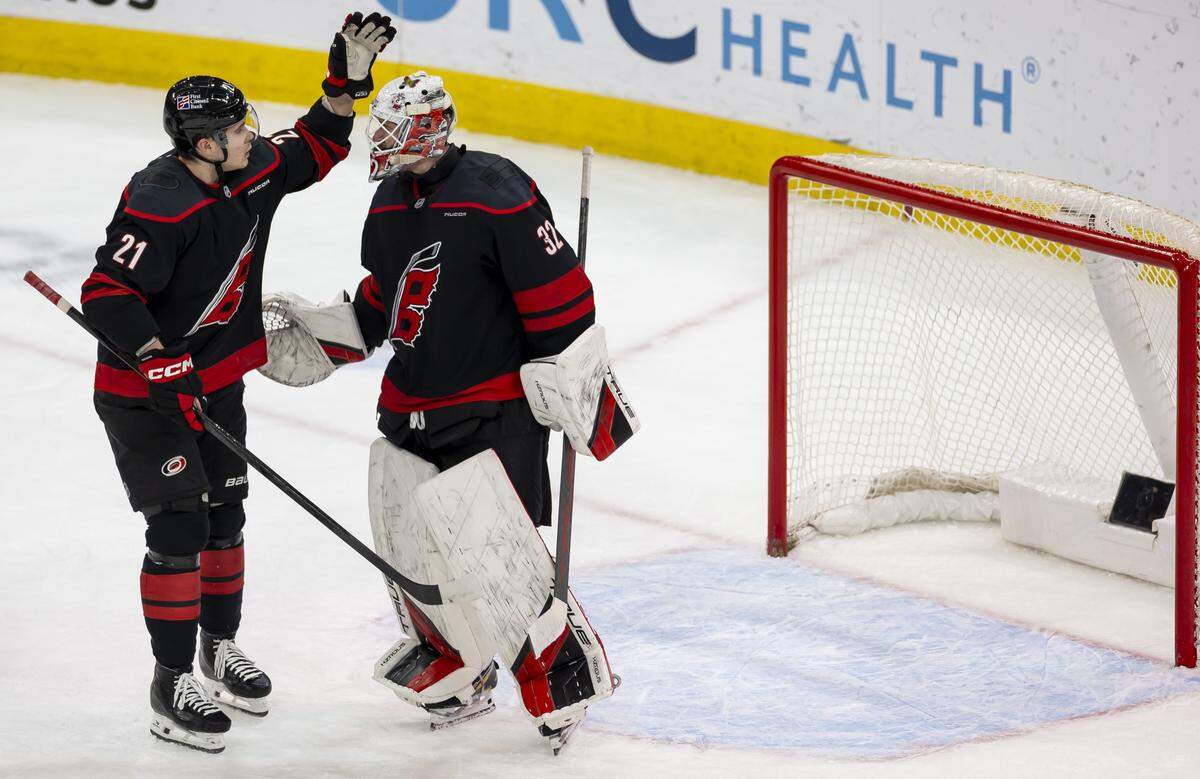
Then came the gutsiest call of all: at the 2026 trade deadline, with the team in the thick of contention, Tulsky added only role player Nicolas Deslauriers. The reaction was immediate — including from his own coach.
“I know there’s a lot of disappointment, I’m going to be honest,” Brind’Amour said on March 6. “The players were hoping to see us make a splash. It’s tough.”
“On one side, it would be nice to throw your chips in and see if you could improve your team,” Brind’Amour continued, “but we love the group we have.”
Turns out, the love was warranted. Tulsky trusted his numbers, trusted Brind’Amour’s system and trusted the room.
Two teams, one identity
The 2006 Hurricanes were built in a frantic two-week window after a lost year, by an old-school GM who chased veterans his coach could weaponize in a brand-new NHL.
The 2026 Hurricanes were built over two methodical offseasons by an analytics whiz who never expected to be in hockey at all, leaning on a coach who was once that 35-year-old captain hoisting the Cup.
Different eras. Different blueprints. Same result: Carolina playing for the Stanley Cup.
The article was compiled with the help of AI tools and edited by journalists, based on original source reporting by former News & Observer journalist Luke DeCock and current N&O journalist Justin Pelletier.
This story was originally published June 1, 2026 at 5:15 AM with the headline "A tale of two teams: How the Hurricanes built Cup contenders in 2006 and 2026."