Why join Carolina Ascent FC ownership? Tennis great Martina Navratilova explains
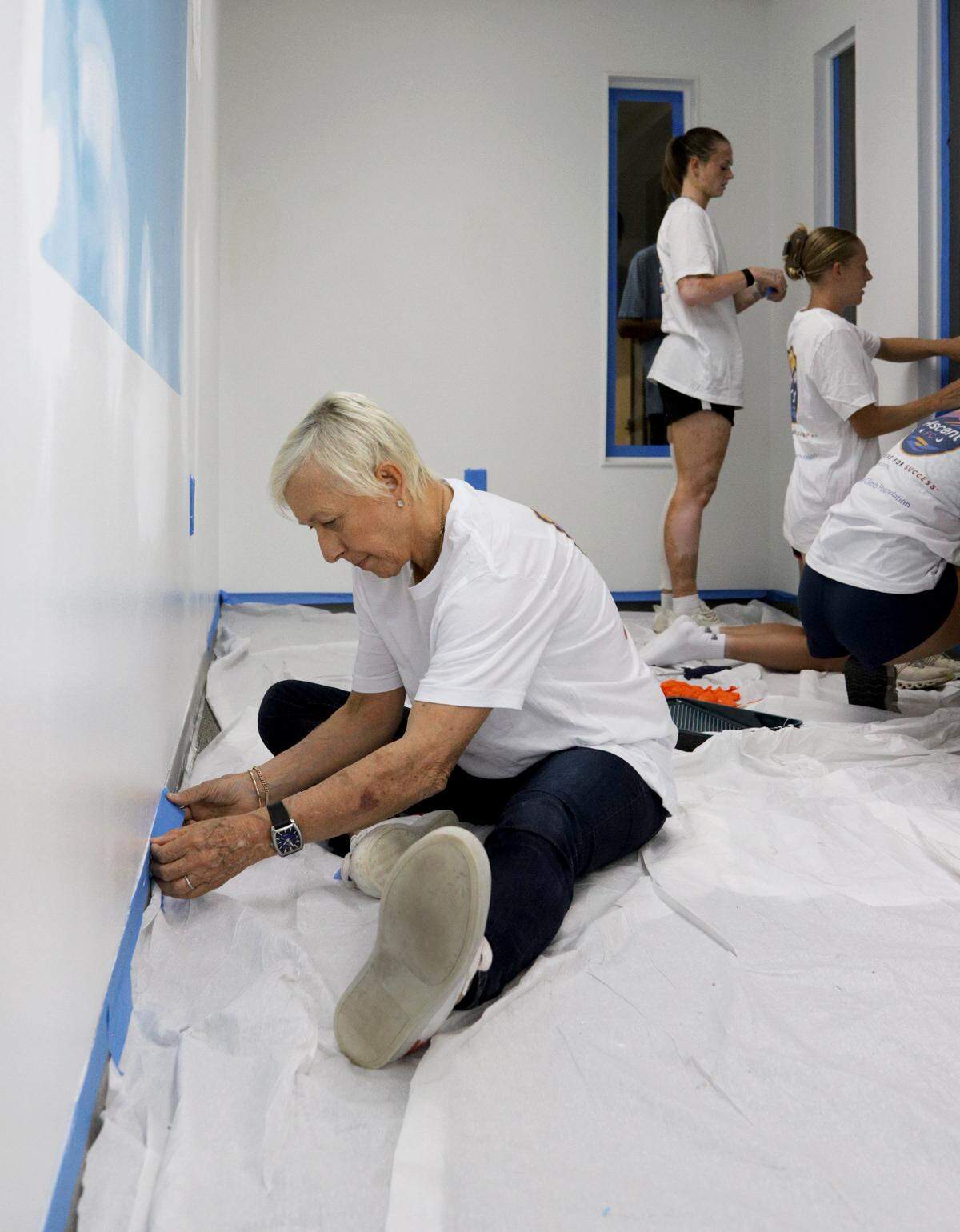
Dressed in a white T-shirt bearing the logo of the Carolina Ascent FC and a simple pair of blue jeans, one of the top athletes of her generation is inside a building just off Wilkinson Blvd.
She’s meticulously sticking blue painter’s tape along a baseboard, ensuring the lines match up before the easy part begins.
Martina Navratilova is doing the grunt work, getting as involved as anyone on this Saturday afternoon. She’s using the same hands and forearms that powered her to 18 Grand Slam singles titles and enjoying every second.
“Just whatever it takes,” Navratilova later explains in a quiet moment. “I come from a fill-it household. Whatever it takes to get the job done. That’s what I do. And I’ve done a little bit of painting, so I kind of knew the sequence.
“And I’m like, ‘OK, there is a baseboard that needs to be taped.’ So I did it.”
Navratilova was in town to lend her support to Carolina Ascent FC, taking a hands-on approach to being one of the team’s minority owners. She came to be a part of the announcement of a multiyear agreement with Dress for Success Charlotte, the latest and largest community outreach initiative of the Ascent.
Dress for Success is an independent nonprofit and global organization with nearly 140 affiliates in 23 countries and collaborates with more than 80 referral agencies to serve women annually through employment retention, financial education, job readiness, entrepreneurship, digital skills and career advancement programs.
In unveiling the move during a service project at the nonprofit organization with Navratilova, the two sides revealed their venture together included financial support for Dress for Success Charlotte’s capital campaign to purchase its new office space, engagement with Ascent players and ownership to in the mission of the organization, match activations involving fans and more.
Once the new office fully opens later in the fall, they’ll have a Carolina Ascent FC Coaching Corner featuring a pair of rooms along with a lounge area that will be used for one-on-one job coaching, which is the organization’s fastest-growing service in the last two years.
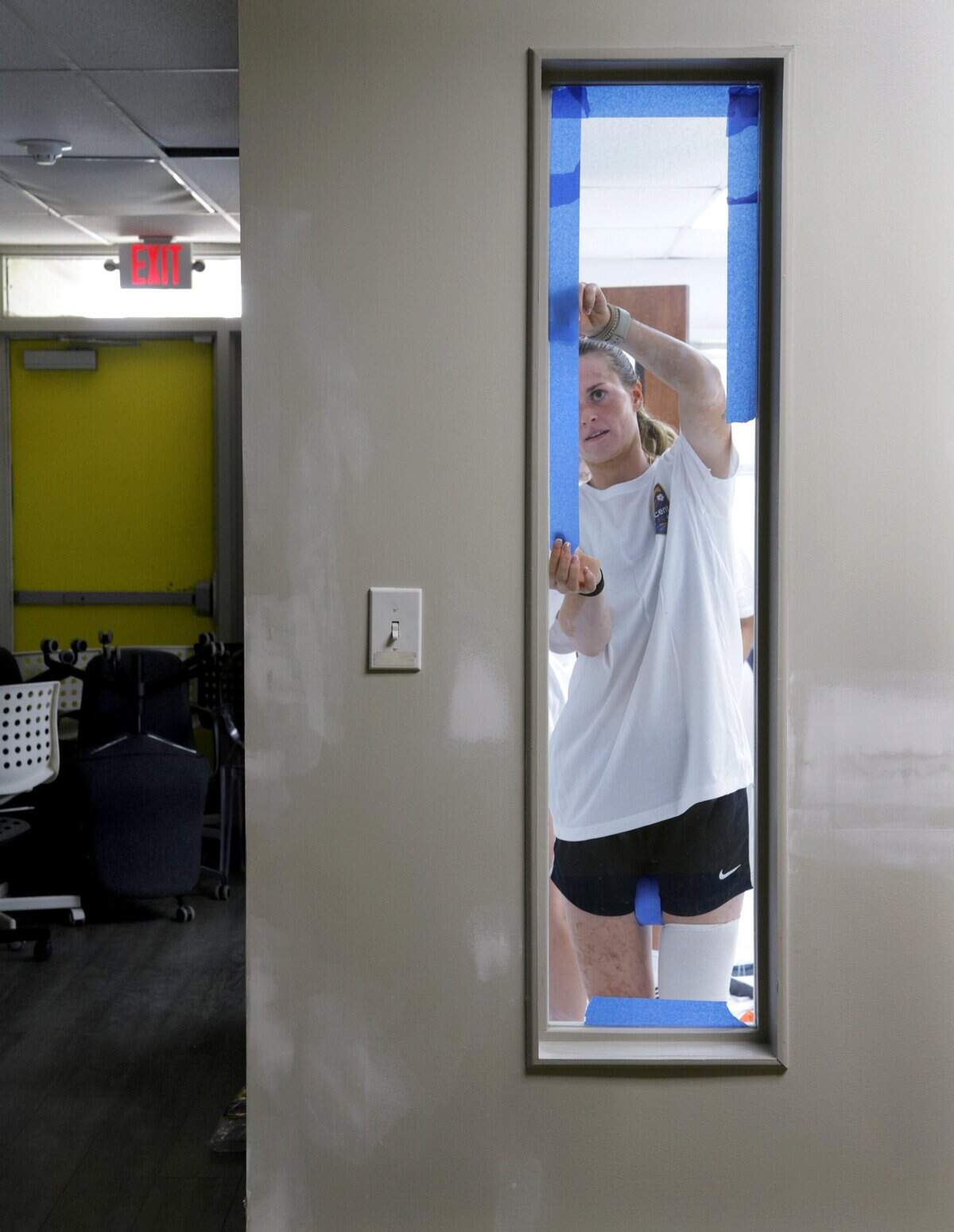
By then, the tape Navratilova laid will be long gone and furniture will fill the room. Next time she walks through the office, she can recall how she got down and dirty with Carolina Ascent FC founder and majority owner Dan DiMicco, several players and Dress for Success Charlotte Executive Director Dr. Emily Wheeler and others.
“Well, I think for me, my mentality always has been give the best that you can,” Navratilova told The Observer. “And I was always competitive with myself, and I didn’t think about being a star. I wanted to be the best tennis player I can be, and that turned me into a star. But I love the sport, so I did whatever it took to become better. And that’s kind of what I do in everyday life.”
No, seriously. That’s Navratilova’s style.
“I take out the garbage every Wednesday and Saturday,” she said. “Wednesday is both and Saturday is just the main garbage. The recycling is only on Wednesday. So you just get the job done. Change the water for the dogs, change the diaper for the kid.
“So whatever needs to be done, I do. I don’t make a fuss one way or the other. And I would never ask anybody to do something that I’m not willing to do myself.”
Navratilova, 68, spoke with The Observer about becoming a minority owner with Carolina Ascent FC — which is one of nine teams in the Gainbridge Super League, a Division I professional women’s soccer league entering its second season — her impressions of Charlotte, what she enjoys most about the sport of tennis now and more.
Roderick Boone: How did you become a part owner?
Martina Navratilova: That was a friend that I’ve known who’s in the business, sports business, an agent. I’ve known him for 40-plus years, and he got in touch with my agent Mary (Greenham) and said, ‘How about this for Martina? I have this idea for part ownership of a women’s team.’ And the more I thought about it, first I’m like, ‘I never thought about it and this sounds like fun.’ And then we had a big Zoom with people that are involved in the team here. And then I realized the impact that they want to have on the community.
It’s not about kicking the ball, winning. It’s about this whole mentality and attitude that you bring to bring people together and support the team, support the community and then give back to the community. And I think they’re doing it with flying colors. Just this thing here at Dress for Success. What a brilliant idea and what a brilliant partnership. So, yeah, I think the outreach that the team gives to the community and the support where women and girls see the dream, they can touch it.
Whether it’s anything to do with physical fitness or just feeling better about yourself and saying, ‘OK, I think I can do this because I see them do that. Then I can go outside my comfort zone and maybe try to ask for a raise.’ Women are terrible about asking for a raise because they don’t want to risk losing their job because they probably have a family to support. They feel too much responsibility. We’re not the risk-takers because we can’t afford to take risks the way guys can.
Guys can fail and they can still get ahead. Once women fail, they’re done. So, when I saw the whole mentality of the ownership, I’m like, ‘I want to be a part of that because I can give something.’ Not the community, but by raising the level of awareness for the team, kind of validating them further. Not that they need validation but also give something to the athletes themselves where I can contribute beyond the financial contribution, where I can share my knowledge.
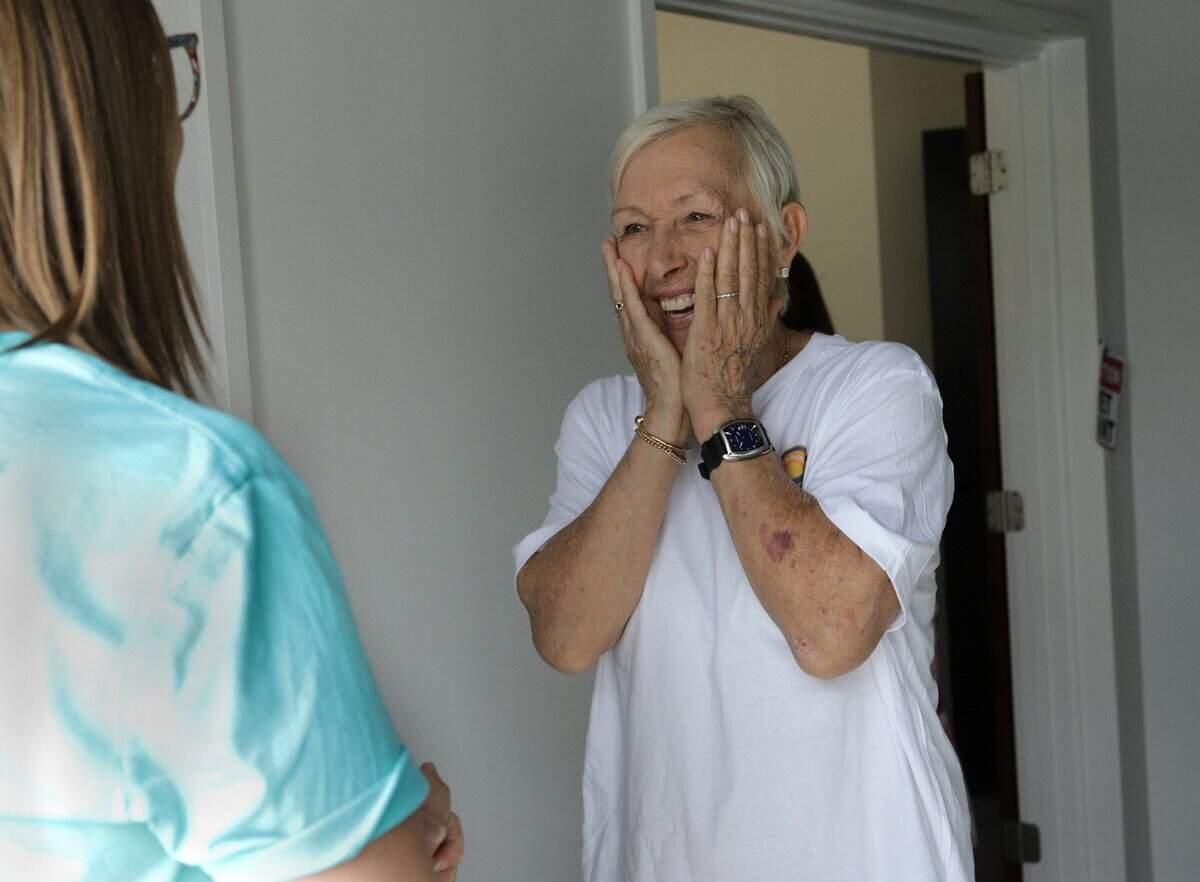
Because to be a champion in one sport takes the same mentality to be a champion in another. And that mentality translates into everyday life. And I can certainly contribute to them with my knowledge, where I had to figure things out for myself. They don’t have to do that. They can make their own mistakes, but no need to repeat the mistakes I made if I can help them avoid that. They’ll make some others, but it’ll help them get to where they want to go a little bit quicker, which is always good.
RB: How much do you look forward to, as you mentioned, being there for them if they need somebody to talk to about anything?
MN: Yeah, well, I will make myself available. And I’m saying this in front of my agent here. I will make myself available to them if they want to call me or text me or email, whatever. If they have any ideas or questions or doubts, where I can help is what I will do. Give them that time and that knowledge, because there is nothing like sharing it with the future generation.
RB: What are your impressions of Charlotte? What do you think about the city and what stands out most to you about it
MN: Well, I’ve been here 50 years ago. It’s just the difference it’s like, are you kidding? Are we still in Charlotte? Are we in Kansas? It’s amazing, the growth and you see the energy. But it’s also … you still feel the pace is normal. It’s not frenetic and everybody’s so nice. Instead of checking into the hotel, it’s like the attitude is so different from anywhere else, really, in this country. And I’m not going to name names, but it’s like everywhere, people are genuinely nice, and it’s just relaxing, but at the same time achieving.
You feel that, you see the growth, you feel the growth. But they are doing it in a nice manner where it’s sustainable and nourishing rather than this frenetic pace. And it’s also quieter, which I appreciate because there’s so much noise pollution. Did you know noise pollution was the biggest stress inducer?
I spent three months in Kenya and I go back to New York, come back to the States, and I’m in New York and I was going to go for a walk. I literally stepped out the door and I went back in. It took me like two weeks before I was not overwhelmed by the noise again. Didn’t hear a police siren for two months, and then you hear it every hour on the hour. So, I appreciate lack of noise pollution. But it’s just a healthy environment here, it seems. There’s a lot of parks for kids, people are active, running, riding their bikes. It’s just a nice pace of life here.
RB: Do you want to come see some games in person? Do you hope to maybe get back here and watch?
MN: I will see. I have two kids that I’m raising, so my time is at a premium. But it is not that far. So, we’ll see how it evolves. But it’s a long season, so I’m sure I’ll come here again before the season’s over. And I’m going to watch the team when they come to Fort Lauderdale. It’s an hour away (from home). So, I’ll see him there. We’ll see what happens here.
RB: What are you enjoying most about this partnership?
MN: I’m just happy to see what will be happening. I hope this is a long-term relationship because I want to see the difference that this team makes in this town. I’m looking forward to meeting somebody 10 years from now and they say, ‘Well, I went to a game and then I thought, well maybe I can be an architect.’
That’s what I want to hear 10 years from now, where girls had to imagine it and now they don’t have to imagine it. They can see it. And it’s much easier to be something when you can see it than when you don’t. And girls, the support for girls to be in sports is very new in this country and we still can’t have enough of it, right?
RB: What’s it been like seeing how female athletics has evolved over the years since you first started playing tennis?
MN: When I first came here, it was like girls who are supposed to be cheerleaders, not the athletes. So, that mentality has changed. But it still is boys get that support automatically. If not, they’re pushed into sport even though they don’t want to do it. Girls had to pave the way within their family, but now I think the fathers have gotten involved and they want their girls to have the same opportunity that their sons have.
And so things have changed in so many ways because of that. But it still is more difficult for girls to get ahead. So, I think this thing will make a difference within the community and I think I’ll look forward to that.
RB: How much are you driven by, as you mentioned, witnessing young girls and women and young girls who maybe didn’t watch you growing up, but can appreciate how you are a product of a tough environment?
MN: What drives me is fairness. Always. Wherever I see it — unfairness — that’s what makes me crazy. And these days, you see a lot of that, but it’s easy to put it into one direction, which is again, women and girls, because that’s universal. It’s not dividing anyone and it’s not saying men are bad or men. But you still want to just make a difference in any small way to erase the inequality.
RB: Lastly, you’re frequently spotted at Grand Slam events. What excites you about the sport of tennis?
MN: Oh, it’s just more international, which is great. And you know, they’re bigger, they’re stronger, but the equipment has changed so much that the game evolved. So, the athletes have evolved as well. But bottom line is the court is still the same dimension. So, yeah, it’s fun to see the progress and we’ll see where it takes us.
I think Africa is the next continent. It’s become very international, at least through all people playing from those countries. But it’s so economy driven anyway, so that’s another battle.
This story was originally published September 29, 2025 at 6:00 AM.