Scott Parel didn’t turn pro until 31. Now he’s a four-time winner on the senior circuit.
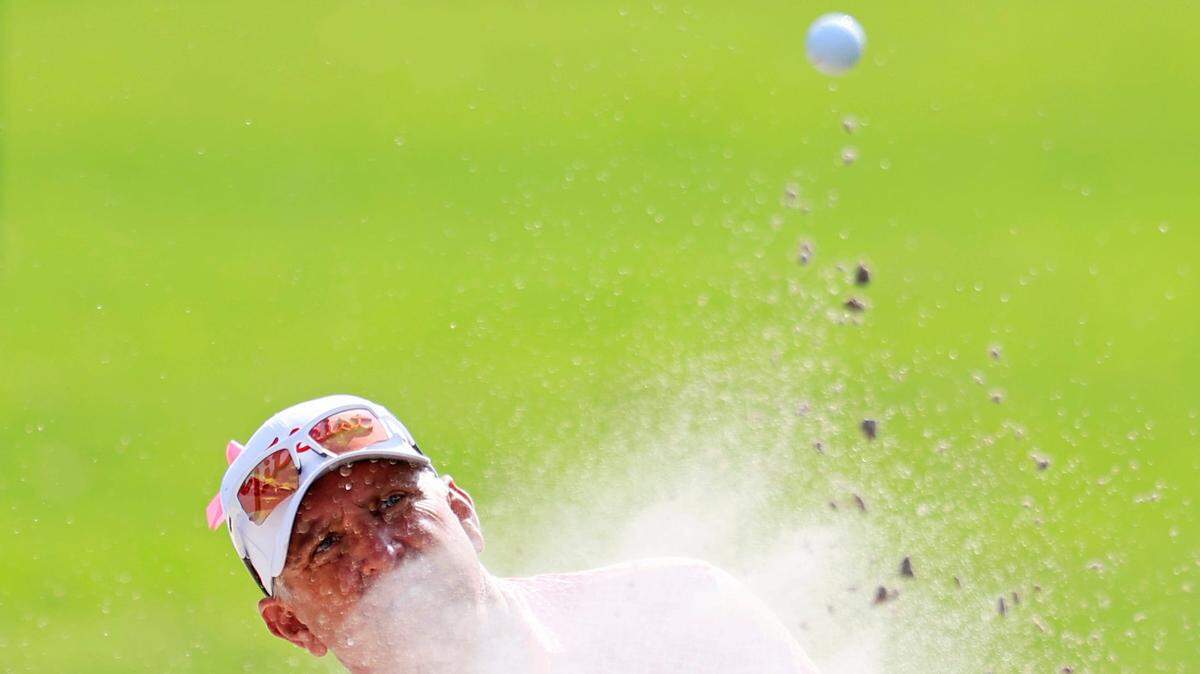
It was winter, and Scott Parel was starting to think about life beyond the walls of his cubicle. He had just recently turned 30, was working in IT and the previous fall had made it to the second stage of qualifying school for the PGA Tour.
That was kind of a one-time deal, something he was encouraged to try by his friends at his club after they got tired of watching him break par and dominate the robust amateur circuit around Augusta, Georgia. But the more Parel thought about it, the more he thought about getting back on the golf course for good.
“I’m thinking, gosh, I was fairly competitive with those guys working a full-time job,” Parel said. “Golf just really being a hobby, maybe if I concentrated on this I could have some success. Then I started hating my job. Which I didn’t really. But I wanted to be playing golf.”
His wife Mary told him if he wanted to do it, they’d figure it out. Twenty-seven years later, and not always easy years, Parel is a four-time winner on the PGA Tour Champions with almost $8 million in winnings. At 58, he comes into this weekend’s SAS Championship 42nd on the points list, needing to get into the top-36 to be fully exempt for another summer and keep this unlikely dream alive.
The scratch golfer’s dream
There are a lot of amateurs out there who talk like that. Every course probably has one, the scratch golfer who’s convinced that if he quit his job and had the time and the resources, he could go shot-for-shot with the guys on television. Especially when they hit 48 or 49 and start thinking about the lower-hanging fruit on the senior tour.
They’re all wrong, of course. It’s a different game out there, not just at the PGA Tour level but on the second-tier Korn Ferry Tour and even the cutthroat mini-tours where guys who were always the best golfer they knew are living out of the back seat of their cars and need a top-10 finish to buy breakfast the next day.
It takes more than talent and technique and power to rise above the mini-tours. It takes endurance and composure and resilience and drive and vision. Parel would not only learn that he had all of that, he also somehow made it work.
He didn’t grow up thinking about making a living as a professional golfer, but he’s growing old doing it.
“I’ve won four times out here, which I think is pretty good for someone who didn’t have anything,” Parel said. “My wife likes to say that I was a 20-year overnight success, which is what it kind of turned into.”
Parel, who was a part of two Georgia state-title teams in high school, considered walking on at the University of Georgia but decided he’d rather just be a student. He got a job in IT. He played golf and basketball and softball. He got married and had two kids. But as he got older, he got jobs that gave him the freedom to practice during the day and work at night. His game got better. His handicap dwindled.
At 29, he qualified for the U.S. Amateur for the first time, making it to the round of 32 in 1994. (His opponent in the next round would have been an 18-year-old Tiger Woods. And if Parel’s back hadn’t acted up at Q School in 1996 – he just wasn’t used to playing that much golf, day after day – he felt like he was playing well enough to keep going.
The long chase pays off
Over the next 15 years, he chased the dream. The first few years, he was grinding it out on mini-tours and trying to qualify for bigger tournaments on Mondays. He made it through Q school in 2002 when he was ready to quit, and had status for most of the next decade, but not without racking up a considerable amount of credit-card debt, rolling it from one 0 percent offer to another.
In 2012, he lost in a playoff at the Rex Hospital Open. A year later, at age 48, he won the Air Capital Classic in Wichita. That did two things: The $119,000 paid off his cards, and beating a bunch of twenty-somethings at their own game convinced him he could compete on the senior tour when he turned 50.
He was right.
Again, it wasn’t easy. At one point, he qualified for Champions Tour events on six straight Mondays while also trying to play on what is now the Korn Ferry Tour when he had the chance. (In 2015, he missed a playoff at the Rex by a shot and was OK with that — he had a Sunday night flight to Minneapolis to qualify for a senior tournament in Iowa on Monday.) In 2016, he was co-medalist at senior Q School and the rest is history.
It’s a different world for him out here, surrounded by guys who have won multiple majors, Hall of Famers, people who can’t eat dinner in a restaurant – anywhere – without signing an autograph. It’s hard not to have impostor syndrome when you’re on the range next to Colin Montgomerie or Freddie Couples or Bernhard Langer. But Parel’s beaten them. Four times.
They were in their primes in their 20s and 30s (other, perhaps, than the ageless Langer). Parel didn’t hit his stride until he was in his 50s. That may be his advantage over all of them. Most of the stars on this tour have millions in the bank and giant tour pensions. They’re playing to feed their competitive fire. Parel is playing to keep playing. How he finishes on Sundays when he’s out of contention may be the difference between coming back next summer and facing whatever comes next.
He wasn’t a professional golfer. Then he was, for 27 years and as long as he has the status to keep playing. And when that time comes, he’ll go back to Augusta having proven anything is possible.
“I’m not a Hall of Fame golfer and I never had any idea to think that I was,” Parel said. “But I was pretty good out here from 50 to 58.”
Never miss a Luke DeCock column. Sign up at tinyurl.com/lukeslatest to have them delivered directly to your email inbox as soon as they post.
Luke DeCock’s Latest: Never miss a column on the Canes, ACC or other Triangle sports
This story was originally published October 13, 2023 at 8:00 AM with the headline "Scott Parel didn’t turn pro until 31. Now he’s a four-time winner on the senior circuit.."