For years, the ACC took men’s basketball for granted. This season’s results reflect that
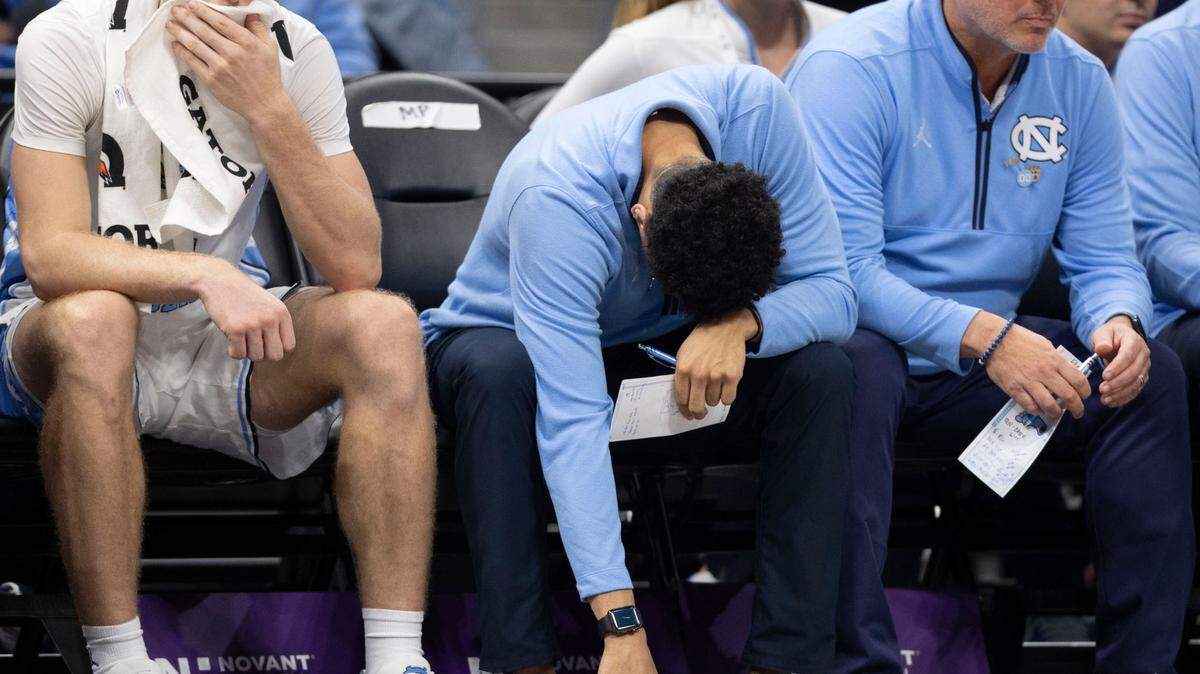
This year, there will be no argument. No ex post facto justifications, spinning March and April success as a retroactive statement of strength. The ACC had every chance to prove its strength — and failed.
The more teams the ACC adds, the fewer NCAA tournament berths it seems to earn.
The more emphasis is placed on football, the worse men’s basketball gets.
Of this there can be no doubt: The ACC is a four-bid league this year. At best.
Duke is elite. Clemson and Pittsburgh have earned their way in. North Carolina’s right on the edge, its win over Dayton in Hawaii a lifeline at this point. Those teams have at least one statement win and haven’t lost to anyone they shouldn’t. It wasn’t long ago, just about every team in the ACC could say the same every holiday season. Now, those four are the exception to the rule.
Maybe a fifth team sneaks in by winning the ACC tournament like N.C. State last year, but even the possibility of someone like Louisville going 18-2 and playing its way in is remote. Because of the unbalanced schedule, there are very few opportunities to win big games on the road and a lot of games against mediocre teams that don’t help.
The Cardinals, for example, play only one of the top four on the road (at Pittsburgh) and already lost at home to Duke. And even if they — or the Wolfpack or Wake Forest or SMU — were to make that kind of a run, it would almost certainly knock someone like UNC out of contention. At this point, it’s basically a zero-sum game.
In years past, the ACC has hotly debated whether its nonconference performance has been weighted too heavily, giving short shrift to teams with a lot of turnover that mature later in the season and wreak havoc in March, like Miami in 2023 or N.C. State in 2024. There was some truth to that. The bar was set too low, and there’s no way to move it anything other than incrementally once conference play starts.

The ACC has been so exceedingly below average so far, this year that’s an argument not even Jim Phillips can make with a straight face. The ACC actually got off to a decent enough start, avoiding any catastrophic losses. But it failed to follow that with good wins, culminating in the embarrassment of the ACC-SEC “Challenge,” a historic 14-2 rout. The ACC is 10-40 in Quadrant 1 games (using barttorvik.com as a proxy for the NET), a bounty of opportunity and a paucity of success.
You can name all 10 in one breath without turning red: Duke-Auburn, Duke-Arizona, Pitt-Ohio State, Pitt-West Virginia, Clemson-Penn State, Clemson-Kentucky, North Carolina-Dayton, Stanford-Santa Clara, Wake Forest-Michigan, Louisville-West Virginia.
Eleven of the losses were by a total of 49 points, all two-possession games or closer. Flip those, and it’s a different conversation. The actual conversation isn’t pleasant.
The Big East is 8-18. The Big Ten is 10-23. The Big 12 is 12-27. That’s the ACC’s competition, and in both raw numbers and winning percentage, it measures up poorly to the other power conferences, let alone the SEC (28-16).
There are still four opportunities to polish that record, three on Saturday — Stanford-Oregon, UNC-UCLA, Syracuse-Maryland — and another in February when Duke and Illinois meet at Madison Square Garden. All but Duke will be an underdog. Even a sweep would only stem the tide. UNC can help itself; the others can help the ACC.
Of the 182 games so far, there have been 10 wins worth remembering. The league’s nonconference record is 118-64. In 2019, when the ACC had three No. 1 seeds and Virginia won the national title, the ACC went 149-41 out of conference. Three fewer teams won 31 more games while the ACC went 18-17 in Q1, best of any conference in both wins and winning percentage. The ACC ended up with seven teams in the NCAA tournament (and N.C. State should have gotten in as well despite a weak schedule; beating bad teams by the margins the Wolfpack did was not properly appreciated by the committee).
Since the tournament expanded to 64 teams in 1985, the ACC has never gotten less than a third of the league into the tournament, even as the league grew and grew and grew. But the jump to 18 teams this season, combined with these lukewarm results, means that longstanding standard is almost certain to fall.
You can’t blame the newcomers, either: SMU has been fine and Stanford and Cal have been no worse than Virginia Tech or Boston College or Miami. They haven’t dragged the ACC down any more than the legacy ACC has on its own.
How did it get this way? That’s a longer conversation with countless threads to pull. In short: Too many misses on coaching hires, competitive dilution through expansion and a 30-year emphasis on football at the expense of basketball (while the SEC was investing heavily in the sport) all chipped away at the foundation of ACC basketball until it became a castle built on sand.
The ACC has spent years dumping money into football while its basketball infrastructure — arenas, training facilities, support staff — has stagnated. Collectively, the league assumed its basketball success was a birthright while it was actually being kept afloat by Hall of Fame coaches who have since departed or are at the end of their careers. A league that once had strength in depth is now top-heavier than ever.
If the ACC is serious about rebuilding basketball, it needs to be as intentional about it as it has been with football for a generation, because the SEC has lapped the league in both football and basketball. And while the ACC can fairly throw up its hands over the television money SEC football brings in, its basketball issues have been entirely self-inflicted — a catastrophe of neglect, complacency and greed.
March may yet save the ACC’s bacon yet again — Duke certainly has a chance to be the last team standing, and there’s no reason why one of the other trio can’t make a deep run — but the rank embarrassment of the ACC-SEC Challenge should have been a warning siren to everyone in power, in Charlotte and elsewhere. The ACC’s status as a men’s basketball powerhouse can no longer be taken for granted.
Never miss a Luke DeCock column. Sign up at www.newsobserver.com/newsletters to have them delivered directly to your email inbox as soon as they post.
Luke DeCock’s Latest: Never miss a column on the Canes, ACC or other Triangle sports
This story was originally published December 19, 2024 at 10:28 AM with the headline "For years, the ACC took men’s basketball for granted. This season’s results reflect that."